Midwest
Wisconsin consultants hired to redraw GOP-drawn legislative maps following court ruling

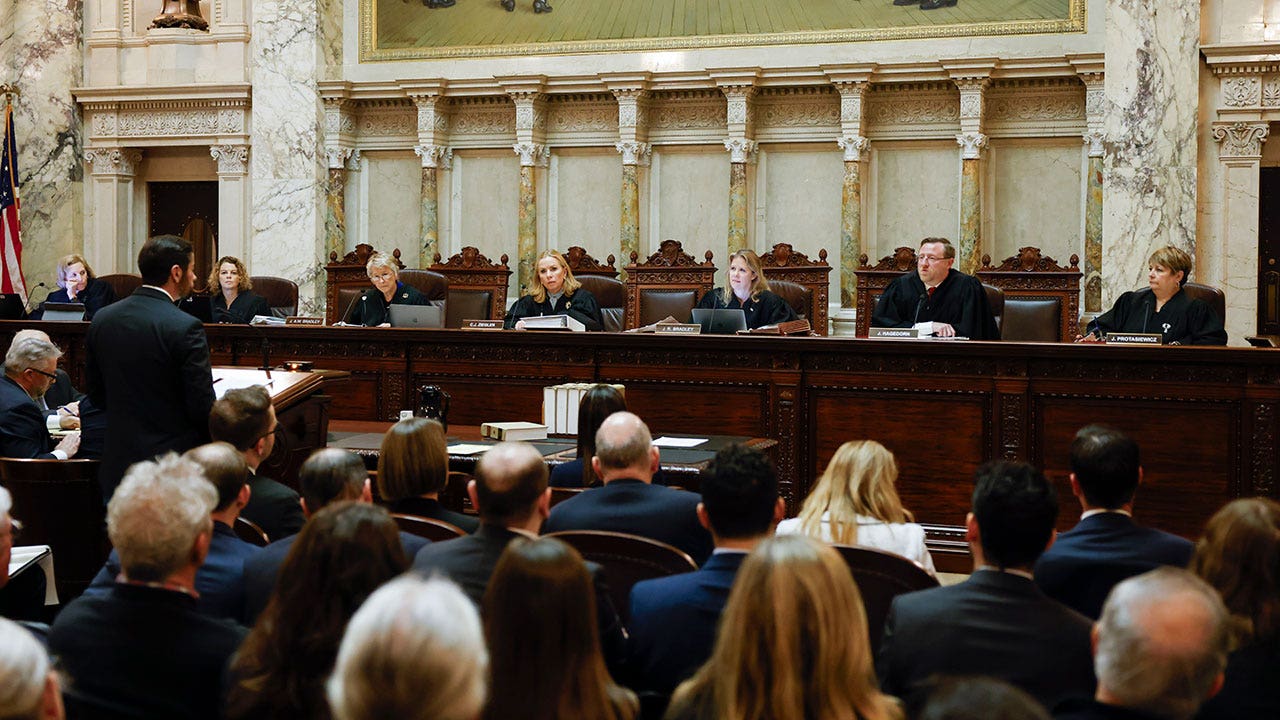
- Two consultants were hired to analyze new legislative boundary lines in Wisconsin after the state’s Supreme Court invalidated the existing Republican-drawn maps.
- Wisconsin, among over a dozen states, is facing challenges to redistricting maps following the 2020 U.S. census.
- The Wisconsin Supreme Court ruled last month that the current legislative maps are unconstitutional, requiring the Legislature to pass new maps.
Two consultants hired to analyze new legislative boundary lines in Wisconsin after the state’s Supreme Court tossed the current Republican-drawn maps will be paid up to $100,000 each in taxpayer money under terms of their contracts made public Thursday.
Each consultant will be paid an hourly rate of $450, up to $100,000 total, but the state director of courts has the authority to exceed the maximum amount if she determines it is necessary, according to the contracts.
Wisconsin is one of more than a dozen states currently wrestling with challenges to redistricting maps that were redrawn following the release of the 2020 U.S. census and first applied to the 2022 elections. Court challenges could result in new U.S. House and state legislative maps before the November election.
WISCONSIN SUPREME COURT TOSSES GOP-DRAWN LEGISLATIVE MAPS, ORDERS NEW VOTING BOUNDARIES
In Wisconsin, the court last month ruled that the current legislative maps are unconstitutional because many districts aren’t contiguous. The court ordered that either the Legislature pass new maps that Democratic Gov. Tony Evers is willing to sign into law, or the court will proceed with adopting its own map.
The Wisconsin Supreme Court listens to arguments from Wisconsin Assistant Attorney General Anthony D. Russomanno, representing Gov. Tony Evers, during a redistricting hearing at the state Capitol, on Nov. 21, 2023, in Madison, Wis. Two consultants were hired to analyze new legislative boundary lines after the state’s Supreme Court invalidated the existing Republican-drawn maps. (Ruthie Hauge/The Capital Times via AP, Pool, File)
The consultants were hired to analyze maps submitted to the court by the Legislature, Evers and others, and report back on their findings.
The consultants — who have the authority to recommend changes to the submitted maps or to create their own — have had a hand in reshaping districts in other states.
Jonathan Cervas, of Carnegie Mellon University in Pittsburgh, redrew New York’s congressional and state Senate maps after a court struck down ones adopted by the Democratic-led Legislature. Bernard Grofman, of the University of California, Irvine, helped redraw Virginia’s federal and state legislative districts after a bipartisan commission deadlocked.
Conservative justices also objected to the hiring of the consultants, saying their selection, the legal authority to appoint them and their responsibilities all raise serious questions.
WISCONSIN REPUBLICANS PASS REDISTRICTING REFORM PLAN, GOV. EVERS CALLS IT ‘BOGUS’
The maps from parties to the lawsuit are due by Jan. 12, with supporting arguments due 10 days later. Reports from the consultants are due by Feb. 1, with responses a week later. That means the court will release new maps likely sometime in late February or early March unless the Legislature acts first.
The state elections commission has said maps must be in place by March 15 if the new districts are to be in play for the November election.
Republican lawmakers last week asked the Wisconsin Supreme Court to stay and reconsider its 4-3 ruling throwing out the GOP-drawn maps. Thursday was the deadline for parties to the lawsuit to submit their arguments.
The court is unlikely to reverse its ruling. The liberal four-justice majority voted in favor of ordering new maps, with the three conservative justices dissenting.
The legislative electoral maps drawn by the Legislature in 2011 cemented the Republican Party’s majorities, which now stand at 64-35 in the Assembly and 22-11 — a supermajority — in the Senate.
Read the full article from Here



Calvin Johnson on his fourth annual charity golf outing
Calvin Johnson speaks at his foundation’s celebrity golf outing at The Cardinal at Saint John’s on Monday, June 15, 2026.
Detroit’s pro sports teams have some pretty iconic uniforms, from the winged wheel of the Detroit Red Wings, to the old English D of the Detroit Tigers to the Honolulu blue of the Detroit Lions.
But for every classic jersey from a Motown team, there is at least one gathering dust in the back of a closet – and not because it’s a cherished item.
There have been some duds in the Detroit sports uniform rotation, with misguided color schemes, wacky logos, unfortunate throwbacks and sleeves where they are not supposed to be (looking at you, Pistons). If it weren’t for these bad uniforms, we might not be able to cherish the brilliant ones quite as much.
But as painful as it might be to revisit these sartorial tragedies, let’s do it, anyway.
Here are the worst jerseys from every major Detroit men’s pro team (excluding the Red Wings, because we honestly couldn’t find one to call bad).
Tigers: 2024-present City Connects
Swing and a miss.
The Tigers debuted their highly-anticipated City Connect jerseys in 2024, and they haven’t exactly been a hit. The black-and-blue color scheme doesn’t scream “automotive industry,” even if the carefully hidden VIN number and the less-carefully hidden highway sign on the sleeve are supposed to pay homage to the Motor City.
That’s the best part of the uniform, by the way – “Motor City” across the chest was a slam dunk, even if the quasi Star Trek font is more reminiscent of spaceships than Model Ts. But by far the worst part is the hat. Not even a downtown tourist shop would sell a hat that ridiculous looking.
The Tigers seemed to have rectified the situation by introducing two alternate jerseys this past offseason, both of which score much higher than the City Connect jersey. But for whatever reason, the Tigers still insist on occasionally breaking out these duds. Banish them, we say.
Lions: 2017 Color Rush
The NFL’s color rush uniforms would likely show up on many “worst” lists for various NFL teams, but Detroit’s color rush attempt in 2017 was especially egregious.
Grey may be a color (technically), but it certainly isn’t a Lions color, as demonstrated by the clashing silver helmets the Lions wear with their traditional unis. At least the Lions all-black uniforms from the past two seasons have an accompanying helmet that matches, truly elevating what an alternate jersey can bring to the field.
But even if the color rush uniforms came with a matching grey helmet, they would still look pretty bad. The best thing that can be said about them is that they are bland, and you have virtually zero chance of seeing a fan wearing one of these in or around Ford Field.
Pistons: 2019-20 City Edition
Remember when the NBA tried to get us all to buy sleeved jerseys in the mid 2010s? And how the Pistons wore a sleeved “Motor City” jersey that used the wrong shade of blue, the wrong shade of red and looked like a shirt for rec league?
The red City Edition uniform is somehow way worse than that.
The brightness of Detroit’s red lends itself much better as a secondary color, as it’s way too bright and harsh to be the featured color on a basketball uniform. The double stripe down the middle serves no purpose and looks to be the only idea the designers had for this uniform. And did we mention how red it is?
These uniforms were shelved after one season, and while the Pistons tried a red City Edition uniform again a couple of years later, they haven’t gone back since. A wise decision.
DCFC: 2025 away
In a vacuum, Detroit City’s 2025 away kits aren’t bad. The lines are clean, the crest keeps its gold sheen and teams are allowed to take a break from their standard color combinations every once in a while.
But green just doesn’t feel right for this team. If it were a lighter green to match the Spirit of Detroit, then maybe the connection to the city would have been strong enough to merit a second look. Forest green, however, just feels like too far a diversion from a team that wears red so well.
Disagree with our rankings? Let us know.
Need to catch up on the news during your lunch break? Sign up for our Sports Briefing newsletter to get daily summaries of Detroit sports!
You can reach Christian at cromo@freepress.com.
Milwaukee, WI
Hundreds rally on Milwaukee’s South Side against ICE arrests and in solidarity with immigrants

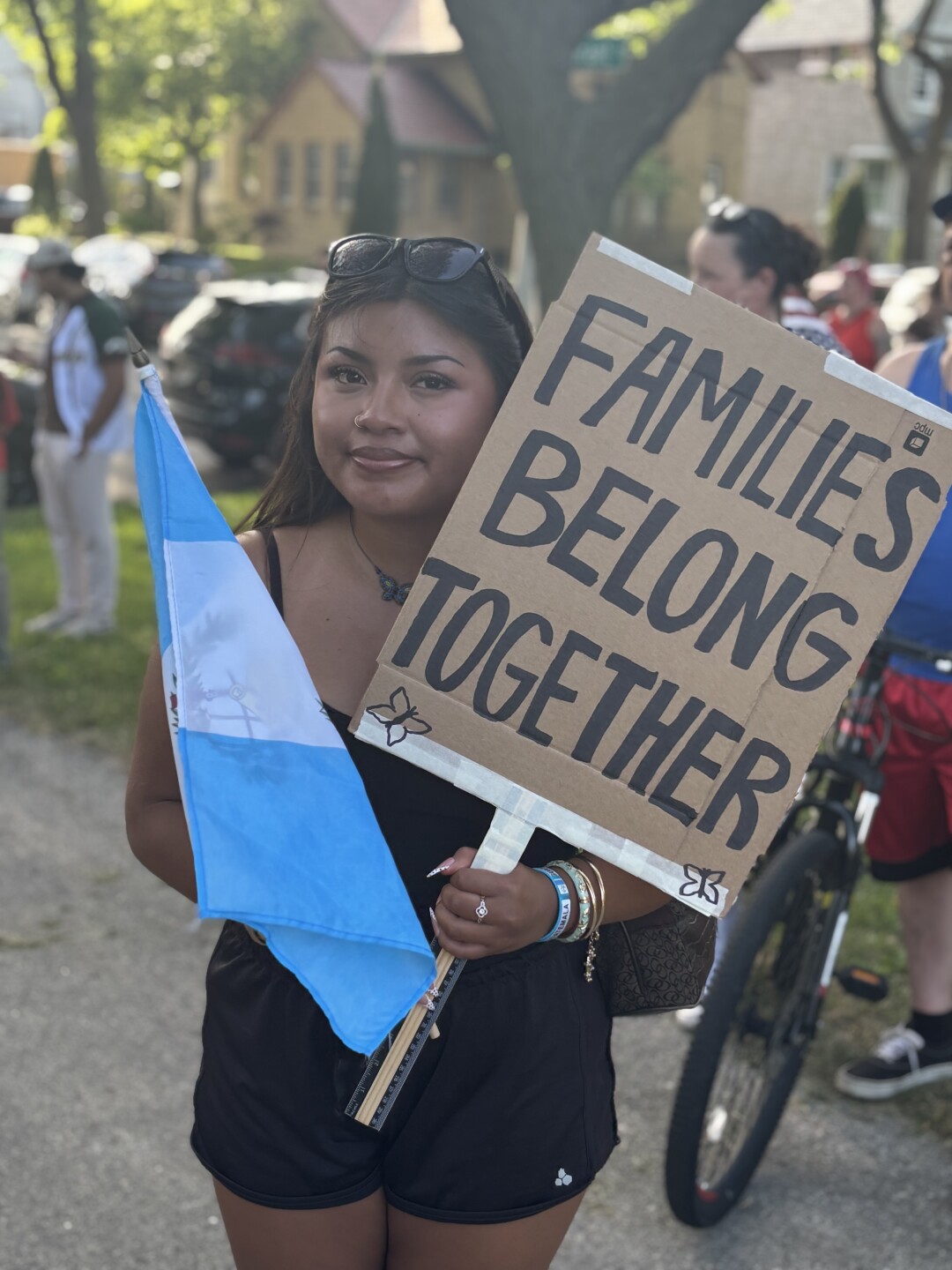
Hundreds of people gathered at Kosciuszko Park on Milwaukee’s South Side, marching through the neighborhood and raising signs in protest of recent ICE arrests across Wisconsin.
READ ALSO | Father with no criminal record detained by ICE on Milwaukee’s south side, family says
Community members, organizations, and city leaders joined together in the march, which organizers said is meant to be peaceful and to raise awareness about human rights.
“We are standing in solidarity; we don’t believe what’s happening out here in the streets is valid. We think this administration is messed up and we see the politics trickling down now to Milwaukee,” Christina Lopez-Prado said.
The protest comes after federal agents conducted a series of arrests across Wisconsin in the last couple of days. The Department of Homeland Security said in a statement Tuesday that they have arrested 39 people and that many of them have criminal histories.
Watch: Hundreds rally on Milwaukee’s South Side against ICE arrests and in solidarity with immigrants
Protest held over ICE activity in Milwaukee
TMJ4 has been covering the recent ICE arrests, getting video and finding multiple people without any criminal record who have been detained by ICE.
“As an immigrant myself from Guatemala, I sympathize so much with the people of my community. Especially those who live in fear for what ICE is doing to our communities,” Julia said. “I have hope because the only thing stronger than fear is hope.”
Emilio De Torre of Milwaukee Turners said the nature of the arrests has shaken the community.
“It’s disruptive. People are afraid to go outside, afraid of being racially profiled,” De Torre said.
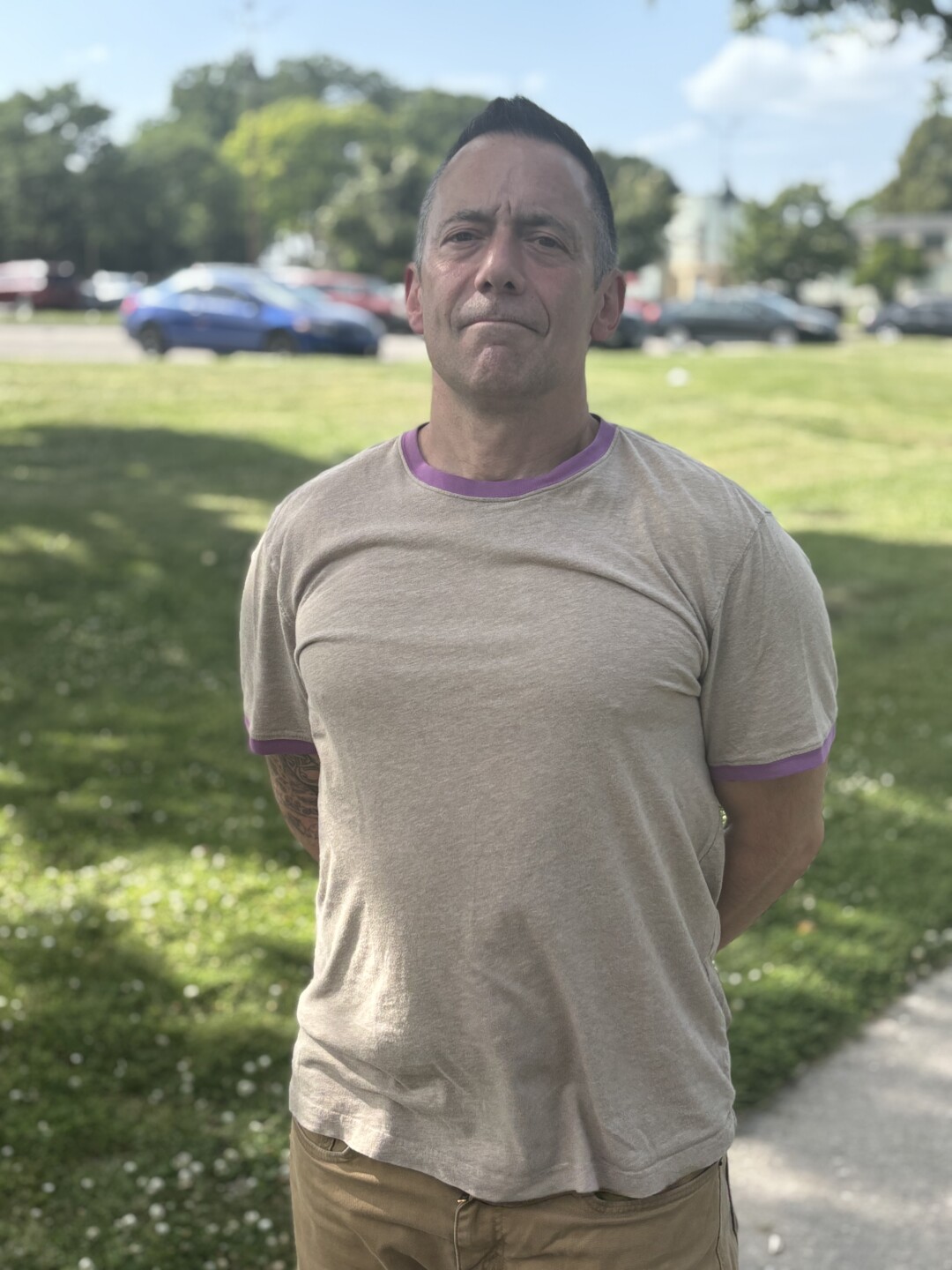
De Torre also addressed what demonstrators want from the federal government.
“Milwaukee does not want the kind of chaos that has been reigned down in Minneapolis, in Chicago, in LA. We want our federal government to follow the Constitution, to follow due process, and to make sure their reactions meet the thing that necessitated it,” De Torre said.
DHS said in its statement that all people arrested have or will receive full due process and will remain in ICE custody pending their removal or removal proceedings.
TMJ4 reached out to DHS for an updated number on arrests made in Wisconsin. They did not provide any new information.
Let’s talk:
Hey there! At TMJ4 News, we’re all about listening to our audience and tackling the stuff that really matters to you. Got a story idea, tip, or just want to chat about this piece? Hit us up using the form below. For more ways to get in touch, head over to tmj4.com/tips.
It’s about time to watch on your time. Stream local news and weather 24/7 by searching for “TMJ4” on your device.
Available for download on Roku, Apple TV, Amazon Fire TV, and more.
Report a typo or error // Submit a news tip

A retrospective look meant to counter hindsight bias pertaining to the Bicentennial era, presented in the manner of Leonard Michaels (“I Would Have Saved Them If I Could”; “The Men’s Club”) and his short story “In the Fifties.“
In the seventies, my family moved to Minnesota from Vermont. I also started school that same year. That was the year everything changed for the worse. I attended six different elementary schools: two red-brick bastions of stale white bread conformity, three inner-city schools, and one school overseas.
In the seventies, I spent whole days exploring wooded and riverine areas, skating and sledding in the winter, riding my bike around the parkways and lakes ringing Minneapolis, or at the beach, where I would swim as far out as I could without the lifeguards getting mad. Given that my family put the “diss” in dysfunctional, being a free-range kid saved my sanity.
In the seventies, my mother commandeered the TV set during the summer of 1973 to watch the Watergate hearings when my brother and I wanted to watch cartoons and situation comedy reruns. We didn’t understand exactly what Nixon had done, but being deprived of entertainment gave us a tangible reason to hate him.
Because home delivery of the Sunday New York Times was not yet an option in the seventies, some of my fonder childhood memories are of going to a suburban news outlet after Sunday school at the First Unitarian Society, where my brother and I would browse the comic books and paperbacks until our mother pried us out of there or the store manager shooed us out.
Because of the 1973 and 1979 energy crises, gas tripled in price during the seventies.
The price of nearly everything increased. I look back wistfully now at my mother maintaining that Big John Baked Beans were too expensive at forty-nine cents a can.
Racist, sexist, ethnocentric and homophobic jokes became less acceptable during the seventies but were still very much a part of the culture.
Corporal punishment and shaming (especially body shaming) were regarded as acceptable parenting methods in the seventies.
In 1973, the American Psychological Association stopped categorizing homosexuality as a mental illness. However, therapists and clinicians wasted no time finding other ways of pathologizing difference. Oppositional defiant disorder, anyone?
The 1970s also saw the rise of the so-called New Right (many of them old-time reactionaries in new clothing), the growth of megachurches and increasing political clout of the religious right, exemplified by Anita Bryant and Jerry Falwell.
Every other news cycle seemed to yield new scarehead articles and more unsettling stories: Killer bees, encephalitis-bearing mosquitoes, the Glensheen Mansion murders, Son of Sam, the Church Committee revelations concerning the FBI and CIA’s misdeeds; to name just a few.
Last but not least, nostalgia became a mass phenomenon in the 1970s with K-Tel’s compilation albums of bygone musical hits, movies like American Graffiti, and TV shows such as “Happy Days” which painted a picture of 1950s in roseate colors for all those yearning for a simpler place and time, or imbued with selective memories. The more things change, the more things stay the same.
We’ll get straight to the point: The financial hardships that Daily Kos is facing this year are tough.
We continue to be paywall-free. We continue to be supported by our readers, not billionaires or corporations. But we need to bring in more revenue. We are leaning on our community more than ever to help make ends meet.
-

 West Virginia5 minutes ago
Fire in Barbour County leaves four dead – WV MetroNews
-

 Wyoming7 minutes ago
These Wyoming Towns Have Banned Fireworks – 2026
-
 Crypto8 minutes ago
Trump denies conflict of interest over crypto. And, Vatican excommunicates rebel group
-

 Finance20 minutes ago
Regions Financial acquires Montgomery-based investment banking firm Frazer Lanier
-

 Fitness23 minutes ago
Apple Watch vs. Oura Ring: Which Tracks Sleep, Health and Fitness Better?
-

 Movie Reviews35 minutes ago
Millie Bobby Brown leads frothy sleuthing caper
-

 World43 minutes ago
Variety Toasts French Cinema With Post-Cannes Summer Dinner at Paris’ Laperouse With Thierry Fremaux, Guillaume Canet, Pierre-Antoine Capton, Rebecca Zlotowski and Anamaria Vartolomei
-

 Politics53 minutes ago
The Many Ways Trump Is Trying to Tip the Scales for the Midterms

