Midwest
Wisconsin boy's disappearance leads searchers to scrapyard tied to 'Making a Murderer' case

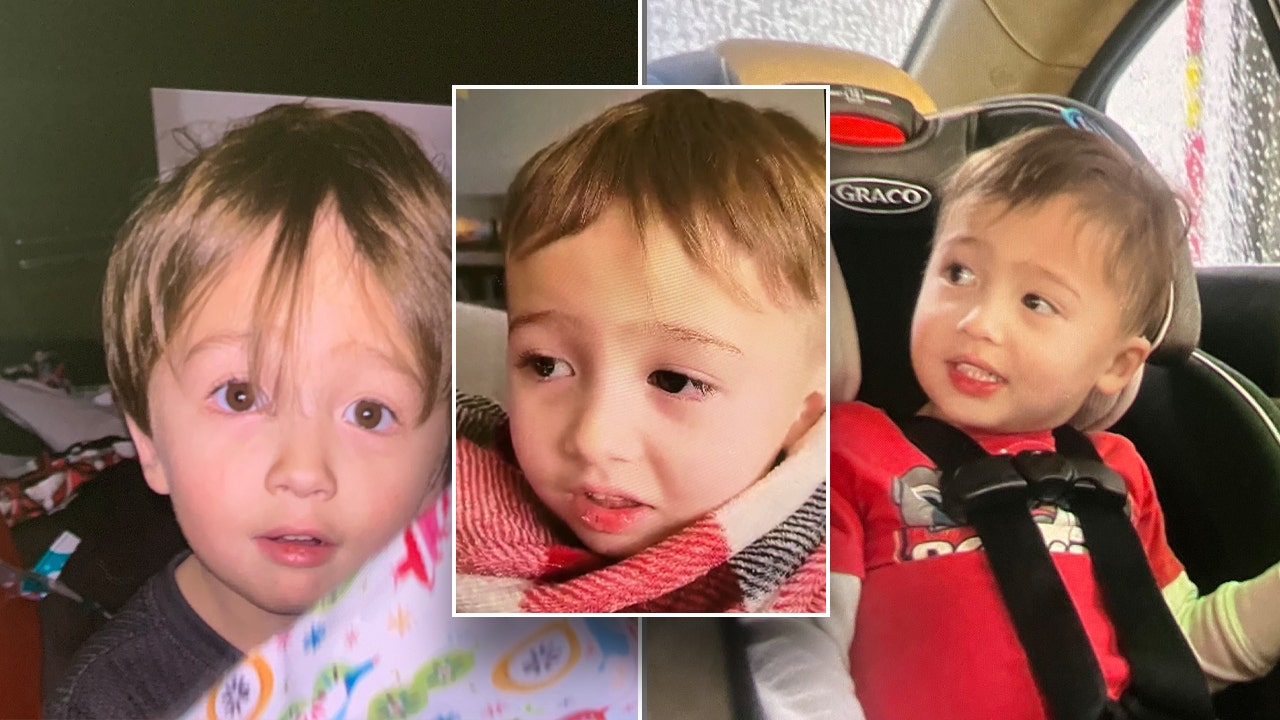
Nearly seven weeks after Wisconsin toddler Elijah Vue went missing, searchers have turned their sights to the scrapyard where Steven Avery dumped a woman’s body in 2005, inspiring Netflix’s “Making a Murderer.”
The 3-year-old was last seen in late February. His mother, Katrina Baur, and her boyfriend, Jesse Vang, both face felony charges for party-to-a-crime child neglect in his disappearance.
Baur, 31, left her son to stay with Vang for several weeks because she wanted to teach the toddler to “be a man,” according to a criminal complaint.
Vang, who regularly subjected the boy to physical punishments, according to the complaint, reported the boy missing from his Two Rivers home on Feb. 20, telling police that Elijah was gone after he awoke from a three-hour nap.
BOYFRIEND OF ELIJAH VUE’S MOTHER ORDERED TO STAND TRIAL ON NEGLECT CHARGE
Elijah Vue, a 3-year-old Wisconsin boy, was last seen around 8 a.m. in Two Rivers on Feb. 20. (Two Rivers Police Department)
There is no direct connection to Vue’s disappearance and Avery’s scrapyard, where he left the remains of freelance photographer Teresa Halbach, but the property is less than nine miles from the Two Rivers home where the boy was last seen, WSAU reported.
“There’s always that dark side that makes you fear the worst,” searcher Nicole Rivera told the outlet. “I pray that he’s OK and alive, and hopefully he will be found alive.”
Elijah Vue’s mother Katrina Baur and her boyfriend Jesse Vang face criminal charges for child neglect. (Two Rivers Police Department)
The reward for information that leads to the boy’s recovery sits at $65,000 between the Two Rivers Police Department, FBI and Manitowoc County Crime Stoppers, the outlet reported.
Elijah is Hmong and White with dark blonde hair and brown eyes. He stands 3 feet tall and has a birthmark on his left knee. He was last seen wearing gray pants, a long-sleeved dark shirt, and red and green dinosaur slip-on shoes. Investigators found one of those shoes near Vang’s apartment, among other evidence, CrimeOnline reported.
MISSING WISCONSIN 3-YEAR-OLD’S MOTHER HIT WITH MORE CHARGES AS POLICE ASK FOR VIDEO OF CAR IN DISAPPEARANCE
Wisconsin authorities announced an Amber Alert for missing 3-year-old Elijah Vue seven weeks ago. A vehicle of interest in his disappearance has since been seized. (Two Rivers Police Department)
‘Making a Murderer’ connection
Avery and his nephew, Brendan Dassey, were found guilty of first-degree intentional homicide and mutilation of a corpse in Halbach’s murder after her body was discovered at Avery’s scrapyard, according to Manitowoc County Court records.
Dassey was also found guilty of second-degree sexual assault, but a federal judge overturned his conviction on the grounds that his confession had been coerced, The Associated Press reported.
Before his 2005 conviction, Avery was wrongfully convicted of attempted murder and sexual assault, and released after an 18-year stint in prison.
Avery filed a $36 million lawsuit against Manitowoc County, its former sheriff and its former district attorney. He was arrested for Halbach’s murder while that civil suit was still pending. Avery and Dassey’s 2007 trials and their associated issues are the subject of the 2015 Netflix documentary series.
Steven Avery, the subject of Netflix’s 2015 documentary series “Making a Murderer,” is serving a life sentence in the murder of Teresa Halbach. (Wisconsin Department of Corrections)
Currently, Avery is serving a life sentence at Fox Lake Correctional Institution, according to Wisconsin inmate records.
However, Kathleen Zellner, Avery’s defense attorney, has said that new evidence shows Dassey acted alone.
“Two new witnesses have emerged in Mr. Avery’s case with new and compelling evidence about a murder mystery that has intrigued a worldwide audience,” Zellner wrote in a motion for post-conviction relief filed two years ago in Manitowoc County court in Wisconsin. “The rush to judgment and tunnel vision that led to the arrest, prosecution and conviction of Mr. Avery is exposed by these new witnesses who provide new and undisputed evidence that directly links Bobby Dassey … to the murder of Teresa Halbach and the framing of Mr. Avery.”
MOTHER OF MISSING WISCONSIN BOY, MAN HER SON WAS STAYING WITH CHARGED WITH CHILD NEGLECT
Steven Avery’s nephew, Brendan Dassey, left, was also convicted of murder in Teresa Halbach’s death. (AP Photo/Morry Gash, File)
In 2005, investigators found Halbach’s DNA in a burn pit, blood samples matching Halbach and Avery in a vehicle in his salvage yard and a bullet with Halbach’s DNA in Avery’s garage, Fox News Digital previously reported. Avery has said that his blood was planted at the scene, collected after a cut on his finger dripped into his bathroom sink.
Two weeks ago, a special prosecutor responded to Avery’s attorney’s latest request to conduct touch DNA testing on evidence in his case.
Special prosecutor Norman Gahn wrote in a letter to Judge Anthony Lambrecht that jurisdiction over the case lies with the Wisconsin Court of Appeals and argued that circuit court judges did not have jurisdiction to make a ruling, WBAY reported.
Read the full article from Here

Cleveland, OH
House explosion in Cleveland’s Slavic Village neighborhood catches neighboring houses on fire

CLEVELAND, Ohio (WOIO) – A house explosion in Cleveland’s Slavic Village neighborhood caught its two neighboring houses and a car on fire and covered the street in thick smoke.
The family who lived in the house that exploded was not home at the time, Cleveland Fire confirmed.
Cleveland EMS told 19 News that paramedics evaluated a 14-year-old boy in stable condition and will be transported by private vehicle for medical assistance.
All residents were safely evacuated and are being assisted by the Red Cross.
The houses are in the 5900 block of Cable Avenue, east of Broadway.
The two-story house that exploded collapsed after noon, Cleveland Fire confirmed.
The explosion and blaze caught the neighboring houses on both sides on fire, Cleveland Fire said.

Below is raw video our 19 News crews captured on scene:
Our cameras captured a first responder carrying a young child on the street away from the home, but it is unknown which house the child lived in.
Cleveland Fire said that 10 companies and 45 firefighters had all fires under control in an hour and a half.
Clouds of smoke filled the nearby streets, creating dangerously low visibility and difficult breathing conditions.
The plume of smoke could be seen for miles, even in downtown Cleveland and Parma.

The cause of the explosion and the estimated damage amount have yet to be determined. Enbridge Gas is on scene, and 19 News is waiting to hear back.

Return to 19 News for updates.
Copyright 2026 WOIO. All rights reserved.

WADSWORTH, Ill. (WLS) — Two people who were killed in a head-on crash involving a semi in the north suburbs on Thursday morning have been identified, officials said on Friday.
The Lake County sheriff’s deputies and the Newport Township Fire Protection District responded to the Route 173 crash, which happened west of North Kilbourne Road in Wadsworth, around 7:50 a.m.
ABC7 Chicago is now streaming 24/7. Click here to watch
Witnesses told investigators that the driver of a 2009 Acura sedan, which was traveling eastbound, appeared to be having difficulty staying in his lane and drifted into the path of a Freightliner semi-truck, which was heading westbound.
The two vehicles then collided head-on, officials said. A third vehicle was also hit.
Chopper 7 was over the scene at 9 a.m., capturing the damage.
The sedan’s driver, a man, and a passenger, a woman, were pronounced dead on the scene.
The Lake County Coroner’s Office identified them as 51-year-old Kelly Wooten and 45-year-old Jacklyn Bradley of Stoughton, Wisconsin. Preliminary autopsy results indicate that both Wooten and Bradley died from blunt-force injuries.
The driver of the third vehicle, a 54-year-old Salem, Wisconsin woman, suffered non-life-threatening injuries.
The crash shut down Route 173 between Kilbourne Road and U.S. 41 in both directions.
The Lake County Sheriff’s Office Technical Crash Investigations Team is investigating.
The video in the player above is from a previous report.
Copyright © 2026 WLS-TV. All Rights Reserved.

The Indiana Pacers are hoping to retain their 2026 first-round pick, which is protected 1-4 and 10-30. If the selection lands between 5 and 9, it conveys to the Los Angeles Clippers as part of the Ivica Zubac–Bennedict Mathurin trade.
At the top of the 2026 NBA Draft class, three names are consistently labeled as generational talents: AJ Dybantsa, Cameron Boozer and Darryn Peterson.
Indiana would welcome any of the three. The bigger question is whether that feeling would be mutual.
On a recent episode of The Bill Simmons Podcast, Simmons was joined by draft analysts Tate Frazier and J. Kyle Mann. During the discussion, Mann shared an interesting note about Peterson.
“I’ve gotten the impression from talking to people close to Darryn,” Mann said, “that Darryn is more likely to say, I’m interested in being the full on brain of this team. I don’t really want to play with another superstar, I want to be the center of the universe.”
J. Kyle Mann on The Bill Simmons Podcast
If that perception holds weight, it creates an intriguing dynamic.
The Pacers were one game away from an NBA championship last season and already feature two established stars in Tyrese Haliburton and Pascal Siakam. Indiana is not a franchise searching for a singular identity, it already has one.
To be clear, Mann’s comments reflect conversations and impressions, not a public statement from Peterson himself. Still, the fit is worth examining. Indiana’s backcourt rotation already includes Haliburton, Andrew Nembhard, Aaron Nesmith and T.J. McConnell. If Peterson were the pick, the Pacers would find ways to get him on the floor. He is that talented. But Indiana could not offer him an immediate “face of the franchise” role the way a Brooklyn, Sacramento or Washington might.
Mann also offered insight into how Dybantsa may view a situation like Indiana’s.
“AJ, people that know them both have told me that AJ is probably more likely to fit in with an Indiana,” Mann said. “Which is interesting because AJ likes to have the ball. Is he willing to be quick off of the ball with Haliburton? I just think that’s an interesting wrinkle in this.”
J. Kyle Mann on The Bill Simmons Podcast
The contrast is fascinating.
Hearing that Dybantsa would fit in more than Peterson is intriguing. Play style wise, I would lean more towards Peterson’s fitting how Indiana likes to play, especially with how Dybantsa has been utilized at BYU.
If we’re talking locker room fit, I think Dybantsa would embody what a Pacer is all about. Comes from a small market. Wants to win and doesn’t need the big city to do it in. He’s confident but won’t let his ego interfere with the success of the team. Just a levelheaded kid with a desire to be great, and would have one of the best playmaking point guards alongside him to help maximize his talent.
These two are the most polarizing and often mentioned names amongst NBA draft circles when looking at the top two in the class. If the comments made by Mann come to be true, the Pacers would be better off drafting the uber talented 6-9 forward, Dybantsa, than drafting a 6-6 elite shooting guard who would rather be “the guy” than a guy.
You can follow me on X @AlexGoldenNBA and listen to my daily podcast, Setting The Pace, wherever you get your podcasts.

House explosion in Cleveland’s Slavic Village neighborhood catches neighboring houses on fire

A total lunar eclipse will turn the moon blood red on Tuesday

Alabama ‘Fully Aware’ of Losing Streak to Tennessee Ahead of Road Rematch

Over $150K worth of drugs seized from man in Juneau, police say

Warmer temps increase rattlesnake risks: Arizona Game and Fish

Florida High School Football Rankings: Top 25 teams – Oct. 21

Cleary's 21 help Le Moyne down Central Connecticut State 69-64 in OT

How old is Bo Nix? What to know about Oregon quarterback ahead of 2024 NFL Draft

99th annual Pony Swim held in Virginia

Indiana Members Credit Union announced as new anchor tenant at Bottleworks District

Where Iran’s ballistic missiles can reach — and how close they are to the US

Has India’s influence in Afghanistan grown under the Taliban?

Bill Clinton to testify before House committee investigating Epstein links

Read Judge Schiltz’s Order

Vulnerable House Dem lashes out at Trump’s ‘racist’ SOTU challenge: ‘That was uncomfortable’
-

 World2 days ago
Exclusive: DeepSeek withholds latest AI model from US chipmakers including Nvidia, sources say
-

 Massachusetts2 days ago
Mother and daughter injured in Taunton house explosion
-

 Montana1 week ago
2026 MHSA Montana Wrestling State Championship Brackets And Results – FloWrestling
-

 Oklahoma1 week ago
Wildfires rage in Oklahoma as thousands urged to evacuate a small city
-

 Louisiana5 days ago
Wildfire near Gum Swamp Road in Livingston Parish now under control; more than 200 acres burned
-

 Denver, CO2 days ago
10 acres charred, 5 injured in Thornton grass fire, evacuation orders lifted
-

 Technology6 days ago
YouTube TV billing scam emails are hitting inboxes
-

 Technology6 days ago
Stellantis is in a crisis of its own making