Midwest
Two charged in Kansas City Chiefs fans' deaths 14 months after bodies found frozen in backyard

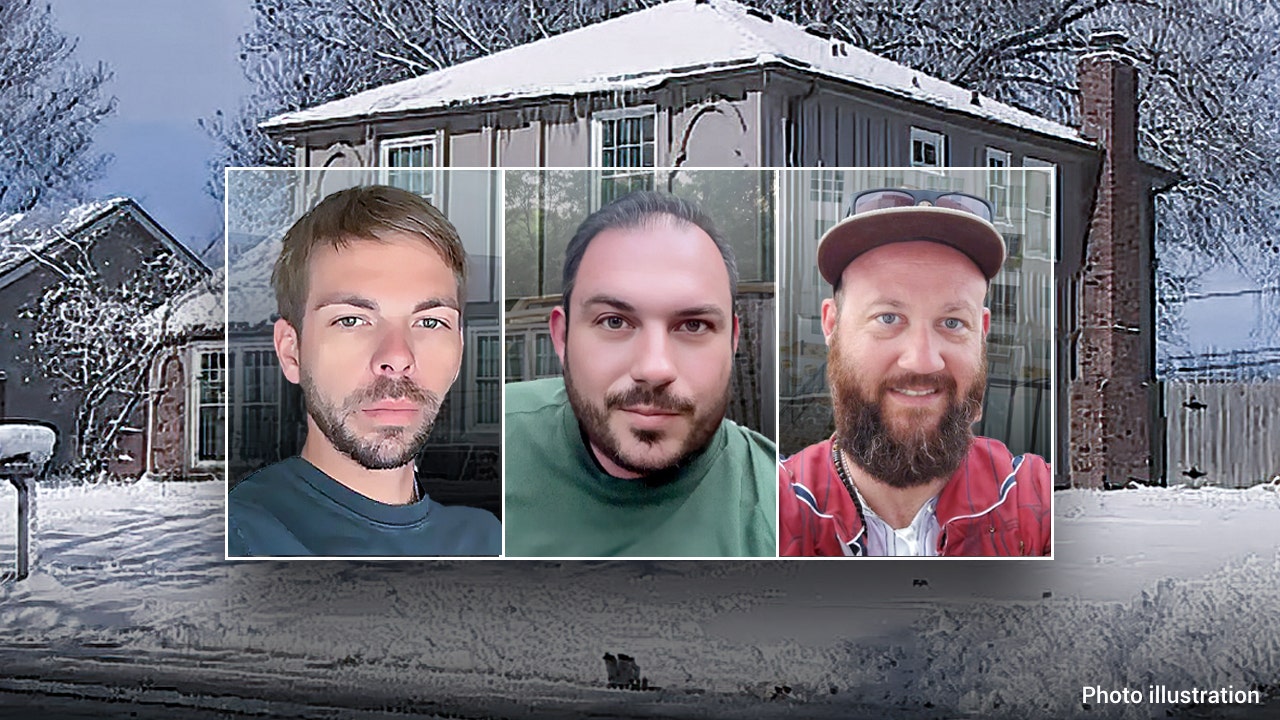
Two arrests have been made in connection with the deaths of three Kansas City Chiefs fans who were found frozen in their friend’s snowy Kansas City, Missouri, backyard after an NFL watch party more than a year ago.
“After an investigation of nearly 14 months, two suspects are now facing felony charges in Platte County, including involuntary manslaughter, related to the deaths of three Chiefs fans in January of 2024,” the Kansas City Missouri Police Department said during a press conference on Wednesday.
Jordan Willis and Ivory J. Carson have been charged with three counts of involuntary manslaughter and two counts of delivery of a controlled substance except 35 grams or less of marijuana or synthetic cannabinoid, according to court records obtained and reviewed by Fox News Digital.
Court records indicate that Carson, who went by “Blade Brown,” supplied and sold cocaine to Willis and the victims, and that his DNA was found on a bag of fentanyl.
KANSAS CITY CHIEFS FANS’ MYSTERIOUS DEATHS YET TO BE RESOLVED A YEAR LATER
From left: Clayton McGeeney, Ricky Johnson and David Harrington. (Fox News Digital)
“KCPD detectives never stopped working on the case, waiting for all the facts to come in. Reaching this point is a testament to their dedication to delivering justice for the victims and their loved ones,” Kansas City Police Chief Stacey Graves said.
Willis is the longtime friend of Clayton McGeeney, 37; Ricky Johnson, 38; and David Harrington, 36, who were visiting his home in Kansas City on Jan. 7, 2024, to watch the Chiefs play the Los Angeles Chargers.
Two days later, the three men were found dead on Willis’ property by McGeeney’s fiancée. Willis could not be reached by phone and did not answer his door in the days afterward, according to family members who searched for the three friends who never returned home.
However, Willis told police he had no idea any of his friends were dead outside and that he hadn’t heard from any of their friends or family members.
Although preliminary autopsy results shared with the media by family members indicate that fentanyl, cocaine and marijuana were in their systems, the deceased men’s families have questioned Willis’ involvement in what happened, with some threatening to file lawsuits.
Willis’ attorney, John Picerno, told Fox News Digital that he was “surprised that Jordan was charged with the deaths of his three friends.”
KANSAS CITY CHIEFS FANS’ DEATHS: WHY FORMER HOMICIDE DETECTIVE BELIEVES CRIMINAL CHARGES STILL POSSIBLE
Court records indicate Ivory J. Carson supplied and sold cocaine to Jordan Willis and the victims, and that his DNA was found on a bag of fentanyl. (Platte County Missouri Sheriff’s Office)
“That was contrary to what the prosecuting attorney’s office told me several months ago,” Picerno said.
“The probable cause statement submitted by the State is consistent with what Jordan stated happened. Jordan maintains that he is not responsible for purchasing or supplying the drugs that led to the deaths of his three friends. We are very much looking forward to the day a jury gets to hear all of the evidence in this case.”
According to court records, Jordan Willis has been charged with three counts of involuntary manslaughter and two counts of delivery of a controlled substance except 35 grams or less of marijuana or synthetic cannabinoid. (Platte County Missouri Sheriff’s Office)
Willis, who moved out of his Kansas City home and enrolled into a rehabilitation program after his friends’ deaths, has had his “life changed forever,” Picerno previously said.
A source close to the Willis family told Fox News Digital previously that the 39-year-old Ph.D. holder and research scientist “still struggles with the aftermath of all of this.”
“[He] not only lost good friends of his, but [had] many people turn on him,” the source said.
“It affected every part of his life, and he’s doing the best he can,” the source continued. “He has been helping with his dad’s care this year, and trying to stay positive.”
It was not immediately clear if Carson had retained a lawyer.
Stepheny Price is a writer for Fox News Digital and FOX Business. She covers topics including missing persons, homicides, national crime cases, illegal immigration and more. Story tips and ideas can be sent to stepheny.price@fox.com
Read the full article from Here


In Lincoln, Ill., another pillar just fell. The New York Times’ Julie Bosman reports that the state plans to close Logan Correctional Center, a women’s prison that employs more than 500 people, stripping the Route 66 town of about 13,000 of one of its last major, stable job sources. State officials say the nearly century-old complex is too deteriorated to fix and will be replaced by a new, modern facility in Crest Hill, outside Chicago. Capitol News Illinois reports the Illinois Department of Corrections estimates it’ll take five years to build the new prison.
In Lincoln, where factories, a glass plant, and even a 157-year-old college have already called it quits, that decision feels like one more hit—and one that favors the Chicago area over downstate. Residents and local leaders, who spent years lobbying to keep the prison, now worry about a fresh wave of departures as families follow jobs elsewhere, further straining schools and small businesses already on the edge. For a look at what the loss of a single prison means for one Midwestern town—which takes particular pride in the fact it was uniquely named for Abraham Lincoln before he became president—read the full piece.
Indiana
Indiana Republicans nominate Max Engling for secretary of state at GOP Convention in Fort Wayne

FORT WAYNE, Ind. (WANE) — Republican delegates selected Max Engling as their nominee for Indiana Secretary of State on Saturday, defeating incumbent Diego Morales at the Indiana GOP State Convention in Fort Wayne.
Roughly 1,800 Republican delegates gathered at the Grand Wayne Convention Center to choose the party’s nominee. Engling, a Hamilton County resident and former senior advisor to U.S. Sen. Jim Banks, will now advance to the Nov. 3 general election.
He will face Democratic nominee Beau Bayh and Libertarian nominee Lauri Shillings. Former Indianapolis Mayor Greg Ballard is also expected to appear on the ballot as an independent candidate after his campaign announced Saturday it had collected more than 52,500 signatures, exceeding the number needed to qualify.
Following his victory, Engling said he was grateful to the delegates and fellow candidates.
“I’m very thankful, very blessed to move forward into the general election,” Engling said. “I’m thankful to the delegates. I’m thankful to the other candidates that ran great races.”
Engling said the campaign will focus heavily on election administration and Republican priorities heading into November.
“We’re going to win when we get there in November,” he said. “The goal is to have common sense solutions where we tighten our security around our elections. I’ve already said it — we’re here to close the primaries, make sure that only citizens are voting in our elections, and to stop the business fraud that we’ve seen in these shell trucking companies that have popped up around the state.”
He said those efforts would begin immediately if elected.
“Priority on day one, we’re going to work with the statehouse to close the primaries,” Engling said. “We already have legislation in the statehouse right now, and we’re pressing on that immediately.”
Engling also addressed the broader political environment, including the possibility of independent candidates on the ballot.
“So, Indiana wants common-sense voting laws,” he said. “They don’t want to move over to a third party; they want to vote for the conservative, Republican option. We’re excited for that.”
He added that Republicans must remain unified heading into the general election.
“Two rounds of voting, understood,” Engling said. “We know that Republicans need to move forward together. That is my mission. So, we are moving forward as a team.”
Engling said the campaign will stay focused on voter turnout and message discipline.
“We’re going to run our race with who we’ve already put forward,” he said. “We’re not looking at what the other folks are doing. We’re going to be energized on our side and say, ‘How do we make sure that our voters are coming out?’ We’re moving forward as a Republican team.”
He closed by emphasizing unity after a competitive convention.
“We are one Republican team,” Engling said. “We know that. We’re going to move forward as a unified team.”
Indiana State Treasurer Daniel Elliott also spoke during the convention, thanking delegates and reflecting on Republican performance heading into November.
“Well, I’m grateful for the Republican Party and their trust in me,” Elliott said. “I worked really hard these last four years to show that we can get good work done. And I think it paid off.”
Elliott said the focus now shifts to the general election.
“November, that is where it really counts, because November is when we’re going to the people of Indiana to say, ‘Here’s what we’ve done,’” he said. “We have good leadership, good Republican leadership. We have good results, our state is one of the top business states in the country. I raised $1.24 billion in two years, which is double what was done in the previous decade. We’ve got a good winning message, so I’m ready for November, and we really want to get everyone’s vote.”
He encouraged voter participation across the state.
“I appreciate your support, I appreciate your support to get here, and now, we need y’all to get out,” Elliott said. “We need to get out, all of us, and vote. This is a sacred responsibility, and it really means something. We need everyone, especially Republicans, to get out and vote.”
Elliott also noted internal confidence within the party following a contested convention process.
“I’ve been very fortunate that the party supports me,” he said. “The reason we didn’t have any opponents is because we’ve worked really hard and people have seen the good work and what we’ve put forth, and they say, ‘Yes, that is who we need.’”
The convention marks only the third time in the last century that the Indiana Republican Party has held its state convention outside Indianapolis.
“This has surpassed the perfection of the 2014 convention,” Allen County Republican Party Chairman Steve Shine said. “I’ve heard nothing but accolades about how great our city is from people who haven’t been here in the last 12 years.”
Shine said the competitive Secretary of State race helped drive enthusiasm among convention attendees.
“There were four great candidates that worked very hard to secure the votes of the delegates,” Shine said. “Today, the winner showed that they were the one with the most perseverance and were able to convince the delegates that they were the right person to face the Democrats in the fall.”
The Secretary of State contest became increasingly contentious in recent weeks after Indiana Attorney General Todd Rokita and Banks withdrew their support for Morales, citing concerns about his ability to win in November.
Rokita said he believes Republicans will unite behind Engling despite the contentious nomination battle.
“Oh, it’s going to play out fine,” Rokita said. “We do this a lot better than Democrats, let me tell you that.”
Following Engling’s victory, Rokita predicted Republicans would rally behind the nominee despite the hard-fought contest.
“Republicans, because we’re all individuals at heart, it’s in our DNA to have these discussions and then unify together,” Rokita said. “I’ve been the candidate in four conventions. Most of them contested.”
Rokita, a former Indiana Secretary of State himself, said he expects the party to come together ahead of the general election. The attorney general said he expects the party to rally around Engling ahead of November.
“Our party has always coalesced around me and against the Democrat in the fall,” Rokita said. “I expect the same thing now.”
Indiana voters will decide the state’s next Secretary of State during the Nov. 3 general election, when Engling faces Bayh, Shillings and potentially Ballard on the statewide ballot.

Coming off a great campaign, the Iowa State Cyclones will be a different-looking team on the hardwood next year. Unfortunately, a lot of key players for the team last season will no longer be around.
After a successful trip to the Sweet 16, the Cyclones will be entering next season with a mostly new group. Due to players like Joshua Jefferson, Nate Heise, and Tamin Lipsey all graduating, the team was always going to have a different look.
While it appears likely that both Lipsey and Jefferson are going to be drafted into the NBA, it goes to show the level of talent that Iowa State is losing. These two players were arguably the two best on the team last year, and replacing that level of production will not be an easy task.
Since both of those players were seniors, the program knew that they would be playing elsewhere. However, the decision by Milan Momcilovic, who was their third star to enter the NBA Draft and transfer portal, likely wasn’t something the team expected before his breakout campaign.
However, due to his success last year, Momcilovic testing the waters of the NBA and entering the portal made a lot of sense for the talented sharpshooter. Eventually, he made the decision to join the Kentucky Wildcats, and losing him will be a big blow for the Cyclones.
Iowa State Will Miss Star Potential of Milan
Even though the Cyclones were able to bring in a lot of good players in the transfer portal, figuring out who the star of the team is going to be next year might be a bit tricky. If Milan were to have returned following one of the best shooting years in the history of college basketball, it would have undoubtedly been him as the featured player of the team.
Now, since Momcilovic is gone, Iowa State is going to need some of their returning players and their new additions to step up. While having quality depth is important, the Cyclones were a team that had arguably three of the top 50 players in college basketball last season.
With their three best players gone, it will be interesting to see who steps up and becomes the top players for Iowa State. Of the transfers, it could be JaQuan Johnson who looks to step up into that role. He is coming off a really strong year with Bradley and very well could be the top-scoring option for the team.
 Add us as a preferred source on Google
Follow
-

 California3 minutes ago
California man arrested for impersonating bank official, coercing money from Colorado victim
-

 Colorado10 minutes ago
Colorado’s Powderhorn Mountain Resort sells historic lift chairs
-

 Connecticut13 minutes ago
Developing story: Crash closes Taft Bridge on Connecticut Avenue NW
-

 Delaware25 minutes ago
Delaware Lottery Powerball, Play 3 Day winning numbers for June 20, 2026
-

 Florida28 minutes ago
Juneteenth in Fort Myers: See photos of the celebration
-
Georgia33 minutes ago
Georgia Lottery Powerball, Cash 3 results for June 20, 2026
-

 Hawaii40 minutes ago
Waianae encampment deadline extended amid pushback from lawmaker, community
-

 Idaho43 minutes ago
One dead, four injured in US 26 crash near Ririe – East Idaho News

