Midwest
Trial begins for 7 Minnesotans charged with stealing more than $40 million from pandemic food program

Opening statements are expected Monday in the fraud trial of seven people charged in what federal prosecutors have called a massive scheme to exploit lax rules during the COVID-19 pandemic and steal from a program meant to provide meals to children in Minnesota.
The seven will be the first of 70 defendants to go on trial in the alleged scam. Eighteen others have already pleaded guilty.
Prosecutors have said the seven collectively stole over $40 million in a conspiracy that cost taxpayers $250 million — one of the largest pandemic-related fraud cases in the country. Federal authorities say they have recovered about $50 million.
10 CHARGED IN SCHEME TO DEFRAUD FOOD PROGRAM FOR LOW-INCOME CHILDREN IN MINNESOTA
Prosecutors say just a fraction of the money went to feed low-income kids, and that the rest was spent on luxury cars, jewelry, travel and property.
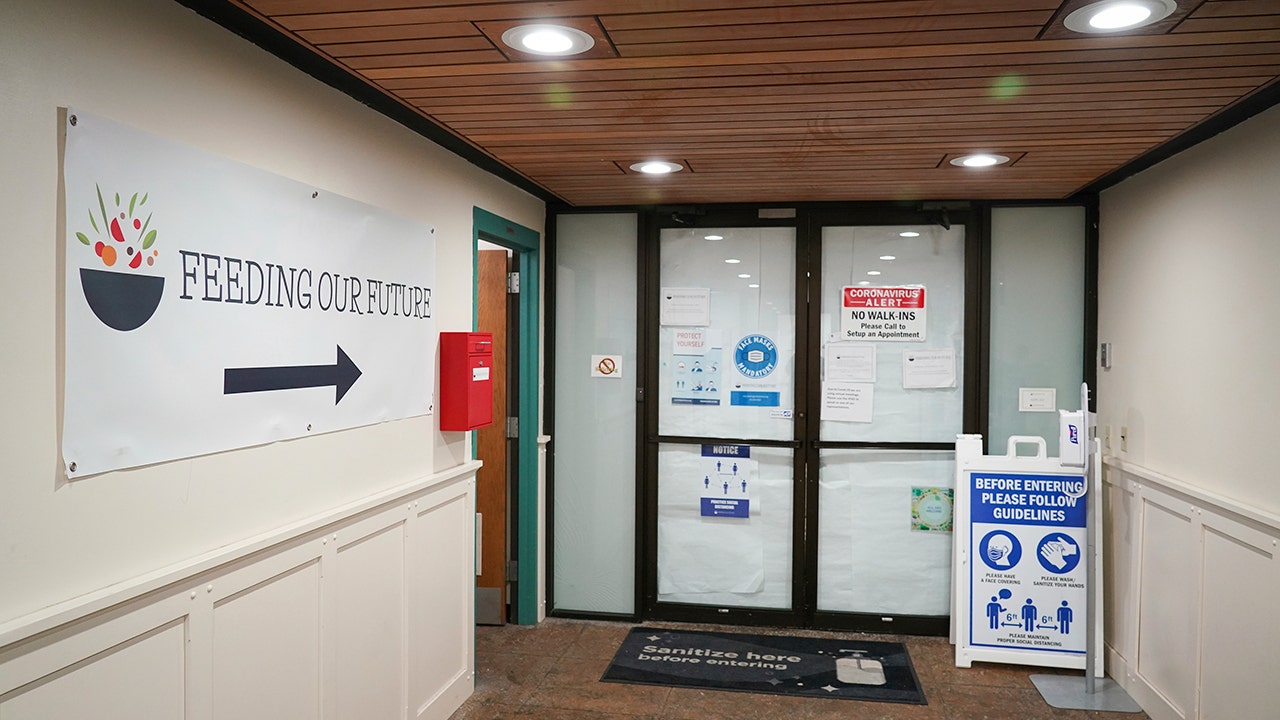
After a major fraud scheme, 7 people are being charged with exploiting the lax rules during the COVID-19 pandemic and stealing millions of dollars from food programs once believed to provide meals to children in Minnesota. (Shari L. Gross/Star Tribune via AP, File)
THE ALLEGED PLOT
The food aid came from the U.S. Department of Agriculture and was administered by the state Department of Education. Nonprofits and other partners under the program were supposed to serve meals to kids.
Two of the groups involved, Feeding Our Future and Partners in Nutrition, were small nonprofits before the pandemic, but in 2021 they disbursed around $200 million each. Prosecutors allege they produced invoices for meals that were never served, ran shell companies, laundered money, indulged in passport fraud, and accepted kickbacks.
THE BIG PICTURE
An Associated Press analysis published last June documented how thieves across the country plundered billions in federal COVID-19 relief dollars in the greatest grift in U.S. history. The money was meant to fight the worst pandemic in a century and stabilize an economy in freefall.
But the AP found that fraudsters potentially stole more than $280 billion, while another $123 billion was wasted or misspent. Combined, the loss represented 10% of the $4.3 trillion the government disbursed in COVID relief by last fall. Nearly 3,200 defendants have been charged, according to the U.S. Justice Department. About $1.4 billion in stolen pandemic aid has been seized.
THIS CASE
The defendants going on trial Monday before U.S. District Judge Nancy Brasel in Minneapolis are Abdiaziz Shafii Farah; Mohamed Jama Ismail; Abdimajid Mohamed Nur; Said Shafii Farah; Abdiwahab Maalim Aftin; Mukhtar Mohamed Shariff; and Hayat Mohamed Nur. They have all pleaded not guilty. Their trial is expected to last around six weeks.
MINNESOTA COURT RECEIVES 1ST ROUND OF GUILTY PLEAS IN $250M SCHEME TO DEFRAUD FEDERAL MEALS PROGRAM
“The defendants’ fraud, like an aggressive cancer, spread and grew,” prosecutors wrote in a summary of their case.
Prosecutors say many of the purported feeding sites were nothing more than parking lots and derelict commercial spaces. Others turned out to be city parks, apartment complexes and community centers.
“By the time the defendants’ scheme was exposed in early 2022, they collectively claimed to have served over 18 million meals from 50 unique locations for which they fraudulently sought reimbursement of $49 million from the Federal Child Nutrition Program,” prosecutors wrote.
FUTURE CASES
Among the defendants awaiting trial is Aimee Bock, the founder of Feeding our Future. She’s one of 14 defendants expected to face trial together at a later date. Bock has maintained her innocence, saying she never stole and saw no evidence of fraud among her subcontractors.
THE POLITICS
The scandal stirred up the 2022 legislative session and campaign in Minnesota.
Republicans attacked Gov. Tim Walz, saying he should have stopped the fraud earlier. But Walz pushed back, saying the state’s hands were tied by a court order in a lawsuit by Feeding Our Future to resume payments despite its concerns. He said the FBI asked the state to continue the payments while the investigation continued.
The Minnesota Department of Education now has an independent inspector general who is better empowered to investigate fraud and waste.
Read the full article from Here



What to know about PCBs and their impact on the Great Lakes, Wisconsin
PCBs are a class of more than 200 chemicals that are known to cause cancer.
An invasive shrimp is swimming in Lake Superior. This is the last Great Lake to be invaded — all five Great Lakes now are infested by the crustaceans..
Researchers for the first time have confirmed a breeding population of an invasive Black Sea-native shrimp in Lake Superior.
The number and extent of the shrimp’s spread in Lake Superior is not clear. However, there is a breeding population in the Duluth.
The findings by researchers at the University of Minnesota-Duluth, Lake Superior Research Institute at the University of Wisconsin Superior, and the Hobart and William Smith Colleges in New York, published in the Journal of Great Lakes Research in April, found that the shrimp are now reproducing and surviving year-round in the Duluth-Superior Harbor, the farthest west the European species has been confirmed.
“Samples we collected in 2025 from two locations in the Duluth-Superior Harbor, a major inland shipping port in the Great Lakes, contained juveniles, adult males, and (pregnant or with young) adult females, indicating a self-sustaining population. Additionally, we document earlier evidence from 2018 samples we collected in the harbor that contained two juvenile specimens,” the article in the Journal said.
In an interview on the CBC’s “Superior Morning” show with Mary-Jane Cormier on June 10, lead researcher Donn Branstrator, of the University of Minnesota, said studies in the Duluth-Superior Harbor this spring after ice was off the lake found adult males and females.
“It’s pretty clear evidence of overwintering,” Branstrator told Cormier. “It would be very unlikely for the population to extinguish (at this point).”
Branstrator told Cormier ongoing bi-weekly research in the harbor, and along the Lake Superior shoreline will exam those questions.
According to the research, the non-native shrimp, about a quarter to half inch long, were first detected in the lower Great Lakes in 2006 in lakes Michigan and Ontario. By 2008, they were found in lakes Huron and Erie as well.
“It has also spread to Oneida and Seneca Lakes in New York … as well as the St. Lawrence River and various canals in northern New York State,” the research said.
Branstrator said the Black and Caspian sea region natives, also have spread throughout Europe into areas they were not native. He said they likely hitchhiked with ballast or bilge water, but the exact mechanism will never be known.
What we know about bloody red shrimp.
What is a bloody red shrimp?
Bloody red shrimp are small crustaceans native to the Black Sea and Caspian Sea region of Europe. They are adapted for fresh and brackish water.
This freshwater shrimp can be ivory-yellow in color or translucent, but exhibits pigmented red pigment cells in the carapax and tail, according to the USGS.
The quarter to half inch long shrimp feed on both phytoplankton and zooplankton at various stages of life.
While relatively small, they are among the larger creatures in the Great Lakes feeding on those food sources.
“They are very large bodied, at the upper end of what we consider zooplankton,” Branstrator said.
Branstrator said the shrimp live in near-shore environments and like to hide in crevices during the day, making use of dock pilings, breakwaters and other human-made structures.
They come out at night and “swarm” together in groups of up to 135 per square foot, the University of Wisconsin Sea Grant said.
Bloody red shrimp have a lifespan of about nine months, grow to adults in just 45 days, and an produce up to four generations per year. Females have been documented to carry up to 66 eggs in a clutch. Broods carried by females in the Muskegon population ranged from two to seven.
Where have the shrimp been found?
The shrimp have spread throughout Europe and now have been found in all five Great Lakes, as well as some locations away from the lakes.
The recent study found a breeding population in the Duluth, Minnesota, harbor, the first in Lake Superior.
According to the research, the non-native shrimp, about a quarter to half inch long, were first detected in the lower Great Lakes in 2006 in lakes Michigan (near Muskegon) and Ontario. By 2008, they were found in lakes Huron and Erie as well.
A single specimen was found in Duluth in 2017, and two were found in 2018. It wasn’t until 2025 that the researchers found a sustaining population when they captured 81 individuals.
How did the shrimp arrive in the Great Lakes?
The shrimp likely hitched a ride in the ballast water of ocean-going vessels, although Branstrator noted during an interview on CBC’s “Superior Morning” that we will never know for certain.
He added that the shrimp have multiple opportunities to hitch rides with vessels during the shipping season.
What impact will the shrimp have on Lake Superior and the Great Lakes?
Branstrator said that question hasn’t been answered. They feed on the same sources as other water-dwelling creatures, but they are large enough that small fish may find them to be a new food source.
Are any shrimp native to the Great Lakes?
The opossom shrimp is a Great Lakes native and looks similar to the bloody red shrimp.

Missouri sportsbooks took $256,364,814 in wagers in May 2026, the lowest monthly handle since the market launched, yet operators posted their strongest revenue month yet at $21,250,814 on an 8.29% hold. The state collected $2,131,872 in tax. Six months after going live on December 1, 2025, Missouri has flipped the usual relationship between volume and revenue: handle keeps settling while revenue keeps climbing, because hold has risen steadily as the launch-period promotions fade. Online betting made up $252,593,427, or 98.53% of all wagers. Figures come from the Missouri Gaming Commission.
Missouri Sports Betting by Month, Since Launch
| Month | Handle | Online | Retail | GGR | Hold | State Tax |
|---|---|---|---|---|---|---|
| December 2025 | $543,039,131 | $538,881,520 | $4,157,612 | $20,758,443 | 3.82% | $521,201 |
| January 2026 | $385,138,868 | $380,412,197 | $4,726,670 | $6,703,555 | 1.74% | $137,873 |
| February 2026 | $277,005,418 | $273,285,304 | $3,720,114 | $10,301,007 | 3.72% | $1,214,627 |
| March 2026 | $329,355,588 | $324,060,170 | $5,295,418 | $20,757,550 | 6.30% | $2,178,985 |
| April 2026 | $273,397,863 | $269,884,804 | $3,513,059 | $20,284,270 | 7.42% | $2,028,427 |
| May 2026 | $256,364,814 | $252,593,427 | $3,771,387 | $21,250,814 | 8.29% | $2,131,873 |
Six Months In, Revenue Sets a Record
May marks a milestone worth pausing on. Missouri’s revenue reached its highest point yet even though its handle sank to a new low, a sign the market has moved past the giveaway-heavy launch phase and into steadier economics. Across its first six months, the state has now taken roughly $2.06 billion in total wagers, produced about $100.1 million in operator revenue, and delivered $8.2 million in tax. Crossing $100 million in cumulative revenue in half a year underlines how quickly Missouri established itself as a mid-sized market.
Handle Settles as the Launch Surge Fades
The volume side keeps normalizing. December’s $543 million opening was inflated by launch-day demand and heavy sign-up promotions, and handle has stepped down almost every month since, landing at $256.4 million in May, less than half that peak. Part of the decline is seasonal, with the sports calendar thinning as the basketball and hockey postseasons wind down and football stays months away. Part is simply the novelty wearing off. Mobile sportsbooks in Missouri continue to carry the market almost entirely, at 98.53% of May handle, a share that has held above 98% in every month since launch.
The Hold Keeps Climbing
The defining trend is the win rate. Hold ran at 3.82% in December, bottomed at 1.74% in January, then rose in four straight steps to 3.72%, 6.30%, 7.42%, and 8.29% in May. That climb is the engine behind the record revenue: as operators pull back the free bets and bonus play that suppressed early margins, more of each wagered dollar sticks. An 8.29% hold is still below the double-digit figures common in older markets, which suggests Missouri’s margin has further room to firm up as the market matures.
Compare All U.S. States

LINCOLN, Neb. (KOLN) – Like his father, Zack Erstad is a Husker. Erstad, the son of Hall of Fame baseball player Darin Erstad, joined the Nebraska men’s golf program on Tuesday.
Zack signed with the Huskers one month after winning a state championship at Lincoln East. With the Spartans, Erstad was a two-time NSAA champion. He was Class A’s individual runner-up in 2026. The previous year, Erstad claimed the Nebraska Junior PGA Championship title.
Erstad said joining the Huskers is a dream come true. The Nebraska newcomer grew up playing baseball and hockey. However, he focused solely on golf while in high school.
Click here to subscribe to our 10/11 NOW daily digest and breaking news alerts delivered straight to your email inbox.
Copyright 2026 KOLN. All rights reserved.
-

 Massachusetts2 minutes ago
Massachusetts dad on ‘adventure of a lifetime’ left fighting for his life in Fiji after noticing bug bite
-

 Minnesota7 minutes ago
Invasive ‘bloody red shrimp’ reach Lake Superior
-

 Mississippi14 minutes ago
Mississippi Lottery Mississippi Match 5, Cash 3 results for June 30, 2026
-

 Missouri17 minutes ago
Missouri Sports Betting May 2026: $256.4M Handle, Record $21.3M Revenue
-
Montana22 minutes ago
Montana Lottery Mega Millions, Big Sky Bonus results for June 30, 2026
-

 Nebraska29 minutes ago
Erstad joins Nebraska golf program
-

 Nevada32 minutes ago
‘Arrive Alive’ initiative with Nevada Department of Public Safety, FOX5
-

 New Hampshire37 minutes ago
This NH Short Film Festival Returns in July, and Every Film Clocks in at 15 Minutes or Less

