South Dakota
‘The very best in humanity’: How a stranger gave a South Dakota boy new life



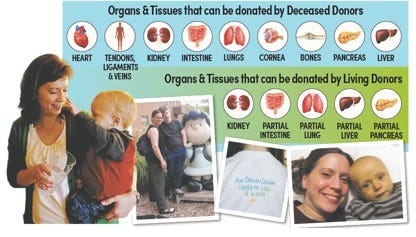
When her infant son began showing signs of jaundice following a full-term, healthy pregnancy, Sarah Beckstrom soon began a journey from fear, anger and sadness to eternal appreciation for a perfect stranger.
But the Mitchell mother and LifeSource, the region’s primary organ procurement organization that helps connect donors and recipients like baby Charlie — now a healthy and active teenager — say continued education around organ donation is necessary to ensure more families can feel what the Beckstroms have for the last decade.
“He was just not thriving. He couldn’t absorb, you know, milk. He was just kind of a not content child,” Beckstrom recently said in an interview with The Dakota Scout, recalling the early signs of the rare genetic liver condition — alpha-1 antitrypsin deficiency — that threatened her son’s life before his first birthday.

State apologizes, but can’t explain missing evidence in prison overdose case



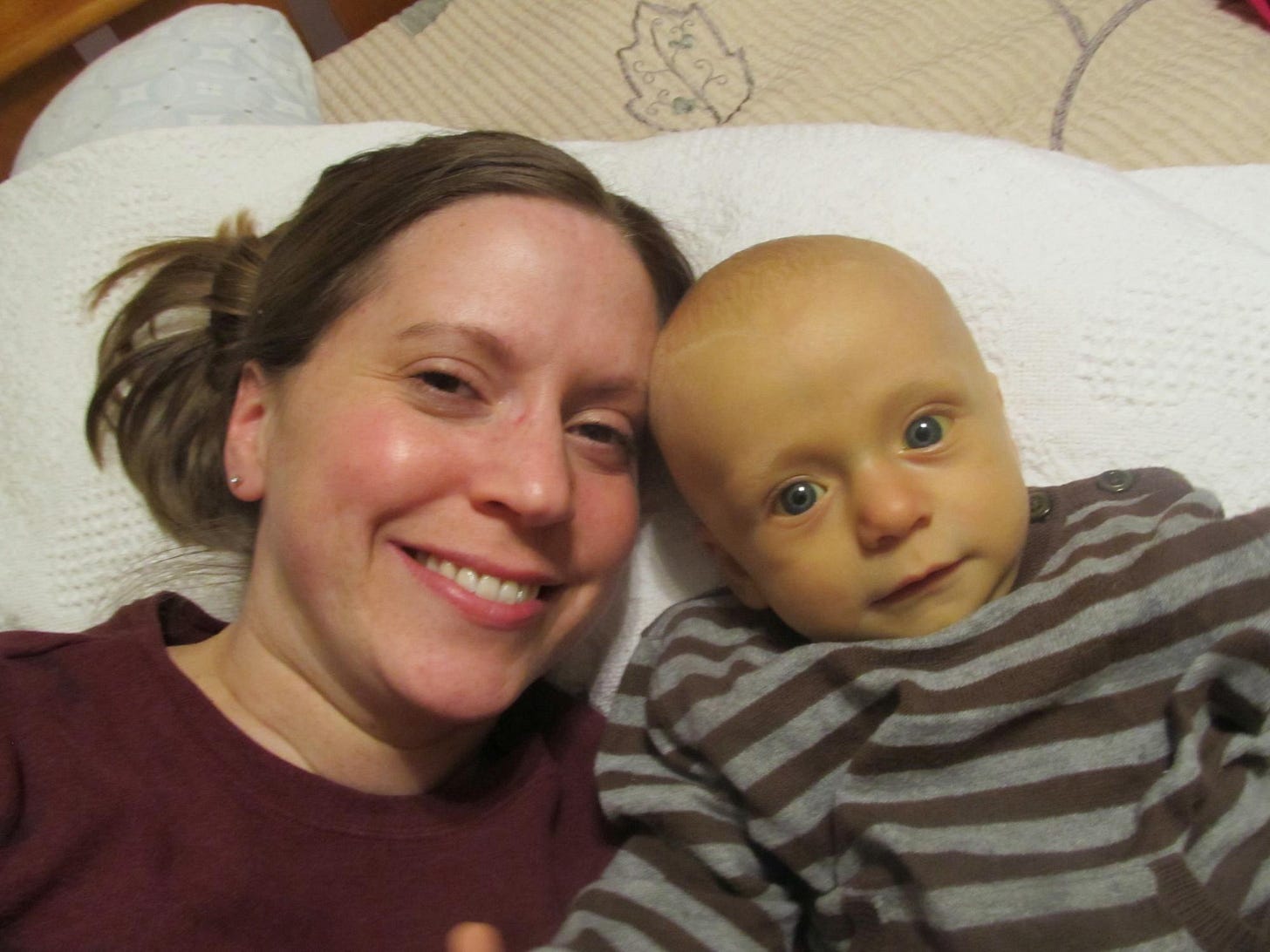
Charlie was placed on the organ waiting list at 7 months old. Three months later, the call came.
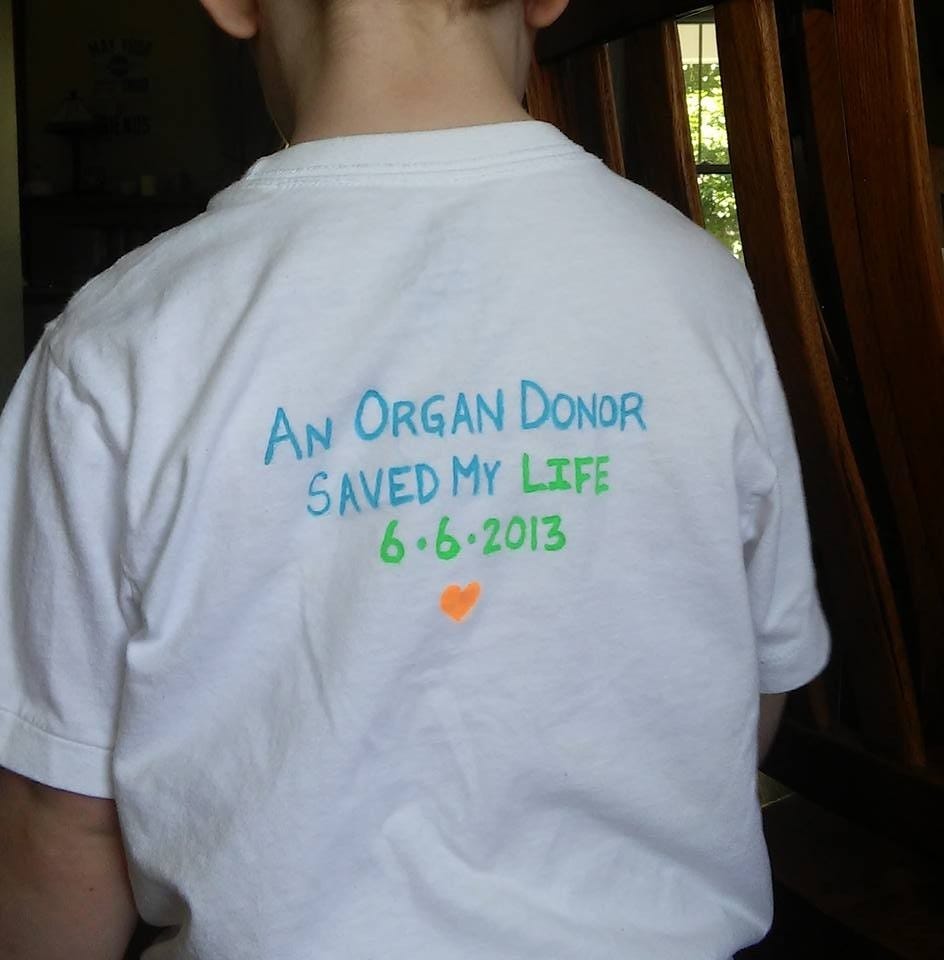
A 13-year-old donor had died, and his liver was a match.
Today Charlie is also 13 — a healthy, energetic one. But for Beckstrom, joy exists alongside grief — for the family who lost their child and ultimately saved hers.
“It was kind of like I wrote the donor’s family after, which was probably one of the most emotionally challenging, difficult things I’ve ever done,” she said. “That circle wasn’t closed for me. And I’m like, okay, I need to do more. Because they gave him a second chance at life.”



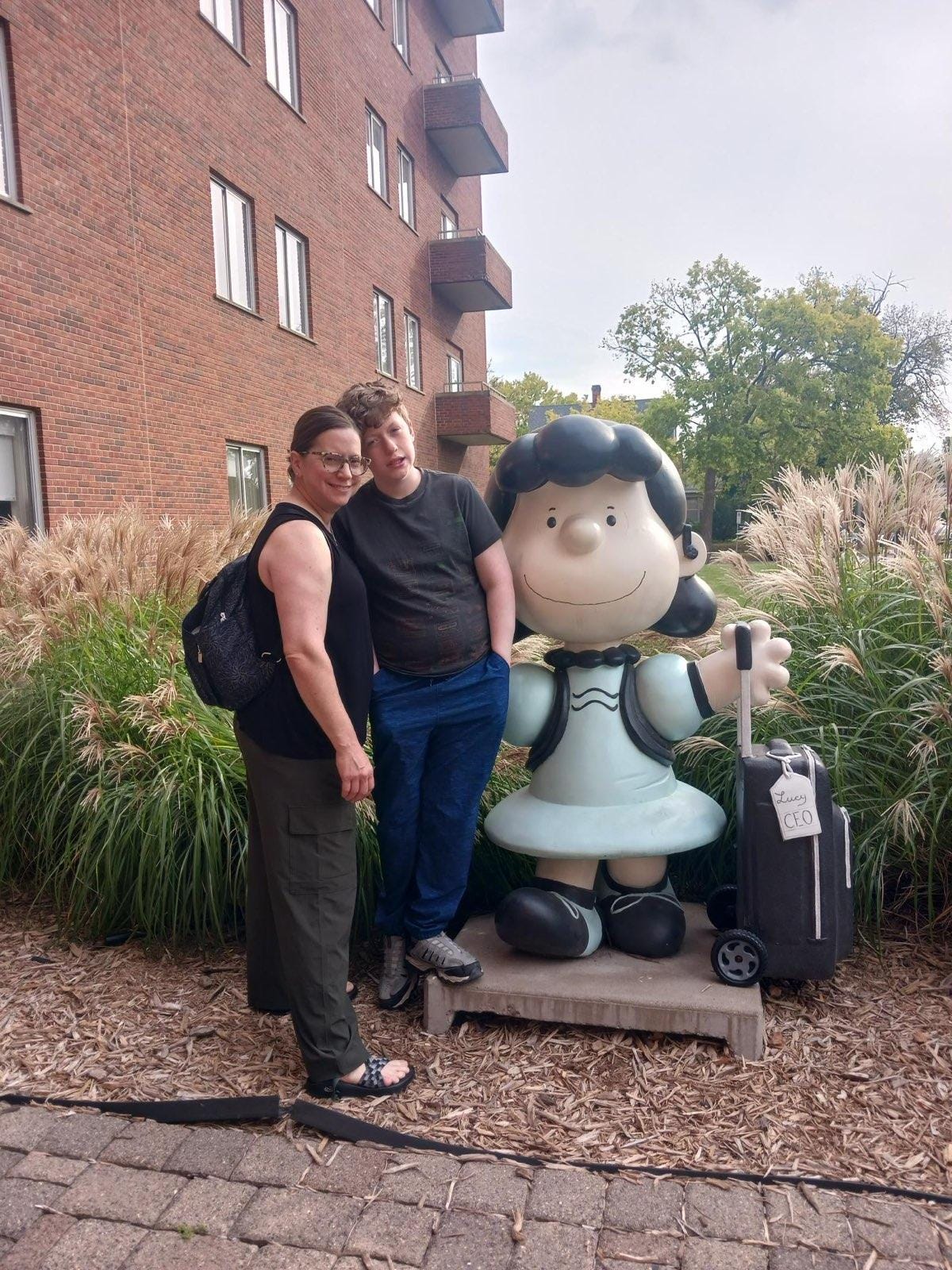
That’s why Beckstrom became a LifeSource ambassador, sharing Charlie’s story in hopes of encouraging more people to check the “yes” box on their driver’s license. The organization oversees the donation system across Minnesota, North Dakota and South Dakota — responding around the clock when someone dies under circumstances that allow organ donation, supporting families, coordinating recovery and transporting organs to recipients.
“When I think about people who say yes to donation, who put donor on their driver’s license, I think that’s the very best in humanity because they’re helping another person,” said Susan Mau Larson, chief administrative officer for LifeSource.
Only about 1 percent of deaths occur in a hospital while the patient is on a ventilator, the criteria that’s typically required for organ donation. But in recent years, medical innovations have helped expand the donor pool nationwide. Perfusion devices can preserve organs longer. The federal HOPE Act allows organ donation between HIV-positive donors and recipients. Broader medical criteria are also increasing the number of viable transplants. Nationally, transplants have risen by about 50 percent over the past decade.
Surgeons say the emotional weight of the process is shared in operating rooms across the country.
Dr. Hassan Turaihi, who performs one or two organ transplants a month at Sanford Health, says the work is both devastating and beautiful.



“Thousands of people are waiting for a second chance at life… a functional heart, a healthy liver, or a working lung,” he said. “Their lives are on pause desperately hoping for a miraculous call so organ donation is a miracle. It’s the ultimate sacrifice.”
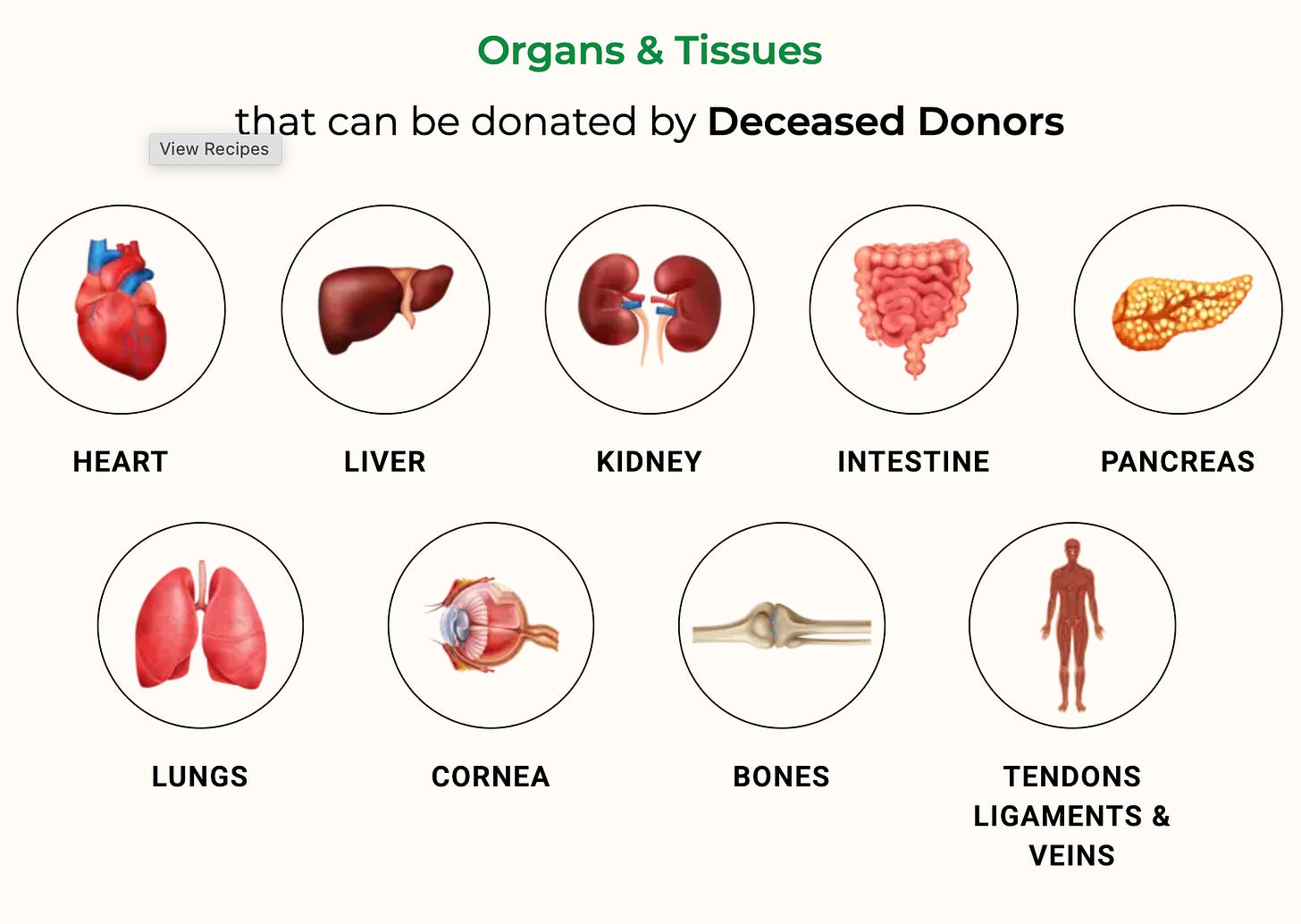
Up to eight people can benefit from a single donor — two kidneys, a heart, lungs, eyes, corneas, pancreas, small bowel and a liver, which can be split to help two patients.
“When I go in for those organ donations, it’s sad to hear the story of family and the donor who made the ultimate sacrifice, but at the same time you know you’re giving someone else the ability to have a new life and new chapter,” Turaihi said.

LifeSource leaders say South Dakota has long had one of the highest donor-registration rates in the nation. But in recent years the rate has slipped from about 60 percent to 57 percent. Mau Larson attributes the decline to national misinformation — claims that organs are lost in transit, that families feel pressured or that the process lacks oversight.


She pushed back on those narratives, emphasizing the accountability and transparency built into every step of the system.
The organization is also working to improve culturally responsive outreach, particularly among American Indian communities. Tribal engagement across South Dakota, including partnerships with Native chaplains and respect for beliefs surrounding keeping the body intact, are initiatives Mau Larson credits with donor rates staying strong in the state.
Data from the federal Organ Procurement and Transplantation Network show the number of American Indians receiving transplants in South Dakota was five in 2023, eight in 2024 and seven in 2025. The state has two kidney-transplant programs, but patients needing other organs — including hearts or livers — typically travel to Minnesota or Colorado. Meanwhile, the number of American Indian deceased donors in South Dakota fluctuated from six in 2023 to two in 2024 and five in 2025.



LifeSource operations are nationwide. In a three-state region that covers South Dakota, North Dakota and Minnesota, that means retrieval teams traveling frequently by air. Transporting organs involves specialized handling protocols, and recent federal changes have streamlined airline procedures and TSA requirements.
Despite ongoing budget negotiations in Washington, Mau Larson said LifeSource has avoided disruptions.
LifeSource leaders say they are grateful for South Dakota’s long record of donor registrations, and they continue answering questions for anyone unsure about what saying “yes” really means.
“We’re talking about helping another person,” Mau Larson said. “That’s the very best in humanity.”




Enter your email and we’ll send a secure one-click link to sign in.
KELOLAND.com is provided by Nexstar Media Inc., and uses the My Nexstar sign-in, which works across our media network.
Learn more at nexstar.tv/privacy-policy.
KELOLAND.com is provided by Nexstar Media Inc., and uses the My Nexstar sign-in, which works across our media network.
Nexstar Media Inc. is a leading, diversified media company that produces and distributes engaging local and national news, sports, and entertainment content across its television and digital platforms. The My Nexstar sign-in works across the Nexstar network—including The CW, NewsNation, The Hill, and more. Learn more at nexstar.tv/privacy-policy.

The existing water treatment plant for the Minnehaha Community Water Corp. on June 9, 2026, south of Dell Rapids, S.D. (Photo: Bart Pfankuch / South Dakota News Watch)
DELL RAPIDS, S.D. – Scott Buss can only imagine what this town north of Sioux Falls might have looked like – and how many jobs and taxes would have been generated – if there wasn’t a local shortage of available water.
Buss, executive director of the Minnehaha Community Water Corp., sat in the conference room of the rural water system based in Dell Rapids recently and ticked off the industrial and agricultural projects turned away due to a lack of water.
After hitting its limit on how much water it can provide a few years ago, the rural system has had to turn away proposed projects valued at hundreds of millions of dollars that offered an untold number of new jobs, he said.
The rejected projects include the Agropur Cheese plant that eventually opened in Lake Norden. A few proposed hog farms and dairy expansions in northern Minnehaha County were also stalled, Buss said.
Get South Dakota news and information in a free email on weekdays. Cancel any time.
Subscribe
Other proposals, most of which never came to fruition in South Dakota, included the $1.5 billion Gevo corn-based jet fuel plant, the $5oo million Wholestone Farms hog processing plant and a data center that at some point all eyed the Dell Rapids area for development.
“All the water rights are spoken for between Dell Rapids and Sioux Falls, so there was no more water to be had in Minnehaha County,” Buss told News Watch in an interview in June. “With all the (residential) development that was coming in, we realized that our well capacity and our treatment capacity was limiting our ability to take on new high water-use customers.”

Buss and the nonprofit corporation’s board of directors aren’t waiting around to potentially miss out on more opportunities.
In a unique arrangement, the corporation is partnering with the neighboring Big Sioux Community Water System to the north on a $170 million expansion project called Shared Resources. The expansion, started three years ago, will use new wells into the Big Sioux Aquifer to generate 8 million gallons of water more per day starting this fall.
“It’s going to be a huge and great benefit for Big Sioux and Minnehaha water,” said Jodi Johanson, director of the Big Sioux system based in Egan. “This project is going to make sure that down the road we have enough water for the future.”
2 systems get stronger together
The Minnehaha water corporation is still able to bring on new residential and retail customers who consume part of the 9.2 million gallons of treated water it can provide on a daily basis.
The system was formed by a group of farmers and landowners in the 1970s but sought a reliable way of providing more and cleaner water to residents of Minnehaha County outside of Sioux Falls who relied exclusively on individual wells. The system started with about 1,200 customers but has grown to more than 5,500 now in seven cities, mostly north of the Sioux Falls metro area.
Given the limits on water from the aquifer, and balancing the water needs of consistent housing and retail growth in northern Minnehaha County, the water system had to say no to developments that request 1 million or more gallons of water per day, Buss said. A million gallons per day is equivalent to the water consumption of about 4,300 homes, he said.
Billions needed to keep South Dakota taps flowing
South Dakota water systems will increasingly turn to the Missouri River to provide water for future population, agricultural and industrial growth. But plans will require billions of dollars and decades of construction to keep taps flowing freely.
As with other rural water systems in South Dakota, the aquifers the systems rely on for their water are either running low or are legally tapped out, or both.
In the case of Minnehaha water corporation, the Big Sioux River Aquifer has gotten drier, but state law is also preventing it from taking more water from the aquifer.
In 1996, the state Water Management Board allocated water rights, or withdrawal limits, to systems that take groundwater from the aquifer, Buss said.
Those limits have now been reached, meaning that Minnehaha water cannot take any more than the 7 million gallons per day it is drawing now.
The system also receives about 2 million gallons per day from the Lewis & Clark Regional Water System, making its daily maximum capacity of about 9.2 million gallons per day, which it sometimes reaches, especially during spring planting season or hot summer months.

Directly to the north, the Big Sioux Community Water System produces up to 2 million gallons per day for about 2,400 customers in Moody and Lake counties as well as some in Brookings County and in western Minnesota, Johanson said.
The system still has room within its water rights to draw more water, making it an attractive partner for Minnehaha water.
Though Big Sioux Community Water System has not turned away any large projects, it needs more water to serve a boom in residential growth in the region, Johanson said.
In the area around Lake Madison, near Madison, developers are considering projects that could someday bring 500 new homes and a new nine-hole golf course, she said.
Support solutions-focused storytelling. Help South Dakota News Watch tell stories that identify and share solutions to the state’s biggest challenges.
Donate
The system also serves a number of dairies that use significant water and provides water to the Dakota Ethanol plant in Wentworth, which is undergoing an expansion. Farmers in the region are also using greater quantities of water to deliver chemicals onto their land, Johanson said.
“This is our first expansion,” she said. “We’re looking forward and we’re trying to find the solution before we face a problem.”
Federal government and customers pay the way
The biggest Shared Resources ticket item is a new $80 million water treatment plant that is nearly completed on 240th Street a few miles north of Dell Rapids.
A 20-inch pipeline from the plant to the east will end at a 1.5 million gallon water tower, and a 24-inch pipeline to the west will terminate at a ground-level storage tank with a 4 million gallon capacity.
Six new wells will draw the water, and the storage tanks will provide both pressure and the ability to adapt to changing demands without service interruption, Buss said.
As with most modern water projects, the costs will be shared by government and end users. The systems are funding the project with $49 million in grants from the Biden-era American Rescue Plan Act and $121 million in low-interest loans from South Dakota’s Drinking Water State Revolving Fund.
The two systems are sharing the cost of the project loans commensurate with how much water they will receive, meaning Minnehaha will pay 65% of the costs for its 5 million gallons per day while Big Sioux will kick in 35% for its 3 million gallons more per day.
Minnehaha water is assuming $87 million in new debt and Big Sioux will take on $42 million in new debt, Buss said.
The average residential consumer in both systems that uses about 7,000 gallons per month will see their bill rise to $135 a month, roughly double the cost in 2020.
“It’s a big project, and it’s a good example of how two systems can work together to have some economies of scale,” Buss said.
Ratepayers will see a significant increase in their monthly water bills. The average residential consumer in both systems that uses about 7,000 gallons per month will see their bill rise to $135 a month, roughly double the cost in 2020, Buss said.
A big project, but even more water needed
But both systems view the Shared Resources project as a temporary fix and both are looking toward proposed projects that will tap the Missouri River for more water in the future.
Buss said his system has applied for 10 million gallons more water per day from Lewis & Clark, which has two expansion efforts planned.
Minnehaha water has simultaneously applied to receive 10 million gallons per day from the proposed Dakota Mainstem Regional Water System, a potentially $10 billion project to carry Missouri River water to more than 50 communities and organizations across eastern South Dakota and parts of Minnesota and Iowa.

The dual application effort is to make sure Minnehaha water can rely on taking in more water from at least one of the two systems as they come online, Buss said.
Johanson said Big Sioux has also signed on to accept water from Dakota Mainstem, even if it takes 20 to 40 years for the water to begin flowing.
To ensure that steady supply of high-quality drinking water, four major projects are in progress to take more water from the Missouri River – including WEB Water in the northeast, Lewis & Clark and the proposed Dakota Mainstem in the southeast as well as the proposed Western Dakota Regional Water System in western South Dakota and the Black Hills.

The projects are part of a wide-scale increase in water service capacity now underway in South Dakota, where water managers of several systems are implementing plans to serve the state for the next 40 to 50 years.
Regional rural water systems such as Minnehaha and Big Sioux are critical components of those projects because they provide water to communities and individual customers at the end of the delivery system.
Alicia Deschepper, zoning administrator for Moody County, said the water system expansions should allow for more growth to occur in Moody and Minnehaha counties, which are seeing new single-family housing developed at a rapid rate.
“I think it will be a great thing for our county and hopefully enable us to bring in more bigger businesses as well as more homes,” Deschepper said.
South Dakota News Watch is an independent nonprofit. Read, donate and subscribe for free at sdnewswatch.org. Contact content director Bart Pfankuch: 605-937-9398/bart.pfankuch@sdnewswatch.org.

SIOUX FALLS, S.D. (Dakota News Now) – The South Dakota Department of Public Safety said a nine-year-old girl from Waterloo, Iowa, is dead following a fatal Hughes County crash on Saturday.
This crash happened on Saturday, July 4, near the Spring Creek Recreation Area about 15 miles northwest of Pierre.
Preliminary crash information suggests a utility vehicle driven by a 37-year-old Iowa man was driving south on Spring Creek Drive. He attempted to turn around and rolled the vehicle.
A 16-year-old boy was also in the vehicle and was hurt, while the driver was not hurt.
The South Dakota Highway Patrol is investigating the crash.
Copyright 2026 Dakota News Now. All rights reserved.
-

 Indianapolis, IN7 minutes ago
Former Colts center Ryan Kelly opens up about life after retirement
-

 Pittsburg, PA10 minutes ago
Pittsburgh Public Safety responds to third teen takeover in 7 days on Fourth of July
-

 Augusta, GA22 minutes ago
Cushman & Wakefield Brokers $87M Sale of Apartment Community in Augusta
-

 Washington, D.C25 minutes ago
The hottest T-shirts in DC are from Metro – WTOP News
-

 Cleveland, OH30 minutes ago
Medical examiner identifies woman found dead in backyard of Cleveland home
-

 Austin, TX37 minutes ago
How much daylight are we losing in Texas this month?
-

 Alabama40 minutes ago
Sweet Home 250 draws thousands to Montevallo for Alabama’s o…
-

 Alaska45 minutes ago
A frozen ground under Alaska’s tundra looks like ordinary soil from above, but scientists have put a $43 trillion price tag on what happens when it thaws

