South Dakota
South Dakota: GFP Commission modifies bounty program – focuses on youth trapping and coyote removal


The South Dakota Game, Fish and Parks (GFP) Commission passed a resolution to end the current Nest Predator Bounty Program at their March meeting in Pierre and create two separate programs within the existing budget and time period.The Nest Predator Bounty Program began in 2019 with the implementation of the Second Century Initiative. This reinvigorated trapping as an outdoor recreational opportunity and a means to get youth engaged and spend more time outdoors.
Data collected from the program shows that the level of youth participation over the past 4 years has exceeded 30%. In 2024 and 2025, youth participation reached 46%.”The Nest Predator Bounty Program has been incredibly successful at engaging youth in wildlife management and our tradition of trapping in South Dakota,” said Kevin Robling, GFP Secretary.
In total, 342,743 nest predators were removed since the program’s inception.”Intense nest predator removal in localized areas during the nesting season can contribute to higher nest success and we encourage individuals to continue to participate in this management activity,” continued Robling. “In 2026, we are going to focus on continuing to get youth outdoors and addressing our coyote population.”
As part of this focus, the current Nest Predator Bounty Program is ending. The allocated $500,000 for this program will be split into two separate programs: the Youth Trapping Recruitment Program and the Coyote Bounty Program.
Youth Trapping Recruitment Program
The Youth Trapping Recruitment Program will be open for South Dakota youth age 17 and under. Tails from raccoon, striped skunk, badger, opossum, and red fox will be worth $10.The program will run from March 1-July 1, unless the $200,000 limit is reached first.”Youth recruitment and retention in trapping and wildlife management is a key component of this program,” said Robling. “We are thrilled with the amount of youth participation we have seen, so we want to continue this momentum.”
Coyote Bounty Program
The Coyote Bounty Program will be open for all South Dakota residents. Tails from coyotes will be worth $30.The program will run from April 1-July 1, unless the $300,000 limit is reached first.”Controlling the coyote population is critical for both our agricultural industry and wildlife populations,” stated Robling. “The newly created Coyote Bounty Program will assist in the management of these predators to help protect newborn calves and lambs for agricultural producers and enhance fawn survival for deer and antelope.”
Tail Submission Opportunities
Individuals wishing to participate in either of these programs may submit tails to their local GFP office during designated tail turn in opportunities. Households are eligible to submit up to $590 worth of tails in each program.
–South Dakota Game, Fish and Parks


GUTHRIE, Okla. — Hadley Peppel and Team South Dakota had a strong showing at the National Junior High Finals Rodeo, which ran from June 21-27 at the Lazy E Arena.
Peppel, who hails from Herrick, was the winner in the bareback riding short-go on Saturday and finished second in the aggregate over three runs, finishing with 192 points and earning $870.71. Jace Wild Green, of Dexter, New Mexico, was the aggregate champion with a score of 198 and claiming $1,160.95.
Peppel was first in the short-go with 67 points and Wild Green was second with 62 points. Wild Green won both of the first two performances during the week, scoring 73- and 63-point rides, respectively. Peppel also took fourth in the first-go with a ride of 66 points.
In boys goat tying, Henry’s Ace Lammers finished as the champion with a total time of 27.99 seconds, powered by a first-place effort in the short-go (8.28 seconds). Lammers earned $1,608.53, plus another $618.66 for the short-go.
Powered by Lammers and Peppel, South Dakota’s boys participants finished third as a team with 4,525 points, only behind Texas (7,080) and Utah (6,585). Overall, South Dakota finished fourth in the team standings with 5,865 points, which was won by Texas (10.208.33), followed by Utah (7,780) and Oklahoma (7,520) and South Dakota. The South Dakota girls participants were fifth in the girls team standings with 1,920 points.
In the second-go of the ribbon roping event, a pair of South Dakota teams fared well. Colome’s Jakob Heath and Miller’s Grace Saiegna had the second-best time in 7.64 seconds, earning $1,497.02. Salenga was also sixth in the all-around cowgirl final standings, scoring 670 points. Wessington Springs’ Wyatt Fagerhaug and Buffalo’s Tommi Holmes teamed up to finish fourth in their ribbon roping performance in a time of 7.87 seconds, earning $953.63.
In barrel racing, Fort Pierre’s Emry Dowling took third in the aggregate timing with a time of 45.51 seconds, good for $1,201.43. Hadlee Landers, of Lawton, Oklahoma, won with a time of 44.514 seconds won the overall title, with Williams, Arizona’s Crosslyn Vest taking second (45.22 seconds). Dowling was also third-fastest in the short-go finals (15.031 seconds), which earned her $462.09, and she was fourth in the first-go (15.193 seconds).
Valentine, Nebraska’s Talon Scheer, who competed for Team South Dakota, had top-10 performances in the girls breakaway and goat tying in the first round of performances, taking fifth in the breakaway and 10th in the goat tying.
In the light rifle shooting competition, Ruger Pelster, of Harrison, Neb., finished third with a three-event score of 327 targets. Chisum Pelster was 11th (312 targets) and Grace Gesinger, of White River, was 13th (307 targets) in the finals.
Our newsroom occasionally reports stories under a byline of “Mitchell Republic.” Often, the “Mitchell Republic” byline is used when rewriting basic news briefs that originate from official sources, such as a city press release about a road closure, and which require little or no reporting. At times, this byline is used when a news story includes numerous authors or when the story is formed by aggregating previously reported news from various sources. If outside sources are used, it is noted within the story.
The South Dakota Lottery offers multiple draw games for those aiming to win big.
Here’s a look at June 27, 2026, results for each game:
Winning Powerball numbers from June 27 drawing
03-16-28-30-59, Powerball: 11, Power Play: 2
Check Powerball payouts and previous drawings here.
Winning Lotto America numbers from June 27 drawing
03-08-18-22-39, Star Ball: 06, ASB: 02
Check Lotto America payouts and previous drawings here.
Winning Dakota Cash numbers from June 27 drawing
02-21-25-30-32
Check Dakota Cash payouts and previous drawings here.
Winning Millionaire for Life numbers from June 27 drawing
26-32-38-51-52, Bonus: 05
Check Millionaire for Life payouts and previous drawings here.
Feeling lucky? Explore the latest lottery news & results
Are you a winner? Here’s how to claim your prize
- Prizes of $100 or less: Can be claimed at any South Dakota Lottery retailer.
- Prizes of $101 or more: Must be claimed from the Lottery. By mail, send a claim form and a signed winning ticket to the Lottery at 711 E. Wells Avenue, Pierre, SD 57501.
- Any jackpot-winning ticket for Dakota Cash or Lotto America, top prize-winning ticket for Lucky for Life, or for the second prizes for Powerball and Mega Millions must be presented in person at a Lottery office. A jackpot-winning Powerball or Mega Millions ticket must be presented in person at the Lottery office in Pierre.
When are the South Dakota Lottery drawings held?
- Powerball: 9:59 p.m. CT on Monday, Wednesday, and Saturday.
- Mega Millions: 10 p.m. CT on Tuesday and Friday.
- Lucky for Life: 9:38 p.m. CT daily.
- Lotto America: 9:15 p.m. CT on Monday, Wednesday and Saturday.
- Dakota Cash: 9 p.m. CT on Wednesday and Saturday.
- Millionaire for Life: 10:15 p.m. CT daily.
This results page was generated automatically using information from TinBu and a template written and reviewed by a South Dakota editor. You can send feedback using this form.


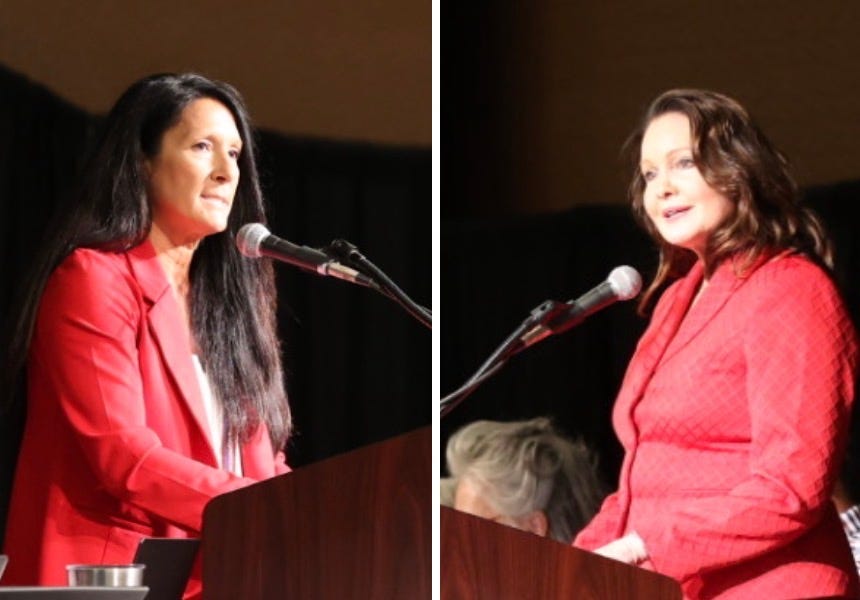
South Dakota is getting another chief elections officer.
Secretary of State Monae Johnson failed to win the Republican nomination for a second term during the South Dakota Republican Party Convention Saturday in Rapid City, where GOP delegates instead favored another Pierre outsider to oversee the state’s elections for the next four years.
“When this office runs well, you don’t notice it. When it doesn’t, you feel it everywhere,” Rep. Heather Baxter told a capacity crowd of delegates and attendees at The Monument events center, where she received nearly 60 percent of votes cast by more than 700 party delegates.

Populist push falls short in South Dakota GOP contest for Public Utilities nod



-

 Pennsylvania2 minutes ago
10 Best Small Towns In Pennsylvania For A Crowd-Free Summer
-

 Rhode Island7 minutes ago
Video: Massive great white shark feeds on dead whale off the coast of Rhode Island
-

 South-Carolina14 minutes ago
South Carolina pitcher Will Craddock announces transfer to SEC program
-

 South Dakota17 minutes ago
Team South Dakota gets strong performances at National Junior High Finals Rodeo
-

 Tennessee22 minutes ago
2026 Tennessee Football Position Preview: Running Backs | Rocky Top Insider
-

 Texas29 minutes ago
Sisters, friend charged in Texas mom’s stabbing death
-

 Utah32 minutes ago
Utah Mammoth Announce 2026 Development Camp Roster | Utah Mammoth
-

 Vermont37 minutes ago
Commentary | Eric Peterson: Time is running out for Vermont

