South Dakota
Poll shows early support for open primaries in South Dakota


LEFT: Tom Dempster, a former state senator and Minnehaha County commissioner, speaks at a news conference to announce the signature drive to put a constitutional amendment that would allow for open primaries on the 2024 general election ballot in Sioux Falls on April 19, 2022. RIGHT: “I Voted” stickers are separated for voters at the downtown Siouxland Public Library branch in Sioux Falls in 2022. A proposed amendment that would open primaries in South Dakota could end up on the 2024 election ballot. (Sioux Falls Argus Leader photos)
Nearly half of registered voters support changing the way primary elections are conducted in South Dakota, but many others remain undecided, according to a statewide poll co-sponsored by South Dakota News Watch.
The survey of 500 registered voters showed that 49.4% of respondents support a proposed constitutional amendment to establish “top-two” open primaries for governor, Congress and state legislative and county races. The poll showed that 34% oppose the measure.
That leaves 16.6% undecided, which open primary advocates see as an opportunity to sell their vision to voters in the 10 months leading up to the November 2024 election, assuming the measure makes the ballot.
“We’re encouraged by these results,” said veteran political operative Drey Samuelson, who serves on the board of directors for South Dakota Open Primaries. “It’s worth noting that undecideds generally split evenly between voting in favor of a measure and against it, which would put us roughly at 58%. We’d be very happy with that result, obviously.”
If successful, the amendment would establish one primary election for each designated office, with all candidates running against each other regardless of party affiliation. The top two vote-getters would advance to the general election.
The Attorney General’s Statement on the amendment notes that a candidate “may list any party next to their name regardless of party affiliation or registration,” meaning a registered Democrat could conceivably be listed on the ballot as a Republican, or vice versa.
Republican state Rep. Aaron Alyward of Harrisburg, S.D., chairman of the conservative South Dakota Freedom Caucus, expressed surprise that so many poll respondents supported open primaries and questioned the reasoning behind the petition effort.
“If this were to go through, we’d essentially have two general elections in South Dakota, which would be completely unnecessary,” Alyward said in a statement to News Watch. “If the backers of this amendment are worried about having options at the ballot box, why isn’t the focus placed on getting people from all parties ready for the general election, rather than trying to create two general elections in a sense?”
Independents shut out of GOP primaries
Supporters point to the fact that all registered voters would be eligible to participate in open primaries. Currently, Independent voters in South Dakota can vote in Democratic primaries but not Republican contests.
That’s a major factor in a state where the breakdown of registered voters (299,984 Republicans, 145,700 Democrats, 147,968 independents/no party affiliation) makes independents a formidable voting bloc of 25%. Most races are decided in GOP primaries in a conservative state where no Democratic presidential nominee has prevailed since Lyndon B. Johnson in 1964.
Republicans outnumber Democrats 94-11 in the state Legislature, and GOP candidates ran unopposed in 21 of the 35 state Senate races in 2022. The last time a Democratic candidate won a statewide election was 2008.
“I know a fair amount of people who are not Republicans by their general philosophy, but they are Republicans in registration because they know that’s where the action is in the primaries,” said Samuelson, who served as chief of staff to former Democratic U.S. Sen. Tim Johnson. “In our system, people won’t have to be something that they’re not to have a vote that’s meaningful.”
Seeking more balance in politics
The poll was conducted by Mason-Dixon Polling & Strategy from Nov. 27-29. Respondents were selected randomly from a state voter registration list and were representative of all South Dakota counties, ages, gender and political parties. The margin of error is plus or minus 4.5%. News Watch and the Chiesman Center for Democracy at the University of South Dakota sponsored the poll.
The open primaries measure has majority support among Democrats (55.7%) and independents (55.4%) and plurality support among Republicans, with 43.1% of GOP respondents supporting the change, 40.3% opposing it and 16.5% undecided.
The poll showed the measure with a healthy lead in four geographic regions of the state (Sioux Falls Metro, East River/South, East River/North and West River). West River, often viewed as more conservative than other areas of the state, had the highest support (52.9%) for changing the way primaries are run.
Nicole Heenan, who is helping South Dakota Open Primaries with its petition effort in Rapid City, S.D., switched party affiliation from Independent to Democrat to challenge Republican state Sen. Helene Duhamel in District 32 in 2022. Duhamel won the general election with 56.2% of the vote.
Heenan told News Watch that putting all candidates into a single primary would provide more balance in a state where 90% of legislators are Republican, compared to 50% of voters registered as Republicans.
“That asymmetry is a sign of dysfunction and inefficiency,” said Heenan, a mental health therapist who ran for Pennington County Commission as an Independent in 2018. “Democracies are supposed to be flexible and dynamic and quick to the needs of the people, and that’s not the system we have right now.”
Out-of-state group gets involved
Though nearly half of states have some form of open primary system, only three currently use a top-two primary such as the one proposed for South Dakota.
California and Washington use top-two primaries, with party labels included, in races other than presidential contests, while Nebraska uses a nonpartisan primary for state legislative races as part of its unicameral system.
Typically, the GOP majority in state politics would be enough to mount a formidable “establishment” response against a ballot measure buoyed by out-of-state interests that threatens the electoral status quo.
Unite America, a nonprofit based in Denver that advocates for election reform, has contributed about $300,000 to the open primary effort in South Dakota, while about $400,000 has been raised through in-state donations.
A similar measure in 2016 aimed to circumvent party primaries with nonpartisan races, in which South Dakota voters would consider candidates on an open ballot with no party designations. That effort failed at the ballot but received 44.5% of the vote.
‘The stars seem aligned for us’
Supporters of the ballot measure said circumstances have shifted in their favor since then due to a schism in state Republican ranks between moderates and an emergent far-right caucus.
The theory is that open primaries, rather than incentivizing candidates from taking extreme positions to win a partisan primary, will help “lower the volume” to produce officeholders more reflective of the general electorate.
“The stars seem aligned for us because the Republican Party has experienced turmoil,” Joe Kirby, a Sioux Falls businessman and government reform advocate who is spearheading the open primary campaign, told News Watch in 2023. “There’s less resistance from Republicans to the idea of changing something to broaden the base of voters.”
In Democratic-controlled California, where voters approved a top-two primary in 2012, presenting candidates to all voters in primaries has led to more moderates getting elected, forcing far-left legislators to work toward the middle to pass laws.
A 2017 study by the Public Policy Institute of California concluded that open primaries, combined with other shifts such as redistricting reform, can help “draw American parties back toward the center of the ideological spectrum.”
For the minority party – Republicans in California and Democrats in South Dakota – the concern is that candidates will get shut out of the general election in the top-two system, making even more dire the party’s lack of representation.
Moving politics toward the middle
Dan Ahlers, executive director of the South Dakota Democratic Party, told News Watch that the SDDP has not yet taken a formal stance on potential 2024 ballot measures. But he noted different approaches to primary elections by the state’s political parties.
“South Dakota’s Democratic primaries have been open to registered Independent voters since 2010,” said Ahlers. “The Republican Party could do this too but has chosen not to open their primaries.”
John Wiik, chairman of the South Dakota Republican Party, did not respond to a request for comment.
South Dakota Open Primaries needs to collect a minimum of 35,017 signatures to place the constitutional amendment on the 2024 ballot. The deadline to submit signatures is May 7, 2024. Samuelson estimated that the group has collected 35,000 signatures so far, with a goal of 50,000.
Samuelson noted a recent Pew Research Center poll showing that four times as many Americans have unfavorable views of both parties than they did in 2002. He sees that as a sign that people want more candidates who appeal to middle-of-the-road voters rather than to the fringes of either party.
“A lot of moderate Republicans, frankly, don’t run in South Dakota because they don’t think that they can win the primary,” Samuelson said. “So we have these elections that are not contested, and that’s not a good thing, no matter what party you’re in.”

The South Dakota Lottery offers multiple draw games for those aiming to win big.
Here’s a look at July 3, 2026, results for each game:
Winning Mega Millions numbers from July 3 drawing
05-09-29-47-57, Mega Ball: 16
Check Mega Millions payouts and previous drawings here.
Winning Millionaire for Life numbers from July 3 drawing
07-08-24-42-47, Bonus: 03
Check Millionaire for Life payouts and previous drawings here.
Feeling lucky? Explore the latest lottery news & results
Are you a winner? Here’s how to claim your prize
- Prizes of $100 or less: Can be claimed at any South Dakota Lottery retailer.
- Prizes of $101 or more: Must be claimed from the Lottery. By mail, send a claim form and a signed winning ticket to the Lottery at 711 E. Wells Avenue, Pierre, SD 57501.
- Any jackpot-winning ticket for Dakota Cash or Lotto America, top prize-winning ticket for Lucky for Life, or for the second prizes for Powerball and Mega Millions must be presented in person at a Lottery office. A jackpot-winning Powerball or Mega Millions ticket must be presented in person at the Lottery office in Pierre.
When are the South Dakota Lottery drawings held?
- Powerball: 9:59 p.m. CT on Monday, Wednesday, and Saturday.
- Mega Millions: 10 p.m. CT on Tuesday and Friday.
- Lucky for Life: 9:38 p.m. CT daily.
- Lotto America: 9:15 p.m. CT on Monday, Wednesday and Saturday.
- Dakota Cash: 9 p.m. CT on Wednesday and Saturday.
- Millionaire for Life: 10:15 p.m. CT daily.
This results page was generated automatically using information from TinBu and a template written and reviewed by a South Dakota editor. You can send feedback using this form.


How Fourth of July became a celebration of history and hope
From revolution to massive fireworks, July Fourth evolved into a celebration of history, heritage and America’s values.
President Donald Trump will kick off Independence Day weekend with a speech at Mount Rushmore beneath busts of four of his predecessors.
As part of a day of festivities tied to the nation’s 250th anniversary, the president will address visitors to the South Dakota landmark in a keynote address on Friday, July 3. at approximately 8:30 p.m. MT/10:30 p.m. ET according to the schedule released by the White House.
After the president’s remarks, the night will end with a massive fireworks display. It will be Mount Rushmore’s first time hosting a July 3 fireworks display since 2020, which Trump also attended during his first term in office.
Earlier in the day, there will be a slew of activities and programming on site for visitors before the evening festivities. The National Park Service and the state are coordinating the celebration, and a ticket lottery to attend has already closed.
Here’s what to know about the timing of the Mount Rushmore celebrations and how to tune in.
What will be at the Mount Rushmore July 3 event?
The event on July Fourth eve will feature myriad exhibits, reenactors and interactive experiences throughout the day, according to Freedom 250, the group working with Trump’s administration to coordinate the weekend’s events.
At night, it will transition into a tribute to the Armed Forces, including military bands, aviation flyovers and precision drill demonstrations, the group said.
After, South Dakota Gov. Larry Rhoden and Interior Secretary Doug Burgum will take the stage to introduce Trump.
Following the president’s remarks, the event will conclude with the fireworks show.
What time is Trump speaking at Mount Rushmore? See schedule
Trump is expected to deliver his Mount Rushmore address at 8:30 p.m. MT (10:30 p.m. ET), according to the White House, though organizers have not yet released a detailed event schedule.
However, the day’s programming is set to run from 4-10 p.m. local time, according to the National Park Service.
The fireworks, which will close out the event, are expected to begin around 9:30 p.m. local time, according to the Sioux Falls Argus Leader, part of the USA TODAY Network.
Where to watch Trump’s speech at Mount Rushmore
The Mount Rushmore event will be streamed live on Travel South Dakota’s website.
Melina Khan is a national trending reporter for USA TODAY. Keep up with her on X @melinakh and Instagram @bymelinakhan.
The South Dakota Lottery offers multiple draw games for those aiming to win big.
Here’s a look at July 2, 2026, results for each game:
Winning Millionaire for Life numbers from July 2 drawing
13-21-25-37-47, Bonus: 01
Check Millionaire for Life payouts and previous drawings here.
Feeling lucky? Explore the latest lottery news & results
Are you a winner? Here’s how to claim your prize
- Prizes of $100 or less: Can be claimed at any South Dakota Lottery retailer.
- Prizes of $101 or more: Must be claimed from the Lottery. By mail, send a claim form and a signed winning ticket to the Lottery at 711 E. Wells Avenue, Pierre, SD 57501.
- Any jackpot-winning ticket for Dakota Cash or Lotto America, top prize-winning ticket for Lucky for Life, or for the second prizes for Powerball and Mega Millions must be presented in person at a Lottery office. A jackpot-winning Powerball or Mega Millions ticket must be presented in person at the Lottery office in Pierre.
When are the South Dakota Lottery drawings held?
- Powerball: 9:59 p.m. CT on Monday, Wednesday, and Saturday.
- Mega Millions: 10 p.m. CT on Tuesday and Friday.
- Lucky for Life: 9:38 p.m. CT daily.
- Lotto America: 9:15 p.m. CT on Monday, Wednesday and Saturday.
- Dakota Cash: 9 p.m. CT on Wednesday and Saturday.
- Millionaire for Life: 10:15 p.m. CT daily.
This results page was generated automatically using information from TinBu and a template written and reviewed by a South Dakota editor. You can send feedback using this form.
-
 Lifestyle12 minutes ago
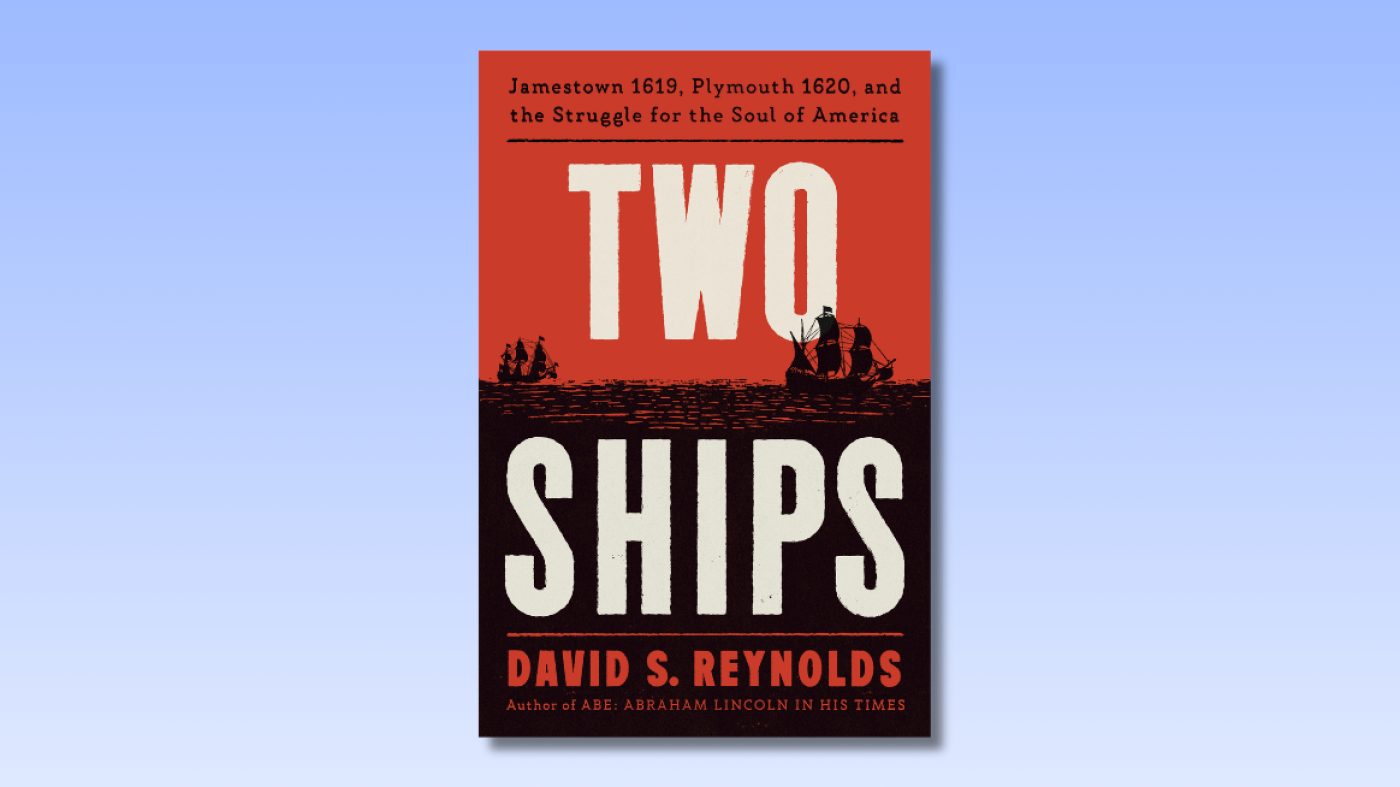
You know the Mayflower. What about the White Lion? Here’s the story of ‘Two Ships’
-

 Technology20 minutes ago
Flatbush Zombies’ Erick the Architect misses his BlackBerry keyboard
-

 World27 minutes ago
Waltz calls out Iranian diplomat at UN following drone strikes on Bahrain and Kuwait
-

 Politics30 minutes ago
Top Trump official touts how DC makeover is proof America is rejecting ‘decline by choice’
-

 Health35 minutes ago
Fourth of July fireworks pose hidden health risk for certain Americans, experts warn
-

 Sports42 minutes ago
Chris Johnson’s former teammate reflects on ex-star’s surprise ALS diagnosis, tight-knit bond after milestone
-
 Business50 minutes ago
Want an AI-proof job? New research says you may be safer at companies embracing the technology
-
 Entertainment57 minutes ago
Taylor Swift and Travis Kelce: Revisit the roots of their love story ahead of MSG wedding bash

