South Dakota
Is your farm vulnerable to cybersecurity attacks?


MADISON, S.D. — With precision agriculture technology becoming more and more advanced, how do farmers keep their equipment and records safe from cybersecurity breaches?
Students and researchers at Dakota State University in Madison, South Dakota, are able to climb in the tractor seat and conduct research surrounding cybersecurity in farm equipment in their on-campus tractor cybersecurity lab.
“The security aspect of things is just trying to make sure that all of our devices, whether they are smart tractors or any sort of even smart tablets or anything that farmers are using are secure and safe and aren’t leaking any information that they shouldn’t be,” said Austin O’Brien, associate professor of computer science and Master of Computer Science coordinator at Dakota State University.
Ariana Schumacher / Agweek
They are also looking at the impacts of artificial intelligence.
“We are working on different projects of how to use AI in various aspects, whether that’s gathering data so farmers can make better decisions, ranchers same thing, or they can also perhaps have higher yields, things of that nature and then autonomous self-driving tractors, things along those lines,” O’Brien said.
The goal of this research is to make sure our farm equipment is secure. They have joined forces with various industry partners including AI Sweden, South Dakota State University and Case IH New Holland.
“We want to make sure that really nefarious agents, you know, cyber hackers, attackers or whoever, they are not able to gather information from these devices,” O’Brien explained. “Also, so that they might not get in and then also take control of any of these or even put bad information inside of that.”

Ariana Schumacher / Agweek
The research set up is unique and makes students and researchers feel like they are actually on the farm.
“We have kind of the set up, I would say almost a little more for fun. We’ve got the driver’s seat and everything and so there is a simulator that is attached to it that is kind of like driving a tractor,” O’Brien said.
But the lab is for more than just fun.
“Maybe the more important part is the stuff that we don’t show,” O’Brien explained. “We are working with CNH and they have proprietary hardware, so we aren’t really allowed to show the actual hardware, but it is more of a smaller device that we have inside our labs so that way we have a good idea of what kind of hardware we are working with, where the inputs and the outputs are and what kind of power that it has.”
Those involved in the project are excited to be working on something that can make an impact on South Dakota’s largest industry: agriculture.
“Students really like the idea that we have been able to research and work on something that actually has a real impact on the South Dakota economy,” O’Brien said.
U.S. farmers and ranchers rapidly have been adopting technologies into their operations. The
2022 U.S. Census of Agriculture
said the percentage of farms with internet access continues to grow, now standing at about 79%. The 2022 Ag Census was the first to list precision agriculture adoption as a farm characteristic, and it estimated that less than 12% of farms were using the technologies. However, among the highest grossing farms — those that sell more than $1 million in farm products — precision ag technology use was at about 39%.
Adoption has been more swift in row crops. A February 2023 USDA study,
“Precision Agriculture in the Digital Era: Recent Adoption on U.S. Farms,”
said farmers were using auto-steer and guidance systems on more than 50% of U.S. acreage planted to corn, soybeans, winter wheat, cotton, rice and sorghum. That’s up from an estimated 10% in the early 2000s.
The use of precision agriculture technologies in row crops holds the possibility of reducing inputs and environmental footprint by more precise placement of seed and fertilizer and by more precise field coverage with less overlap thanks to guidance systems. Yield monitors can provide valuable information about field performance and resource allocation. Remote sensing and autonomous equipment could offer valuable information or efficiency without increasing labor.
Factors holding farmers back from adopting the technologies include cost and technical knowledge. But another risk factor for many is whether the data and connection to the farm can be protected.
While agriculture and food companies have dealt with disruptive and dangerous hacks to technology
, cybersecurity breaches in farm equipment have not happened in the United States yet.
“We haven’t seen anything of that nature happen, but we are always wanting to stay a step ahead of that for sure,” O’Brien said. “We know that with the Ukraine conflict that’s out there, we have seen Russia basically do different types of attacks on different infrastructure, so we want to make sure that our infrastructure is a step ahead of that.”

Ariana Schumacher / Agweek
Cybersecurity professionals can kind of determine peak times attackers may look to target farming equipment.
“Which is different from some areas of cybersecurity,” said Mark Spanier, associate professor and interim dean of the College of Arts and Sciences at Dakota State University. “In agriculture, you know that somebody is wanting to attack like right at harvesttime, because they can put all of their efforts in that short window of time. If they can be disruptive during that window of time, they can create all sorts of havoc.”
But having more specific target attack times can also be challenging.
“So, it’s an interesting balance of ‘I know when somebody is likely going to attack so I can put all of my efforts in’ but it also means that your attacker can put all of their efforts in at that very specific point as well, so it creates an interesting dynamic,” Spanier said.
And there are ways that farmers right now can be proactive in protecting their equipment technology.
“The onboard computer systems that they are going to have on their pieces of equipment, ensuring they are updated and with the current specs on things, as with anything you are wanting to make sure things are up to date so if there has been a known vulnerability that has emerged, that is then updated with the patches that it needs to have,” Spanier said.

Ariana Schumacher / Agweek
“Just be cognizant of what you are doing, where you leave your data, where your data exists, so if you are uploading data to the internet, just make sure that you know exactly where you are uploading to,” O’Brien said “Maybe that’s certain websites if you are working with different companies or businesses. Just be aware that you are working directly with them and maybe not through various other services.”
But overall, this research is to serve as a prevention tool.
“That kind of concern, while it’s there, just know that we are actively working on things, so we don’t want to present it as a doom and gloom situation, we are wanting to stay a step ahead,” O’Brien said. “We haven’t seen any big issues but that’s because people are actively working to stay in front of it.”



Oklahoma didn’t suffer any strong wind damage this week, but wind farms in South Dakota certainly did.
Several wind turbines were toppled by the 130 MPH winds that hit the central part of the state Monday morning. They were described as straight line winds and not tornadoes. But the winds compared to those recorded in some tornadoes.
The 131-mph wind was recorded at Holabird in Hyde County at 6:15 a.m. local time.
A picture of the extensive damage showed at least 7 of the wind towers were bent over by the powerful Mother Nature.
According to a report by Energy News Beat, storm chaser Jakob McMillin documented the scene in a widely shared post on X (formerly Twitter), showing multiple wind turbine towers collapsed or heavily damaged, with blades and structural debris scattered across the prairie. In replies to his post, McMillin stated he observed “over 20” turbines destroyed or critically damaged.
The Affected Wind Farm
The damaged facility is the South Dakota Wind Energy Center (also known as the Highmore Wind Energy Project or Highmore Wind Farm), located approximately 10 miles south of Highmore.
- Number of turbines: 27
- Turbine model: GE Vernova 1.5s (1.5 MW each)
- Total nameplate capacity: 40.5 MW
- Commissioning year: 2003 (South Dakota’s first major wind farm)
- Owner/Operator: NextEra Energy Resources (formerly FPL Energy)
- Power purchaser: Basin Electric Power Cooperative
The South Dakota Lottery offers multiple draw games for those aiming to win big.
Here’s a look at June 29, 2026, results for each game:
Winning Powerball numbers from June 29 drawing
10-14-41-53-59, Powerball: 03, Power Play: 2
Check Powerball payouts and previous drawings here.
Winning Lotto America numbers from June 29 drawing
08-13-29-30-31, Star Ball: 04, ASB: 03
Check Lotto America payouts and previous drawings here.
Winning Millionaire for Life numbers from June 29 drawing
04-25-26-31-36, Bonus: 04
Check Millionaire for Life payouts and previous drawings here.
Feeling lucky? Explore the latest lottery news & results
Are you a winner? Here’s how to claim your prize
- Prizes of $100 or less: Can be claimed at any South Dakota Lottery retailer.
- Prizes of $101 or more: Must be claimed from the Lottery. By mail, send a claim form and a signed winning ticket to the Lottery at 711 E. Wells Avenue, Pierre, SD 57501.
- Any jackpot-winning ticket for Dakota Cash or Lotto America, top prize-winning ticket for Lucky for Life, or for the second prizes for Powerball and Mega Millions must be presented in person at a Lottery office. A jackpot-winning Powerball or Mega Millions ticket must be presented in person at the Lottery office in Pierre.
When are the South Dakota Lottery drawings held?
- Powerball: 9:59 p.m. CT on Monday, Wednesday, and Saturday.
- Mega Millions: 10 p.m. CT on Tuesday and Friday.
- Lucky for Life: 9:38 p.m. CT daily.
- Lotto America: 9:15 p.m. CT on Monday, Wednesday and Saturday.
- Dakota Cash: 9 p.m. CT on Wednesday and Saturday.
- Millionaire for Life: 10:15 p.m. CT daily.
This results page was generated automatically using information from TinBu and a template written and reviewed by a South Dakota editor. You can send feedback using this form.


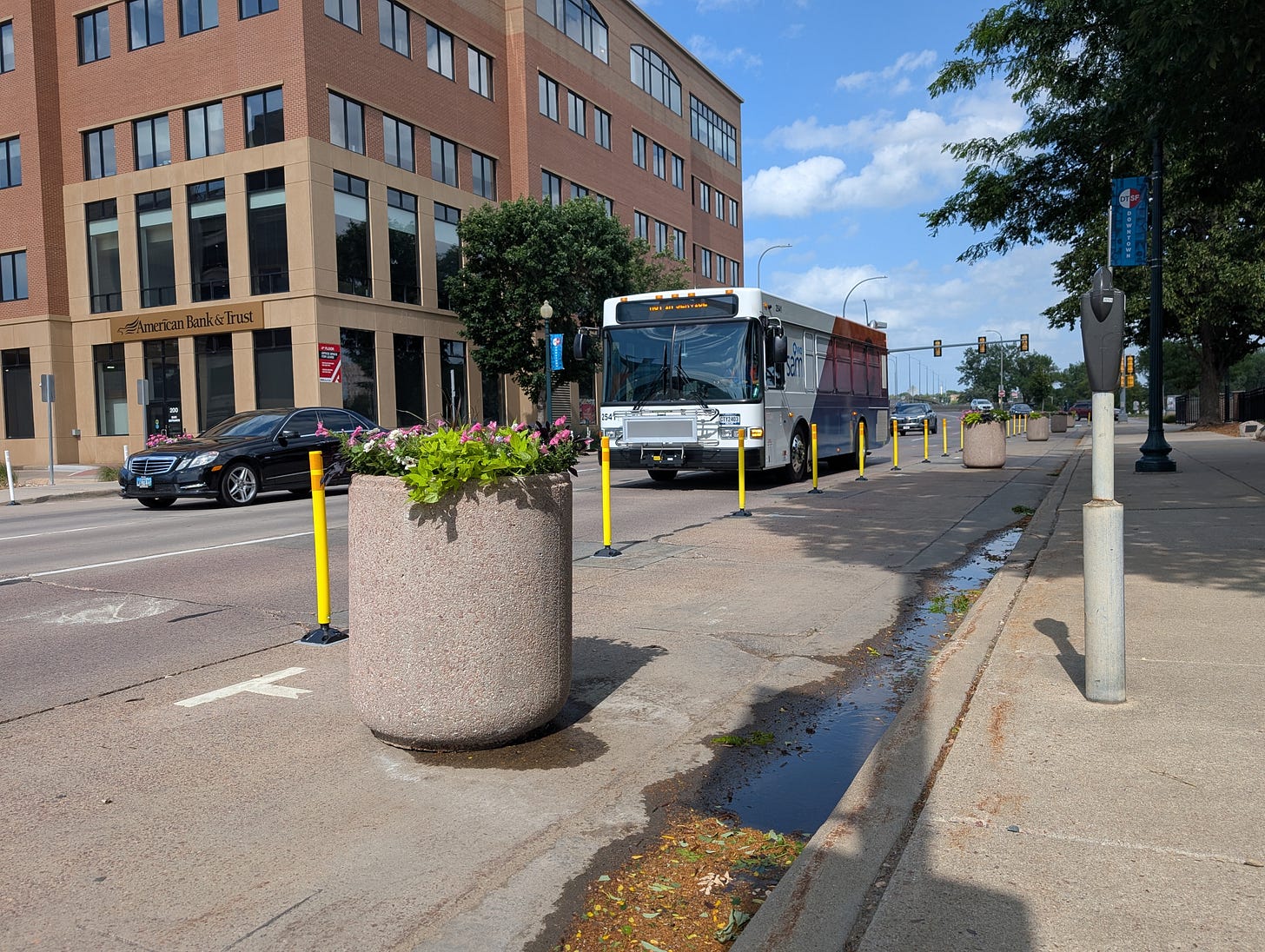
Deliberately slowed rush-hour traffic in downtown Sioux Falls is serving as a preview for commuters ahead of a major, yearslong overhaul of the city’s aging viaduct overpasses.
And Downtown Sioux Falls Inc. is using the opportunity to study traffic patterns in advance of the reconstruction of the 10th and 11th street overpasses on the east end of the core commercial district. Though the state-led project is still years away, the temporary traffic-calming measures are helping engineers gather data on vehicle speeds, volumes and behaviors.

2026 general election ballot set after referral effort falls short



-

 Missouri4 minutes ago
Gov. Kehoe signs Missouri FY27 budget totaling $50.7B. What you need to know
-

 Montana7 minutes ago
New health care system director appointed at Montana VA
-

 Nebraska12 minutes ago
Hilgers says Nebraska, Colorado water dispute could take years, but Perkins County Canal should progress
-

 Nevada19 minutes ago
Deputies respond to stabbing at Nevada Cares Campus in Reno; one victim hospitalized
-

 New Hampshire22 minutes ago
Federal judge denies effort by Trump administration to get NH’s detailed voter data
-
New Jersey27 minutes ago
News Flash • New Jersey Legislative Senate Democrats, NJ
-

 New Mexico34 minutes ago
Las Vegas police and fire to enforce zero-tolerance illegal firework ban
-

 North Carolina37 minutes ago
NC budget plan could boost Durham schools, workforce

