South Dakota
3 South Dakota counties to vote on returning to ballot tabulation by hand


Voters in at least three rural South Dakota counties are set to decide Tuesday whether to return to counting ballots by hand, the latest communities around the country to consider ditching machine tabulators based on unfounded conspiracy theories stemming from the 2020 presidential election.
The three counties, each with fewer than 6,000 residents, would be among the first in the U.S. to require old-school hand counts, which long ago were replaced by ballot tabulators in most of the country.
A number of other states and local governments have considered banning machine counting since the 2020 election, but most of those efforts have sputtered over concerns of cost, the time it takes to count by hand and the difficulty of hiring more staff to do it.
‘ELECTION INTERFERENCE’ CLAIMS MUDDY BATTLEGROUND STATE POLITICS AMID COMPETITIVE RACES
Experts say counting the votes by hand is less accurate that machine tabulation.
Supporters of the South Dakota effort aren’t deterred by such worries.
“We believe that a decentralized approach to the elections is much more secure, much more transparent, and that the citizens should have oversight over their elections,” said Jessica Pollema, president of SD Canvassing, a citizen group supporting the change.
Like efforts elsewhere, the South Dakota push for hand counting has its origins in false claims pushed by former President Donald Trump and his allies after the 2020 presidential election. They made claims of widespread voter fraud and spread conspiracy theories that voting machines were manipulated to steal the election. There has been no evidence to support such claims, but they have become embedded in many places that voted heavily for Trump.
The citizen initiatives in South Dakota to prohibit tabulating machines are set to appear on Tuesday’s primary ballot in Gregory, Haakon and Tripp counties. Similar petition efforts for future measure votes are underway in more than 40 other counties in the conservative state, Pollema said. At least four counties have rejected attempts to force hand counting.
Earlier, the Fall River County Commission voted in February to count ballots by hand for the June election, and Tripp County counted its general election ballots by hand in 2022.
From left, Jessica Pollema speaks Oct. 19, 2023, at the Military Heritage Alliance in Sioux Falls, S.D. She is a co-founder of South Dakota Canvassing and a leading advocate of getting rid of the machines in favor of hand counting ballots in South Dakota. (Stu Whitney/South Dakota News Watch via AP)
If the measure passes Tuesday, Gregory County Auditor Julie Bartling said the county will have to increase the number of precincts to lessen the burden of hand counting. That will force it to buy more assisted voting devices for disabled voters. The county also will face the difficult task of hiring more election workers.
Bartling, who runs elections in the county, opposes the initiative and said she has “full faith in the automated tabulators.”
Todd and Tripp County Auditor Barb DeSersa said she also opposes attempts to require hand counting of all ballots because the process isn’t as accurate. She said the 2022 hand count left election workers exhausted.
“I know the ones that have done it the last time didn’t want nothing to do with it this time, so I think once they do it once or twice, they’ll get tired of it, and it’ll be harder to find people to volunteer to do that,” DeSersa said.
DeSersa’s office estimated it would cost $17,000 to $25,000 for elections in Tripp County to be counted by hand, compared to about $19,000 to $21,000 using tabulators. Haakon County Auditor Stacy Pinney said she initially estimated hand counting will cost between $750 and $4,500, but “overall, an election cost is hard to determine at this point.”
According to a state attorney’s analysis for Haakon County, it would take two election workers using a tabulator three to four hours to count all the ballots. It would take 15 to 20 election workers between five and 15 hours to do a hand count, depending on the number of contested races.
The three counties have a combined 7,725 active registered voters, according to a statewide report.
Republican state Rep. Rocky Blare, who lives in Tripp County, said he will vote against the measure.
“They can’t prove to me that there’s been any issues that I think have affected our election in South Dakota,” Blare said.
Secretary of State Monae Johnson, a Republican, expressed confidence in tabulating machines, noting they have been used for years. In a statement, she pointed to “safeguards built in throughout the process and the post-election audit on the machines after the primary and general election to ensure they are working properly.”
The June election will be the first with a post-election audit, a process included in a 2023 state law. It involves hand counting all the votes in two races from 5% of precincts in every county to ensure the machine tabulation is accurate. Johnson’s office said there was no evidence of any widespread problems in 2020 or 2022. One person voted twice, she said, and was caught.
After repeated attacks against machine-counting of ballots in the 2020 presidential election, Dominion Voting Systems last year reached a $787 million settlement in a defamation case against Fox News over false claims the network repeatedly aired. The judge in that case found it was “CRYSTAL clear” none of the claims about Dominion’s machines was true, and testimony showed many Fox hosts quietly doubted the claims their network was airing.
Since 2020, only a few counties have made the switch to hand counting. In California, officials in Shasta County voted to get rid of their ballot tabulators, but state lawmakers later restricted hand counts to limited circumstances. Officials in Arizona’s Mohave County rejected a proposal to hand count ballots in 2023, citing the $1.1 million cost.
David Levine, a former local election official in Idaho who is now a senior fellow with the Alliance for Securing Democracy, said research has shown hand counting large numbers of ballots is more costly, less accurate and takes more time than machine tabulators.
“If you listen to conspiracy theorists and election skeptics throughout the U.S., one reason the 2020 election was illegitimate was because of an algorithm. Hence, if you take computers out of the voting process, you’ll have a more secure election,” Levine said. “The only problem: it’s not true.”
While some areas do count ballots by hand, mainly in the Northeast, it typically happens in places with a small number of registered voters. Hand counts are common during post-election tests to check that machines are counting ballots correctly, but only a small portion of the ballots are manually checked.
Election experts say it’s unrealistic to think workers in large jurisdictions, with tens or hundreds of thousands of voters, could count all their ballots by hand and report results quickly, especially since ballots often include multiple races.
CLICK HERE TO GET THE FOX NEWS APP
“The issue is that people aren’t very good at large, tedious, repetitive tasks like counting ballots, and computers are,” Levine said. “Those who believe otherwise are either unaware of this reality or choose to ignore it.”


Oklahoma didn’t suffer any strong wind damage this week, but wind farms in South Dakota certainly did.
Several wind turbines were toppled by the 130 MPH winds that hit the central part of the state Monday morning. They were described as straight line winds and not tornadoes. But the winds compared to those recorded in some tornadoes.
The 131-mph wind was recorded at Holabird in Hyde County at 6:15 a.m. local time.
A picture of the extensive damage showed at least 7 of the wind towers were bent over by the powerful Mother Nature.
According to a report by Energy News Beat, storm chaser Jakob McMillin documented the scene in a widely shared post on X (formerly Twitter), showing multiple wind turbine towers collapsed or heavily damaged, with blades and structural debris scattered across the prairie. In replies to his post, McMillin stated he observed “over 20” turbines destroyed or critically damaged.
The Affected Wind Farm
The damaged facility is the South Dakota Wind Energy Center (also known as the Highmore Wind Energy Project or Highmore Wind Farm), located approximately 10 miles south of Highmore.
- Number of turbines: 27
- Turbine model: GE Vernova 1.5s (1.5 MW each)
- Total nameplate capacity: 40.5 MW
- Commissioning year: 2003 (South Dakota’s first major wind farm)
- Owner/Operator: NextEra Energy Resources (formerly FPL Energy)
- Power purchaser: Basin Electric Power Cooperative
The South Dakota Lottery offers multiple draw games for those aiming to win big.
Here’s a look at June 29, 2026, results for each game:
Winning Powerball numbers from June 29 drawing
10-14-41-53-59, Powerball: 03, Power Play: 2
Check Powerball payouts and previous drawings here.
Winning Lotto America numbers from June 29 drawing
08-13-29-30-31, Star Ball: 04, ASB: 03
Check Lotto America payouts and previous drawings here.
Winning Millionaire for Life numbers from June 29 drawing
04-25-26-31-36, Bonus: 04
Check Millionaire for Life payouts and previous drawings here.
Feeling lucky? Explore the latest lottery news & results
Are you a winner? Here’s how to claim your prize
- Prizes of $100 or less: Can be claimed at any South Dakota Lottery retailer.
- Prizes of $101 or more: Must be claimed from the Lottery. By mail, send a claim form and a signed winning ticket to the Lottery at 711 E. Wells Avenue, Pierre, SD 57501.
- Any jackpot-winning ticket for Dakota Cash or Lotto America, top prize-winning ticket for Lucky for Life, or for the second prizes for Powerball and Mega Millions must be presented in person at a Lottery office. A jackpot-winning Powerball or Mega Millions ticket must be presented in person at the Lottery office in Pierre.
When are the South Dakota Lottery drawings held?
- Powerball: 9:59 p.m. CT on Monday, Wednesday, and Saturday.
- Mega Millions: 10 p.m. CT on Tuesday and Friday.
- Lucky for Life: 9:38 p.m. CT daily.
- Lotto America: 9:15 p.m. CT on Monday, Wednesday and Saturday.
- Dakota Cash: 9 p.m. CT on Wednesday and Saturday.
- Millionaire for Life: 10:15 p.m. CT daily.
This results page was generated automatically using information from TinBu and a template written and reviewed by a South Dakota editor. You can send feedback using this form.


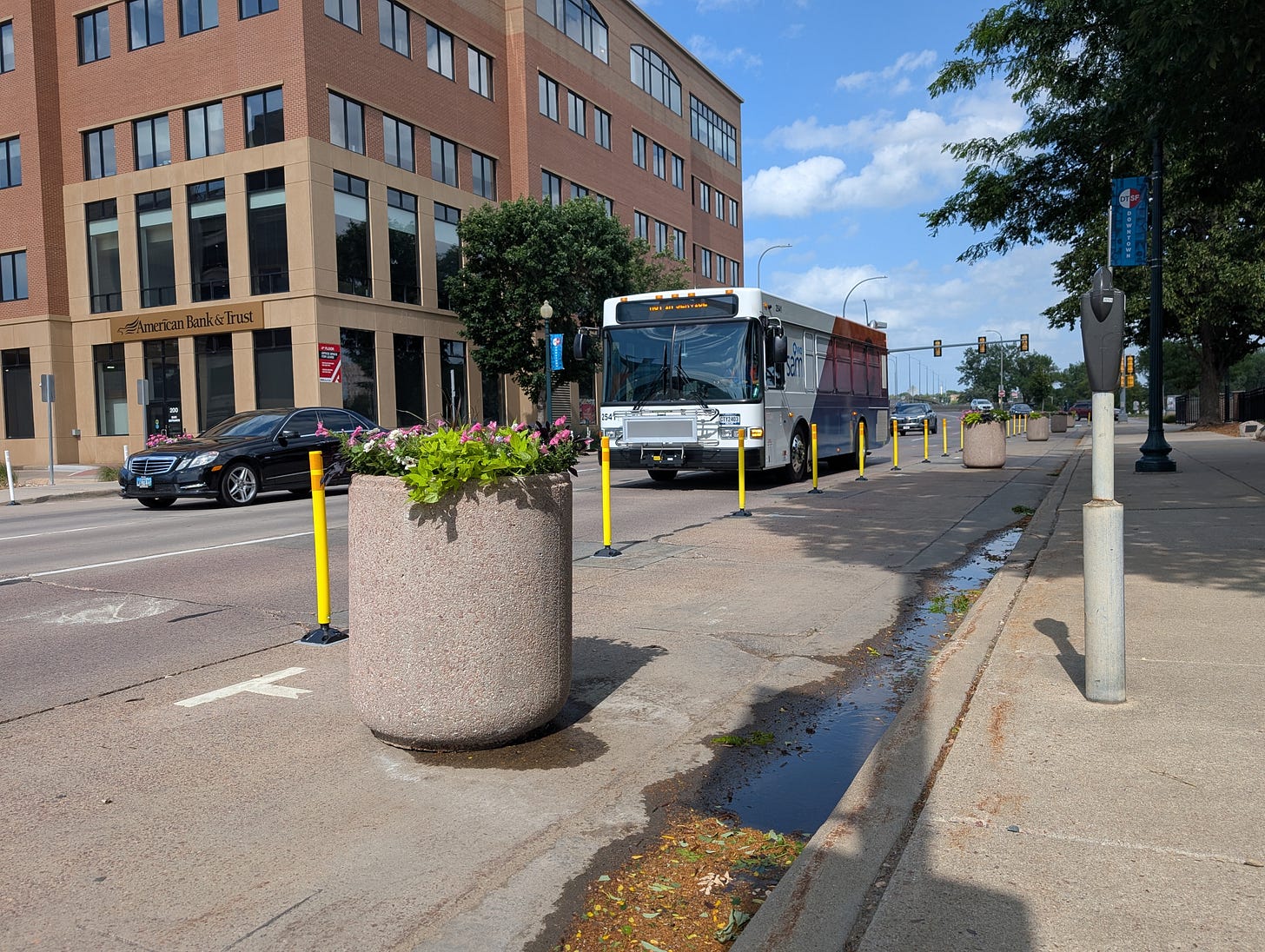
Deliberately slowed rush-hour traffic in downtown Sioux Falls is serving as a preview for commuters ahead of a major, yearslong overhaul of the city’s aging viaduct overpasses.
And Downtown Sioux Falls Inc. is using the opportunity to study traffic patterns in advance of the reconstruction of the 10th and 11th street overpasses on the east end of the core commercial district. Though the state-led project is still years away, the temporary traffic-calming measures are helping engineers gather data on vehicle speeds, volumes and behaviors.

2026 general election ballot set after referral effort falls short



-

 Technology4 minutes ago
Meta is adding ridiculous ‘rate limits’ and a soft paywall to its smart glasses
-

 World9 minutes ago
Boy, 2, pulled alive from rubble six days after Venezuela’s devastating twin earthquakes
-

 Politics11 minutes ago
Socialism goes west as DSA-backed challenger ousts longtime Democrat
-

 Health16 minutes ago
Americans are giving up multivitamins for a different daily health habit, study finds
-

 Sports19 minutes ago
2026 World Cup Quarterfinal Odds: Which Squads Will Make Final 8?
-

 Technology24 minutes ago
Warehouse robots move packages without human handoff
-
 Business31 minutes ago
Disneyland to offer $59 evening tickets next month
-
 Entertainment34 minutes ago
After Amazon drops OpenAI movie ‘Artificial,’ film finds new home at Neon

