Midwest
On this day in history, February 12, 1809, Abraham Lincoln is born in Kentucky

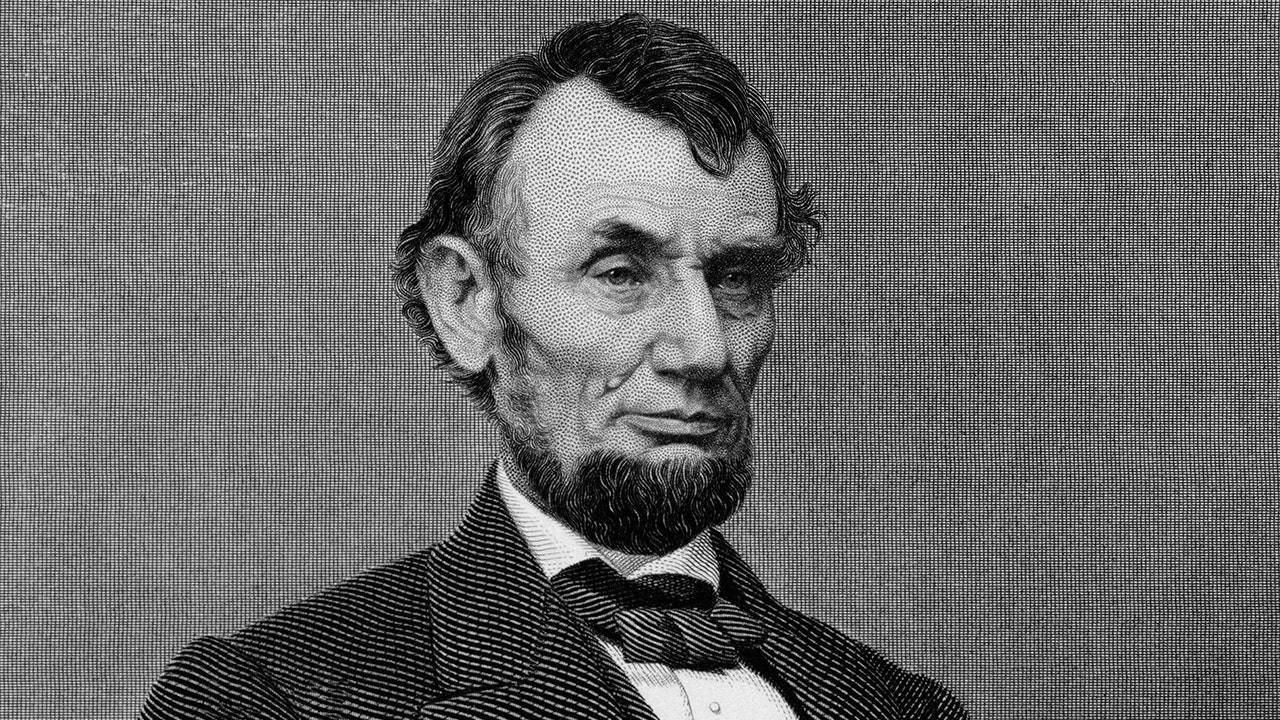
America’s 16th president, Abraham Lincoln, was born in Hodgenville, Kentucky, on this day in history, Feb. 12, 1809.
Lincoln grew up in a poor family, the son of a Kentucky frontiersman — and struggled to become educated, according to whitehouse.gov.
Young Lincoln attended school for only one year until he left to learn independently by reading, History.com reports.
ON THIS DAY IN HISTORY, FEBRUARY 11, 1858, OUR LADY OF LOURDES FIRST APPEARS TO ST. BERNADETTE SOUBIROUS
When Lincoln was eight years old, his family moved to Indiana, which he described as a “wild region with many bears and other wild animals still in the woods.”
Lincoln’s mother passed away when he was 10 years old. Young Abe spent the remainder of his childhood with his father and siblings in the family’s Pigeon Creek log cabin, the Indiana Department of Administration reports on its website.
A drawing of the early home of Abraham Lincoln in 19th century Gentryville, Indiana, is shown here. (The Print Collector/Print Collector/Getty Images)
As an adult, Lincoln moved to Illinois, where he worked several different jobs: postmaster, surveyor and shopkeeper.
ON THIS DAY IN HISTORY, NOVEMBER 17, 1871, NATIONAL RIFLE ASSOCIATION FOUNDED BY CIVIL WAR VETERAN UNION OFFICERS
Lincoln was also a “legendary wrestler” in Illinois due to his impressive physical strength and 6’4″ stature, History.com reports.
Lincoln first entered politics in 1834 when he began serving in the Illinois legislature.
He served in that body until 1842 — the same year he married Mary Todd.
The Lincoln family in a lithograph, from left: Abraham Lincoln, William Lincoln, Robert Lincoln, Mary Todd Lincoln and Thomas Lincoln. The lithograph was published by Kelly and Sons in 1861. (Glasshouse Vintage/Universal History Archive/Universal Images Group via Getty Images)
He served in Congress from 1847 to 1849 and went on to become an attorney, according to History.com.
In the 1850s, as the nation’s division over slavery grew more intense, Lincoln returned to politics as leader of the Republican Party.
ON THIS DAY IN HISTORY, NOVEMBER 21, 1864, ABRAHAM LINCOLN ‘PENS’ LETTER TO MRS. BIXBY
Even though he was considered politically moderate, Lincoln advocated for the restriction of slavery in states where it existed.
Lincoln reminded the nation that “a house divided against itself cannot stand.”
During his run for Senate in 1858, Lincoln reminded the nation that “a house divided against itself cannot stand,” according to History.com.
Abraham Lincoln, 16th president of the United States. His presidential campaign favored abolition but prioritized saving the Union. (Historica Graphica Collection/Heritage Images/Getty Images)
Lincoln lost the Senate seat but gained national recognition for his unified political stance.
In 1860, Lincoln launched his presidential campaign, which favored abolition but prioritized saving the Union.
HOW ABRAHAM LINCOLN WAS SAVED BY HIS SON TAD — AND GAVE US ‘A HOLIDAY TRADITION’ TO REMEMBER
Lincoln won the presidency by 400,000 popular votes about one year before the Civil War began — which was on April 12, 1861, according to Senate.gov.
In 1863, Lincoln signed the Emancipation Proclamation, freeing enslaved people in the Confederate states.
President Abraham Lincoln with General George B. McClellan at his headquarters at Antietam, Oct. 3, 1862. From left: General George W. Morell, Colonel Alexander S. Webb, General McClellan, scout Adams, Dr. Jonathan Letterman, unidentified officer, President Lincoln, Colonel Henry Hunt, General Fitz, John Porter, unidentified officer. (Getty Images)
Lincoln’s efforts to abolish slavery earned him the nickname “the Great Emancipator,” despite his initial waffling on the issue at the beginning of the war.
THE GREAT ADVICE OF PRESIDENTS WASHINGTON AND LINCOLN ON PRESIDENT’S DAY
Lincoln was known for entertaining friends and guests with his “dry, folksy wit,” History.com reports.
He was also a great animal lover and brought a variety of pets into the White House — including a turkey named Jack and a goat named Nanko.
Although he was likable, Lincoln’s decision to end slavery didn’t sit well with Confederate sympathizers, reportedly leading to his assassination by John Wilkes Booth on April 14, 1865.
For more Lifestyle articles, visit www.foxnews.com/lifestyle.
Read the full article from Here


For Pi Day, grocery shoppers get quizzed on what pi means
From the video archive, Columnist Jim Stingl quizzes Whole Foods Market customers on the mathematical pi. Video originally published March 14, 2010.
For math enthusiasts and foodies, Pi Day on March 14 is upon us once again.
We all know what pie is, but what the heck is pi? Pi ― 3.14 ― is the ratio of the circumference of a circle (the distance around the outside of it) to the diameter of that circle (the distance edge-to-edge). As we may have learned in math class, no matter the size of the circle, pi is always 3.14.
Hence on March 14, many bakeries and eateries in and around Milwaukee are offering pie sales and diverse pie selections. A selection of them are listed below.
Note that pie availability is typically while supplies last and preordering or calling beforehand is recommended. If there is a bakery or restaurant that is recognizing Pi Day and is not included in this list, let us know so we can add it.
Gather Bakehouse in Bay View
At Gather Bakehouse, the bakery will have mini 3-inch pies as well as 9-inch pies. Flavors include Dutch apple, strawberry rhubarb, cherry, French silk, honey custard and key lime. There will also be preorder options.
Location: 1100 E. Oklahoma Ave., Milwaukee
Hours: 6 a.m. to 3 p.m. Tuesday through Friday; 7 a.m. to 3 p.m. Saturday and Sunday. It’s closed on Monday.
For more information: Visit gatherbakehouse.com
National Bakery & Deli in Brookfield, Greendale and Milwaukee
National Bakery & Deli will have multiple pies available for National Pi Day: banana cream, cherry, apple, chocolate cream, Dutch apple and strawberry cream.
Location: 13820 W. Greenfield Ave., Brookfield; 5637 Broad St., Greendale; and 3200 S. 16th St., Milwaukee.
Hours for all locations: 6:30 a.m. to 3 p.m. Monday through Friday; and 6:30 a.m. to 2 p.m. on Saturday.
For more information or to order online: Visit nationalbakery.com
Kelly’s Pot Pies & More in Greenfield and East Troy
Kelly’s Pot Pies & More will have $3.14 off any large Reuben pot pie or shepherd’s pie beginning Pi Day and running through St. Patrick’s Day. These specials will be at both the East Troy and Greenfield stores.
Kelly’s Pot Pies & More also has other pot pies, including beef, turkey, veggie, taco and pizza. They also offer quiche, cheesecake, lemon torte and key lime pie.
To help guarantee a pie, order online two hours or more in advance.
Locations: 3785 S. 108th St. in Greenfield; and 3268 Main St. in East Troy
Hours: 11 a.m. to 5:30 p.m. Tuesday through Friday; and 10 a.m. to 2 p.m. Saturday
To order online or for more information: Visit kellyspotpies.com.
Mr. Dye’s Pies at 3rd Street Market Hall in Milwaukee
At Mr. Dye’s Pies at 3rd Street Market Hall, there are a plethora of pies sold by the slice or as a whole pie including peanut butter, sweet potato, pecan, key lime and blueberry.Location: 5504 W. State St. (First Floor, South Hall located in the row of stalls to the right of Dairyland)
Hours: 11 a.m. to 8 p.m. Tuesday through Thursday; 11 a.m. to 10 p.m. Friday and Saturday; and 11 a.m. to 7 p.m. on Sunday
For more information: Visit 3rdstmarkethall.com/locations/all-vendors/mrdyespies
The Elegant Farmer in Mukwonago
The Elegant Farmer will participate on National Pi Day from March 9 to 15 and will offer $3.14 off 5-inch apple pies baked in a paper bag (original price is $9.99). The pies baked in a bag feature a flaky crust with a sugar cookie-like top.
Location: 1545 Main St. (at Highways ES & J) in Mukwonago
Hours: 9 a.m. to 6 p.m. daily
For more information or to order: Order online at elegantfarmer.com or call 262-363-6770
Periwinkle’s Bakery in Waukesha
Periwinkle’s Bakery on Broadway in Waukesha will have its full pie menu for special order on March 14 and a variety of 9-inch-deep dish pies for sale that same day at its retail location at neighboring Rochester Deli. These include French Silk, caramel apple, Key West lime, wild blueberry and peanut butter French silk.
Online orders need to be placed the week prior.
Location: 143 W. Broadway, Waukesha (Bakery for purchase inside of Rochester Deli)
Hours: 10 a.m. to 3 p.m. Monday through Thursday; 10 a.m. to 7:30 p.m. Friday; and 10 a.m. to 3 p.m. on Saturday
For more information: Visit periwinklesbakery.com
All in Favor, Say Pie in Waukesha
At All in Favor, Say Pie, you can order your pie online to pick up in Waukesha. Flavors include Door County cherry pie, apple blueberry, Dutch apple pie, cranberry apple, mixed berry and blueberry. Pies should be ordered two to five days in advance.
For more information and to order: Visit https://sites.google.com/view/allinfavorsaypie/home
Aggie’s Bakery and Cake Shop in West Allis
Aggie’s Bakery and Cake Shop will sell pies including cherry, apple, caramel apple, blueberry, peach and banana cream pie on National Pi Day.
Location: 7328 W. Greenfield Ave., West Allis
Hours: 7 a.m. to 6 p.m. Monday through Friday; 7 a.m. to 5 p.m. Saturday; and 7 a.m. to 1 p.m. on Sunday
For more information: Call 414-482-1288 or visit aggiesbakery.com
The Bake Sale in West Allis
The Bake Sale in West Allis has pie options that customers can order online days in advance which include key lime, French silk, apple, caramel apple, strawberry rhubarb, pecan, whiskey chocolate pecan and fruity pebble. Pies are available on National Pi Day while supplies last. Select pies are available in the store.
Location: 6923 W. Becher St., West Allis
Hours: 6:30 a.m. to 2 p.m. Monday through Wednesday; 6:30 a.m. to 4 p.m. Thursday and Friday; 7 a.m. to 4 p.m. on Saturday; and 8 a.m. to 2 p.m. on Sunday
For more information or to order: 414-543-4230 or bakesalewestallis.com
Bishop’s Sweets in West Allis
For National Pi Day, Bishop’s Sweets will have whole pies and slices available while supplies last. If you want a specialty pie or to ensure there is one ready, order the pie 72 hours before March 14.
The featured pie flavors include apple, cherry, banana cream, coconut cream and Bishop’s Sweets requested favorite, French silk pie. The bakery will also be introducing additional pies for people to try, including chess, buttermilk and Mississippi mud pie.
Location: 8005 W. Lincoln Ave., West Allis. Bishop’s Sweets also offers delivery through Uber Eats and DoorDash.
Hours: 7 a.m. to 6 p.m. on National Pi Day, March 14, or until the pies are sold out. Otherwise, hours are 11 a.m. to 6 p.m. Friday; 10 a.m. to 5 p.m. on Saturday; and noon to 4 p.m. on Sunday. (It is closed Monday through Thursday.)
For more information: Visit www.facebook.com/BishopsSweets or call 414-763-2436.
Cathy Kozlowicz can be reached at 262-361-9132 or cathy.kozlowicz@jrn.com. Follow her on X at @kozlowicz_cathy


Indianapolis-area students speak on proposed ILEA changes
Students from both Shortridge High School and KIPP Indy Public Schools speak on the proposed models from the Indianapolis Local Education Alliance.
The signers of a recent statement by the African American Coalition of Indianapolis questioning who speaks for the Black community raise concerns about process while our students of color continue to be left behind in a public education system that offers too little opportunity and too few positive outcomes.
We agree that parents and students should be heard, which is why we’re troubled that our voices were overlooked during the public process led by the Indianapolis Local Education Alliance. We were present at nearly every ILEA meeting, sharing our personal experiences and asking leaders to take bold action, and we spent months discussing and researching ideas before offering a series of recommendations to improve schools in both IPS and the charter sector.
For many of us, speaking up to improve public education in our city goes back years. We have consistently focused on stronger accountability for all schools within IPS and on growing what works in communities that most need quality schools. So we have to ask: Did you not hear us? Or did you choose to ignore us because our opinions don’t align with yours? Are you now trying to diminish our voices by suggesting that our affiliation with certain organizations means we can’t think or speak for ourselves?
Let us be clear. Our advocacy is driven by our own experiences, and it is these perspectives that add value to the debate we’re having as a community. We live in neighborhoods that are directly impacted by the opportunity gap. It takes courage to advocate, and when voices like ours are attacked, it discourages others in our community from standing up and speaking out.
We strongly support IPS — many of us attended the district as children and have our own students there now. We also support a system of quality charter schools, and we will continue to advocate for both despite attempts to pit sectors against one another. While these recent words and claims are unfair and deeply hurtful, we remain dedicated to bringing voices together to solve problems.
It is time to stop the toxic politics of school type and focus on progress for children, especially Black and brown students who have been harmed by a tragic opportunity gap that has existed for generations. While House Bill 1423 is not perfect, we see it as the best opportunity in many years to hold all schools accountable for improved results, expand transportation and access across IPS, and move toward financial stability across the system.
You may disagree with us on the policy, and that is OK. But please do not dismiss our voices or discount our stories, which represent so many in IPS who simply want a high-quality, safe public school experience for their children.
LaToya Hale, Greg Henson, Dontia Dyson, Cristal Salgado and Swantella Nelson are Indianapolis parents.

Southern California’s Jewish community reacts to war in the Middle East

Check out these Milwaukee-area places to celebrate Pi Day on March 14

Atlanta Braves News: Top 30 Prospects, Starting Pitching Depth, More

City officials report less speeding at corners with traffic cameras in Minneapolis

We speak for ourselves in IPS-charter debate. Don’t dismiss us. | Letters

Florida High School Football Rankings: Top 25 teams – Oct. 21

Cleary's 21 help Le Moyne down Central Connecticut State 69-64 in OT

How old is Bo Nix? What to know about Oregon quarterback ahead of 2024 NFL Draft

99th annual Pony Swim held in Virginia

Indiana Members Credit Union announced as new anchor tenant at Bottleworks District

Trump sends official notification to Congress on strikes against Iran

Unexpected birth brings hope to near-extinct Amazon tribe

Supreme Court blocks redrawing of New York congressional map, dealing a win for GOP

Map: Earthquake Shakes Central California

Gas prices could jump as Middle East tensions threaten global oil supply
-

 World5 days ago
Exclusive: DeepSeek withholds latest AI model from US chipmakers including Nvidia, sources say
-

 Massachusetts6 days ago
Mother and daughter injured in Taunton house explosion
-

 Denver, CO6 days ago
10 acres charred, 5 injured in Thornton grass fire, evacuation orders lifted
-

 Louisiana1 week ago
Wildfire near Gum Swamp Road in Livingston Parish now under control; more than 200 acres burned
-

 Technology1 week ago
YouTube TV billing scam emails are hitting inboxes
-

 Politics1 week ago
OpenAI didn’t contact police despite employees flagging mass shooter’s concerning chatbot interactions: REPORT
-

 Technology1 week ago
Stellantis is in a crisis of its own making
-

 Oregon4 days ago
2026 OSAA Oregon Wrestling State Championship Results And Brackets – FloWrestling