Ohio
Senate Bill 294 could impact Ohio’s energy rates, will overhaul energy siting policy


COLUMBUS, Ohio (WSYX) — Ohio lawmakers are considering legislation that would formally define the state’s energy siting policy, prioritizing affordable, reliable, and clean energy sources while reducing reliance on foreign competitors.
Senate Bill 294, sponsored by Senators George Lang and Mark Romanchuk would enact a new section of Ohio law governing how energy projects are evaluated by the Ohio Power Siting Board.
The bill declares that, in all cases involving applications for utility facility certificates, the state must emphasize energy security through cost stability, grid reliability, domestic production, and infrastructure independence.
Under the legislation, Ohio would be required to favor energy sources that meet newly defined standards for affordability, reliability, and cleanliness. An “affordable energy source” is defined as one with stable and predictable costs that provides cost-effective heating, cooling, and electricity generation, while delivering savings comparable to certain federally recognized energy sources over the past five years. Advanced nuclear energy technologies are explicitly excluded from the bill’s definition of affordability.
“The ultimate mission is to lower energy costs in the State of Ohio,” Senator Lang told ABC 6 Tuesday. “Energy is so critical to our economy. Right now, if you look at what advanced manufacturing needs, we need to dominate in the advanced manufacturing market if we’re going to succeed.”
SB 294 outlines what qualifies as a “reliable energy source,” requiring energy resources to be available at all times with minimal interruptions. For power generation, qualifying sources must maintain a minimum capacity factor of 50%, be fully dispatchable, and have the ability to ramp production up or down within an hour to stabilize the electric grid. The bill further states that reliable sources must be able to complement renewable energy during periods of low availability.
SB 294 defines “clean energy sources” as those that meet federal air quality standards under the Clean Air Act, including nuclear energy and natural gas. The bill references federal law in determining which energy sources qualify and allows hydrocarbons to be considered clean if they comply with national ambient air quality standards. Opponents took to the podium during Tuesday’s Ohio Senate Energy Committee hearing.
“The bill undermines our ability to meet rising demand, adapt to generation retirement and build a resilient grid,” explained Evangeline Hobbs with American Clean Power.
Hobbs testified against SB 294, stating Ohio is in need of policies that expand energy options, not restrict them. “Excluding renewables from the definition of reliable energy, as SB 294 does, undermines the states ability to meet future demand and weakens grid resilience,” she said. “At precisely the moment where Ohio needs every available energy source, this bill would tie the state’s hands.”
Hobbs added if no ‘new clean power’ is added in the state, rates could increase by 140% by 2032.
Critics add SB 294 could raise rates for consumers and harm the environment by defining natural gas as a clean energy source.
“The legislature should not be deciding this. Let the market decide. If power grids are uneconomical, they will not be built,” said Janine Migden-Ostrander, Institute for Energy Democracy Fellow at Pace University.
A key component of the legislation is its emphasis on domestic production. Except for energy generated by nuclear reactions, the bill directs the state to prioritize fuel sources primarily produced within the United States. The proposal also seeks to limit dependence on foreign adversary nations for critical materials and manufacturing by prioritizing secure energy infrastructure.
If passed, SB 294 would not mandate specific energy projects but would guide how the Ohio Power Siting Board evaluates applications for power plants, transmission lines, and other major energy facilities. Supporters say the policy framework is intended to strengthen Ohio’s energy independence while ensuring stable prices and grid reliability for residents and businesses.
During the Ohio Senate Energy Committee hearing Tuesday morning, Chair Brian Chavez denied ABC 6’s request to record the discussions surrounding SB 294.
SB 294 is moving through the Ohio Senate with no set timeline of when this bill could be voted on.


ROSSFORD, Ohio — Smoke from Canadian wildfires forced the cancellation of three community events Thursday, including a multi-day festival, a weekly farmers market and a summer concert series finale.
Organizers of the Rossford Balloon & Fireworks Fest, the Perrysburg Farmers Market and the Whitehouse Summer Concert Series each cited hazardous air quality conditions as the reason for their decisions.
Rossford Balloon & Fireworks Fest canceled
Rossford city officials and the Rossford Convention & Visitors Bureau Board jointly decided Thursday to cancel the Rossford Balloon & Fireworks Fest, which was scheduled to run July 17-19.
The Visitors Bureau’s director Beth Genson said in a statement: “The decision to cancel the 2026 Rossford Balloon & Fireworks Fest was made jointly by City officials and the Rossford Convention & Visitors Bureau Board after careful consideration of the hazardous air quality conditions caused by smoke from the Canadian wildfires. The health and safety of our attendees, volunteers, vendors, performers and staff was our highest priority. We recognize how disappointing this is for our community and visitors, but we believe cancelling the event was the responsible decision under these circumstances.”
Perrysburg farmers market, Whitehouse concert also called off
The Perrysburg Chamber of Commerce canceled Thursday’s farmers market in historic downtown Perrysburg. The chamber’s director of tourism Sally Moore said: “The health and safety of our vendors, customers, volunteers, and staff is our top priority. Based on the current hazardous air quality conditions and the guidance we received, we believe cancellation is the safest course of action.”
In Whitehouse, the final performance of the summer concert series at Whitehouse Village Park was also canceled Thursday out of concern for the safety of concertgoers. A spokesman for the series said organizers are hoping to reschedule the final performance in August or September.
Health experts advise staying indoors
Dr. David Geisinger, a pediatric emergency medicine physician, said residents should limit time outdoors while smoke remains in the area.
“We all need to be extra careful, but the children especially, younger kids, anybody with asthma, chronic lung disease, COPD, bronchitis, they would need to be especially careful,” Geisinger said.
Geisinger added that with current air quality index levels, indoor activities are the safer option.
“With this level of air quality index and the smoke, it’s better to do activities that are inside,” he said.
Smoke from the Canadian wildfires was expected to continue affecting air quality into Friday.
Latest Local News | First Alert Weather | Crime | National | 13abc Originals
Copyright 2026 WTVG. All rights reserved.

WARREN, Ohio (WKBN) – A Warren man indicted in June on charges he had inappropriate conduct with a teenager pleaded guilty Thursday in Trumbull County Common Pleas Court.
Daniel Procopio, 29, pleaded guilty to one third-degree felony count of attempted illegal use of a minor in nudity-oriented material or performance.
Howland police arrested Procopio following a report filed by the parent of a teenager who reported Procopio had inappropriate contact with the teen. The investigation by Howland police showed Procopio in February 2026 had asked a 16-year-old female to send nude photos of herself to him, according to Assistant Prosecutor Gabriel Wildman.
The crimes are alleged to have taken place in February and March.
Procopio will be sentenced at a later date.
The Ohio Lottery offers multiple draw games for those aiming to win big.
Here’s a look at July 15, 2026, results for each game:
Powerball
Powerball drawings are held Monday, Wednesday and Saturday at 10:59 p.m.
02-07-18-29-38, Powerball: 16, Power Play: 2
Check Powerball payouts and previous drawings here.
Pick 3
Drawings are held daily, seven days a week, at 12:29 p.m. and 7:29 p.m., except Saturday evening.
Midday: 1-1-8
Evening: 0-9-3
Check Pick 3 payouts and previous drawings here.
Pick 4
Drawings are held daily, seven days a week, at 12:29 p.m. and 7:29 p.m., except Saturday evening.
Midday: 7-8-8-3
Evening: 8-6-3-8
Check Pick 4 payouts and previous drawings here.
Pick 5
Drawings are held daily, seven days a week, at 12:29 p.m. and 7:29 p.m., except Saturday evening.
Midday: 6-3-8-0-7
Evening: 5-5-0-3-2
Check Pick 5 payouts and previous drawings here.
Rolling Cash 5
Drawings are held daily, seven days a week, at approximately 7:05 p.m.
04-17-19-26-36
Check Rolling Cash 5 payouts and previous drawings here.
Classic Lotto
Drawings are held Monday, Wednesday and Saturday, at approximately 7:05 p.m.
04-18-28-41-42-45, Kicker: 2-5-8-9-8-0
Check Classic Lotto payouts and previous drawings here.
Millionaire for Life
Drawings are held daily, seven days a week, at approximately 11:15 p.m.
01-05-18-23-33, Bonus: 05
Check Millionaire for Life payouts and previous drawings here.
Feeling lucky? Explore the latest lottery news & results
This results page was generated automatically using information from TinBu and a template written and reviewed by an Enquirer digital news director. You can send feedback using this form.
-

 News4 minutes ago
Where Wildfire Smoke Is The Worst Right Now—And What To Do About It
-

 Los Angeles, Ca2 hours ago
LADWP begins long-term repairs after West Hollywood water main rupture
-

 Detroit, MI2 hours ago
Livestream: Mayor Sheffield, Detroit health chief to address wildfire smoke threat
-
 San Francisco, CA2 hours ago
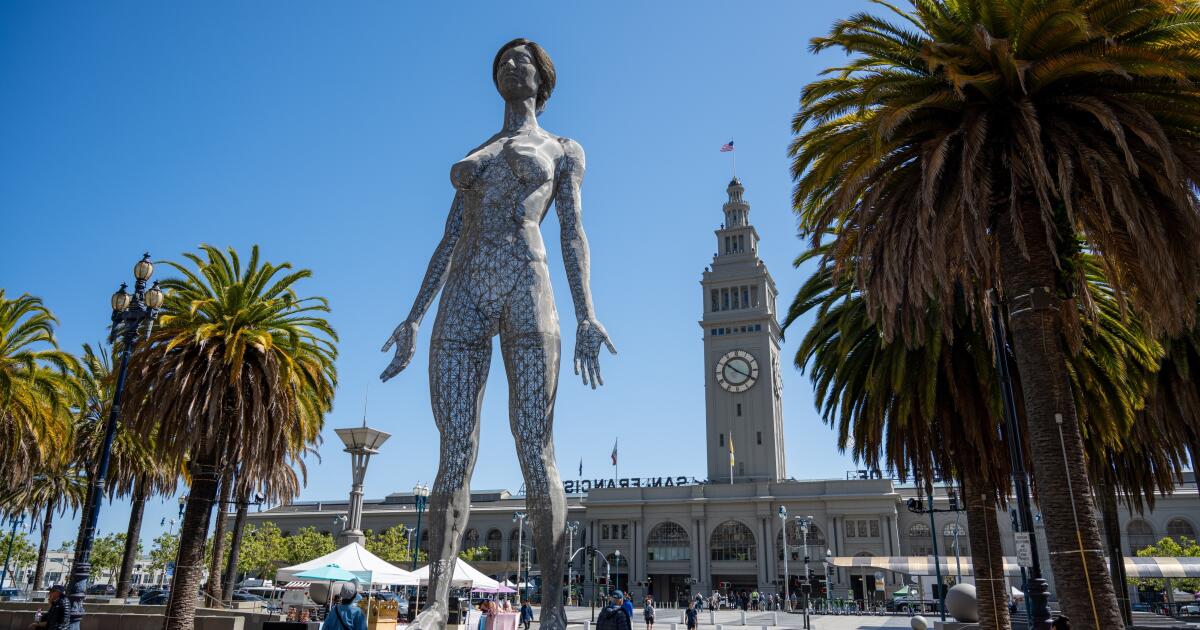
A sculpture of a giant naked woman goes on sale in San Francisco. Bring a crane
-

 Dallas, TX2 hours ago
No ‘straight answer’: Why Pioneer Cemetery is the latest battleground at City Hall
-

 Miami, FL2 hours ago
TSA hosts news conference ahead of World Cup third place match at Miami Stadium
-

 Boston, MA3 hours ago
ICE Boston arrests Barbados national during targeted operations in Attleboro
-

 Denver, CO3 hours ago
Denver Broncos training camp is 2 weeks away

