Midwest
Ohio grandmother mauled to death by pit bulls while ‘peacefully gardening’: lawsuit

Warning: This story contains graphic content.
Two pit bulls that mauled an Ohio grandmother to death last year were left to roam freely despite their history of attacks, and even got into a stash of cocaine weeks before the incident, according to a newly-filed lawsuit.
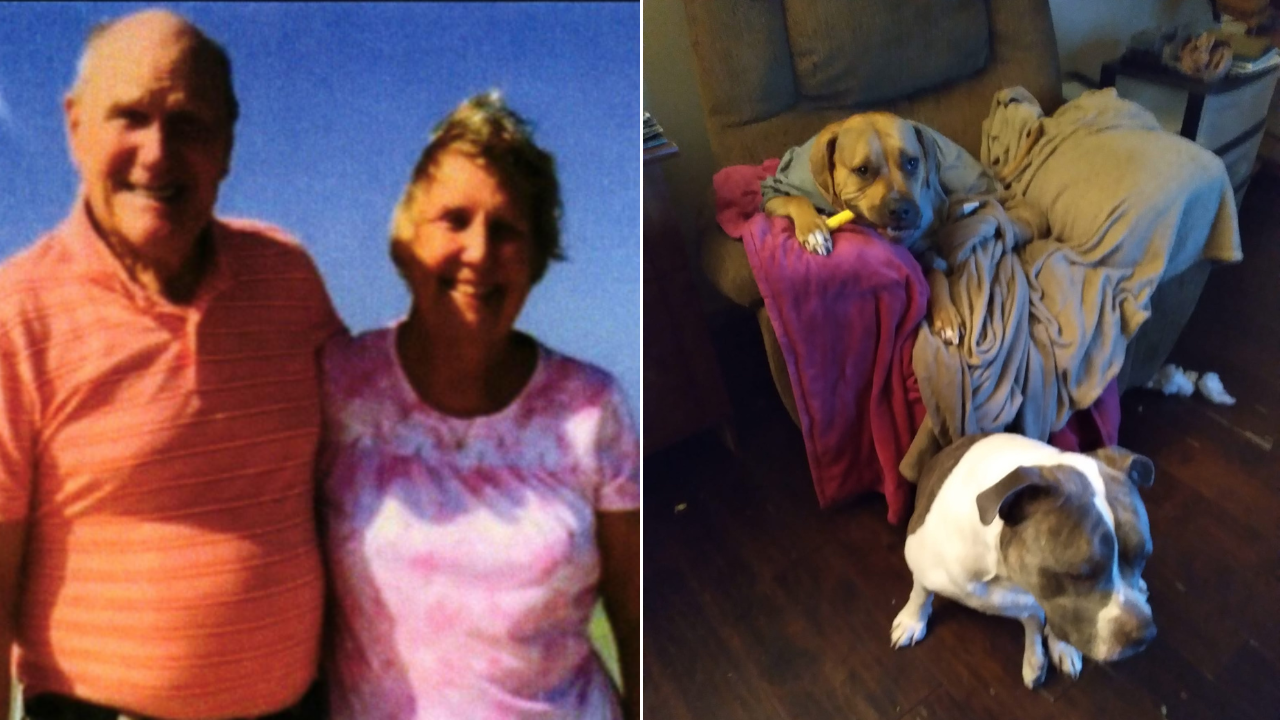
Jo Ann Echelbarger, 73, was killed by a pair of pit bulls named Apollo and Echo, which were owned by suspects Susan and Adam Withers, on Oct. 17. The gruesome incident took place at The Reserve at Ashton Village, a residential complex in Ashville, Ohio.
According to a suit filed on behalf of Echelbarger’s family on Mar. 13, the decedent had only lived at the complex for a few months before she was killed. The two pit bulls “ran around the Reserve’s common areas, eventually attacking Jo Ann while she was peacefully gardening.”
“Part of Jo Ann’s harm was the extreme and severe conscious physical and mental pain and suffering she experienced in the moments before, during and after being viciously attacked and prior to her death,” the filing described. “Part of this was caught on some of the most gruesome videos one could ever envision.”
DOGS THAT KILLED ELDERLY SAN ANTONIO MAN ‘SNAPPED’ AFTER PET SERVICES VISIT, OWNER SAYS
Jo Ann Echelbarger, 73, was mauled to death by two pit bulls while “peacefully gardening,” according to a new lawsuit. (Handout / Google Maps)
The tragedy was made worse by Echelbarger’s life-long fear of dogs, the lawsuit noted. The dogs were later killed by police.
“The attack and last moments of Jo Ann’s life were particularly terrifying because Jo Ann feared dogs since she had previously been bitten by a dog as a child,” the lawsuit stated.
“In fact, the dogs were so aggressive and persistent in their menacing, violent, and aggressive behavior that the police were forced to shoot and kill the dogs to end the terror,” the suit described. “And even after bullets hit one of the dogs, it returned to Jo Ann and continued to attack before running back into the Withers’ home.”
According to the lawsuit, the October incident was not the first time the dogs had gotten into trouble. The document lists several violent or disruptive incidents involving the canines – including one Oct. 2023 incident where Apollo attacked a resident and killed their dog.
The Withers’ dogs were reportedly ordered to leave the community in a Sept. 11 court order that hadn’t been enforced, the lawsuit stated.
Three weeks before Echelbarger’s death, on Sept. 27, police were called to see the dogs because “Echo and Apollo had ingested Adam Withers’ cocaine.”
NEW YORK INFANT MAULED, KILLED BY DOGS IN ATTIC WHILE PARENTS SMOKED MARIJUANA: POLICE
Jo Ann Echelbarger, pictured in an undated photo with her husband, was attacked by two pit bulls named Echo and Apollo. (Handout / Adam Withers via Facebook)
“The body cam footage of the incident reveals that Ashville PD called the Warden’s Office to no avail,” the suit said.
In a statement to Fox News Digital, Rex H. Elliott, the attorney representing Echelbarger’s family, accused the residential complex and the Pickaway County Dog Warden of neglect in the situation.
“The fact is that if the Dog Warden or Condo Association had done their jobs, Jo Ann Echelbarger would be alive today and her family would not have to live with this profound loss or the constant memory of the horrific nature in which she was killed,” Elliott said.
“These failures resulted in the death of a wonderful 73-year-old wife, mother and grandmother.”
Adam Withers and his mother, Susan Withers, were both arrested over the incident. (Pickaway County Sheriff’s Office)
Fox News Digital reached out to the attorneys representing the Withers, but did not receive a response in time for publication.
Read the full article from Here


ALLIANCE, Neb. (WOWT) – Carhenge, a replica of the world-famous Stonehenge made of old cars, opened in the Nebraska Panhandle in 1987.
According to Visit Nebraska, it was constructed in Alliance by the Jim Reinders family in memory of his father during a family reunion.
Carhenge also includes sculptures made of old cars and car parts.
It is open year-round and free to visit.
MORE LOCAL HISTORY
—
On July 4, 2026, our country will celebrate its 250th birthday. Every day leading up to it, First Alert 6 will take a look at the people and events that shaped our area.
—
Get a first alert to severe weather approaching your area. Download the First Alert 6 Weather app.
Copyright 2026 WOWT. All rights reserved.

BISMARCK — North Dakota is experiencing losses on nearly every commodity outside of beef and cattle and the state is working toward finding solutions to the ongoing loss of cropland value. At the same time, costs have increased at a faster rate than farmers are used to. North Dakota Agriculture Commissioner Doug Goehring describes it as “death by a thousand paper cuts.”
“It’s not any one thing that’s taking farmers to their knees,” he said. “I needed to get a certain sensor in the fuel pump and that fall before COVID, we were coming out of a kind of a tough year and it was $1,700. I said, ‘Let’s just wait and put it in next spring.’ Well, next spring came around and it was $3,200. I mean, holy cow. And nothing changed. So, there just seems to be some opportunistic type of practices going on.”
Rules and regulations don’t seem to be helping. For Goehring, a look at certain regulations would be a good step. One example is the Regional Haze Rule adopted by the EPA in 1999, mandating that states develop and implement air quality protection plans to reduce the pollution that causes visibility impairment. North Dakota, with a clean coal emission in place and operating at 19 parts per million, was disadvantaged.
“You had air emission standards in Pennsylvania that were operating at 200. Then the memorandum came from the administration and EPA that you had to cut those emissions in half. How the heck do you cut 19 or 18 parts per million in half?” he said.
American culture has brought more hurdles, too.
Tom Campbell, USDA state director for Rural Development, notes the rise of GLP-1 drugs. People are eating less sugar, bread and starches, which could be hitting some key sectors regionally. Combined with rising expenses and fixed costs, it becomes a “double whammy.”
“You have to harvest everything, and hopefully we can get some big yields to offset some of the losses,” Campbell said, noting that weight-loss drugs may be “changing habits” among consumers.
“… I don’t know if it’s for sure or not, but we’re concerned about the future there, too.”
A bright spot for the region, but an unfortunate development for others, is drought in the Pacific Northwest. Low moisture levels there have added dollars to other markets.
“Unfortunately, somebody else’s disaster is our benefit. But, usually, that’s what it takes: somebody else’s problems to fix our problems,” Campbell said.
With prices, it’s a waiting game. High prices are generally thought to correct themselves with low demand. What can be controlled, Goehring believes, is the way rules and regulations are considered.
Measurable outcomes could give detailed accounts of the domino effect that takes place with either implementing regulations or taking them away.
“There has to be some measurable difference on a basis at which the public can derive some value from a rule or regulation that goes in place. Because every one of them is impacting our daily lives, whether it’s at home, on the road or in our businesses,” Goehring said.
Digital Content Producer and Sports Reporter at the Grand Forks Herald since December of 2020. Maxwell can be contacted at mmarko@gfherald.com.

COLUMBUS, Ohio (WSYX) — As concerns have grown over the impact of social media on young people, lawmakers are pushing to keep protections in tact to keep children safe online.
This week the Sixth Circuit Court of Appeals ruled that Ohio’s law, the Social Media Parental Notification Act, requiring parental consent for children under the age of 16 to use social media must be restored. Gov. Mike DeWine signed the act into law in July 2023.
Netchoice, the trade group that represents Tik Tok, Snapchat, Meta and other tech companies contested Ohio’s law in 2024, arguing that it was overly broad, vague and represented an unconstitutional impediment to free speech.
“An unconstitutional law protects no one, and we remain focused on ensuring the First Amendment rights of Ohioans are protected,” Paul Taske, NetChoice Litigation Center Director said.
Cincinnati-based Sixth Circuit’s panel does not agree with this view point, determined that the law is not unconstitutional and had the block on the law’s enforcement vacated.
“At bottom, the Act imposes a parental consent requirement,” Judge Eric Clay wrote. “That requirement constitutes a marginal burden that precisely targets the multi-faceted problem that Ohio has identified: Children’s unsupervised assent to terms and conditions for use of platforms that take advantage of and harm them.”
The Social Media Parental Notification Act is a way to protect children’s mental health against the “intentionally addictive” nature of social media, according to U.S. senator Jon Husted.
The law requires companies to get parental permission for social media and gaming apps and to provide their privacy guidelines so families know what content would be censored or moderated on their child’s profile.
Ohio Attorney General Andy Wilson says the ruling is “a win for Ohio families.”
“The court agreed that parents –- not social media companies –- should get a say in what kids see online,” he said in a statement. “We have an obligation to keep our children safe, and today, the most dangerous place for our kids is the internet. This decision gives parents the tools to be involved and provide oversight.”
-

 Montana6 minutes ago
Planning For Life After Coal Cost a Montana County Commissioner His Seat – Inside Climate News
-

 Nebraska9 minutes ago
Today in History – June 20: ‘Carhenge’ opens to public in Alliance, Nebraska
-

 Nevada21 minutes ago
Nevada’s First And Largest Military Outpost Is Now A Historic State Park To Camp, Paddle, And Hike – Islands
-
 New Hampshire24 minutes ago
New Hampshire faces child care crisis: Costs rise, options fall – Valley News
-

 New Jersey29 minutes ago
Parsippany Positioned for the Spotlight Through New Jersey’s Film Ready Program | Parsippany Focus
-

 New Mexico36 minutes ago
APD: Pedestrian hit and killed in early morning crash
-

 North Carolina38 minutes ago
North Carolina’s 5 Most Efficient Scorers Next Season
-

 North Dakota44 minutes ago
For North Dakota producers, ‘death by a thousand paper cuts’

