North Dakota
North Dakota Supreme Court Considers Motion to Reinstate Abortion Ban While Appeal is Pending


The North Dakota Supreme Court hears arguments involving abortion via Zoom on Nov. 21, 2024. (Screenshot Bismarck Tribune via the North Dakota Monitor)
(North Dakota Monitor) – North Dakota’s solicitor general called on the North Dakota Supreme Court to reinstate an abortion law struck down by a lower court until a final decision in the case is made, arguing that the ban must remain in effect because the state has a compelling interest in protecting unborn life.
“We say that not to be dramatic, but because the district court seems to have lost sight of that,” Phil Axt told justices Thursday.
The ban, signed into law by Gov. Doug Burgum in April 2023, made abortion illegal in all cases except rape or incest if the mother has been pregnant for less than six weeks, or when the pregnancy poses a serious physical health threat.
South Central Judicial District Court Judge Bruce Romanick vacated the law in September, declaring it unconstitutionally vague and an infringement on medical freedom.
He further wrote that “pregnant women in North Dakota have a fundamental right to choose abortion before viability exists.”
The law went into effect just weeks after the North Dakota Supreme Court ruled the state’s previous abortion ban unconstitutional and found that women have a right to seek an abortion for health reasons.
Axt argued Thursday that Romanick’s judgment striking down the 2023 law conflicts with the Supreme Court’s prior ruling, and that Romanick’s legal analysis contains “glaring errors.” Axt claimed there’s nothing in the state constitution that supports a right to abortion until the point of viability.
“It’s been clear since our territorial days that in order to justify killing another human being, there must be a threat of death or serious bodily injury,” Axt said.
Meetra Mehdizadeh, an attorney representing the plaintiffs, said to reverse Romanick’s decision even temporarily would be to disregard many serious problems he identified with the statute.
The ban does not sufficiently explain to doctors when they may legally provide abortions — which chills their ability to provide necessary health care for fear of prosecution, she said.
“The district court correctly held that the ban violates the rights of both physicians and patients, and staying the judgment and allowing the state to continue to enforce an unconstitutional law would be nonsensical,” Mehdizadeh said.
Axt countered that the law is not vague, and that doctors are incorrect to assume they would face criminal penalties for good-faith medical decisions.
If doctors are confused about the ban, said Axt, “the solution is not striking down the law — it is providing some professional education.”
In briefs filed with the court, the state also argued that Romanick’s judgment vacating the law seems to conflict with his original order declaring the law unconstitutional.
While the order identifies a right to abortion until the point of fetal viability, Romanick’s judgment does not include any reference to viability. The state is now confused as to whether it can now enforce any restrictions on abortion, Axt said.
North Dakota still must observe abortion regulations established under other laws not challenged in the lawsuit, Mehdizadeh said.
Axt further claimed that Romanick’s judgment should be put on hold because it addresses a “novel” area of law, and because it takes a supermajority of the Supreme Court to declare a statute unconstitutional.
“Statutes should not be presumed unconstitutional until this court has had an opportunity to weigh in on the matter, and a super majority of this court is of that opinion,” Axt said.
Justice Daniel Crothers said he questioned Axt’s logic.
“Any novel issue where the district court declares something unconstitutional, it’s sounding like you’re suggesting that we should presume that it’s wrong,” Crothers said to Axt.
The appeal is the latest step in a lawsuit brought against the state by a group of reproductive health care doctors and a Moorhead, Minnesota-based abortion provider, Red River Women’s Clinic. The clinic previously operated in Fargo, but moved across the state line after Roe v. Wade was overturned in 2022.
The ban, passed with overwhelming support by both chambers of the Republican-dominated Legislature, set penalties of up to five years in prison and a maximum fine of $10,000 for any health care professionals found in violation of the law.
The arguments were only on whether Romanick’s decision should be put on hold during the appeal, not on the merits of the case itself, which the Supreme Court will consider separately. The justices took the matter under advisement.


Richard D. “Rick” Langowski, age 78 of Minto, North Dakota passed away on Thursday, April 16, 2026 at his home in Minto.
Rick was born March 10, 1948 in Grafton, North Dakota, the son of the late Julian and Catherine (Wysocki) Langowski. In 1967, he volunteered for the military bringing him to Germany as a Motor Sargent. After an Honorable Discharge he took a job at the International Airport in Grand Forks, ND. His duties included: refueling planes and jets as well as maintaining the grounds. He had the opportunity to meet the famous singer Mr. James Brown.
Rick was united in marriage to Alice Odegard on June 17, 1982 in Minto, North Dakota. The family made their home in Minto where they raised Jason and Angela. Rick was very proud of his children and loved them more than anything. He told everyone and bragged about the children he raised. He cherished his grandchildren and loved to be present in every aspect of their lives.
His career changed to semi driving where he drove for Cenex Transportation for four years and ten years for Valley Transports. His love for the open road directed him into the used car business. He opened Minto Auto Sales and Services in 1987, proudly operating for 39 years. He had the privilege to meet many people and travel to many places. He enjoyed riding his many Harley Davidson Motorcycles. In 2025, he sold the business to his longtime mechanic and friend, Aaron Anderson. In Rick’s opinion, “Minto Auto is one of the best mechanical shops in the area.”
He was a member of the Sacred Heart Catholic Church, Minto, ND. He loved hunting with Jason, watching sports, especially the Yankees and Twins. In 2017, Rick was able to enjoy a father/son trip of a lifetime to Alaska. He thoroughly enjoyed every aspect of the trip and thought was the best time of his life.
Rick is survived by his children: Jason Odegard, Reynolds, ND; Angela (Nick) Eppert, Goshen, IN; grandchildren: Ashlyn, Kaia, Annika, Boden and Caelan; sisters: Carol King, Grand Forks, ND; Connie Jones, Argyle, MN; seven nieces and nephews. He is also survived by his very close friend and confidant, Yvette Estep, Grafton, ND. He was preceded in death by his parents and siblings: Robert and Ronald.
Rick’s family would like to extend a very special thank you to Yvette Estep, an employee of Rick’s, affectionately known as “hotrod.” She was there for Rick, along with Aaron for doctor’s appointments, treatments and helped comfort him throughout his battle. Jason and Angela will be forever indebted to her and consider her family.
Mass of Christian Burial will be Wednesday, April 22, 2026 at 10:30 A.M. at the Sacred Heart Catholic Church of Minto. Visitation will be for one hour prior to the service at the church. Interment will be at the Sacred Heart Catholic Cemetery, Minto, ND. Military Rites will be provided by the Minto American Legion Post and the North Dakota National Guard Honor Guard.
or send flowers to the family in memory of Richard D. Langowski, please visit our
.

By Nehal Malik
Tesla is heading to court to challenge one of the final frontiers of the traditional car dealership model. The automaker has officially filed a lawsuit against the state of North Dakota, seeking the right to open its first two showrooms and service centers in Bismarck and Fargo.
For years, North Dakota law has required vehicle manufacturers to sell their products through independent, third-party franchised dealerships. Tesla, which famously avoids the middleman to sell directly to consumers, argues that these decades-old rules are an unnecessary barrier. According to a report by the Minot Daily News, the case is now in the hands of District Judge Bonnie Storbakken.
A Battle Over Definitions
The core of Tesla’s legal argument relies on a specific reading of state law. Currently, North Dakota defines a “manufacturer” as a person who assembles or imports a vehicle and sells it to dealers in the state for resale. Tesla argues that because it sells directly to its customers and does not use third-party dealers at all, it technically doesn’t fall under that legal definition.
“Tesla just wants to be able to sell its vehicles in North Dakota, and not force customers who would wish to purchase a Tesla vehicle to have to drive to Minnesota or another state to do it,” said Ari Holtzblatt, one of Tesla’s attorneys. Currently, the more than 800 Tesla owners in North Dakota have to leave the state just to take delivery of their cars or receive first-party service.
The state’s Assistant Attorney General, Michael Pitcher, isn’t buying it. He argued during a recent hearing that “Tesla can operate in North Dakota the same way that every other manufacturer does. They can appoint dealers, they can enter into franchise agreements, and they can sell through that.” From the state’s perspective, the law isn’t stopping Tesla from doing business; it’s just regulating how the company’s cars get into owners’ hands.
Challenging the Franchise Model
Tesla has a long history of fighting these “protectionist” franchise laws across the U.S. In many cases, Tesla’s legal victories have paved the way for other EV startups like Rivian and Lucid to secure their own direct-sales exceptions. In some of the more restrictive states, Tesla has even found innovative workarounds by partnering with Native American tribes to open stores on sovereign tribal land.
The direct-to-consumer model is vital for Tesla because it allows the company to control the entire customer experience and maintain higher margins by cutting out dealer markups. For the customer, this often translates to a more transparent buying process without the high-pressure sales tactics or hidden fees associated with traditional dealerships.
The Road Ahead for North Dakota
North Dakota has historically lagged behind in EV infrastructure, though the state is slowly catching up with a growing number of Supercharger locations and charging ports along the I-94 corridor. Tesla’s attempt to establish a physical presence in the state is a clear sign that the company sees untapped potential in the region.
If the court rules in Tesla’s favor, it won’t mean instant licenses, but it will give the company the green light to reapply with the Department of Transportation. As the automotive world shifts toward an electric future, these legal battles in North Dakota will likely determine how much choice consumers actually have when it comes to how they buy their next car.
By Nehal Malik

Tesla is gearing up for its first major financial check-in of the year. The company has officially scheduled its Q1 2026 earnings call for after the bell on Wednesday, April 22, 2026. Ahead of the event, Tesla has shared its company-compiled earnings consensus for the quarter, which aggregates estimates from 20 top sell-side analysts, including Goldman Sachs, Morgan Stanley, and Wedbush.
According to the data, analysts are expecting average total revenues of approximately $21.4 billion for the quarter. On the profitability side, the consensus for GAAP Earnings Per Share (EPS) sits at $0.16, with an adjusted non-GAAP figure of $0.33. While the company noted it “does not endorse any information, recommendations or conclusions made by the analysts,” these numbers provide a clear benchmark for what Wall Street expects from Elon Musk and his team.
Setting the Stage for Q1 Results
This earnings report follows a quarter in which Tesla’s delivery numbers came in slightly below analyst projections. The company delivered 358,023 vehicles, just missing the initial analyst consensus of 365,645. Even with the slight miss, deliveries grew about 6.3% compared to the first quarter of last year.
To put these new earnings estimates in perspective, we can look back at Q1 2025. In that first quarter of last year, Tesla reported an adjusted EPS of $0.27 and revenue of $19.34 billion. While the Q1 estimates show a healthy gain in earnings that aligns with the year-over-year growth in deliveries, the focus during the call will likely be on margins and future growth rather than just the raw revenue numbers.
A Roadmap Beyond the Model S and X
The Q&A session with executives is expected to be one of the most eventful in years, especially since Model S and Model X production has officially ended. Tesla is currently offering its final Signature Edition units as a tribute to its flagship legacy, leaving a “premium-shaped” hole in the lineup that many investors hope will be filled by a new high-end SUV (CyberSUV, anyone?) or the long-awaited next-gen Roadster.
We also expect significant updates on Tesla’s AI and robotics divisions. Musk recently confirmed that the AI5 chip design is complete, with work already beginning on AI6 and Dojo 3. Additionally, the Cybercab robotaxi is slated to enter mass production this month, and investors will be looking for a firm timeline on the first unsupervised autonomous rides.
What to Watch For
Beyond the balance sheet, the call will likely touch on the Optimus humanoid robot. Tesla is rumored to be close to unveiling a production-ready prototype later this year, and any mention of “Optimus in the factory” will surely move the needle.
As Tesla transitions from a traditional car manufacturer to an AI and robotics powerhouse, this earnings call will serve as a pulse check for that transformation. We’ll be covering the call on April 22 to see if Tesla can beat expectations and provide a clear vision for its hardware-heavy roadmap through 2027.
By Nehal Malik
Tesla’s Spring 2026 Software Update (version 2026.14 and later) is officially here, and while the “flashy” features like the new “Hey Grok” wake word are getting most of the attention, the vehicle’s user interface is also getting a massive glow-up. Tesla has updated the parked vehicle visualizations, bringing improved vehicle models to the center touchscreen.
Installed on 0.9% of fleet
Last updated: Apr 18, 2:05 pm UTC
The new look was first showcased by Tesla enthusiast @sergiumogan on X, who posted a direct comparison between the old and new interfaces. The difference is immediately apparent, with improved lighting and the car model and the surrounding scene looking significantly more realistic.
First Before & After look at Tesla’s v2026.14.1 Spring Update. Parked vehicle visualisation comparison (white color ).#teslaupdate #tesla pic.twitter.com/qZwyhiPf3i
— Sergiu Mogan (@sergiumogan) April 17, 2026
Higher Fidelity via Unreal Engine
The jump in quality is thanks to Tesla’s integration of Unreal Engine into its software stack. This technology was previously used on the flagship Model S and Model X, but it is now trickling down to the rest of the fleet. The car model itself is higher quality, with improved lighting effects that make reflections on the paint and glass far more noticeable.
The environment around the car has also been completely redesigned. Instead of a simple gray void, the “park scene” now features a professional, studio-like atmosphere. There is a cool fog-like effect over the windscreen, with spotlight-style lighting shining down on the car, creating a sense of depth that was missing in previous versions. This level of polish makes the car feel like a premium piece of tech even when it is just sitting in your garage.
Hardware Requirements and Compatibility
Currently, this high-fidelity visualization is only showing up for the new “Highland” Model 3 (2024+) and the 2025+ Model Y (Juniper). However, there are plenty of reasons for owners of older vehicles to be optimistic. This feature will likely become available for some other models in a future update, such as the Cybertruck, roughly 2022+ Model 3, and 2022+ Model Y, provided they are equipped with the AMD Ryzen-powered MCU 3 infotainment unit.
The processing power required for these lighting effects and high-res textures means that older Intel Atom-based cars (MCU 2) will likely be left out of this specific visual upgrade. While this might not be the most “exciting” functional feature, it proves that Tesla is working on all aspects of the user experience. The company isn’t just pushing its self-driving software to the limits; it is making sure the car looks and feels modern every time you step inside.
It’s not just the parked screen; these improved models are also used on the vehicle visualizations.
A Strong Start to the Spring Update
The Spring 2026 Software Update has delivered on its promises in spades. Between interactive maps for the rear screen and the rebranding of Dog Mode to Pet Mode, not to mention a brand new Self-Driving App that brings subscriptions, tutorials, and usage stats under one umbrella, Tesla is keeping its fleet feeling fresh.
As the Spring Update continues to roll out to more owners globally, we expect to see even more hidden UI tweaks discovered. Tesla has successfully turned its cars into evolving platforms where a simple over-the-air update can make your three-year-old vehicle feel like a brand-new model.

BISMARCK, N.D. (KFYR) – A new streaming series about the late John F. Kennedy Junior, along with a congressional campaign by John F. Kennedy’s grandson, has once again put the Kennedy family back in the headlines. This summer, a former bodyguard of Jackie Kennedy will be in the spotlight. He’s originally from North Dakota and recently passed away.
Clint Hill came from a small town in North Dakota but landed on the world’s stage after he protected First Lady Jackie Kennedy after her husband, the President of the United States, was assassinated.
And now, decades later, members of the Washburn American Legion revere Clint Hill for his heroic service to five Presidents.
“He was involved in that infamous assassination in Dallas, which certainly affected his life, but he came out of it. And his support of God and country never wavered through all of this,” said John Schulz, monument organizer and member of Washburn American Legion Victor B Wallin Post #12.
To honor this North Dakota son, Schulz and others have spent the past year organizing a grand dedication and monument for Hill.
“We’ll have a nice carved-in flag on the left side of the monument,” said Shulz.
The monument will be made of polished granite and weigh 12,000 pounds.
It will be six feet tall and five feet wide, and will include a bronze plaque of the Zapruder photo of Hill covering Jackie Kennedy during the JFK assassination.
Shulz worked alongside Hill’s widow, Lisa McCubbin Hill, to design sections of the monument.
Shulz believes this dedication is long overdue.
“I think it’s important to honor someone who served his country well. He served under five Presidents and did a wonderful job taking care of them,” said Shulz.
There will also be multiple plaques summarizing important points of Hill’s life on the back side of the monument.
The dedication will happen on Aug. 1 at Washburn’s Veterans Memorial Park.
Three to four hundred people will be in attendance, including Hill’s widow, past and present state governors and various Hill relatives.
So far, the legion post has raised $60,000 of its $100,000 goal, but feels it will have no problem reaching that fundraising number.
Copyright 2026 KFYR. All rights reserved.
-

 Technology37 seconds ago
The future of local TV news has taken a Trumpian turn
-

 World7 minutes ago
Pope Leo says remarks about world being ‘ravaged by a handful of tyrants’ were not aimed at Trump: report
-

 Politics13 minutes ago
Trump renews bridge, power plant threat against Iran in push for deal, mocks ‘tough guy’ IRGC
-

 Health19 minutes ago
Loneliness may be silently eroding your memory, new research reveals
-

 Sports25 minutes ago
ESPN’s Stephen A Smith hears boos from WrestleMania 42 crowd
-

 Technology31 minutes ago
Chinese robot breaks human world record in Beijing half-marathon
-
 Business37 minutes ago
Civil case against Alec Baldwin, ‘Rust’ movie producers advances toward a trial
-
 Entertainment43 minutes ago
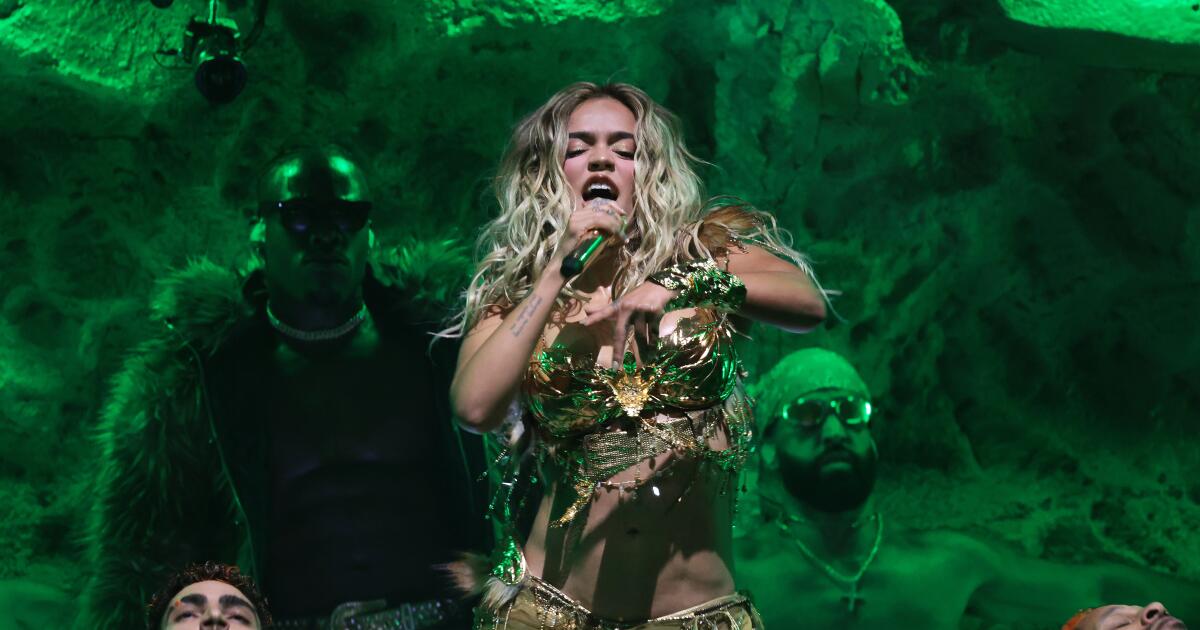
Karol G at Coachella was a global hit. Yet other foreign acts fear touring the U.S.