North Dakota
Grand Forks Military Compatibility Committee meets for the first time


GRAND FORKS — The Grand Forks Military Compatibility Committee met for the first time in Grand Forks on Thursday morning at Grand Forks International Airport. The brief inaugural meeting introduced the committee, reviewed the military impact zones chapter to the North Dakota Century Code and began the process of identifying potential zoning considerations.
The committee was created as a part of Senate Bill 2398, which was passed during the 2025 legislative session. The bill’s purpose is to create impact zones around military installations and form committees that will help oversee any potential development in those zones to avoid detrimental impacts on military operations.
Present for the meeting were North Dakota Agriculture Commissioner Doug Goehring, Grand Forks County Administrator Tom Ford, Lt. Col. Trenton Norman, Grand Forks Township board member Andy Byron and Grand Forks International Airport Executive Director Ryan Reisinger.
“The Legislature felt this was an opportunity to gain a better understanding and in many ways, assist (Grand Forks Air Force Base) in that cause. We are in no way trying to put our finger in your chili; we just want to make sure we can add some ingredients,” Goehring said.
Chapter 37-30-03 of the Century Code states the agriculture commissioner may create one or more military compatibility committees to harmonize land, airspace and electromagnetic spectrum use in military impact zones, review potential encroachment of military installations in military impact zones and promote the sustainability of military operations in the state.
A similar meeting was also held for the first time this week in Minot.
In Grand Forks County, there are concerns about solar farms or wind turbines causing problems for the base. Ford said the county is sensitive to any type of encroachment and it is trying to get ahead of it.
The county is in the process of a compatible use study that would help the Grand Forks County Commission refine its special use policies. This could include adding cement to runways close to the base or adding wind farms, Ford offered as examples.
The main concern for Ford was any impacts on spectrum frequency availability as opposed to air or land use. Ford also offered to keep the committee apprised of how the compatible use study proceeds.
Gorman Field, a UND-owned Unmanned Aircraft System testing and training site in Emerado, was mentioned as a type of project that the committee would want to get ahead of, given its proximity to the base.
“Are there other opportunities for similar drone programs and projects that are going to happen in the rural county? Not that we are aware of, but we would like to get ahead of it just because we weren’t really able to mitigate it with the Gorman Field project,” Byron said.
Goehring also offered oil and gas pipelines as potential sources of impact.
“That might be something to watch and monitor,” he said.
Representing the base, Norman stated they are not aware of any concerns of encroachment at the moment. The base is actively working to engage its community partners and has a “wonderful working relationship.”
Grand Forks City Council President Dana Sande was absent from the meeting. Sande will act as the committee’s representative from the city, according to Goehring.
Before adjournment, Goehring determined the committee would meet again in the summer at a date to be determined later.
Digital Content Producer and Sports Reporter at the Grand Forks Herald since December of 2020. Maxwell can be contacted at mmarko@gfherald.com.



Michigan State warms up for March Madness at NCAA Tournament practice
Michigan State basketball takes the floor in Buffalo, New York, for its NCAA Tournament practice on Wednesday, March 18, 2026.
It’s the green and white vs. the green and yellow in Buffalo, New York, as Michigan State basketball faces North Dakota State on Thurday, March 19 (4:05 p.m., TNT) at KeyBank Center.
The Spartans are the 4-seed and favored by 16½ points, but that doesn’t rule out an upset by the 13-seed Bison: two 4-seeds have lost in the first round in the past three years (Alabama to College of Charleston in 2024 and Virginia to Furman in 2023).
Will the Spartans go the way of the Crimson Tide and Cavaliers? Probably not, but five Free Press sports writers have their thoughts on the 2026 NCAA Tournament first-round game between Michigan State and North Dakota State.
Tony Garcia
If this is in fact Tom Izzo’s month, there’s no time to fall to a double-digit seed. The Spartans’ defense has been gutted its past two games, but Jeremy Fears Jr. is exactly the type of guard a team needs in March. He leads the Spartans out of the opening round. The pick: MSU 77, North Dakota State 64.
Carlos Monarrez
Ol’ Mr. March, Tom Izzo, has his Spartans dancing yet again and with a healthy break – ahem – after an early Big Ten Tournament exit, you can bet he’ll get the defense to tighten up. It’ll need it against the good-shooting Bisons, who are great from 3-point range. The pick: MSU 78, North Dakota State 70.
Jeff Seidel
The Spartans should have no excuses. They are well-rested and have had time to prepare for the Bison, a team that last made the NCAAs in 2019. If the Spartans come out and go through the motions, thinking ahead to future opponents – like they did at the Big Ten Tournament – it would be inexcusable. I also don’t think that’s gonna happen. The Spartans will roll. The pick: MSU 90, North Dakota State 71.
Chris Solari
The Spartans haven’t taken a step back from high-level competition in weeks, so they will welcome having the clear-cut physical advantages to bang with the Bison. The key at KeyBank Center will be MSU defending NDSU’s sharp-shooting lineup to prevent a classic 3/14 upset. The pick: MSU 84, North Dakota State 72.
Shawn Windsor
The Spartans go as their shooting goes. That’s been the narrative for much of the season anyway, and while they look like Final Four contenders when they hit a few outside shots, the better barometer of late has been their 3-point defense. They’ll need some against the Bisons, who love to chuck ’em, and make ’em. Expect MSU to tighten up on the perimeter. The pick: MSU 74, North Dakota State 63.

BISMARCK, N.D. (NORTH DAKOTA MONITOR) – North Dakota can expect a key property tax relief program to cost about $430 million for the 2025-2027 budget cycle — about $20 million more than what the state planned to spend.
The 2025 legislature set aside $408.9 million for the primary residence credit for the two-year budget cycle, State Tax Commissioner Brian Kroshus said.
“That discussion was had during the last session, that I don’t think this is enough,” he told state lawmakers at a Tuesday meeting of the Tax Reform and Relief Advisory Committee. “We were given every assurance that if we need to ask for additional funds, they will be found.”
The credit, created in 2023, subsidizes property taxes for most homeowners. Initially it provided a $500 discount every year, but lawmakers in 2025 increased that amount to $1,600 as part of a major property tax relief package, House Bill 1176.
Kroshus said the cost of the program is outpacing the state’s initial projection for several reasons. First, the credit is becoming more well-known, and more people are persuaded to apply for $1,600 in relief compared to the original $500.
“The $1,600 credit tends to get your attention a little bit more,” he said.
More North Dakotans are also becoming homeowners as the state’s housing supply increases, he added.
The deadline for homeowners to apply for the credit this year is April 1.
House Bill 1176 also sought to provide tax relief by capping annual property tax increases by local governments to 3% annually.
The North Dakota League of Cities, the North Dakota Association of Counties and the North Dakota School Boards Association recently conducted informal surveys of their members to see how communities are responding to the cap.
The associations told lawmakers Tuesday that many members report that the new cap is making budgeting more stressful.
All three organizations found widespread confusion about how the law works, and said the statute is too rigid. They said the law isn’t flexible enough to accommodate their communities, which have varying budgeting processes, scheduling deadlines, population sizes and tax bases.
“Langdon School District, located in the northeast part of the state, was especially direct in their response, saying that the district did not feel confident that it could even determine whether it was in compliance with the 3% cap,” Amy De Kok, executive director of the North Dakota School Boards Association, said during the meeting.
Many local government officials also emphasized in the survey that the costs of basic expenses like emergency services and employee benefits — especially health insurance — are increasing more than 3% a year. They said they’re worried about how they’ll pay for those costs in the long-term under the cap.
Some counties reported being “unable to provide the adequate competitive salary increases” and that “they were limited in their ability to budget for large projects,” said Donnell Preskey, government and public relations specialist for the North Dakota Association of Counties.
Some local governments also say the law makes it harder to qualify for certain state funding opportunities, since some programs require them to tax their communities above a certain threshold to qualify.
“Township officers are being pushed in two different directions,” Larry Syverson, executive director of the North Dakota Township Officers Association, said during the meeting.
Communities suggested increasing the cap or making it proportional to inflation, the informal surveys found. Another common request was for the law to be amended to be more forgiving of administrative deadlines and to make it easier to correct paperwork mistakes, since communities are still getting used to the new system.
They also raised the possibility of allowing costs like public safety, infrastructure and election expenses to be exempt from the caps.
House Bill 1176 allows for local governments to exceed the 3% cap if voters approve it on the general election ballot.
None of the association representations said they were aware of any communities proposing cap increases to voters during the 2026 general election at this time. They said some local governments are dipping into reserves or tapping into other funding sources in order to make up for money lost due to the cap, however. Local governments also have an ability to carry over unused property tax increases from year-to-year in certain circumstances.
Several lawmakers on Tuesday questioned why communities aren’t going to voters to override the cap if it’s putting so much stress on their budgets.
Kory Peterson, former mayor of Horace, in testimony to the committee noted it’s hard for communities to get tax increases approved on the ballot.
“There’s a lot of tax fatigue,” he said. “As a former mayor, I know that it would be very, very difficult to try and bring up a tax increase in the city of Horace.”
Not all of the feedback was negative. De Kok said some school districts said the cap made the budgeting process more predictable and transparent for taxpayers, for example.
The committee expressed interest in exploring legislation to address some of the local governments’ concerns later this year. It’s scheduled to meet again in June.
“We knew after the session that there was going to be some adjustments necessary,” Rep. Don Vigesaa, R-Cooperstown, said during the meeting.
North Dakota
Michigan State Spartans play North Dakota State Bison in first round of NCAA Tournament

North Dakota State Bison (27-7, 17-2 Summit League) vs. Michigan State Spartans (25-7, 15-6 Big Ten)
Buffalo, New York; Thursday, 4:05 p.m. EDT
BETMGM SPORTSBOOK LINE: Spartans -16.5; over/under is 143.5
BOTTOM LINE: No. 11 Michigan State plays in the first round of the NCAA Tournament against North Dakota State.
The Spartans’ record in Big Ten games is 15-6, and their record is 10-1 in non-conference play. Michigan State is third in the Big Ten at limiting opponent scoring, allowing 68.4 points while holding opponents to 41.0% shooting.
The Bison’s record in Summit League action is 17-2. North Dakota State leads the Summit League with 10.2 offensive rebounds per game led by Trevian Carson averaging 2.1.
Michigan State’s average of 7.7 made 3-pointers per game this season is only 0.7 fewer made shots on average than the 8.4 per game North Dakota State allows. North Dakota State has shot at a 46.8% clip from the field this season, 5.8 percentage points higher than the 41.0% shooting opponents of Michigan State have averaged.
TOP PERFORMERS: Jeremy Fears Jr. is averaging 15.7 points and 9.2 assists for the Spartans. Coen Carr is averaging 12.0 points over the last 10 games.
Damari Wheeler-Thomas is averaging 14.4 points for the Bison. Tay Smith is averaging 2.5 made 3-pointers over the last 10 games.
LAST 10 GAMES: Spartans: 6-4, averaging 78.5 points, 33.8 rebounds, 18.1 assists, 3.9 steals and 3.0 blocks per game while shooting 46.3% from the field. Their opponents have averaged 77.2 points per game.
Bison: 8-2, averaging 79.3 points, 33.9 rebounds, 16.0 assists, 6.6 steals and 2.0 blocks per game while shooting 46.4% from the field. Their opponents have averaged 67.7 points.
___
The Associated Press created this story using technology provided by Data Skrive and data from Sportradar.

3 Trades That Would Instantly Elevate Detroit Lions

San Francisco Ballet presents ‘Don Quixote’

Lake Dallas home explodes, 1 taken to hospital

Teenage suspects of 12-year-old girl’s 2025 rape in Miami appear in court again after being charged as adults

Lukas Reichel has goal and assist in Boston debut to help Bruins top Jets 6-1

Florida High School Football Rankings: Top 25 teams – Oct. 21

How old is Bo Nix? What to know about Oregon quarterback ahead of 2024 NFL Draft

Cleary's 21 help Le Moyne down Central Connecticut State 69-64 in OT

99th annual Pony Swim held in Virginia

Indiana Members Credit Union announced as new anchor tenant at Bottleworks District

4 House Dems vote against Women’s History Museum bill over biological women-only amendment, Republican claims

Iran attacks cut 17% of Qatar’s LNG capacity for up to 5 years: QatarEnergy

Cursive is back. But should students be learning the skill?

State Department to ask for bonds of up to $15,000 for visa applications from a dozen more countries

Russian tanker drifting in the Mediterranean Sea may explode
-

 Oklahoma5 days ago
Family rallies around Oklahoma father after head-on crash
-

 Nebraska7 days ago
Wildfire forces immediate evacuation order for Farnam residents
-

 Detroit, MI1 day ago
Drummer Brian Pastoria, longtime Detroit music advocate, dies at 68
-

 Georgia4 days ago
How ICE plans for a detention warehouse pushed a Georgia town to fight back | CNN Politics
-

 Massachusetts1 week ago
Massachusetts community colleges to launch apprenticeship degree programs – The Boston Globe
-

 Alaska5 days ago
Police looking for man considered ‘armed and dangerous’
-

 Colorado1 week ago
‘It’s Not a Penalty’: Bednar Rips Officials For MacKinnon Ejection | Colorado Hockey Now
-
 Southwest1 week ago
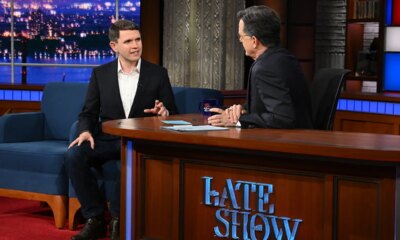
Talarico reportedly knew Colbert interview wouldn’t air on TV before he left to film it