North Dakota
Cleanup underway of the Keystone oil pipeline spill in North Dakota


BISMARCK, N.D. — Trucks and workers started cleaning up the Keystone oil pipeline spill in rural North Dakota, though its cause and the project timing is unclear.
The pipeline ruptured Tuesday morning in southeastern North Dakota and was shut down within two minutes by an employee who heard a mechanical bang. An aerial photo released Wednesday shows a black, pondlike pool of oil suspended in a partially snowy field that’s traversed by tire tracks.
A farmer told The Associated Press he could smell the scent of crude oil, carried by the wind.
South Bow, a liquid pipelines business that manages the pipeline, estimated the spill’s volume at 3,500 barrels, or 147,000 gallons. Keystone’s entire system remains shut down.
That’s not yet known. The company is investigating what caused the spill and how long repairs might take, spokesperson Kristin Anderson said Wednesday.
The spill is not a minor one, said Paul Blackburn, a policy analyst with Bold Alliance, an environmental and landowners group that fought the pipeline’s extension, called Keystone XL.
The estimated volume of 3,500 barrels, or 147,000 gallons of crude oil, is equal to 16 tanker trucks of oil, he said. That estimate could increase over time, he added.
Blackburn said the bigger picture is what he called the Keystone Pipeline’s history of spills at a higher rate than other pipelines. He compared Keystone to the Dakota Access oil pipeline since the latter came online in June 2017. In that period, Keystone’s system has spilled nearly 1.2 million gallons (4.5 million liters) of oil, while Dakota Access spilled 1,282 gallons (4,853 liters), Blackburn said.
In its update, the company said the pipeline “was operating within its design and regulatory approval requirements at the time of the incident.”
The 2,700-mile (4,350-kilometer) pipeline originates in Alberta, Canada, and carries heavy tar sands crude oil south across the Dakotas and Nebraska before splitting to carry oil both to refineries in Illinois and south to Oklahoma and Texas.
The $5.2 billion Keystone Pipeline was built in 2010. TC Energy built the pipeline which is operated by South Bow as of last year.
The spill is contained to an agricultural field. In an update Wednesday, South Bow said it has multiple on-site vacuum trucks beginning to recover the oil. Continuous air quality monitoring is underway. The pipeline’s affected segment is isolated, and the company said it’s evaluating plans for a return to service.
Phone messages and emails were left Wednesday with the state Department of Environmental Quality and the Ransom County sheriff about the spill and response.
Myron Hammer, an adjacent landowner who farms the land affected by the spill, said it hasn’t yet adversely affected him, aside from the smell of crude oil or sulfur carrying when the wind blows in a certain direction. The pipeline company appears to be doing its due diligence to fix the problem, he said.
There’s been a lot of truck traffic bringing equipment to the scene, he said. His house is about 1.75 miles (2.82 kilometers) away.
“It’s become a beehive of activity in the proximity there,” Hammer said. Some of his property is being used as a staging area for equipment.
The spill site is north of Fort Ransom, a tiny town in a hilly, forested area known for scenic views and outdoor recreation. A state park and hiking trails are nearby.
They very well might, though energy experts have different outlooks.
The pipeline’s shutdown could quickly raise gas prices in the Midwest and could have more effects on diesel and jet fuel because refineries will have less of the crude oil they need, said Ramanan Krishnamoorti, vice president for energy and innovation at the University of Houston.
Higher-priced diesel could lead to higher grocery prices because diesel trucks transport those products, he said.
Other experts said the refineries likely have a supply of crude oil already on hand that would help protect against immediate impacts of the shutdown.
“Even if the pipeline gets cut off completely for, say, 2 or 3 weeks, they have enough crude (oil) to continue refining for gasoline,” said Mark LaCour, editor-in-chief of the Oil and Gas Global Network.
Gas prices increased for a third consecutive week in the U.S., but that could change as oil prices drop amid the escalating global trade war.



LAMBERT — Corey Polkowske of Absarokee amassed 160 rushing yards and scored three times as Montana defeated North Dakota 65-13 late Saturday in the 2nd Mon-Dak 6-Man all-star game at the Lambert Sports Complex.
Related: Team USA shuts out Canada for 5th consecutive Can-Am 6-Man All-Star Game win
Polkowske was named Montana’s offensive MVP as the Treasure Staters beat North Dakota for the second consecutive year in what was part of a Fourth of July celebration.
Related: 6-Man All-Stars: Big 2nd half propels Blue past Red 72-46
Marshall Hull of Absarokee returned three interceptions for touchdowns to spearhead Montana’s defensive effort. Curtis Mullin of Richey-Lambert was named the team’s defensive MVP for the game.
The offensive MVP for North Dakota was Jaydon Champion of Alexander, and the defensive MVP was Ian Slater from Trenton.

GRAND FORKS — If all goes according to plan, Cole Reschny will sign with the Calgary Flames at the end of the 2026-27 season and begin his pro career.
But Reschny made it clear to everyone in Calgary that he intends to do one thing this year at UND — win a national championship.
Reschny repeatedly mentioned his desire to bring a national title back to Grand Forks during his media availability at Calgary’s development camp last week.
“I think one more good year at North Dakota to help me develop as a player, as a person, off the ice, with my body in the gym and nutrition-wise,” Reschny said about his timeline to turn pro. “That’s the goal: hopefully win a national championship, then make the jump at the end of the year and hopefully get a couple (NHL) games in and get that experience.”
UND lost 2-1 to Wisconsin in the NCAA Frozen Four semifinals last season in Las Vegas.
After the game, Reschny said the program’s standard should be Frozen Fours, and that he was driven to finish it off in 2027 in Washington, D.C.
“College hockey is getting very strong,” Reschny said. “There are some powerhouse teams. You see Michigan, you see Michigan State, Denver obviously, us, Minnesota Duluth is coming. It’s going to be a grind. Whoever comes out on top, it’s going to be tough. But I think we’ve got the team to do it. It’s always tough in those one-off games but that’s college hockey and you’ve got to play it. But I think we’ve got a very good shot ourselves.”
Eric Hylden / Grand Forks Herald
Reschny had a strong freshman season at UND, scoring six goals and tallying 35 points in 36 games. He was named the National Collegiate Hockey Conference’s Rookie of the Year.
Reschny said there were some growing pains early in the season, coming from Victoria of the Western Hockey League.
“The first month was hard,” Reschny said. “You don’t realize how hard college hockey is until you’re playing it. You go from playing 16- to 20-year-olds to… there are 24-year-olds out there. I think the time and space was the biggest thing. No one takes a shift off. Every night is going to be hard. You’ve got to grind it out and find a way. But that was very good for my game. I’m not the biggest guy but I play strong and play hard. So, just learning to play against those bigger guys, putting my time in the gym, nutrition-wise, too. We’re very lucky at North Dakota. I used that to my advantage.
“It was very good having Dane Jackson as my head coach. He’s played pro. He understands. It was a good year, we had a good group around us. We just fell short, so hopefully we can do it this year.
A Calgary media member asked Reschny why players coming out of North Dakota always talk about how special it is.
“We’re so lucky there with the facilities, the people, the environment,” Reschny said. “Every day it’s so fun to go to the rink and just try to get better and push each other on the ice, in the weight room and we’re always battling with little things, too. The ice is always available for us. We’re always going out, playing games, shooting pucks, doing things like that. The environment, the culture, the rich history, the pride of the program and the facilities are second to none. It’s a special place to be. I’m very excited to go back there another year. I think we’ve got an extremely good team again, so it will be good.”
One of the players UND is adding to its roster also was at Calgary Flames development camp.
Carson Carels, the No. 6 overall draft pick, is slated to be a freshman defenseman.
“I think UND is going to shape me to be a more complete player and continue my maturity as a player,” Carels said. “I think it’s going to be a good step and I’m really happy going there.”
Carels was asked if there’s temptation to sign an NHL deal right away and try to make Calgary’s roster.
“There’s obviously temptation to hop in this,” Carels said, “but in the long run, you don’t want a five-year career. You want to get to the 15- or 20-year mark. I think that extra year of college is going to set my body right and set my mind right for a longer career.”

Leighton Chamblee / UND athletics
Carels and Reschny were teammates at the World Junior Championship last year in Minneapolis and St. Paul.
“We’ve played together a lot,” Carels said. “I think we’re going to play together for a long time, just going to North Dakota, and then, obviously, hoping to play on the Flames together as well. We’re going to have a long relationship and hopefully a long career together as well.”
Reschny also had high praise for Carels.
“Very, very, extremely good player but he’s even better off the ice,” Reschny said. “He’s so easy to talk to, to get along with. He understands the game. He understands what it takes. Being around a guy like that is huge. You push each other. Any time you get a chance to add a guy like that to your team, it’s great.
“He’s going to be huge for us. He’s going to play a lot of minutes this year. Just having him come in, alongside (Keaton) Verhoeff, they’re going to be two young D-men, but they’re going to be very big and play a lot of minutes for us. It will be big and it’s exciting. We’ve got a good team this year and I think we can go for it.”
Reschny said he watched the NHL Draft a couple of weeks ago and saw Carels go No. 6 and Verhoeff go No. 9 to the San Jose Sharks.
“It’s exciting,” Reschny said. “You obviously have buddies in the draft. I lived with Verhoeff all year and played with him the last few years. It’s exciting to see guys like that. I know Cars, too. It’s great. You play with guys like that at World Juniors, big tournaments like that. To see him come this way was very exciting. . . a D-man like that, of his caliber, it’s very exciting. This is a group that’s coming up.”
Their next stop is Grand Forks.
Players will begin gathering this week to go through voluntary offseason workouts together.
Carels said there were a few reasons why he chose to spend this season at UND.
“One thing that stands out is how close it is to home,” said Carels, who grew up on a Manitoba farm. “It’s only two-and-a-half hours away and that’s awesome. I haven’t really played that close to home in a long time. Getting family down there would be awesome. But I think it’s more about the people and the organization as well. When I went down there, it felt like home. It felt like it did in Prince George. It’s going to be a second home. That’s what jumped out to me.”

James Doyle / Prince George Cougars
North Dakota
Armstrong, Strinden celebrate grand opening of Theodore Roosevelt Presidential Library in Medora

MEDORA, N.D. – Gov. Kelly Armstrong and Lt. Gov. Michelle Strinden today celebrated the grand opening of the Theodore Roosevelt Presidential Library in Medora with local, state and federal officials, praising the new facility for bringing Roosevelt’s impactful legacy to life for current and future generations of Americans.
Armstrong quoted the Independence Day remarks delivered by a 27-year-old Roosevelt in 1886 in the governor’s hometown of Dickinson, in which Roosevelt expressed his affinity for “big prairies, big forests and mountains, big wheat fields, railroads, and herds of cattle, too,” among other things. Roosevelt said, “we must keep steadily in mind that no people were ever yet benefited by riches if their prosperity corrupted their virtue.”
“The values T.R. carried away from these Badlands — hard work, conservation, and active citizenship — these are not historical artifacts. They are North Dakota values,” Armstrong said. “And they are exactly the values this library will showcase to the world.”
The 96,000-square-foot library will be open year-round, with interactive exhibits offering an immersive experience for citizens young and old, from North Dakota and beyond.
“If this was just a library built in remembrance of our 26th president, that would be enough. But it is so much more than that,” Armstrong said. “With this grand opening today, we honor the spirit of one of the most consequential figures in the 250-year history as the greatest country in the history of the world. The spirit of resilience, honesty, bravery. The spirit of big dreams and big ideas, and the perseverance to do the hard work required to turn them into reality.”
Roosevelt sought solace and healing in Medora after his wife and mother died on the same day in February 1884, writing in his journal, “The light has gone out of my life.” He established the Elkhorn Ranch – now often referred to as the “cradle of conservation” – and would later say that he would not have become president if not for his experience in North Dakota.
“Now, people from all over the world can come to this exact place, stand where T.R. stood, and feel – not just understand, but feel – how it changed him,” Armstrong said. “That’s what this library makes possible. And North Dakota is genuinely proud to offer it to the world.”
For more information, visit the Theodore Roosevelt Presidential Library’s website.
-
 News18 minutes ago
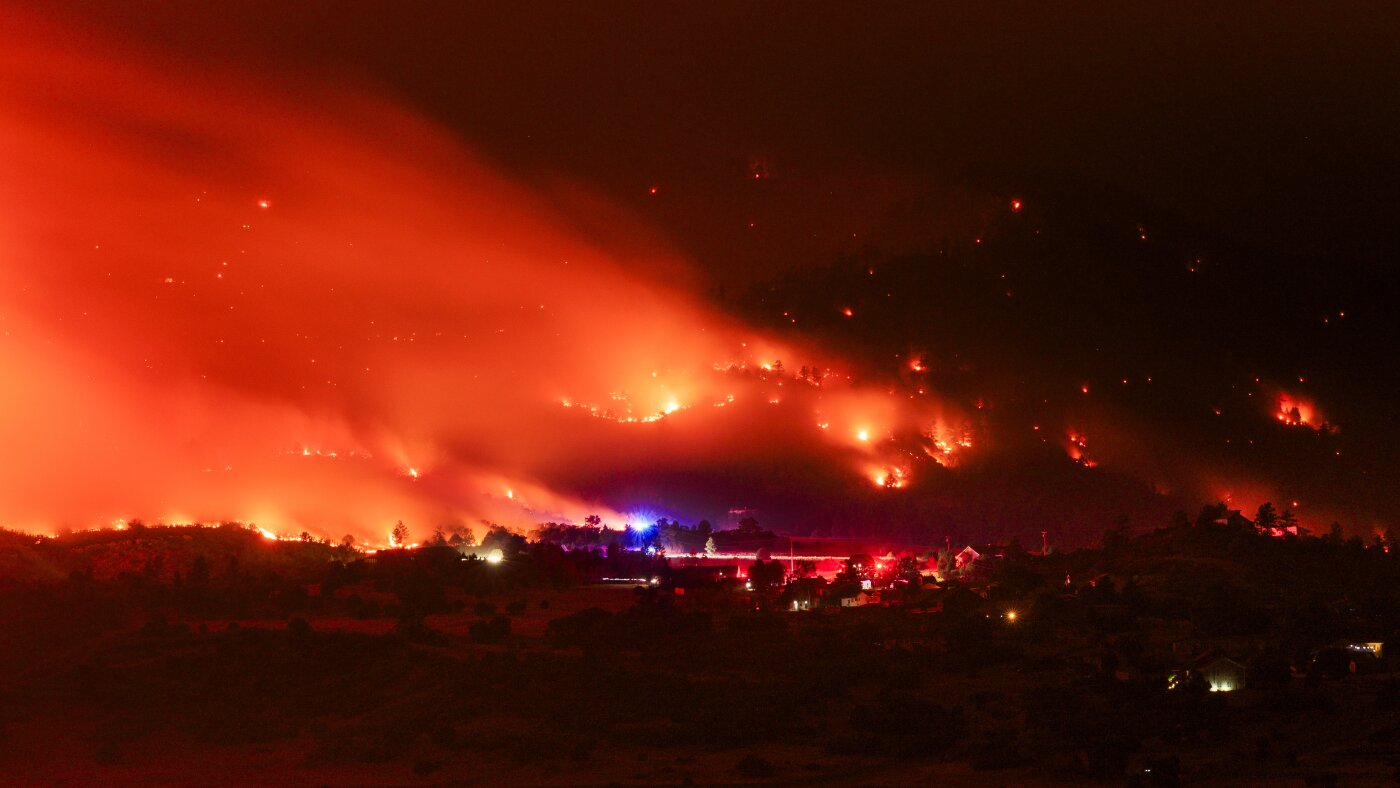
Thunderstorms, heat and wind will hamper efforts to contain Colorado wildfires
-

 New York2 hours ago
10-Minute Challenge: The Ceiling at Grand Central
-

 Los Angeles, Ca2 hours ago
1 killed, multiple people injured in Tarzana 4-car crash
-

 Detroit, MI2 hours ago
Power outage forces flaring at Marathon’s Detroit refinery; portion of Schaefer Road closed
-

 San Francisco, CA2 hours ago
San Francisco’s fireworks show ends in hours of gridlock involving Waymo cars
-

 Dallas, TX2 hours ago
FIFA Fan Fest in Dallas paused due to lighting in the area Sunday evening
-

 Miami, FL2 hours ago
Venezuelan Independence Day: Aid efforts continue after devastating earthquake
-

 Boston, MA2 hours ago
Timeline: Looking back on Jaylen Brown’s Celtics career – The Boston Globe

