Midwest
Noem says DHS can ‘always do better’ when pressed on agency’s ‘mistakes’ before Homan’s deployment

NEWYou can now listen to Fox News articles!
Homeland Security Secretary Kristi Noem acknowledged her department could “always do better” when pressed Sunday on alleged mistakes ahead of border czar Tom Homan’s deployment to Minneapolis.
“I would say that we can always do better, and we learn from every situation that we’re in,” she told “Fox & Friends Weekend.”
“We see a very organized, well-funded campaign of violent protests against our law enforcement officers, so we’re going to continue to get as much information as soon as possible to give a strategy to protect people, protect our federal buildings, like the president laid out yesterday, and we’re going to make sure that the American people are safe, that we still continue to go after violent criminals who are trafficking drugs, trafficking our children, and bring them to justice and get them out of our country.”
Noem’s comments follow President Donald Trump’s decision to deploy Homan to Minnesota after heated clashes between anti-ICE agitators and federal agents sparked unrest across the Twin Cities.
HAKEEM JEFFRIES SAYS DEMS WILL NOT BACK FUNDING BILL FOR ‘KILLING MACHINE’ DHS EVEN IF NOEM IS FIRED
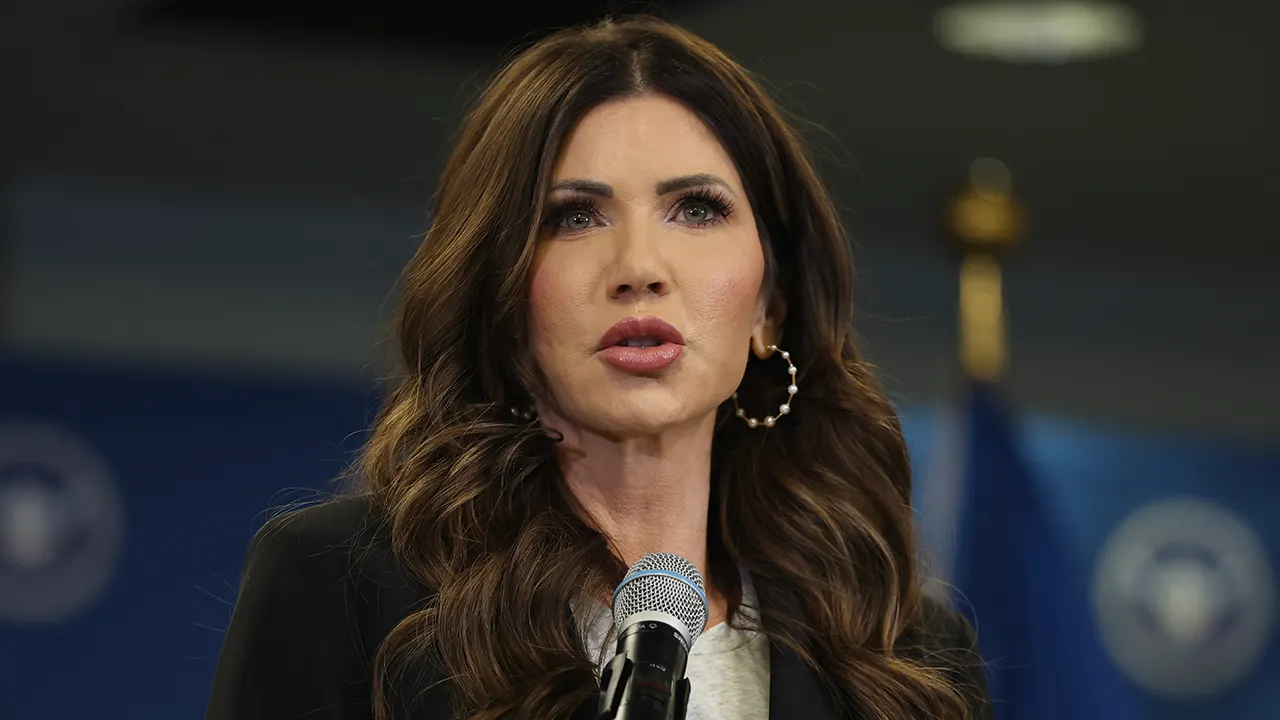
Secretary Kristi Noem holds a news conference at Miami International Airport on Jan. 31, 2026, in Florida. (Joe Raedle/Getty Images)
The unrest resulted in the law enforcement-related deaths of two U.S. citizens, Renee Nicole Good and Alex Pretti, which only exacerbated the outrage.
After a “very productive” meeting with Minnesota Attorney General Keith Ellison, Homan vowed during a Jan. 29 news conference to stay in Minnesota, leading Immigration and Customs Enforcement (ICE) operations there “until the problem is gone.”
Meanwhile, House Democrats ramped up the pressure on Noem in light of tensions in the Twin Cities, calling for her firing and threatening impeachment if she remains in office.
NOEM SAYS MINNEAPOLIS SUSPECT COMMITTED ‘DOMESTIC TERRORISM,’ ACCUSES WALZ, FREY OF INCITING VIOLENCE
Border czar Tom Homan speaks during a news conference about immigration enforcement operations on Jan. 29, 2026, in Minneapolis. (Scott Olson/Getty Images)
“We will continue to do our work, and this job is an honor to do. I’m very blessed that I get the chance to lead the department,” she said, responding to the criticism on Sunday.
“It’s an important position to protect our homeland and to make sure that these agencies are responding to people, that we’re stopping terrorists and criminals from harming the American people. I always tell people that the days that you don’t hear about us are the days that we were successful, because that meant that we stopped so many dangerous people from perpetuating violence and have gotten those terrorist threats and criminals out of our country before they had the chance to do something that would have devastated families.”
Despite calls for Noem’s removal by Democrats, Trump has praised her performance in the role.
CLICK HERE TO DOWNLOAD THE FOX NEWS APP
“I think she’s doing a very good job,” he recently told reporters.
“The border is totally secure. You forget, we had a border that I inherited where millions of people were coming through. Now, we have a border where no one is coming through.”
Fox News’ Anders Hagstrom and Emma Colton contributed to this report.
Read the full article from Here



Detroit, MI
Detroit crime hits decades-low as Michigan governor candidates debate how to keep progress going

DETROIT – Violent crime has been trending downward in Detroit and across Michigan, but the five major candidates running for governor disagree on what it will take to sustain that progress.
Detroit recorded 165 homicides in 2025, the city’s fewest since the mid-1960s.
Non-fatal shootings fell 26%, carjackings dropped 46%, and robberies declined 21% compared with the previous year.
In one-on-one interviews with Local 4, the candidates agreed that public safety remains foundational to Michigan’s future, arguing that residents and businesses are less likely to invest in communities they do not believe are safe.
However, they offered sharply different approaches to reducing crime, strengthening law enforcement, and preventing future violence.
Mike Cox emphasizes tougher enforcement and parole supervision
Former Michigan Attorney General Mike Cox said his experience as a Wayne County prosecutor and the state’s top law enforcement official has shaped his approach to public safety.
Asked about Michigan’s biggest public safety challenge, Cox acknowledged recent progress but said more work remains.
“Crime has gone down in Detroit, Saginaw, and Flint, but we have to do better,” said Cox. “200 murders is unacceptable in the city of Detroit. Any murder is unacceptable. So I worked with the Detroit police back when I was AG, and of course, when I spent 13 years as a Wayne County prosecutor.”
Cox said he would revive the “Joshua Project,” a program that conducted nighttime compliance checks on probationers and parolees through the Michigan Department of Corrections.
“Which had Department of Corrections folks going out at night, checking on probationers and parolees,” said Cox. “That worked then; it would work now. Politics got in the way then; it won’t this time.”
He also called for changes to Michigan’s criminal justice system.
“I push the legislature to get rid of cashless bail to change sentencing guidelines and, importantly, appoint the right sort of judges who understand that there’s a difference between being a victim and a defendant,” said Cox.
John James says restoring confidence in the justice system is critical
Republican Congressman John James argued the state’s biggest public safety issue is declining public confidence in law enforcement and the courts.
“I believe the number one public safety concern is that people frankly don’t trust that the judicial system, that the law enforcement system works for them,” said James. “They see people getting out back on the streets after committing violent crimes before a lot of these cops are out done with their shifts. We need to enforce the law, and we need to make sure that there are consequences and common sense in the state of Michigan again.”
James said his administration would prioritize victims and seek tougher consequences for repeat violent offenders.
“People don’t feel safe in their neighborhoods anymore,” said James. “I’m going to enforce the law. I’m going to make sure that violent repeat offenders go to jail and stay there. And any activists, judges, DAs, and prosecutors who care more about criminals’ feelings than victims’ rights are going to have to account to the governor and to the agency.”
Perry Johnson says policy should begin with data
Republican businessman Perry Johnson said public safety strategies should be tailored to regional needs rather than applied uniformly across the state.
“Safety depends on regions,” said Johnson. “Some areas of our state are extremely safe. Other areas are not.”
Johnson said the government should first identify weaknesses before implementing new policies.
“So those are the areas that must be looked at,” said Johnson. “So even when you look at safety, doing a basic audit of seeing where the weaknesses are, where the strengths are, where you need to improve. Has to be done instead of just randomly have something go across the board in the entire state.”
Johnson also argued that decision-making should be driven by measurable data.
“I think making a decision blind is like shooting at a dart board, covering your eyes, and hoping you hit the bullseye,” said Johnson. “That is not my way to run any organization, any business, or any government.”
Chris Swanson focuses on prevention and trafficking
Genesee County Sheriff Chris Swanson, a Democratic candidate with three decades in law enforcement, identified drug trafficking and human trafficking as Michigan’s most pressing public safety threats.
“Drug trafficking is the number one industry,” said Swanson. “Human trafficking is fastest growing in the world, and they’re interdependent. Those are the top two.”
Swanson said preventing crime before it occurs should be a central responsibility of government.
“The best way to treat crime is preventative,” said Swanson. “Stop it before it starts. It’s called problem-solving policing. And if you just treat the symptom, then you’re not solving the problem.”
Jocelyn Benson centers plan on reducing gun violence and increasing transparency
Secretary of State Jocelyn Benson said reducing gun violence would be a top priority if elected governor.
“We need to protect our communities against gun violence, whether it’s here in an education institution, at a place of worship, or in any community,” said Benson. “As a resident of Detroit, I see how important it is that we prioritize reducing gun violence and ensuring our law enforcement and other community partners are equipped with the tools they need.”
Benson also argued that transparency in state government strengthens public trust.
“Transparency in how our executive offices work,” said Benson. “Is going to be really important for me as governor because it helps engage citizens in seeing the process and getting information about how your government’s actually working.”
Different approaches to a shared goal
The Republican candidates generally emphasized tougher enforcement, judicial accountability, and data-driven resource deployment.
The Democratic candidates focused more heavily on prevention, gun violence reduction, combating trafficking, and strengthening trust between government, law enforcement, and the public.
Whoever succeeds Gov. Gretchen Whitmer will inherit a state where several public safety indicators continue to improve.
According to the Michigan Department of Corrections, the state’s recidivism rate fell to a record low of 21% last year, meaning nearly four out of five people released from prison did not return within three years.
Copyright 2026 by WDIV ClickOnDetroit – All rights reserved.

MILWAUKEE — It’s well known that Milwaukee is famous for beer, brats, the Bucks, and the Brewers. But let’s put some respect on the comedy scene here.
The Laughing Tap features weekly stand-up performances with nationally touring acts. They opened up their new venue at 761 N. Jefferson St. in Milwaukee back in March.
Since then, they’ve had dozens of acts perform. Now, they are putting on a new type of comedy show, The Milwaukee Comedy Challenge.
According to the website, the challenge is: “A friendly battle of wits with over $2000 in Cash Prizes, more than 2.5 hours of Paid Gigs awarded, and the chance to challenge yourself to be the best comic you can be. This isn’t about competing with your fellow comics, it’s about challenging yourself to write great material, get bigger laughs, and become a better comic.”
The first round has finished. The challenge continues on July 22 with the start of the second round. The remaining 20 comics will perform a four-minute set. Only 10 will make it to the next round. There will be four more rounds afterwards. In the finals, comics will have to perform 20-minute sets with completely new jokes. The winner will be receive a paid headliner gig at The Laughing Tap, a spot in the 2026 Milwaukee Comedy Festival, and $1,000.
If you think you’re pretty funny, you can get on stage for The Laughing Tap’s weekly stand-up open mic on Wednesdays at 6 p.m. Every aspiring comic gets about three to four minutes.
Milwaukee comedy club The Laughing Tap hosting comedy challenge
Let’s talk:
Hey there! At TMJ4 News, we’re all about listening to our audience and tackling the stuff that really matters to you. Got a story idea, tip, or just want to chat about this piece? Hit us up using the form below. For more ways to get in touch, head over to tmj4.com/tips.
It’s about time to watch on your time. Stream local news and weather 24/7 by searching for “TMJ4” on your device.
Available for download on Roku, Apple TV, Amazon Fire TV, and more.
Report a typo or error // Submit a news tip

People pack the overflow room outside the Minneapolis City Council chambers on Thursday in opposition to a controversial police drone proposal that would have contracted with the company Skydio, which also has sold drones to Immigration and Customs Enforcement and the Israeli military.
Cait Kelley | MPR News
-

 Los Angeles, Ca43 minutes ago
Arrest made in deadly shooting at 4th of July gathering in Compton; search for 2nd suspect continues
-

 Detroit, MI1 hour ago
Detroit crime hits decades-low as Michigan governor candidates debate how to keep progress going
-

 San Francisco, CA1 hour ago
Operator of boat that capsized near Alcatraz mourns brother as search continues
-

 Dallas, TX1 hour ago
Mavericks vs Thunder Game Preview and Injury Update
-

 Miami, FL2 hours ago
Miami Dolphins Fans Vs. The Media
-

 Boston, MA2 hours ago
Man who allegedly shot at Boston Police officers arrested after foot chase in Dorchester
-

 Denver, CO2 hours ago
Swan, dragon and duck boats are back pedaling around City Park
-

 Seattle, WA2 hours ago
Ticket Alert: Thundercat, Michelle Branch, and More Seattle Events Going On Sale This Week – The Stranger

