Nebraska
Nebraska lawmakers hold town halls over regulating medical marijuana


OMAHA, Neb. (WOWT) – Dozens of voices came together Sunday afternoon in a call to action to lawmakers over a bill community members said they believe is needed more attention.
They talked about LB677, which draws up guidelines for regulating medical marijuana in Nebraska.
“This whole idea medical marijuana leads to recreational is a farce,” Dominic Gillen, of Omaha, said. “It is necessary to make that argument.”
After being stalled in committee, the compromise bill originated with Sen. Ben Hansen of Blair.
For months, Nebraska‘s attorney general has urged lawmakers to do nothing until the courts weigh in again.
But supporters argue the people have spoken since the ballot measure passed overwhelmingly.
Here‘s the compromise. It allows people to use up to 2 ounces of the medical flower, but it can only be vaporized, not smoked.
Out of the 15 medical conditions that qualify to get it, PTSD is not on the list.
“I’m asking the legislature to let me and my doctor make the decision on how that balances out for me,” Angie Philips, of Omaha, said.
Sen. Hansen said hearing and seeing the strong community support goes a long way.
“The whole point of meetings like this and town halls like this is for us as policymakers to bring back in those personal stories we sometimes forget,” Sen. Ben Hansen, said.
Crista Eggers, the head of Nebraskans for Medical Marijuana, said this is a step in the right direction and hopes more lawmakers will consider the voice of the people.
Lawmakers are expected to argue over the bill sometime later this month.
—
Get a first alert to breaking news delivered to your inbox. Sign up for First Alert 6 email alerts.
Copyright 2025 WOWT. All rights reserved.



The Nebraska State Fair is celebrating America’s 250th anniversary with a special 72-hour flash sale on Season Passes.
From July 3 through July 5, fans can purchase a 2026 Season Pass for just $50—a significant discount from its regular value of $132.
The pass includes one admission per day for all 11 days of the 2026 Nebraska State Fair, making it ideal for visitors who plan to attend multiple days.
Fair officials say the promotion is one of the biggest Season Pass discounts offered in years and will not be extended.
After July 5, Season Passes will remain available at a higher discounted price.

OMAHA, Neb. (WOWT) – Legalizing online sports betting has met with resistance in the Nebraska Legislature for years.
Tax Relief Nebraska, a group backed by Nebraska casinos and online sports betting groups, took the issue to the people of the state through a petition drive.
Those petitions are now in, and casino officials say they expect to have enough signatures to make the November ballot — but also expect pushback through Election Day.
The case for online betting
Currently, legal sports bets cannot be placed on a phone in Nebraska. Casino operators say people who choose to wager are finding other ways to do it.
“They’re just doing it illegally through a virtual private network, or they’re driving over to the first exit between Iowa and Nebraska, placing a bet and then driving back to their home,” said Lynne McNally of Warhorse Casino.
Nebraska casino operators say the state has already collected millions of dollars in state taxes and property tax relief from casino gambling, and that online sports betting would add to that total.
A majority of Nebraskans voted for casino gambling to enter the state in 2020, and casino operators expect similar support if the online betting petition makes the November ballot.
“As you know, we got 65% on the constitutional amendment and actually got nearly 70% on the tax portion of the statute when the casinos were legalized in 2020. I think that we’ll be in that area, if not maybe a little higher than that,” McNally said.
“There’s always going to be a sector of the public that doesn’t want to gamble. They don’t want to go to our facilities and that’s just fine. I guess I have an objection with trying to tell other people what to do,” McNally said.
The opposition
The Nebraska Family Alliance stands against online gambling and plans to campaign against the initiative across the state. The nonprofit group issued a statement that reads in part: “Online sports betting has been a massive public policy failure that benefits national sportsbooks at the expense of kids, student-athletes, families and businesses. While they have more money, they don’t have the truth.”
Pat Loontjer, director of Gambling with the Good Life, has opposed expanded gambling in Nebraska for 30 years.
“They’re telling the same lie — property tax relief. Well in Nebraska you say property tax relief and everybody says where do I sign,” Loontjer said.
Loontjer also raised concerns about the impact on young people.
“Sports betting on the phone is the most addictive thing for young people, young men especially. You’ve got kids that are going to lose their scholarships, lose their future,” Loontjer said.
What comes next
If enough signatures are verified and the issue is placed on the November ballot, Warhorse Casino officials say Nebraskans could be able to make sports bets on their phones by spring of next year.
Copyright 2026 WOWT. All rights reserved.

Along with marching in the parade, the high schools will tour the U.S. Capitol, visit Mount Vernon and other monuments and museums.
Around 80 Grand Island students are making the trip. Lee said the students cover their own costs, with fundraising largely run though the school’s booster program helping offset the expense.
Bishop Neumann’s 53 students benefited from community donations, along with a holiday greenery sale and fundraisers, which Kellett said helped cover airfare and other costs.
For both directors, the trip carries extra weight tied to the nation’s 250th anniversary.
“That’s a pretty big milestone,” Lee said. “And to be able to be a part of that is pretty neat.”
Kellett said the moment will stay with students long after the parade ends.
“These kids, they’ll be around for the 300th anniversary of the country, and they’ll be able to look back and tell their grandkids, ‘you know, I was there at 250 and was able to march in the National Independence Day Parade,’” Kellett said.
Both bands have spent the summer preparing. Grand Island started working on its music after its final spring concert in May, rehearsing its marching and music together on Tuesday evenings.
Bishop Neumann has rehearsed continuously over the summer and marched in two parades to prepare, a 150th anniversary celebration in Weston and the Papillion Days parade.
Kellett said the band’s last rehearsal in Wahoo drew residents who lined the streets holding signs and cheering the students on.
“The students have come in, and they’ve worked really hard,” Kellett said. “They have their music memorized and they’ve worked on their marching skills, and so all that effort into this they’re ready to go for the parade.”
The parade starts at 9:30 a.m. CT Saturday at Third Street and Constitution Avenue.
-

 Health10 minutes ago
She Ate High-Protein Ice Cream Daily and Lost 193 Lbs—Her Keys to Success
-
 Lifestyle25 minutes ago
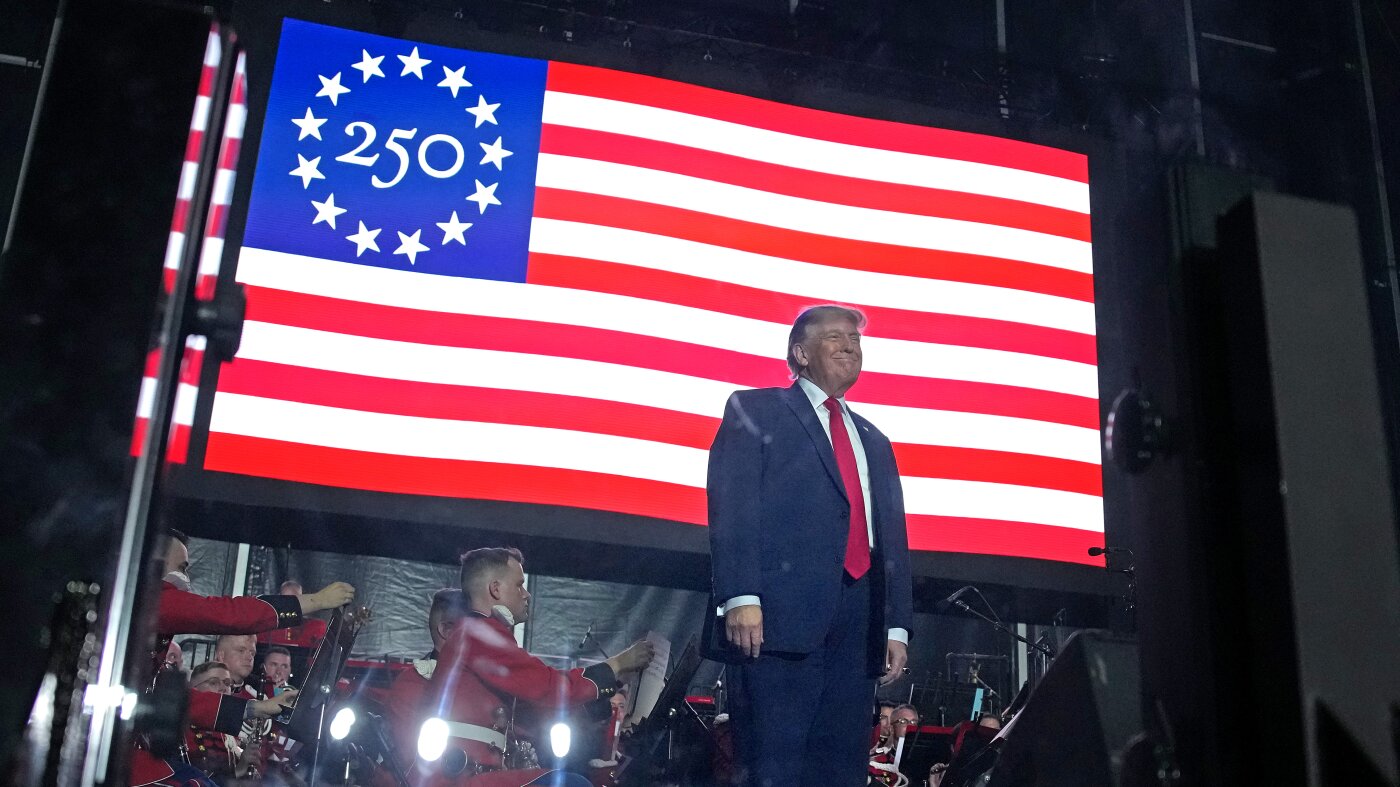
House Democrats accuse Trump of ‘hijacking’ America’s 250th birthday for his own gain
-

 Technology37 minutes ago
Tesla driver faces manslaughter charges over Texas crash that killed a woman inside her home
-

 World40 minutes ago
Six Kurdish fighters killed in IRGC ambush as clashes spread across western Iran
-

 Politics45 minutes ago
Sanctuary county refused 615 ICE transfer requests, turned over just 11 illegal immigrants, records show
-

 Health52 minutes ago
Mystery parasite leaves Americans battling ‘explosive’ illness as CDC investigates
-

 Sports55 minutes ago
2026 World Cup Round Of 16 Odds: Who’s Favored To Advance?
-

 Technology1 hour ago
Fox News AI Newsletter: American manufacturer says AI is creating jobs, not replacing them

