Midwest
MN fraudsters blew taxpayer cash on luxuries out of reach for most Americans, feds say

NEWYou can now listen to Fox News articles!
President Donald Trump and congressional allies are probing Minnesota’s sprawling “Feeding Our Future” fraud scheme and pressing federal agencies to recover millions in stolen taxpayer dollars, including funds that were used by convicted individuals in the scheme to finance purchases of luxury vehicles and homes that are out of reach for most Americans.
Republicans say the renewed investigations are necessary because, despite dozens of convictions, federal officials are still working to recover only a fraction of the stolen money — a process that has uncovered not only the high-end vehicles and homes but also designer goods, and large amounts of cash tied to the scheme.
Meanwhile, city officials in Minneapolis are bracing for an influx of Immigration and Customs Enforcement (ICE) agents after the agency announced plans for a new operation in the state.
At issue is a $250 million fraud scheme that exploited a children’s nutrition program funded by the U.S. Department of Agriculture and overseen by the state of Minnesota during the COVID-19 pandemic, with the stated goal of providing food to school-aged children.
The scheme exploited the U.S. Department of Agriculture’s decision to waive many of its standard requirements for the Federal Child Nutrition Program during the pandemic, including relaxing its requirement for non-school-based distributors to participate in the program.
WHAT TO KNOW ABOUT MINNESOTA’S ‘FEEDING OUR FUTURE’ FRAUD AT THE CENTER OF TRUMP’S LATEST CRACKDOWN
FBI Director Kash Patel described the scheme in July as “one of the worst” in Minnesota history. (Getty Images)
Conspirators charged in the scheme falsely claimed to have served millions of meals to children during the pandemic, but instead used the money for personal gain, according to FBI and federal court documents reviewed by Fox News Digital.
They are also accused of fabricating invoices, submitting fake records, and falsely claiming to have handed out thousands of meals to children across hundreds of food distribution “sites” across the state — when many, in fact, had provided none at all.
At least 77 individuals in Minnesota have been indicted as part of the fraud scheme, as Fox News Digital previously reported, and it is believed to be the largest pandemic-era scheme in U.S. history.
According to FBI and court documents reviewed by Fox News Digital, many of the convicted fraudsters exploited the taxpayer fund to live lavishly — purchasing real estate, pricey vehicles and houses, and seeking to funnel additional funding into more fraudulent schemes to further exploit the government.
One defendant, Abdiaziz Farah, was sentenced to 28 years in federal prison earlier this year for his role in the Feeding Our Future scheme.
According to FBI exhibits and court documents reviewed by Fox News Digital, Farah used his role as a co-owner of Empire Cuisine and Market to exploit the COVID-era nutrition program for millions of dollars in personal gain, which he used to purchase commercial property and real estate, including two lakefront lots, “with the aim of building himself a multi-million-dollar home.”
FBI documents submitted to the court paint a picture of the goods that were seized — among them, six Rolex watches, cars, thousands of dollars in luxury clothing, designer purses, and more.
Other funds were funneled abroad, a strategy that appears to have been by multiple fraudsters convicted in the case.
“Farah further sent the taxpayer money he stole overseas, purchasing real estate in Kenya and a high-rise apartment building in Nairobi,” Justice Department officials said. “Farah laundered the fraud proceeds through China. This overseas money is beyond the reach of American law enforcement—neither these funds nor Farah’s international real estate holdings have been, or can be, seized or forfeited.”
The federal judge overseeing the case described his fraud as “breathtakingly elaborate,” and said at the time of his conviction that he acted out of “pure unmitigated greed.”
Farah, she noted, had come to the U.S. as a refugee as a child and had received many opportunities from public agencies and nonprofits, including housing, a grant for full college tuition, and a former job in the public sector. “Given that background, it is ironic at best that, as the government aimed no child went hungry during the pandemic, you saw the opportunity to fraudulently make money,” she said after his conviction.
Court documents, photos, and testimony provided at the trials have provided a window into the luxurious lifestyles many of the fraudsters had been leading as a result of the scheme.
Federal authorities seized $64,000 in cash, gold jewelry purchased in Dubai, and four vehicles — including a brand-new Tesla and a Porsche — from one defendant’s home.
Five individuals were separately convicted last year of attempting to bribe a juror with $120,000 cash in exchange for returning a “not guilty” verdict for one of the defendants.
PATEL TOUTS FBI’S DOZENS OF CONVICTIONS IN $250 MILLION MINNESOTA COVID SCAM
Kash Patel appears before the Senate Judiciary Committee for his confirmation hearing as FBI director. (Ben Curtis/AP)
Others convicted are accused of having funneled money abroad into shell corporations, while at least some others appear to have spent the money to pay down their own credit card bills, or otherwise fund their “lavish lifestyles,” according to information provided by the Justice Department.
In the case of Abdimajid Mohamed Nur, a defendant who was ordered to pay $48 million in restitution for his crimes, many of the stolen funds were sent to a shell company.
Nur is believed to have spent the bulk of the $900,000 in fraud proceeds not sent to the shell company on himself, to fund the purchase of new vehicles, fund a honeymoon trip to the Maldives, and in purchasing jewelry.
Treasury Secretary Scott Bessent said in an interview on CBS News’s “Face the Nation” Sunday that “a lot of money has been transferred from the individuals who committed this fraud.”
Much of the fraudsters’ proceed have “gone overseas,” he told host Margaret Brennan, “and we are tracking that both to the Middle East and to Somalia to see what the uses of that have been” as part of the Trump administration’s broader investigation into the funding that was sent abroad.
But the efforts to trace, let alone recover, many of the stolen funds have proved to be a bit slow-going.
To date, federal officials have recovered an estimated $60 million in funding that was stolen as part of the “Feeding Our Futures” scheme, according to estimates provided by the U.S. Attorney’s Office in the state — less than half of the $250 million in stolen funds.
The slow recovery effort is not for lack of trying. Last month, a federal judge in the state ordered one defendant to pay $48 million in restitution funds, in addition to a 10-year prison sentence he received as part of his role in the sprawling fraud effort.
Other individuals convicted have also been ordered to refund the government millions of dollars to recoup the stolen taxpayer funds.
Still, the process can be complex and difficult. That’s because recovering the stolen funds often involves tracing them to how they were spent — including U.S. properties and vehicles, and then seizing those items for forfeiture — which can contribute to the delay.
In some cases, individuals who were convicted of the crimes actually have family members still living in the homes they are accused of purchasing with the stolen funds.
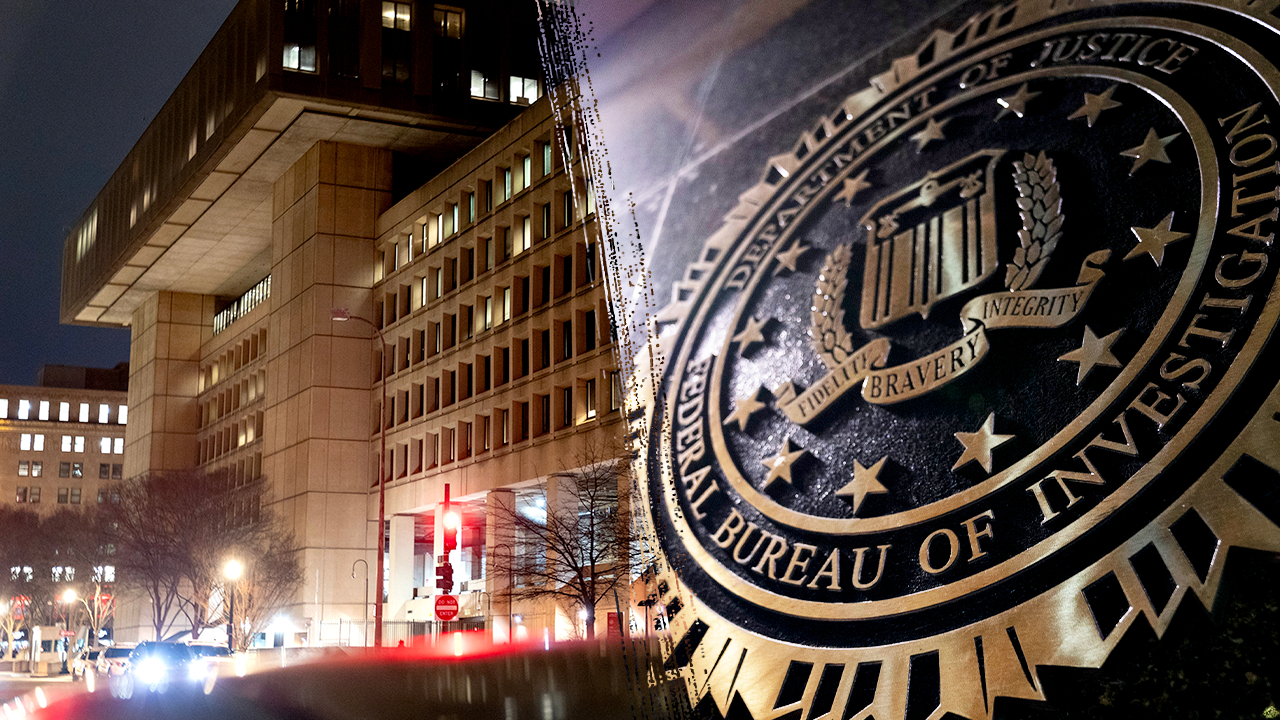
FBI Director Kash Patel described the scheme in July as “one of the worst” in Minnesota history.
“These individuals misappropriated hundreds of millions in federal funds intended to nourish vulnerable children during a time of crisis, redirecting those resources into luxury homes, high-end vehicles and extravagant lifestyles while families faced hardship,” he said.
TRUMP, STATES BACK IN COURT OVER SNAP AS BENEFITS REMAIN IN LEGAL LIMBO
Republican Speaker of the House Lisa Demuth speaks during a press conference in the governor’s reception room at the Minnesota Capitol in St. Paul, Minn., May 15, 2025. (Jerry Holt/The Minnesota Star Tribune via Getty Images)
Charging documents show that roughly 300 “food sites” in the state served little or no food, with the so-called food vendors and organizations fabricated to launder money intended to reimburse the cost of feeding children.
Senior FBI officials told Fox News that the investigation and resulting trials and indictments continue to impact the state and have already touched off legislative reform in Minnesota.
They added that the investigation into the fraud remains ongoing, and that additional charges were expected.
“Stealing from the federal government equates to stealing from the American people — there is no simpler truth,” FBI’s special agent in charge, Alvin Winston, told Fox News Digital in a statement at the time.
Read the full article from Here



A man was arrested in North Dakota in connection with a November murder in Durham County.
Deputies said 28-year-old Alberto Flores died after he was shot on Sunday morning outside of a business on Guess Road.
Carlos Anuel Medina Robles was charged with first-degree murder in the shooting death of Luis Alberto Flores. The Durham County Sheriff’s Office Criminal Investigative Division and the FBI, Homeland Security Investigations, and U.S. Marshals Service were able to track Robles down.
On Thursday, the U.S. Marshals Service found Robles in Ward, North Dakota. He was taken into custody.
Extradition proceedings are pending.

COLUMBUS, Ohio — In August 2019, police in Bexley, Ohio, responded to a report of a “domestic dispute” at the home of Dr. Amy Acton.
Acton — then the director of the state’s Department of Health, now a Democratic candidate for governor — pulled a mirror off the wall, “shattering the glass” when she “became upset” because she felt her husband “was antagonizing her,” according to a police report. She told officers she had been drinking, had taken an unknown amount of prescription drugs and was about to drive away in her car before her husband, who also told police he had been drinking, talked her out of it, the report stated.
A medic dispatched to check on Acton recommended that she go to the hospital, but Acton “refused,” according to the police report. Police determined that there was no evidence of physical violence between Acton and her husband, only a “verbal argument over her extended work hours.”
Months later, Acton would become one of Ohio’s most visible leaders as the state battled Covid, advising and appearing almost daily alongside Gov. Mike DeWine as they issued stay-at-home orders and shared the latest case numbers. Acton’s time in the spotlight brought her doting admirers, as well as vicious critics. And as the lone Democrat serving in a Republican governor’s Cabinet, she quickly became a prospect for elected office herself after resigning her post in June 2020.
Acton, 60, is likely to face Republican Vivek Ramaswamy, a biotech entrepreneur who has been endorsed by DeWine and President Donald Trump, in the general election.
Her campaign on Friday disputed and sought to clarify several elements of the police report. Acton and her husband had returned home from dinner, where she had one drink, according to the campaign’s written response for this article. During a “verbal disagreement regarding her long work hours,” Acton “bumped into a wall hanging which fell,” the campaign said. She then went to bed and was asleep when police arrived, according to the campaign.
Officers were dispatched to the home at 9:45 p.m., according to the police report, which does not indicate how they were alerted to the incident.
Acton’s campaign said that she was not “intoxicated” at any point during the evening and that the prescription medications referenced in the police report were ones that she had taken regularly for years.
The campaign also disputed that there was any reason for Acton to go to a hospital, asserting that any “harm, injury, or impairment” would have been noted in the police report.
Police officials in Bexley, a Columbus suburb, did not respond to a request for comment for this article.
“Amy Acton worked around the clock on behalf of Ohioans while serving as Health Director,” Acton spokesperson Addie Bullock said in an emailed statement that also criticized Ramaswamy and his policy proposals “as Ohioans continue to reject him and his cost-raising scams.”
The 2019 incident at Acton’s home has, until now, not been reported publicly. It also was not something widely known, if it was known at all, inside the DeWine administration. The governor, according to his spokesperson, was not happy to learn of the matter for the first time from NBC News.

“Prior to your inquiry, Governor DeWine was unaware of both the 2019 incident and associated police report involving Dr. Acton,” the spokesperson, Dan Tierney, wrote in an emailed response to questions. “The Governor holds his staff to the highest standards of conduct. Given that the allegations in the report are deeply troubling, Governor DeWine would have expected Dr. Acton to have at that time promptly disclosed this to him, and he is very disappointed that it did not occur.”
DeWine has in the past been largely praiseful of Acton. His backing of Ramaswamy, 40, came relatively late and reluctantly, after the governor unsuccessfully tried to draft Lt. Gov. Jim Tressel, a former Ohio State football coach, into the primary.
Ohio has trended more decisively Republican, having elected only one Democratic governor in the last 36 years. Reliable, independent polling has been scarce, but several surveys have shown a close race, raising Democrats’ hopes for an upset.
Acton’s performance as health director has stood out as a major storyline in the race. Fox News recently retracted an article by its OutKick sports affiliate that accused Acton of hectoring social media users for ignoring social distancing guidelines. The tweets had come not from Acton, but from an account spoofing her.
The episode was an example of how Acton’s candidacy has reignited debate over the pandemic shutdowns that she advised DeWine to implement. She became a target for right-wing activists and protesters, some of whom reportedly wielded guns and signs scrawled with antisemitic messages outside the Statehouse in Columbus and outside her home. Acton, who is Jewish, downplayed that scrutiny as a factor in her resignation in June 2020, saying at the time that her decision would afford her more time to spend with her family.
DeWine, riffing on the “not all heroes wear capes” cliché, described Acton as a “hero” who wears a “white coat” when announcing her departure. Acton stayed with the administration for several more weeks, serving as a health adviser before officially leaving in August 2020.
Later in 2020, after Acton gave an interview to The New Yorker, the magazine reported that she had begun to “worry that she might be forced to sign health orders that violated her Hippocratic oath to do no harm.”
As a first-time candidate for elected office, Acton has leaned less on the high-profile role she had as DeWine’s top health adviser and more on her personal narrative. She emphasizes how she grew up poor in Youngstown, a difficult childhood marked at times by hunger and homelessness.
After receiving her medical license in 1994, Acton practiced as a pediatrician and later earned a master’s degree in public health at Ohio State University. She was the final Cabinet director DeWine named in 2019. Those close to DeWine at the time emphasized how he had been deliberate in identifying a qualified health care professional for the job rather than rewarding a career bureaucrat or political loyalist.
It was a move that initially seemed to pay off in the early days of Covid. DeWine’s daily televised briefings, often with Acton at his side, became appointment viewing in Ohio. Acton herself became a household name, so beloved that one company printed T-shirts in her honor.
While the Republican base vilified DeWine and Acton for their initially aggressive pandemic management, both remained popular in broader circles. Democrats tried to recruit Acton to run for an open Senate seat in 2022 — an option she strongly considered but decided against. That same year, DeWine cruised to re-election, helped by Democrats and independents who appreciated his handling of Covid.
Republicans fighting to hold onto the governor’s mansion after the term-limited DeWine leaves office have branded Acton as a quitter.
“What did Amy Acton do when the legislature began pushing back? Amy Acton quit,” state Senate President Rob McColley told an audience in January after being introduced as Ramaswamy’s running mate for lieutenant governor. “Ohio needs a businessman, not a bureaucrat. Ohio needs a creator, not a quitter. Ohio needs a visionary, not a victim. Ohio needs somebody who’s going to focus on affordability, not somebody who’s going to put in lockdown policies that are going to raise our prices.”
Though DeWine has endorsed Ramaswamy, he also has attempted to inoculate Acton from pandemic-related criticism.
“The decisions that were made during COVID, they were my decisions, so no one should blame someone else if they don’t like it,” DeWine told Columbus’ NBC affiliate in December. “The buck stops with me.”

USA TODAY 250th anniversary travel guides and American stories
USA TODAY marks America’s 250th with travel guides, culture, history, and local stories.
Check your next can of Coke, it might have a South Dakota landmark on it.
Coca-Cola has launched cans of its iconic drinks specific to each state. These will also include Puerto Rico and Washington, D.C. as a way to celebrate America’s 250th birthday. South Dakota’s can features Mount Rushmore.
The Atlanta-based beverage company, like the country itself, is gearing up to celebrate close to three centuries of independence this July 4 with the release of America250 collectible mini cans.
From Georgia’s peach to California’s surfer culture, each mini-can “highlights iconic local symbols” of each one of the 50 states, as well as Puerto Rico and the District of Columbia.
According to the Coca-Cola Company, the America250 packaging also connects consumers to “interactive experiences.”
The campaign is anchored by “Drink in America,” a new creative anthem that celebrates the spirit of American communities.
“For nearly 140 years, Coca‑Cola has been part of the American experience,” Stacy Jackson, Vice President of Coca‑Cola Trademark, North America, said in a statement. “… Our goal is to uplift Americans throughout every zip code and create optimism for the future.”
Here’s what to know about Coca-Cola’s collectible America250 mini cans, including where to get them.
Coca-Cola has dubbed the new collection of limited-edition America250 packaging, which includes custom bottles and America250 collectible mini cans, “the center of the celebration.”
Each mini can features a design “unique” to each of the 50 states, plus Puerto Rico and the District of Columbia.
Fans can unlock prizes and rewards, including the opportunity to win a new Jeep and other experiences inspired by exploring the country, by scanning participating products with America250 packaging.
Additional Coca-Cola brands like Vitaminwater, Smartwater, BodyArmor, and Gold Peak will also don commemorative packaging.
According to the Coca-Cola Company, the collectible mini cans will be available for purchase at major retailers, including Walmart and Target nationwide, starting this month. In addition to the minicans, Coca-Cola also plans to roll out custom bottles.
Coca-Cola confirmed to USA TODAY that regular Coke, Coke Zero and Diet Coke will have the America250 artwork on the minicans.
In addition to limited-edition packaging and “creative storytelling,” the America250 signature partner plans to rack up 250,000 volunteer hours in 2026 and will be launching “Paint the Nation,” a large-scale public art initiative.
Coca-Cola will keep the celebration going throughout 2026, with “brand presence” at major events, including the NASCAR Coca‑Cola 600 and the PGA Tour Championship.
According to the Coca-Cola Company, the “collaboration reflects both the Company’s deep roots in American culture and its ongoing commitment to bringing people together in meaningful ways.”
This story has been updated to add new information.

Strong to severe storms possible in New Mexico today

How North Carolina Developed Its 2026 NFL Draft Class

Man arrested in North Dakota six months after Durham County murder

Police responded to a report of a ‘domestic dispute’ at Ohio governor candidate’s home in 2019

TIMELINE: Rounds of storms in Oklahoma continue throughout weekend

Florida High School Football Rankings: Top 25 teams – Oct. 21

How old is Bo Nix? What to know about Oregon quarterback ahead of 2024 NFL Draft

Cleary's 21 help Le Moyne down Central Connecticut State 69-64 in OT

99th annual Pony Swim held in Virginia

Indiana Members Credit Union announced as new anchor tenant at Bottleworks District

Trump adversary running for Senate borrows his filibuster playbook

Russian propaganda unit targets Hungary’s elections

WATCH: Artemis II astronauts splash down on Earth

Swalwell’s former female staffer drops bombshell allegations of sexual assault, exposing himself: report

NASA’s Artemis II prepares for splashdown on Earth
-

 Atlanta, GA6 days ago
1 teenage girl killed, another injured in shooting at Piedmont Park, police say
-

 Education1 week ago
Video: Toy Testing with a Discerning Bodega Cat
-

 Movie Reviews1 week ago
Vaazha 2 first half review: Hashir anchors a lively, chaos-filled teen tale
-

 Georgia4 days ago
Georgia House Special Runoff Election 2026 Live Results
-

 Pennsylvania5 days ago
Parents charged after toddler injured by wolf at Pennsylvania zoo
-

 Arkansas22 hours ago
Arkansas TV meteorologist Melinda Mayo retires after nearly four decades on air
-
 Milwaukee, WI5 days ago
Potawatomi Casino Hotel evacuated after fire breaks out in rooftop HVAC system
-
 Entertainment1 week ago
Inside Ye’s first comeback show at SoFi Stadium