Missouri
Missouri tax revenues declining in first months of fiscal year, raising concerns • Missouri Independent


Missouri’s general revenue has lagged behind inflation for two years in a row. And with that gap widening, the next few months could determine whether state revenue will see a year-over-year decline for the first time in more than a decade.
“September is a good sort of bellwether one for us, because that’s where we get quarterly payments from both individuals and corporations,” Dan Haug, Gov. Mike Parson’s budget director, said in an interview with The Independent last week. “There’s not a lot of significant due dates in July and August, so we try not to even really look at what trends are until we get through the end of September.”
Through Friday, general revenue receipts are down more than 3% compared to the same period in fiscal 2024.
Need to get in touch?
Have a news tip?
Revenue grew 2.74% in fiscal 2023, while inflation was calculated at 3% by the federal Bureau of Labor Statistics. In fiscal 2024, which ended June 30, revenue grew 1.47%, while inflation was again pegged at 3%.
Missouri isn’t the only state suffering from sluggish revenue growth, according to a recent report from Pew Charitable Trusts. During the COVID-19 pandemic, many states — including Missouri — enjoyed a surge of revenue that drove new spending and tax cuts.
Missouri enjoyed double-digit revenue growth for two years, a trend that ended in early 2023. Nationally since the start of fiscal 2023, the report states, state government revenues have fallen below inflation rates and below the growth trend seen before the pandemic. That is the first time in 40 years that has happened outside of an economic recession.
“There’s less fiscal flexibility, but it’s unclear whether states will be really under strain or not, but it’s going to be more difficult than before,” said Alexandre Fall, a senior associate with Pew who was the main author of the report.
As they wrote this year’s budget in the spring, the Republican-led legislature tried to limit ongoing general revenue spending to the anticipated revenue of $13.2 billion. But even after Gov. Mike Parson vetoed $1 billion, the budget anticipates spending $15.1 billion in general revenue, dipping into surpluses accumulated during the surge in 2021 and 2022.
House Budget Committee Vice Chairman Dirk Deaton, a Republican from Noel, said lawmakers must continue to limit ongoing spending to new revenue.
“If revenue is lower in the future we will have to look carefully at core spending items to make sure the state budget is on a sustainable path and Missouri is well positioned to balance the budget year after year,” Deaton said.
State revenue was down in the early part of fiscal 2024 but ended up with modest growth, Deaton noted.
State Rep. Peter Merideth of St. Louis, the ranking Democrat on the Budget Committee, said future legislatures should commit to meeting state needs instead of hanging on to surpluses. Merideth is not returning to the House due to term limits.
Any spending cuts tied to the flow of revenue, rather than to the state’s total available resources, will fall heavily on education programs, Merideth predicted.
“We will cut education further,” he said. “Maybe it’s on the transportation line, or maybe it’s somewhere else, and we will cut higher education because those are about the only two slightly discretionary places that the legislature has to cut with large sums of money.”
Sitting on a surplus
On June 30, the general revenue fund held $4.8 billion, down $960 million from the balance a year earlier. That is still the third-highest year-end balance in state history.
Some of that money is committed to multi-year building projects, such as a $300 million mental health hospital in Kansas City, but most of it is unencumbered.
Other surplus money was stashed elsewhere. The state is holding $2.4 billion transferred from general revenue for major projects including rebuilding Interstate 70 and expanding the state Capitol Building.
Another $1.8 billion was held in accounts that can be spent like general revenue.
The question for lawmakers and state officials is how to spend from surplus funds without exhausting them, said Liz Farmer, a fiscal policy writer at Pew.
“States are spending down balance dollars at a rapid rate,” Farmer said.
The budget presented by Parson in January anticipated an unencumbered general revenue balance of $1.9 billion on June 30, 2025.
Along with major projects, in the past two years lawmakers have used the surplus to fund smaller items in their districts. Parson has vetoed many of those items as he cut $550 million from the budget in 2023 and $1 billion approved this year.
Future lawmakers need to resist the urge to earmark funds for their district, Merideth said. Stagnant or declining state revenue should mean extra funds are reserved for filling shortfalls in important programs.
“We have a surplus to work with in the short term but we haven’t hit an economic crash, which at some point will happen in the future,” Merideth said. “That’s when we’re going to be in real trouble.”
GET THE MORNING HEADLINES DELIVERED TO YOUR INBOX
During the recession that began in 2008, revenues fell from about $8 billion annual to $6.7 billion a few years later. Haug, who has worked for both the legislature and the executive branch, said the state is in good shape in case of a recession.
“We’ve got a very healthy fund balance to help us get through a minor downturn, if there is one, although I’m not sure that there even will be one,” Haug said. “We’re in a lot better spot to weather this kind of stuff than we’ve been probably in any of the time I’ve been here.”
There are structural changes in the cost of state government that are permanent, thanks to the surge of revenue.
The pay of every state worker hired before the beginning of 2022 has increased at least 20.7% under pay raise plans proposed by Parson. Some workers have received much larger percentage boosts, from a longevity pay plan approved this year, increases in night pay for workers in prisons, mental health hospitals and other custodial institutions and approval of a minimum salary of $15 an hour for all state jobs.
With state agency staff vacancy rates averaging more than 10%, the cost of running the state will go up as workers are added.
“Increased state employee pay and salaries, as well as permanent tax cuts, were two very popular policy choices that were made across states and were made in Missouri,” Fall said. “But now that we’re seeing all this excess revenue kind of pull back, and states are seeing decreased flexibility, it’s unclear what comes next.”
Missouri has passed two large permanent tax cuts, with income tax rate cuts enacted in a special session in 2022, and a bill exempting Social Security benefits from state income tax in 2023.
Together, that legislation will reduce state revenue by $1 billion or more annually. The next step in the phased-in tax cut passed in 2022 will take effect on Jan. 1, cutting the top income tax rate to 4.7%.
Those cuts will generate economic activity that will sustain revenues, Deaton said.
“Missouri has made very clear through our tax policy we are more interested in growing the bank accounts of the people as opposed to growing the amount of monies coming to Jefferson City,” he said.
With a new governor coming into office in January and new legislative leadership, tapping the surplus could be a temptation.
“Whoever is sitting in that governor’s mansion and whoever is sitting in the budget committee chair will make a significant difference and it’s hard to predict,” Merideth said.
Revenue picture
In the last full fiscal year before the pandemic, the Missouri general revenue fund took in $9.6 billion. In the fiscal year that ended June 30, the total was $13.4 billion, 1.47% more than in the previous year.
Two of the main sources of state revenue — personal and corporate income taxes — saw a decline in collections in fiscal 2024. So far this year, the decline in revenue received so far has extended to sales tax collections.
The surge in revenue coincided with the highest inflation rates in 40 years and sales tax growth led the way, thanks to consumers spending federal pandemic relief aid along with higher wages and prices.
There is no evidence in the Missouri economy that would show the current decline in sales tax collections is anything but temporary, Haug said.
“People may be pulling back a little bit temporarily to pay off debt and things like that, but eventually the fundamentals are what’s going to drive it,” Haug said.
Missouri added 62,400 jobs from July 2023 to July 2024 and personal income grew at an annual rate of 6.7% in the first quarter of the year. State GDP is up 1.6% on an annual basis and inflation, while slowing, continues, with prices nationally about 2.5% higher than a year ago.
“Long term, that’s what’s going to drive our revenues, and I think that’s still what’s going to drive our revenues,” Haug said.
With the end of pandemic restrictions, consumers are spending more on non-taxed services and travel, Farmer said, as well as substituting cheaper goods when they make purchases.
Missouri estimates its revenue each December for the remainder of the fiscal year and the coming year. A longer horizon for budget outlooks would make the state better prepared for possible trouble, she said.
“That is one of our key benchmarks for state fiscal health, and something that could be really helpful for assessing what these impacts on personal income tax and those cuts look like for the state down the line for revenue,” she said.
A longer-term outlook may be helpful, Deaton said, but experience shows that the short-term estimates aren’t particularly accurate.
“There have been times they were very close and other years when estimates missed badly,” Deaton said. “The further you extend out, the greater the margin of error.”



KANSAS CITY, Mo. — The Kansas City, Missouri, City Council voted Thursday to begin an effort to restore the once-grand Federal Reserve building on Grand Avenue in the city’s downtown.
Courtesy of Alicia M Brady, Urban Alicia Photography
The council approved an ordinance that directs KCMO City Manager Mario Vasquez to begin the receivership process “for the vacant nuisance property known as the former Federal Reserve Bank of Kansas City.”
The building closed in 2008 and neglect followed the closure, according to a docket memo to the city council that lays out problems with the building.
You can read the docket memo below.
“The site’s vacancy and nuisance conditions directly and increasingly depreciate the value of nearby properties and depress regional commercial activity; and residents and property owners near the site lament the nearly two decades of inactivity and decomposition, citing both aesthetic and security concerns involving the site’s crumbling exterior, graffiti covering the interior, broken glass and refuse strewn throughout, exposed ceilings with materials left dangling, an unsecured elevator shaft, and the site’s serving as a haven for squatting, fires, and other chronic nuisance activities; and the city has received multiple reports of property violations at the site over time, including falling debris and people entering through unsecured entrances, and the current developer’s failure to prevent and remediate these nuisances violates Code of Ordinances Sections 48-31 and 48-46(c), among other provisions.”
A developer bought the site in 2013, and the city approved a financial incentive deal in 2016 for the developer to build a 284-room hotel, a 450-space parking garage and a 40,000-square-foot family entertainment center.
The cost of the development was estimated at $182 million, but after investing $42 million in asbestos removal and interior demolition by April 2021, no other progress has been made on the project.
In 2022, the current developer got a temporary restraining order to avoid foreclosure after a default notice “alleging failure to maintain property insurance, unpaid property taxes, and outstanding mechanic’s liens,” according to a docket memo.
KSHB 41 News reached out to Alicia Brady, an Iowa-based photographer whose work includes photographs of the building’s decay.

Courtesy of Alicia M Brady, Urban Alicia Photography
“I was thrilled to learn that the mayor came across my post and photographs and that they helped spark action toward getting the former Federal Reserve building back on track for rehabilitation,” Brady said in an email to KSHB 41 News. “As someone who has been documenting abandoned and historic buildings since I was 15 years old, it’s incredibly rewarding to know that my work may have played a small part in preserving such an important piece of Kansas City’s history.”
KCMO Mayor Quinton Lucas posted on LinkedIn about Thursday’s council action.
“Since 2008, the old Federal Reserve Bank building has sat empty, left open to the elements, vandals, fires, neglect and decay,” Mayor Lucas said. “ No more. We’re taking action to ensure accountability from property owners and new life in this tower in the heart of our downtown.”
—
Missouri
Missouri Partners With Trump Administration To Speed Nuclear, Infrastructure Projects – Missourinet

Missouri is taking another step toward expanding nuclear energy and other major infrastructure projects through a new partnership with the federal government.
Gov. Mike Kehoe signed a memorandum of understanding Wednesday with the Federal Permitting Improvement Steering Council at Ameren Missouri’s Callaway Energy Center near Steedman. The agreement is designed to better coordinate state and federal reviews, reduce permitting delays and increase transparency for major projects.
Kehoe said the partnership supports Missouri’s efforts to move quickly on future energy development, particularly nuclear energy.
“Missouri is proud to join four other states in signing the MOU, and we appreciate the Trump administration for helping us out to get to this goal, which, if you’ve been around me at all, you understand we don’t work at bureaucratic speed. We like business speed,” Kehoe said.
Under the agreement, Missouri will work with the Permitting Council to identify priority infrastructure projects and align state and federal review timelines. Federal officials say the partnership will help streamline project approvals while avoiding duplication between agencies.
The agreement comes as Missouri leaders continue exploring the future of nuclear energy. In May, Kehoe created a nuclear energy task force to examine how nuclear power can support the state’s long-term energy reliability and economic growth.
Missouri Department of Natural Resources Director Kurt Schaefer said the state is well-positioned to take advantage of the opportunity.
“We’re right at this culmination of having the right people in the state of Missouri and having the right people in Washington, D.C. to really try and bring not only Missouri, but the country really up to speed on everything from energy development, particularly nuclear, to critical mineral development that really have been kind of languishing for a lot of years,” Schaefer said.
Schaefer said the agreement could help remove delays that have slowed major projects in the past.
“With the Department of Natural Resources, the speed of business gets T-boned by the speed of the federal government. So, this couldn’t have come at a better time to get these reports out of how we can advance both nuclear energy and critical minerals and then work with the federal government to make sure that we don’t have any bureaucratic slowdowns on that end,” he said.
The Trump administration is using the agreement process to work directly with states on critical infrastructure projects. Missouri is the fifth state to sign an agreement with the Permitting Council, joining Alaska, Idaho, Tennessee and Utah.
Copyright © 2026 · Missourinet
The Missouri Lottery offers several draw games for those aiming to win big.
Here’s a look at July 1, 2026, results for each game:
Winning Powerball numbers from July 1 drawing
02-06-26-39-68, Powerball: 06, Power Play: 2
Check Powerball payouts and previous drawings here.
Winning Pick 3 numbers from July 1 drawing
Midday: 1-3-3
Midday Wild: 9
Evening: 3-8-0
Evening Wild: 5
Check Pick 3 payouts and previous drawings here.
Winning Pick 4 numbers from July 1 drawing
Midday: 0-5-9-5
Midday Wild: 1
Evening: 5-4-4-8
Evening Wild: 5
Check Pick 4 payouts and previous drawings here.
Winning Cash Pop numbers from July 1 drawing
Early Bird: 12
Morning: 03
Matinee: 01
Prime Time: 07
Night Owl: 02
Check Cash Pop payouts and previous drawings here.
Winning Show Me Cash numbers from July 1 drawing
05-07-18-25-33
Check Show Me Cash payouts and previous drawings here.
Winning Powerball Double Play numbers from July 1 drawing
10-20-30-60-64, Powerball: 07
Check Powerball Double Play payouts and previous drawings here.
Feeling lucky? Explore the latest lottery news & results
Are you a winner? Here’s how to claim your lottery prize
All Missouri Lottery retailers can redeem prizes up to $600. For prizes over $600, winners have the option to submit their claim by mail or in person at one of Missouri Lottery’s regional offices, by appointment only.
To claim by mail, complete a Missouri Lottery winner claim form, sign your winning ticket, and include a copy of your government-issued photo ID along with a completed IRS Form W-9. Ensure your name, address, telephone number and signature are on the back of your ticket. Claims should be mailed to:
Ticket Redemption
Missouri Lottery
P.O. Box 7777
Jefferson City, MO 65102-7777
For in-person claims, visit the Missouri Lottery Headquarters in Jefferson City or one of the regional offices in Kansas City, Springfield or St. Louis. Be sure to call ahead to verify hours and check if an appointment is required.
For additional instructions or to download the claim form, visit the Missouri Lottery prize claim page.
When are the Missouri Lottery drawings held?
- Powerball: 9:59 p.m. Monday, Wednesday and Saturday.
- Mega Millions: 10 p.m. Tuesday and Friday.
- Pick 3: 12:45 p.m. (Midday) and 8:59 p.m. (Evening) daily.
- Pick 4: 12:45 p.m. (Midday) and 8:59 p.m. (Evening) daily.
- Cash4Life: 8 p.m. daily.
- Cash Pop: 8 a.m. (Early Bird), 11 a.m. (Late Morning), 3 p.m. (Matinee), 7 p.m. (Prime Time) and 11 p.m. (Night Owl) daily.
- Show Me Cash: 8:59 p.m. daily.
- Lotto: 8:59 p.m. Wednesday and Saturday.
- Powerball Double Play: 9:59 p.m. Monday, Wednesday and Saturday.
This results page was generated automatically using information from TinBu and a template written and reviewed by a Missouri editor. You can send feedback using this form.
-
 Lifestyle22 minutes ago
To be or not to be a parent : It’s Been a Minute
-

 Technology34 minutes ago
Sony’s PlayStation disc factory is already being repurposed
-

 World37 minutes ago
Couple publicly caned after alleged TikTok kiss sparks outrage in Indonesia
-

 Politics43 minutes ago
WATCH: Controversial SCOTUS decision strikes a divide among lawmakers
-

 Health50 minutes ago
Big Medicare change slashes weight-loss drug costs for eligible seniors
-

 Sports52 minutes ago
VAR denies Croatia’s game-tying goal as Cristiano Ronaldo leads Portugal to Round of 16
-

 Technology57 minutes ago
New sodium-ion battery could reshape grid storage
-
 Business1 hour ago
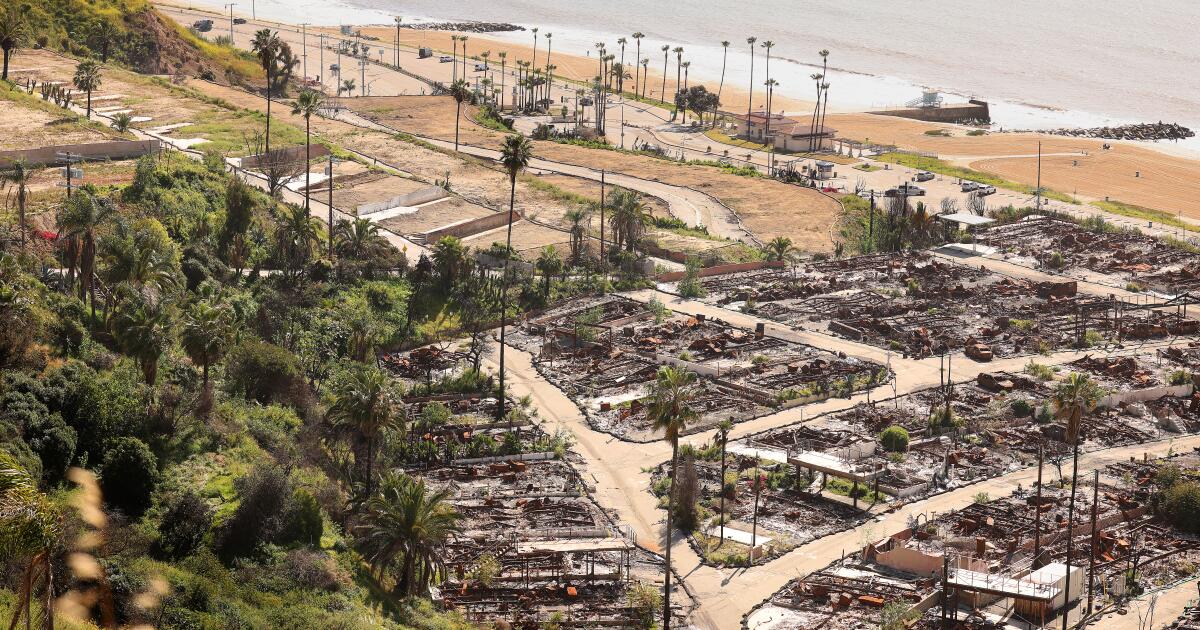
Home insurer surcharges for wildfires is legal, judge rules

