Missouri
Missouri budget committee pushes forward $51 million in cuts to childcare subsidy funds


KSHB 41 News reporter Braden Bates covers parts of Jackson County, Missouri, including Lee’s Summit. Send Braden a story idea by e-mail.
A budget proposal in the Missouri legislature would cut the childcare subsidy program by $51 million.
Missouri budget committee pushes $51 million in cuts to childcare subsidy funds
The proposed cuts have some local families and child care providers are on edge as the bill passed through the budget committee and now goes to the state house floor.
Angela True adopted her two grandchildren and enrolled them at the Little Learning Lodge in Lee’s Summit. Both of the kids get their full tuition paid for through the subsidy program.
“If I didn’t have child subsidy help, I wouldn’t be able to work. It’s too expensive,” True said.
KSHB 41
True qualified for the full amount because of the student’s history and adoption status. Other students who fall in the low-income range could only get partial relief.
“I couldn’t afford daycare,” True said. “I mean there’s just no way, like two children probably $450 a week. That’s $1,800 a month. I can’t. I make $2,800 a month. I got to pay rent. I got to pay utilities. I got to buy food. I don’t get any other assistance. Just subsidy assistance.”
State legislators said the proposed budget cuts are designed to ensure the state does not pay 100% of tuition on top of additional incentive funding.
A scenario laid out by House Budget Chair Dirk Deaton, (R-Seneca), asked if students who get 100% of their tuition paid, should they also get the extra funding from state incentives.
“In that instance, state government’s paying more than a private pay individual would be paying for the same service to that provider,” Deaton said.

Missouri House of Representatives
Some of those incentive funds include bonuses for children with special needs and accredited schools.
At a February budget meeting, lawmakers and representatives from the Missouri Elementary and Secondary Education Department said the incentives were designed when students got less that 100% tuition.
Casey Hanson is the Deputy Director of Kids Win Missouri. She said the incentives offer a lot of benefits.
“Those are really needed to care for those special populations,” she said. “I think, similarly with accreditation, if you want higher quality, which is really what we want in this state, providers aren’t able to achieve that necessarily without that extra bump,” said Hanson

KSHB 41
She acknowledged a possible need to look at how the program operates, but not at the expense of its budget.
“I do think we need to be open to conversations about restructuring the program and what that could look like,” Hanson said. “I think there’s a number of different combinations of routes that the General Assembly could take to do that. What we don’t want to talk about, and what’s a non-starter, is cutting $51 million from a program like this.”
Michelle LaPlant owns and runs the Little Learning Lodge and does not receive those added incentives. She said between 35% and 45% of her students receive the subsidy, and she fears the proposed cuts could bring problems for their families.
“It just seems like this is like a backhanded way for them to still not cover childcare,” LaPlant said.

KSHB 41
LaPlant pushed back on the idea that the families relying on subsidies are not deserving of the help.
“I see a lot of comments and memes and things, these parents are not lazy, nonworking people that are mooching off of society,” LaPlant said.”They’re working and they’re trying, they’re going to school, they’re trying to better themselves and do right by them and their kids so that their kids have a better life.”
True said her children’s school has been essential to her ability to hold a stable job.
“They helped me eight-hours-a-day while I went to work to make a living for them,” True said. “They’re the ones who taught them everything.”
On March 1, the subsidy program created a waitlist for the first time. Foster families will still automatically get the funds, but low-income families could be forced to wait.
Another change in the bill would be the way the child care centers are paid. In May, the centers were scheduled to switch to upfront payments at the beginning of the month, similar to how non-subsidy users pay.
However, the bill stated it would continue the current payment system with it based on the child’s attendance.
“With subsidy, providers are paid in arrears after the services are rendered, a month after the services are rendered,” said Hanson. “They’re only paid for up to five absences. This just creates less financial stability for providers.”
The budget proposal has passed through the House Budget Committee and will move to the House floor for discussion.
Read the bill here.
This story was reported on-air by a journalist and has been converted to this platform with the assistance of AI. Our editorial team verifies all reporting on all platforms for fairness and accuracy.





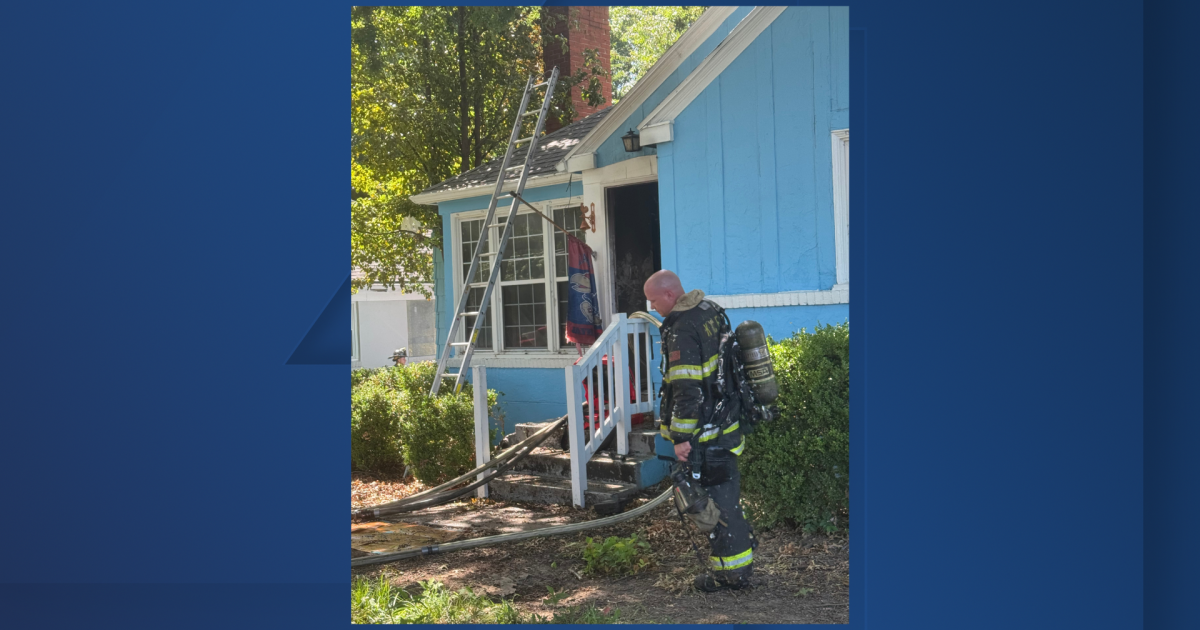
KANSAS CITY, Mo. — Fire crews battled a house fire Saturday morning in Kansas City, Missouri, that sent an occupant and a firefighter to the hospital.
The Kansas City, Missouri, Fire Department responded to a house fire around 10:10 a.m. Saturday in the 100 block of West 85th Street.
KCFD said one occupant was trapped inside the residence. Upon arrival, crews began battling the fire and entered the house to rescue the occupant.
Firefighters located an elderly woman and got her out of the house. She was taken by ambulance to a local hospital in serious condition.
A KCFD firefighter was taken to the hospital for a minor injury.
A dog inside the residence was able to evacuate safely.
The fire department reported the fire was brought under control around 10:25 a.m. City Planning and Dangerous Buildings were requested at the scene.
KCFD is investigating the cause of the fire.
—
The Missouri Lottery offers several draw games for those aiming to win big.
Here’s a look at July 17, 2026, results for each game:
Winning Mega Millions numbers from July 17 drawing
22-34-45-48-55, Mega Ball: 14
Check Mega Millions payouts and previous drawings here.
Winning Pick 3 numbers from July 17 drawing
Midday: 3-2-3
Midday Wild: 7
Evening: 6-5-7
Evening Wild: 3
Check Pick 3 payouts and previous drawings here.
Winning Pick 4 numbers from July 17 drawing
Midday: 2-5-9-9
Midday Wild: 8
Evening: 2-2-1-1
Evening Wild: 3
Check Pick 4 payouts and previous drawings here.
Winning Cash Pop numbers from July 17 drawing
Early Bird: 08
Morning: 06
Matinee: 06
Prime Time: 07
Night Owl: 10
Check Cash Pop payouts and previous drawings here.
Winning Show Me Cash numbers from July 17 drawing
01-06-11-19-21
Check Show Me Cash payouts and previous drawings here.
Feeling lucky? Explore the latest lottery news & results
Are you a winner? Here’s how to claim your lottery prize
All Missouri Lottery retailers can redeem prizes up to $600. For prizes over $600, winners have the option to submit their claim by mail or in person at one of Missouri Lottery’s regional offices, by appointment only.
To claim by mail, complete a Missouri Lottery winner claim form, sign your winning ticket, and include a copy of your government-issued photo ID along with a completed IRS Form W-9. Ensure your name, address, telephone number and signature are on the back of your ticket. Claims should be mailed to:
Ticket Redemption
Missouri Lottery
P.O. Box 7777
Jefferson City, MO 65102-7777
For in-person claims, visit the Missouri Lottery Headquarters in Jefferson City or one of the regional offices in Kansas City, Springfield or St. Louis. Be sure to call ahead to verify hours and check if an appointment is required.
For additional instructions or to download the claim form, visit the Missouri Lottery prize claim page.
When are the Missouri Lottery drawings held?
- Powerball: 9:59 p.m. Monday, Wednesday and Saturday.
- Mega Millions: 10 p.m. Tuesday and Friday.
- Pick 3: 12:45 p.m. (Midday) and 8:59 p.m. (Evening) daily.
- Pick 4: 12:45 p.m. (Midday) and 8:59 p.m. (Evening) daily.
- Cash4Life: 8 p.m. daily.
- Cash Pop: 8 a.m. (Early Bird), 11 a.m. (Late Morning), 3 p.m. (Matinee), 7 p.m. (Prime Time) and 11 p.m. (Night Owl) daily.
- Show Me Cash: 8:59 p.m. daily.
- Lotto: 8:59 p.m. Wednesday and Saturday.
- Powerball Double Play: 9:59 p.m. Monday, Wednesday and Saturday.
This results page was generated automatically using information from TinBu and a template written and reviewed by a Missouri editor. You can send feedback using this form.

A coalition of hemp businesses filed a federal lawsuit Thursday in an attempt to halt a statewide ban on intoxicating hemp products from going into effect in November.
The lawsuit, filed in the U.S. District Court for the Western District, claims the ban state lawmakers passed this spring contains “unconstitutionally vague” definitions for hemp and marijuana.
Craig Katz, government relations and compliance manager for one of the plaintiffs, St. Louis-based MNG 2005, Inc., said the problem begins with lawmakers’ lack of understanding about the cannabis industry.
“A lot of this stuff is kind of in the weeds,” Katz said. “It’s very difficult to understand. And when people are trying to legislate it, if they don’t understand it, you come up with something like HB2641, which doesn’t make a whole heck of a lot of sense.”
The coalition includes MNG, the parent company of 55 CBD Kratom stores nationwide, the Missouri Hemp Trade Association, and a Wisconsin-based hemp business, Lifted Liquids Inc.
The bill in question was among the first Missouri Gov. Mike Kehoe signed this year and will take all intoxicating hemp products off the shelves starting Nov. 12 — including THC seltzers currently sold in bars and grocery stores.
The legislation largely aligns state law with the upcoming federal ban that Congress approved last year.
Under Missouri’s bill, if Congress reverses course and decides to allow the sale of these products, the state would only permit them in licensed marijuana dispensaries. And if Congress delays the ban for a couple of years, Missouri law would still ban all products, except for intoxicating beverages.
It also tasks Missouri Attorney General Catherine Hanaway with enforcement.
Kehoe, Hanaway, and Sarah Wilson, director of the Missouri Department of Health and Senior Services, which oversees the state’s marijuana program, are the named defendants.
Hanaway’s spokeswoman said the office had not been served with the lawsuit. Kehoe’s office and DHSS declined to comment since it’s pending litigation.
Gov. Mike Kehoe signs a bill placing restrictions on intoxicating hemp products in his office on April 23 (Annelise Hanshaw/Missouri Independent).
Similar bills have been debated since 2023, but have failed to pass. Without regulations, intoxicating hemp products with as much as 1,000 mg of THC are currently sold in smoke shops — outside of Missouri’s licensed marijuana dispensaries.
The bill’s sponsor, Rep. Dave Hinman, a Republican from O’Fallon, said the legislation largely gives state law enforcement and prosecutors the authority to enforce the federal hemp ban after Nov. 12.
“ I believe this is the last-ditch effort for the hemp industry,” Hinman said. “HB2641 passed the Missouri House, Senate, and was signed by the governor. It was vetted throughout the entire process. I don’t believe this Hail Mary will get the results the Hemp Trade Association wants, and Missouri will mirror the federal government.”
The lawsuit argues that the bill defines the same products as both “hemp” and “marijuana” in different provisions, which leaves businesses, law enforcement and prosecutors confused about what is legal.
“Because unlicensed marijuana activity is a crime in Missouri, that confusion carries criminal consequences,” states the coalition’s press release announcing the lawsuit.
While the bill “promises” not to interfere with interstate hemp commerce, the coalition notes that it also restricts who may transport hemp products through the state, the press release states.
And it contains effective date provisions “so convoluted that businesses cannot determine which products are covered or when,” it said.
The coalition believes the “confusing” definitions will also take non-intoxicating CBD products off Missouri shelves.
“This isn’t consumer protection,” said Jay Patel, the association’s president. “It’s the elimination of an entire legal industry coupled with a government-mandated monopoly.”
-

 Los Angeles, Ca50 minutes ago
VIDEO: Bear hops wall into Glendale backyard
-

 Detroit, MI1 hour ago
It’s Abdul El Sayed vs. billionaires, Bernie Sanders says in Detroit
-

 San Francisco, CA2 hours ago
San Francisco’s 45-foot nude woman sculpture can be yours — with a major catch
-

 Dallas, TX2 hours ago
Biggest Question Nobody Is Asking About Dallas Cowboys & How They Answer It
-

 Miami, FL2 hours ago
Influencer Andrew Tate and Brother Tristan Arrested in Miami
-

 Boston, MA2 hours ago
Smoke on the water: Saturday’s rain may clear the air for World Cup final
-

 Denver, CO2 hours ago
Kalshi Promo Code DENVER: Secure $10 Bonus for Saturday MLB Games – Denver Stiffs
-

 Seattle, WA2 hours ago
Seattle teens arrested after shooting up Portland gas station, carjacking rideshare driver

