Missouri
Missouri budget committee pushes forward $51 million in cuts to childcare subsidy funds


KSHB 41 News reporter Braden Bates covers parts of Jackson County, Missouri, including Lee’s Summit. Send Braden a story idea by e-mail.
A budget proposal in the Missouri legislature would cut the childcare subsidy program by $51 million.
Missouri budget committee pushes $51 million in cuts to childcare subsidy funds
The proposed cuts have some local families and child care providers are on edge as the bill passed through the budget committee and now goes to the state house floor.
Angela True adopted her two grandchildren and enrolled them at the Little Learning Lodge in Lee’s Summit. Both of the kids get their full tuition paid for through the subsidy program.
“If I didn’t have child subsidy help, I wouldn’t be able to work. It’s too expensive,” True said.
KSHB 41
True qualified for the full amount because of the student’s history and adoption status. Other students who fall in the low-income range could only get partial relief.
“I couldn’t afford daycare,” True said. “I mean there’s just no way, like two children probably $450 a week. That’s $1,800 a month. I can’t. I make $2,800 a month. I got to pay rent. I got to pay utilities. I got to buy food. I don’t get any other assistance. Just subsidy assistance.”
State legislators said the proposed budget cuts are designed to ensure the state does not pay 100% of tuition on top of additional incentive funding.
A scenario laid out by House Budget Chair Dirk Deaton, (R-Seneca), asked if students who get 100% of their tuition paid, should they also get the extra funding from state incentives.
“In that instance, state government’s paying more than a private pay individual would be paying for the same service to that provider,” Deaton said.

Missouri House of Representatives
Some of those incentive funds include bonuses for children with special needs and accredited schools.
At a February budget meeting, lawmakers and representatives from the Missouri Elementary and Secondary Education Department said the incentives were designed when students got less that 100% tuition.
Casey Hanson is the Deputy Director of Kids Win Missouri. She said the incentives offer a lot of benefits.
“Those are really needed to care for those special populations,” she said. “I think, similarly with accreditation, if you want higher quality, which is really what we want in this state, providers aren’t able to achieve that necessarily without that extra bump,” said Hanson

KSHB 41
She acknowledged a possible need to look at how the program operates, but not at the expense of its budget.
“I do think we need to be open to conversations about restructuring the program and what that could look like,” Hanson said. “I think there’s a number of different combinations of routes that the General Assembly could take to do that. What we don’t want to talk about, and what’s a non-starter, is cutting $51 million from a program like this.”
Michelle LaPlant owns and runs the Little Learning Lodge and does not receive those added incentives. She said between 35% and 45% of her students receive the subsidy, and she fears the proposed cuts could bring problems for their families.
“It just seems like this is like a backhanded way for them to still not cover childcare,” LaPlant said.

KSHB 41
LaPlant pushed back on the idea that the families relying on subsidies are not deserving of the help.
“I see a lot of comments and memes and things, these parents are not lazy, nonworking people that are mooching off of society,” LaPlant said.”They’re working and they’re trying, they’re going to school, they’re trying to better themselves and do right by them and their kids so that their kids have a better life.”
True said her children’s school has been essential to her ability to hold a stable job.
“They helped me eight-hours-a-day while I went to work to make a living for them,” True said. “They’re the ones who taught them everything.”
On March 1, the subsidy program created a waitlist for the first time. Foster families will still automatically get the funds, but low-income families could be forced to wait.
Another change in the bill would be the way the child care centers are paid. In May, the centers were scheduled to switch to upfront payments at the beginning of the month, similar to how non-subsidy users pay.
However, the bill stated it would continue the current payment system with it based on the child’s attendance.
“With subsidy, providers are paid in arrears after the services are rendered, a month after the services are rendered,” said Hanson. “They’re only paid for up to five absences. This just creates less financial stability for providers.”
The budget proposal has passed through the House Budget Committee and will move to the House floor for discussion.
Read the bill here.
This story was reported on-air by a journalist and has been converted to this platform with the assistance of AI. Our editorial team verifies all reporting on all platforms for fairness and accuracy.






In the spring of 2021, Cecilia Williams lost her son, daughter-in-law and grandson to a drunken driver.
Williams, who lives in Bonne Terre, is now raising the two orphaned grandchildren who survived, Bentley and Mason.
A year later, Melanie Wankum was hit head-on by a drunken driver, killing her instantly and injuring a passenger on their way back from a wedding.
In both tragedies, families of the victims became advocates on their behalf, championing tougher laws in Missouri against drunken driving.
Soon after the crash that killed her son and his family, Williams found herself in Jefferson City lobbying for a bill that would hold drunken drivers responsible for children left without a parent after an accident.
It would require convicted drunken drivers to pay child support to the surviving children until they are at least 18, or 21 if they are still in school.
Named after Williams’ grandsons, the legislation was introduced in 2021 and signed by the governor five years later on July 9. Tennessee was the first state and Missouri was the eighth to pass a version of “Bentley Law.”
The child-support provision was included this year in Missouri House Bill 1740, which also stiffened other drunken driving laws. The additional provisions have become known as “Melanie’s Law,” to recognize the woman killed in 2022 by a drunken driver in Jefferson City.
Melanie’s Law changed felony classifications for DWI cases that cause injury or death to require longer prison sentences. It also expanded the mandatory use of ignition interlock devices for those involved in alcohol-related incidents. Missouri is one of 35 states with similar laws.
“The pain a family feels when a loved one is killed by a drunk driver is one that never goes away,” said state Rep. Dave Griffith, who sponsored the legislation.
The bill went through a number of revisions before it was passed, Griffith said.
“At each one of those steps, I think we’re very thoughtful about how we can make the bill better and how it’s going to affect the families that suffer and deal with this,” Griffith said.
“Driving while intoxicated is a choice,” he said. “It’s my hope that when people know the ramifications of making those bad decisions they will think twice before getting behind the wheel.”
Mothers Against Drunk Driving, a national organization with offices in Missouri, has been consistently involved in pushing for enactment of the stricter legislation. Working closely with Cecilia Williams, the organization supported the Missouri bill until it passed.
“Cecilia has been dedicated to turning the tragic crash into a way to honor her loved ones, as well as raise awareness of the dangers of driving impaired,” said Tabitha Perkins, state executive director for Mothers Against Drunk Driving.
“For Missouri, we hope this bill will serve as a deterrent to individuals who drink and drive,” Perkins said. “Knowing that even after they are released from prison, they will still have a financial obligation to complete will make drivers think twice before they get behind the wheel of a deadly weapon in an impaired state.”
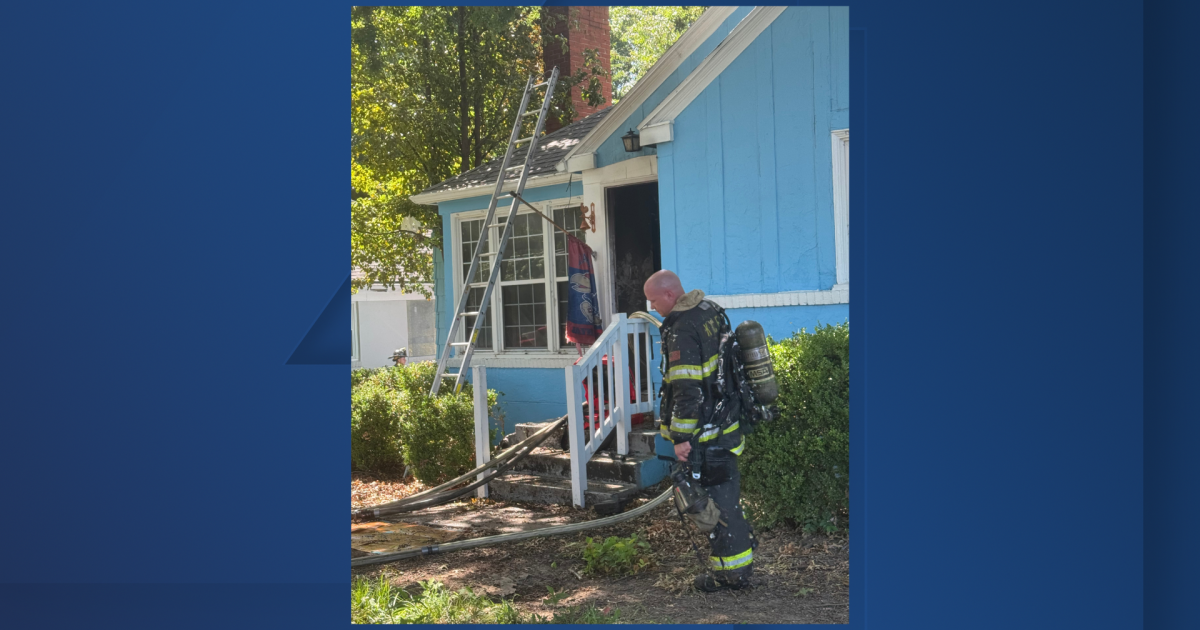
KANSAS CITY, Mo. — Fire crews battled a house fire Saturday morning in Kansas City, Missouri, that sent an occupant and a firefighter to the hospital.
The Kansas City, Missouri, Fire Department responded to a house fire around 10:10 a.m. Saturday in the 100 block of West 85th Street.
KCFD said one occupant was trapped inside the residence. Upon arrival, crews began battling the fire and entered the house to rescue the occupant.
Firefighters located an elderly woman and got her out of the house. She was taken by ambulance to a local hospital in serious condition.
A KCFD firefighter was taken to the hospital for a minor injury.
A dog inside the residence was able to evacuate safely.
The fire department reported the fire was brought under control around 10:25 a.m. City Planning and Dangerous Buildings were requested at the scene.
KCFD is investigating the cause of the fire.
—
The Missouri Lottery offers several draw games for those aiming to win big.
Here’s a look at July 17, 2026, results for each game:
Winning Mega Millions numbers from July 17 drawing
22-34-45-48-55, Mega Ball: 14
Check Mega Millions payouts and previous drawings here.
Winning Pick 3 numbers from July 17 drawing
Midday: 3-2-3
Midday Wild: 7
Evening: 6-5-7
Evening Wild: 3
Check Pick 3 payouts and previous drawings here.
Winning Pick 4 numbers from July 17 drawing
Midday: 2-5-9-9
Midday Wild: 8
Evening: 2-2-1-1
Evening Wild: 3
Check Pick 4 payouts and previous drawings here.
Winning Cash Pop numbers from July 17 drawing
Early Bird: 08
Morning: 06
Matinee: 06
Prime Time: 07
Night Owl: 10
Check Cash Pop payouts and previous drawings here.
Winning Show Me Cash numbers from July 17 drawing
01-06-11-19-21
Check Show Me Cash payouts and previous drawings here.
Feeling lucky? Explore the latest lottery news & results
Are you a winner? Here’s how to claim your lottery prize
All Missouri Lottery retailers can redeem prizes up to $600. For prizes over $600, winners have the option to submit their claim by mail or in person at one of Missouri Lottery’s regional offices, by appointment only.
To claim by mail, complete a Missouri Lottery winner claim form, sign your winning ticket, and include a copy of your government-issued photo ID along with a completed IRS Form W-9. Ensure your name, address, telephone number and signature are on the back of your ticket. Claims should be mailed to:
Ticket Redemption
Missouri Lottery
P.O. Box 7777
Jefferson City, MO 65102-7777
For in-person claims, visit the Missouri Lottery Headquarters in Jefferson City or one of the regional offices in Kansas City, Springfield or St. Louis. Be sure to call ahead to verify hours and check if an appointment is required.
For additional instructions or to download the claim form, visit the Missouri Lottery prize claim page.
When are the Missouri Lottery drawings held?
- Powerball: 9:59 p.m. Monday, Wednesday and Saturday.
- Mega Millions: 10 p.m. Tuesday and Friday.
- Pick 3: 12:45 p.m. (Midday) and 8:59 p.m. (Evening) daily.
- Pick 4: 12:45 p.m. (Midday) and 8:59 p.m. (Evening) daily.
- Cash4Life: 8 p.m. daily.
- Cash Pop: 8 a.m. (Early Bird), 11 a.m. (Late Morning), 3 p.m. (Matinee), 7 p.m. (Prime Time) and 11 p.m. (Night Owl) daily.
- Show Me Cash: 8:59 p.m. daily.
- Lotto: 8:59 p.m. Wednesday and Saturday.
- Powerball Double Play: 9:59 p.m. Monday, Wednesday and Saturday.
This results page was generated automatically using information from TinBu and a template written and reviewed by a Missouri editor. You can send feedback using this form.
-

 Utah5 minutes ago
Rainfall causes substantial damage along Highway 153 in Beaver County
-

 Vermont11 minutes ago
‘If we don’t write it down, it disappears’: Independent historian gathers Vermont veterans’ stories before they are lost to history – VTDigger
-

 Virginia17 minutes ago
Updated ACC Recruiting Rankings: Where is Virginia Tech heading into fall camp?
-

 Washington23 minutes ago
How the Democratic Party's divide over Israel has reached WA
-

 Wisconsin29 minutes ago
Best Case, Worst Case, And Most Likely Scenarios for Wisconsin Football in 2026
-

 West Virginia35 minutes ago
West Virginia Ascend continues to reach success – WV MetroNews
-

 Wyoming41 minutes ago
Inside The ‘Cowboy Starship,’ A $7.95 Million Off-Grid Mansion In Remote Wyoming
-

 Crypto47 minutes ago
Ethereum’s 12 Biggest Wallets Expose 6 Exchanges Controlling 6.6 Million ETH

