Missouri
Bills legalizing driverless cars clear a Missouri House committee


The push to allow Waymo driverless taxis to operate in Missouri cleared its first hurdle Tuesday evening, Jan. 20.
The House Emerging Issues committee voted 7-4 Tuesday, along partisan lines, to advance two identical bills sponsored by Republican state Reps. Don Mayhew of Crocker and Brandon Phelps of Warrensburg.
The bills had received strong support from advocates for the disabled, Mothers Against Drunk Driving and St. Louis Mayor Cara Spencer, during a three-hour public hearing last week.
But committee members heard fervent opposition from numerous Teamsters commercial drivers, who argued the legislation is a “job killer” because it opens the door for driverless trucks on highways.
The bill also faced opposition from first responders and school bus drivers, who raised public safety concerns.
Tom Mullins, a St. Louis firefighter with Teamsters Local 610, said at last week’s hearing that other cities have struggled with keeping “robo taxis” out of emergency scenes or getting them to move to the side of the road when their sirens are on.
“Delays in even seconds can make a life or death difference in property preservation and human survival,” Mullins said. “Emergency crews have had to physically intervene, smashing windows to force the vehicle to stop or physically stand in front of an autonomous vehicle to keep it from entering the scene.”
Lori Becker, CEO of the St. Louis-based Starkloff Disability Institute, urged the committee to think about people with disabilities and those who have “transit-limiting conditions.” Becker said she and others face challenges with Uber drivers and would feel “more safe being in a car independently.”
“I don’t have to rely on someone’s judgment or availability or get their permission to get a ride somewhere — I can just go,” Becker said. “And that’s a right that we all deserve. So it’s about our rights, it’s about our dignity, and it’s also about putting more money back into the economy.”
Democratic lawmakers from Kansas City noted the legislation would prevent local governments from banning self-driving cars and services in their cities. All three Kansas City members of the committee voted against the bills.
State Rep. Emily Weber, a Democrat from Kansas City, asked Phelps and Mayhew if they’d spoken with the city’s police chief about the impacts of the bill, specifically about training first responders to interact with the cars.
“We’re having issues hiring police officers, first responders,” Weber said. “So now you’re adding additional new training, and it seems like neither one of you have had conversations with the areas that are going to be affected by this.”
Mayhew said that he’s had numerous conversations with the leadership in St. Louis.
Representatives from the St. Louis mayor’s office spoke in support of the legislation, saying the city is already partnering with Waymo cars as a test site. Waymo is only allowed to test the cars in manual mode with a driver, until a state law is passed permitting driverless cars.
St. Louis Democratic state Rep. Elizabeth Fuch voted against the bill.
After St. Louis was announced as a test site, Waymo hired four Missouri Capitol lobbyists in November to help push for the legalization bill.
The legislation requires a law enforcement plan be submitted to the Department of Public Safety detailing how to communicate with a “fleet specialist” and how to take the cars off the road if needed. The vehicles must remain at the scene of a crash, as required by current law, and crashes or collisions involving autonomous vehicles must be reported.
Autonomous vehicle taxis would operate under the same rules as taxis and other for-hire passenger transport systems, it states, and commercial vehicles would abide by commercial vehicle laws.
This story was first published at missouriindependent.com.



Missouri
Thousands show up to protest current administration at ‘No Kings’ rally in Kansas City, Missouri

KSHB 41 reporter Lily O’Shea Becker covers Franklin and Douglas counties in Kansas. Share your story idea with Lily.
—
Thousands showed up to Mill Creek Park on Saturday in Kansas City, Missouri, in a wave of protests across the country criticizing U.S. President Donald Trump and his administration.
Thousands show up to protest current administration at KCMO ‘No Kings’ rally
Multiple protesters told KSHB 41 News they participated in the protest because they feel like it is the only way their voices can be heard.
Chris Morrison/KSHB
“Congress is not working for us,” said Sharon, a protester at Mill Creek Park. “I have called my Congress people numerous times.”
It was the third wave of ‘No Kings’ protests across the country since June 2025.
“I’ve been here for each of the ‘No Kings,’ and I’ll admit that I’m frustrated that I have to be back here again,” protester Carter Taylor said.
Taylor is a teacher for Kansas City Public Schools with AFT Local 691, and she said she showed up to represent her students.
“I hope that everyone here doesn’t just stay here today — that they donate to food banks, that they check in on their public schools,” Taylor said.
Will Shaw/KSHB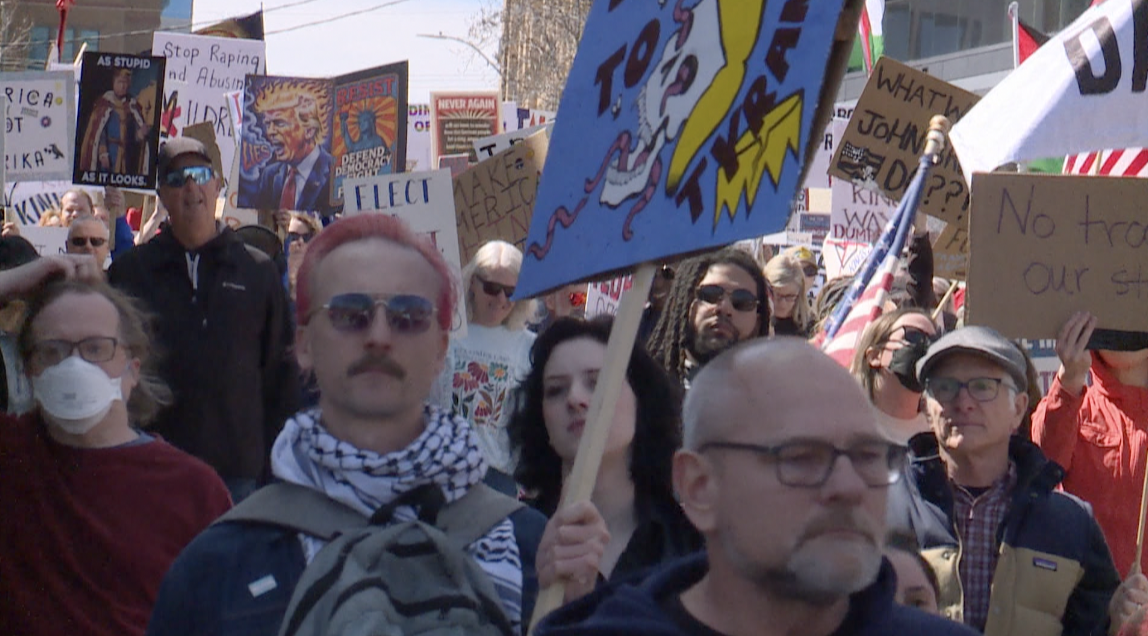
Protesters held signs critiquing the current administration’s stances on tariffs, ongoing wars and immigration enforcement, among other things.
Chris Morrison/KSHB
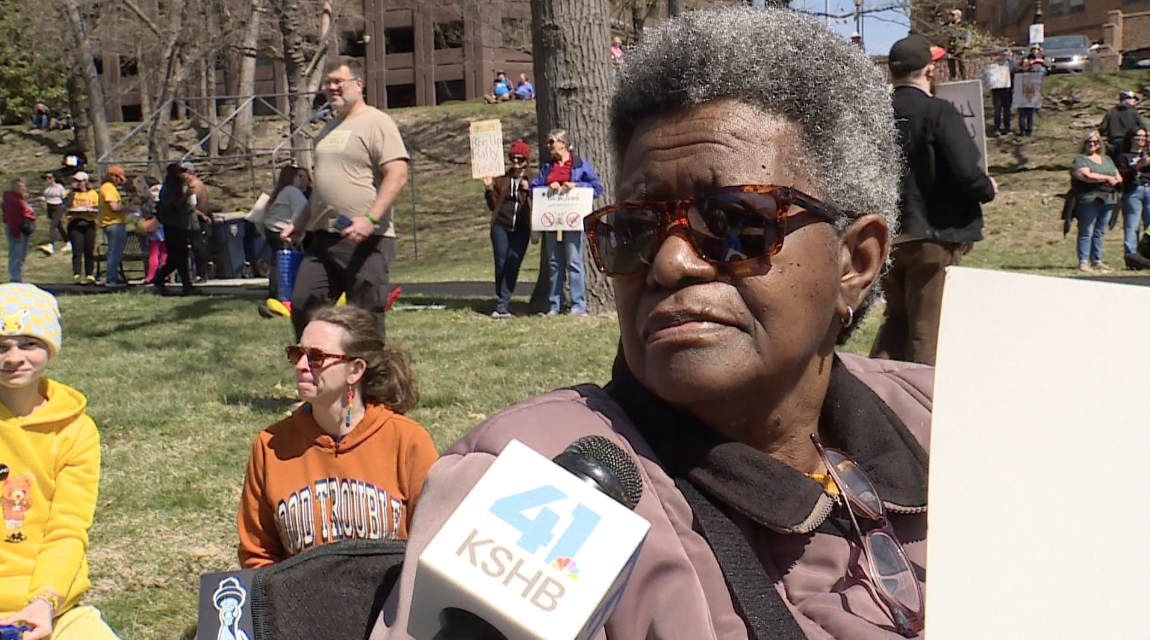
“It means that people care,” protester Lonnie Beattle said. “People care about what’s going on in this country, and people are not happy with what’s going on in the country.”
—

The Missouri Lottery offers several draw games for those aiming to win big.
Here’s a look at March 27, 2026, results for each game:
Winning Mega Millions numbers from March 27 drawing
13-27-28-41-62, Mega Ball: 16
Check Mega Millions payouts and previous drawings here.
Winning Pick 3 numbers from March 27 drawing
Midday: 1-2-5
Midday Wild: 5
Evening: 1-5-9
Evening Wild: 6
Check Pick 3 payouts and previous drawings here.
Winning Pick 4 numbers from March 27 drawing
Midday: 4-9-8-1
Midday Wild: 7
Evening: 6-7-3-3
Evening Wild: 6
Check Pick 4 payouts and previous drawings here.
Winning Cash Pop numbers from March 27 drawing
Early Bird: 10
Morning: 10
Matinee: 03
Prime Time: 15
Night Owl: 09
Check Cash Pop payouts and previous drawings here.
Winning Show Me Cash numbers from March 27 drawing
08-15-18-25-29
Check Show Me Cash payouts and previous drawings here.
Feeling lucky? Explore the latest lottery news & results
Are you a winner? Here’s how to claim your lottery prize
All Missouri Lottery retailers can redeem prizes up to $600. For prizes over $600, winners have the option to submit their claim by mail or in person at one of Missouri Lottery’s regional offices, by appointment only.
To claim by mail, complete a Missouri Lottery winner claim form, sign your winning ticket, and include a copy of your government-issued photo ID along with a completed IRS Form W-9. Ensure your name, address, telephone number and signature are on the back of your ticket. Claims should be mailed to:
Ticket Redemption
Missouri Lottery
P.O. Box 7777
Jefferson City, MO 65102-7777
For in-person claims, visit the Missouri Lottery Headquarters in Jefferson City or one of the regional offices in Kansas City, Springfield or St. Louis. Be sure to call ahead to verify hours and check if an appointment is required.
For additional instructions or to download the claim form, visit the Missouri Lottery prize claim page.
When are the Missouri Lottery drawings held?
- Powerball: 9:59 p.m. Monday, Wednesday and Saturday.
- Mega Millions: 10 p.m. Tuesday and Friday.
- Pick 3: 12:45 p.m. (Midday) and 8:59 p.m. (Evening) daily.
- Pick 4: 12:45 p.m. (Midday) and 8:59 p.m. (Evening) daily.
- Cash4Life: 8 p.m. daily.
- Cash Pop: 8 a.m. (Early Bird), 11 a.m. (Late Morning), 3 p.m. (Matinee), 7 p.m. (Prime Time) and 11 p.m. (Night Owl) daily.
- Show Me Cash: 8:59 p.m. daily.
- Lotto: 8:59 p.m. Wednesday and Saturday.
- Powerball Double Play: 9:59 p.m. Monday, Wednesday and Saturday.
This results page was generated automatically using information from TinBu and a template written and reviewed by a Missouri editor. You can send feedback using this form.
Missouri
Boone Health files lawsuit against Missouri Heart Center, alleging contract breaches, data misuse

COLUMBIA, Mo. (KMIZ)
Boone Health is suing a Columbia-based cardiology group, alleging breaches of contract, misuse of confidential information and plans to engage in unlawful competition.
The lawsuit, filed in Boone County Circuit Court, targets Missouri Cardiovascular Specialists LLP, also known as the Missouri Heart Center or MO Heart, which has provided cardiology services to Boone Health for more than a decade. According to court documents, a renewed agreement was signed in 2021 covering professional services and management of Boone Health’s cardiology operations.
Boone Health alleges it paid the cardiology group millions of dollars under those agreements for staffing, administrative oversight and revenue cycle management, which included access to sensitive financial and patient-related data. In return, MO Heart and its physicians agreed to noncompete and confidentiality provisions designed to protect Boone Health’s business interests.
The health system claims MO Heart violated those agreements by preparing to launch a competing cardiology practice in the Columbia area, potentially as soon as the contracts expire on May 6, 2026. The lawsuit alleges the new venture would fall within a restricted geographic area and time frame outlined in the noncompete clause, which Boone Health argues is enforceable under Missouri law.
Boone Health also accuses MO Heart of disclosing or misusing confidential information, including billing rates, reimbursement data and strategic business details during its transition to new partnerships with outside organizations. Boone Health alleges in the lawsuit those actions could cause “severe and irreparable injury.”
In addition, Boone Health claims MO Heart obstructed access to critical systems and data. The lawsuit alleges the cardiology group cut off Boone Health’s access to a key billing and patient information platform and stopped sharing necessary data, raising concerns about continuity of patient care.
Boone Health alleged that MO Heart indicated that it intends to operate independently and has taken the position that the noncompete provisions are unenforceable, according to the filing.
Boone Health is asking a judge to rule the noncompete agreements that MO Heart signed are valid, as well as having MO Heart return or destroy confidential information, and delay starting a competing practice until May 2027.
A jury trial has been requested.
A spokesperson for Boone Health told ABC 17 News that it would provide additional details early next week.
Dr. James T. Elliott of MO Heart disagreed with allegations in the lawsuit through a written statement.
“For months, we have tried to meet with leadership team at Boone Health to work constructively towards a new, collaborative arrangement that would preserve access to and expand high‑quality care for our patients and for the entire community. Unfortunately, Boone refused to engage with us in any meaningful way. Instead, we have been met with a series of escalating legal threats, culminating in today’s filing,” the statement reads.
“Earlier today Boone Health filed a lawsuit against Missouri Heart Center. We disagree with the lawsuit’s allegations and believe those claims are both legally and factually incorrect. This litigation does not change our commitment to caring for patients.”

Ken Roczen wins second race of 2026 in Detroit, Hunter Lawrence crashes and loses points lead

San Francisco’s 5 Best Affordable Places To Stay On A Tight Budget, According To Guests – Islands

DAL@PIT Postgame: Glen Gulutzan | Dallas Stars

1 dead, 9 injured in 3-vehicle crash in southwest Miami-Dade

+)WAY TO WATCH Free Boston Legacy FC vs Utah Royals LIVE

Florida High School Football Rankings: Top 25 teams – Oct. 21

How old is Bo Nix? What to know about Oregon quarterback ahead of 2024 NFL Draft

Cleary's 21 help Le Moyne down Central Connecticut State 69-64 in OT

99th annual Pony Swim held in Virginia

Indiana Members Credit Union announced as new anchor tenant at Bottleworks District

Jeffries declines to break with indicted Democrat after ethics panel’s guilty verdict

Hundreds of thousands march through London in stand against the far right

2 students killed, 7 other people injured in Tennessee bus crash during school field trip

Dem senators dodge crucial question on illegal alien accused of killing Chicago college student

EU Parliament unblocks key political hurdle in digital euro talks
-

 Movie Reviews1 week ago
‘Youth’ Twitter review: Ken Karunaas impresses audiences; Suraj Venjaramoodu adds charm; music wins praise | – The Times of India
-

 Sports1 week ago
IOC addresses execution of 19-year-old Iranian wrestler Saleh Mohammadi
-

 New Mexico6 days ago
Clovis shooting leaves one dead, four injured
-
 Business1 week ago
Disney’s new CEO says his focus is on storytelling and creativity
-

 Tennessee5 days ago
Tennessee Police Investigating Alleged Assault Involving ‘Reacher’ Star Alan Ritchson
-

 Technology6 days ago
YouTube job scam text: How to spot it fast
-

 Minneapolis, MN3 days ago
Boy who shielded classmate during school shooting receives Medal of Honor
-

 Texas1 week ago
How to buy Houston vs. Texas A&M 2026 March Madness tickets