Minnesota
Why state charges for Minneapolis ICE shooting are possible but tricky


To get a case to trial, state prosecutors may have to show federal immunity doesn’t apply.

Watch moment ICE agent fatally shoots woman in Minnesota
A bystander filmed the moment an ICE agent fatally shot a woman in Minneapolis after President Trump ramped up immigration enforcement in the area.
Many in Minnesota and across the country were outraged by the killing of Renee Nicole Good by a federal immigration agent in a Minneapolis neighborhood, and called for the agent to face charges. Minneapolis Mayor Jacob Frey, who oversees the city’s police department, said the Trump administration’s characterization of the shooting as self-defense is “spin.”
But even if Minnesota prosecutors conclude the shooting was a crime, can they charge a federal Immigration and Customs Enforcement agent for something he did on the job? No, according to Vice President JD Vance, who asserted that the agent has “absolute immunity” from criminal charges.
The reality isn’t so simple. Minnesota state prosecutors may, in fact, be able to prosecute the federal immigration agent who shot and killed a Minneapolis woman, though the pathway forward would come with special challenges.
State officials announced Jan. 9 that they are collecting evidence surrounding Good’s Jan. 7 death, a signal they may consider bringing charges. The move comes after President Donald Trump and other White House officials suggested the shooting was justified, and state authorities said the FBI pulled out of a joint investigation.
Though the U.S. Department of Justice hasn’t announced whether it will bring charges, the hasty statements by White House officials opposing charges make a federal prosecution seem highly unlikely, especially at a time when the lines between the DOJ and White House are increasingly blurred.
“When you have the president, the vice president, the secretary of homeland security all saying that this was self-defense, there’s zero chance that Pam Bondi and the Department of Justice will move forward with a prosecution at the federal level,” Neama Rahmani, a former federal prosecutor, told USA TODAY.
At a Jan. 9 news conference, Minnesota Attorney General Keith Ellison and the top prosecutor for Minneapolis’ Hennepin County, Mary Moriarty, both said they haven’t yet made a charging decision when it comes to Good’s death, and will wait until evidence is evaluated.
Ellison led the state prosecution of Derek Chauvin, a Minneapolis cop convicted in 2021 of murdering a Black man who was under arrest, George Floyd. Moriarty was elected in 2022 on a platform of holding police accountable.
Rahmani said he wouldn’t be surprised by a decision to bring charges.
“I think they ultimately will choose to prosecute,” Rahmani said. “Attorney General Ellison’s office has been pretty aggressive in these types of cases, dating back to George Floyd,” he added.
As tensions have flared over the Minneapolis death, federal agents shot and wounded two people during a traffic stop in Portland, Oregon, on Jan. 8. As with the Minnesota case, federal officials said the driver “weaponized his vehicle,” while local officials called for an investigation. Similar questions of potential state charges could arise in that case.
Here’s why Minnesota authorities could pursue state charges, but could also face challenges:
Hurdles to Minnesota prosecuting federal agent
One challenge to Minnesota officials bringing charges is that they would likely have to prosecute the case outside of their home turf. There’s a federal law allowing officers of federal agencies to move their cases to a federal court when they are being prosecuted for something they did as part of their official responsibilities.
That’s a significant disadvantage for state prosecutors, according to Mark Bederow, a criminal defense lawyer in New York City and former Manhattan prosecutor. He noted that, in a federal court, state prosecutors would be dealing with a different pool of potential jurors, a different judge, and different legal processes.
“It’s a road game, instead of having home court advantage,” Bederow said.
In addition, state prosecutors would likely have to meet special legal standards to get the case to trial, because they would be prosecuting a federal agent. In that type of case, defendants often argue they can’t be prosecuted because of a constitutional provision – the Supremacy Clause – that puts federal law above state law.
Federal courts have sometimes blocked state prosecutions under that provision, out of concern that state authorities are using their prosecutorial power to frustrate the federal government from legitimately exercising its own powers, according to Bryna Godar, a staff attorney at the University of Wisconsin Law School’s State Democracy Research Initiative.
Godar wrote in the Lawfare legal publication that federal courts have repeatedly blocked state prosecutions when the federal official was reasonably carrying out lawful federal duties. But, outside those circumstances, courts have allowed the prosecutions to go forward.
“In many cases, the federal officer may ultimately walk away with immunity. But not always,” Godar wrote.
Another potential challenge is courts disagreeing on the exact contours of this type of immunity for federal officers, leaving the law in this area somewhat unsettled, according to Godar. The U.S. Supreme Court hasn’t weighed in on this type of immunity in more than a century.
Murder and manslaughter charges could be in play
Even if state officials do decide charges are warranted, they are unlikely to bring a first-degree murder charge, according to Rahmani. That crime generally requires premeditation.
He said state officials might consider a form of manslaughter or a lesser murder charge, which come with maximum penalties ranging from 10 to 40 years in prison. For example, a person can be guilty of second-degree manslaughter in Minnesota by unreasonably endangering a person’s life or of second-degree murder by intentionally killing someone without premeditation.
“It’s possible that there’s multiple charges and they don’t just land on one, to give jurors really the option,” Rahmani said.
‘Very tough job for prosecutors’
If the ICE agent ended up facing charges, he would likely argue he shot Good in self-defense, former prosecutors told USA TODAY.
Minnesota law allows officers to use deadly force if it’s reasonable for them to believe the force will protect them or another person from great bodily harm.
In this case, the agent may argue that Good appeared to be directing her SUV at him. Trump officials have highlighted video footage from the front of the SUV, saying it shows movement in the agent’s direction. Advocates for Good have pointed to footage from the rear, which shows the vehicle turning as if to pass the agent and get away.
Looking across multiple public videos, which show both Good’s handling of the wheel and the movement of the SUV’s tires, Good is driving simultaneously rightward and forward, as the agent stands towards the left, front side of her car. Then there are three brief sounds that may be bullet shots, one as the agent points his gun at the left side of the front windshield, and then two more as he is pointing at the side window as the car drives away.
Protests have mounted across the country, with many arguing the video shows the shots weren’t reasonable, and protesting what they see as ICE’s aggressive behavior — including towards U.S. citizens such as Good — more generally.
“They are already trying to spin this as an action of self-defense,” Minneapolis Mayor Jacob Frey said at his Jan. 7 press conference. “Having seen the video myself, I want to tell everybody directly – that is bull—-.”
But Bederow said, as emotional as the case is, there is much more to be parsed out in terms of witness interviews and video analysis that could illuminate key legal questions, such as whether it was reasonable for the ICE agent to believe he was in danger.
“Lawyers who do this for a living and have experience in self-defense or justification cases realize that there’s a lot more nuance to this than saying, ‘She didn’t mow the guy down, and he shot and killed her,’” Bederow said.
If he does face charges, the agent might argue that he was operating in a heated environment — he and Good’s wife were filming each other outside the SUV as she asked if he “wanted to come at” them, just seconds before the shooting — and that he didn’t have the luxury of analyzing the direction of the SUV’s movements in a frame-by-frame, slow motion video.
“It’s going to be a very, very tough job for prosecutors, notwithstanding the fact that there is very disturbing video and a woman lost her life,” he said.



Elk River leaders are moving to keep Minnesota’s retired state flag flying in the city after residents backed the idea in a survey.
The Elk River City Council voted 5-0 on Monday night to draft a resolution to display the old flag instead of the new design adopted two years ago.
The move came after more than 1,000 residents responded to an online survey posted by the city. In that survey, the city says almost 75% supported displaying the old flag.
A final council vote is expected at its next meeting on the 20th.
Minnesotans hold onto old habits when buying a state flag
Other cities across the state have taken similar steps to fly the retired flag, including Champlin and Zumbrota.
The flag design turned into a political dispute when planning for a new design first began. Two years later, debates continue, with some believing the old flag celebrated the displacement of Native Americans and others embracing it due to its history.
Lawmakers, commission member discuss new legislation for state flag, seal designs

Country music star Brad Paisley will be bringing his talents to the Grandstand at this year’s Minnesota State Fair.
Paisley, along with special guest Avery Anna, will take to the stage on Sept. 3. Tickets go on sale at 10 a.m. on Friday, with prices ranging between $52 to $113.75.
Paisley has won several awards, including three Grammys, two American Music Awards, 15 Academy of Country Music Awards and 14 Country Music Association Awards.
In 2008, Paisley became the first artist to achieve 10 consecutive Billboard Country Airplay No. 1 singles. Last year, he was inducted into the Nashville Songwriters Hall of Fame.
This year’s Grandstand acts also include TLC, Salt-N-Pepa, En Vogue, Rod Stewart, “Weird” Al Yankovic and Bonnie Raitt. Pre-fair discount admission tickets are also still available.

Newsletter: NATO holds amid fragile Iran ceasefire
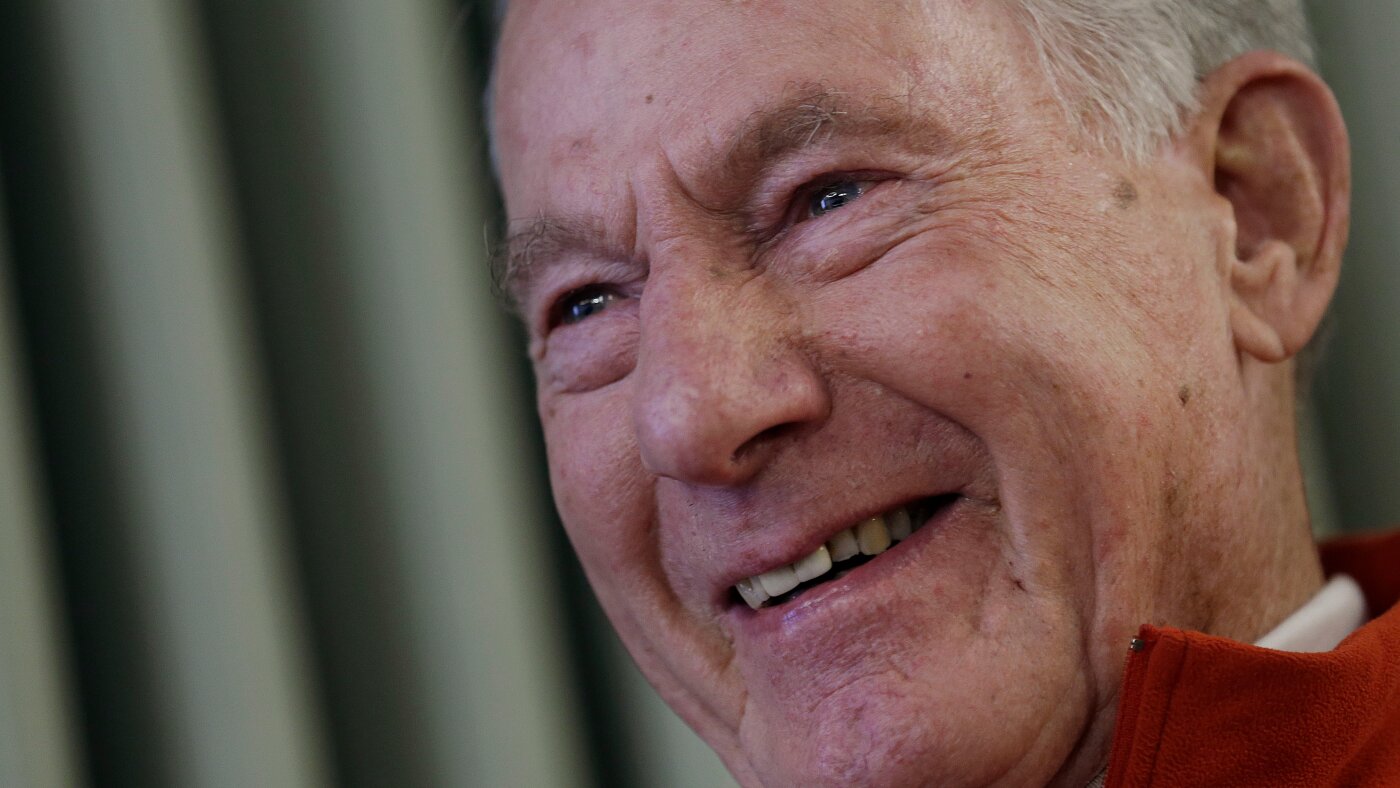
Jim Whittaker, the first American to summit Mount Everest, dies at 97

Video: Suspect in Gilgo Beach Murders Pleads Guilty

Closed Detroit behavioral facility faces lawsuit over alleged sex abuse of teen

Devers belts big HR to clinch Giants' series victory over Phillies

Florida High School Football Rankings: Top 25 teams – Oct. 21

How old is Bo Nix? What to know about Oregon quarterback ahead of 2024 NFL Draft

Cleary's 21 help Le Moyne down Central Connecticut State 69-64 in OT

99th annual Pony Swim held in Virginia

Indiana Members Credit Union announced as new anchor tenant at Bottleworks District
Newsletter: NATO holds amid fragile Iran ceasefire
Jim Whittaker, the first American to summit Mount Everest, dies at 97

Video: Military Families Bear the Burden of War, Again

Fox News Poll: Record number say taxes are too high; government spending seen as wasteful

‘Even the street cats ran’: Inside Israel’s deadliest attack on Beirut
-

 Atlanta, GA4 days ago
1 teenage girl killed, another injured in shooting at Piedmont Park, police say
-

 Culture1 week ago
Do You Know Where These Famous Authors Are Buried?
-

 Movie Reviews7 days ago
Vaazha 2 first half review: Hashir anchors a lively, chaos-filled teen tale
-

 Georgia2 days ago
Georgia House Special Runoff Election 2026 Live Results
-

 Pennsylvania2 days ago
Parents charged after toddler injured by wolf at Pennsylvania zoo
-

 Education1 week ago
Video: We Put Dyson’s $600 Vacuum to the Test
-
 Milwaukee, WI3 days ago
Potawatomi Casino Hotel evacuated after fire breaks out in rooftop HVAC system
-
 Entertainment1 week ago
Inside Ye’s first comeback show at SoFi Stadium