Minnesota
Minnesota may open some of the first government-run cannabis dispensaries in the U.S.


Minnesota could become the first state in nine years to open cannabis dispensaries that are run by cities and counties.
That’s because of one line in the state’s new cannabis laws that allow for cities and counties to “establish, own and operate a municipal cannabis store.” The law appears to be the first of its kind in the country and has prompted cities to research whether they want to open their own dispensaries.
But there’s only one city that’s been successful with running a cannabis store. The City of North Bonneville in Washington was the first city in the country to open a municipal cannabis dispensary back in 2015, but was no longer operating it as of 2021.
Municipal cannabis stores are of particular interest to local governments in Minnesota that don’t already operate their own liquor stores. In cities like Edina and Isanti, liquor stores serve as a revenue stream that helps reduce taxes for residents and businesses.
Your gift today creates a more connected Minnesota. MPR News is your trusted resource for election coverage, reporting and breaking news. With your support, MPR News brings accessible, courageous journalism and authentic conversation to everyone – free of paywalls and barriers. Your gift makes a difference.
Because of conflicts with federal law, other states have shied away from adopting the state-owned liquor store model for cannabis retailers.
“The idea has been floated and rejected in various states, such as New Mexico and New Hampshire. Lawmakers have done so because cannabis remains illegal (Schedule I) under federal law and they do not wish to enact policies that place state-employees in a position where they are engaging in activity that is in positive conflict with federal law,” said Paul Armentano, deputy director of NORML, a national cannabis advocacy group.
According to state Rep. Zack Stephenson, DFL-Coon Rapids, who helped author the legislation that legalized recreational cannabis last year, the idea of municipal cannabis stores came directly from cities and counties in Minnesota.
“When we were putting the bill together, we weren’t copy-pasting from other states. We were trying to come up with a Minnesota-specific model. And one of the things that works well for many communities across Minnesota is municipal liquor stores. They are important to a lot of cities all across the state. And building from that successful model, there were cities that had some potential interest in taking the same approach with cannabis that they take with liquor. And we wanted to enable them to do that, if they chose to do it and if it was workable,” said Stephenson.
1 of 10

2 of 10
Government officials in the City of Osseo, the City of St. Joseph and Cook County have been weighing the pros and cons of operating a cannabis retail store, despite the fact that Minnesota’s Office of Cannabis Management won’t come out with official cannabis regulations until early 2025.
The Office’s rules will dictate what municipal cannabis dispensaries could look like. But the Office is still in the process of drafting those rules, and most municipalities are still in the early stages of discussion on cannabis dispensaries.
Country’s first government-run dispensary struggled to break even
North Bonneville Mayor Brian Sabo said when the idea of a government-run marijuana store came forward, before he was mayor, marijuana stores were still an uncharted concept in Washington after the state legalized recreational cannabis use and sales in 2012.
Soon after, the city formed a public development authority for the purpose of opening a cannabis retail store. The plan was to use the profits to pour back into North Bonneville, like upgrading street lights and rebuilding a central park playground.
An “aggressive business plan” was put forward outlining the customer base needed to support the store would come from other areas throughout the Northwest, according to Sabo.
“On paper, the plan appeared to be a good one but critics were warning it was far too aggressive given how far out and secluded North Bonneville is within the Gorge, and the number of retail stores that were planned to be opened throughout Washington State,” Sabo said.
The store, known as the Cannabis Corner, opened in 2015 and was widely reported as the first municipal marijuana store in the U.S. Sabo said it did fairly well the first couple years, but as more retail stores opened in the state and in Oregon, business drastically fell off.
By 2018, the dispensary was struggling to break even.
“A request by the PDA was granted to move the store and license to a larger market of Stevenson, Washington, the next city 10 miles east of North Bonneville. Although the store did better in the larger market, sales never exceeded break-even status, negating the promise of a financial windfall for the city,” said Sabo.
In 2021, their city council decided the business was more of a liability than an asset. They dissolved the public development authority and sold the store.
Government officials and cannabis experts from multiple states were not aware of any other government-run dispensaries in the U.S., meaning Minnesota appears to be poised to be the second try after North Bonneville failed.
Minnesota cities say revenue from a cannabis dispensary could help reduce property taxes, offset budget increases
The Minnesota cities of Osseo and St. Joseph, along with Cook County, are a few municipalities that don’t operate a liquor store and are exploring the idea of a cannabis store.
The biggest draw for them is the potential revenue a dispensary would bring in.
“It really comes down to dollars and cents. In the time when the costs of providing the high-quality city services to our residents and business owners only continues to go up each and every year, we are looking for any potential revenue stream that can help offset our budget increases,” said Riley Grams, Osseo city administrator.
The sales tax on cannabis product sales in Minnesota is 10 percent, in addition to state and local taxes. Local governments are barred from imposing their own tax on cannabis.
In Cook County, commissioners are divided on the idea. County administrator James Joerke said Cook County currently doesn’t have any enterprise funds or operate any utilities.
“There are some who see this as an opportunity to generate revenue that can be used to offset property taxes. There are others who I think have concerns about playing a role even selling a product that could have harmful effects to residents. And there’s also some sentiment that this is really something that the private sector should handle,” said Joerke.
Similar discussions are happening in the City of St. Joseph. Mayor Rick Schultz said 30 percent of the city’s land is exempt from property taxes and the income from a dispensary could help relieve some of the tax burden for residents and businesses.
Both Osseo and Cook County have formed committees to look more closely into what it would take to run a cannabis store. Cook County is partnering with the City of Grand Marais for the committee, while St. Joseph has had only a few conversations about the topic.
Now, all that’s left to do is to wait for the state’s Cannabis Office to come up with official rulemaking. The Office has until this summer to draft rules and plans to adopt them by early 2025, when licensing applications are also planned to open.
While St. Joseph and Cook County are still in the early stages of exploring a cannabis store, Osseo wants to be ready to submit as soon as the application window for licensing opens.
“We didn’t want to be reactionary. We wanted to get out ahead of the game and be ready as or as ready as we possibly could be once the final rules and regulations were implemented and approved by the state legislature,” said Gram.
6 of 6
1 of 6
2 of 6
Between the summer and early 2025, the rules are subject to change. Depending on those changes, it could elongate the timeline the Office has in mind for opening cannabis sales.
“Realistically, even if we were able to offer full licenses in early 2025, the process of obtaining a license and actually opening your doors is a lengthy one. And so I think that 2025 is always the goal, but OCM is very focused on making those license applications available,” said Charlene Briner, Minnesota’s interim cannabis director.


See how the bald eagle’s story shows its enduring symbolism
As the U.S. celebrates 250 years, the bald eagle endures as North America’s native sea eagle and national bird.
The common loon, Minnesota’s state bird, is more closely related to a penguin than a duck.
Despite loons predominantly living in the northern hemisphere and penguins mostly living in the southern hemisphere, researchers consider them to be genetic cousins. Taxonomic analyses placed them in an evolutionary cluster tracing back 40 million to 50 million years ago, along with herons and pelicans.
While loons and ducks share habitat on Minnesota lakes, they aren’t close relatives. Ducks are closer cousins to geese and swans.
After sharing a common ancestor, penguins and loons developed distinct characteristics. Loons can fly, but struggle to move on land; penguins can’t fly, but waddle on land. Penguins use flipper-like wings to swim; loons use webbed feet for underwater propulsion.
They have some similar features, however, including dense bones to help dive underwater and their tuxedo coloring.
MinnPost partners with Gigafact to produce fact briefs — bite-sized fact checks of trending claims. Read our methodology to learn how we check claims.

Fires in the past burned more frequently in western Canada, but recent years have seen that trend migrate eastward, with large fires now burning in Ontario, Quebec and Atlantic provinces, Prof Chasmer said, leading to more noticeable smoke in densely populated cities like Toronto and New York.

Minnesota United, the Liberia Lone Star National Football Team and SARX today announced that the international friendly against the Liberia National Team, scheduled for July 26, 2026, has been canceled.
While we were looking forward to welcoming the Liberia National Team and celebrating the strong ties between Minnesota’s Liberian community and our club, circumstances outside of our control have made it necessary to cancel the match. We appreciate the understanding of our supporters and wish the Liberia National Team all the best.
Fans who purchased tickets to the match will be refunded within approximately 3-10 business days.
-

 Los Angeles, Ca15 minutes ago
LADWP begins long-term repairs after West Hollywood water main rupture
-

 Detroit, MI39 minutes ago
Livestream: Mayor Sheffield, Detroit health chief to address wildfire smoke threat
-
 San Francisco, CA51 minutes ago
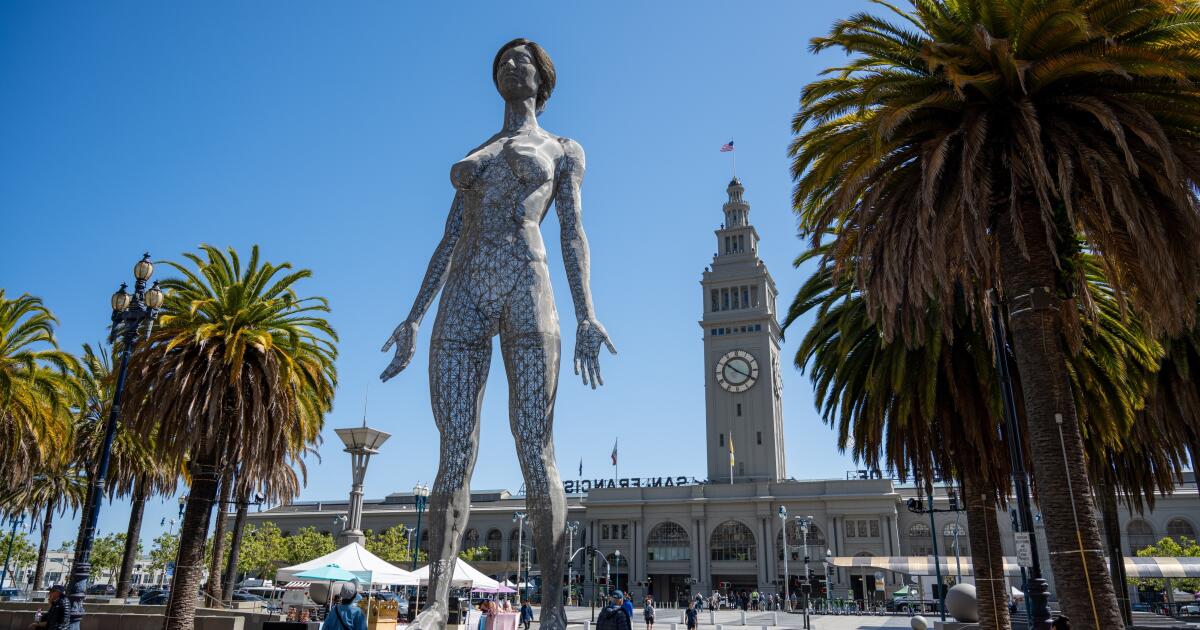
A sculpture of a giant naked woman goes on sale in San Francisco. Bring a crane
-

 Dallas, TX57 minutes ago
No ‘straight answer’: Why Pioneer Cemetery is the latest battleground at City Hall
-

 Miami, FL1 hour ago
TSA hosts news conference ahead of World Cup third place match at Miami Stadium
-

 Boston, MA1 hour ago
ICE Boston arrests Barbados national during targeted operations in Attleboro
-

 Denver, CO1 hour ago
Denver Broncos training camp is 2 weeks away
-

 San Diego, CA1 hour ago
Daily Business Report: July 17, 2026, San Diego Metro Magazine

