Midwest
Minnesota lawmaker expresses concern after reviewing voter rolls, finding 3,000 people missing information

NEWYou can now listen to Fox News articles!
A Minnesota state representative is questioning the integrity of voter roll data in the state’s most populous county, setting off a dispute over access to election records.
“Why is there such an effort to block us or any election integrity group to see this information?” state Rep. Pam Altendorf said Saturday.
“If they’re clean, that’s great. And if not, if [Minnesota Secretary of State] Steve Simon is unable or unwilling to clean our voter rolls, then we absolutely have to get federal help because this is disenfranchising every legal voter in Minnesota.”
Altendorf said the dispute stems from her attempt to obtain active voter roll data from multiple Minnesota counties. She submitted data requests to four counties after reviewing state statutes and consulting with election integrity groups, arguing that as vice chair of the Minnesota House Elections Committee, she has the authority to access the information.
MINNESOTA FRAUD CASE IS ‘CANARY IN THE COAL MINE’ FOR GOVERNMENT SYSTEMS — INCLUDING ELECTIONS, LAWYER WARS
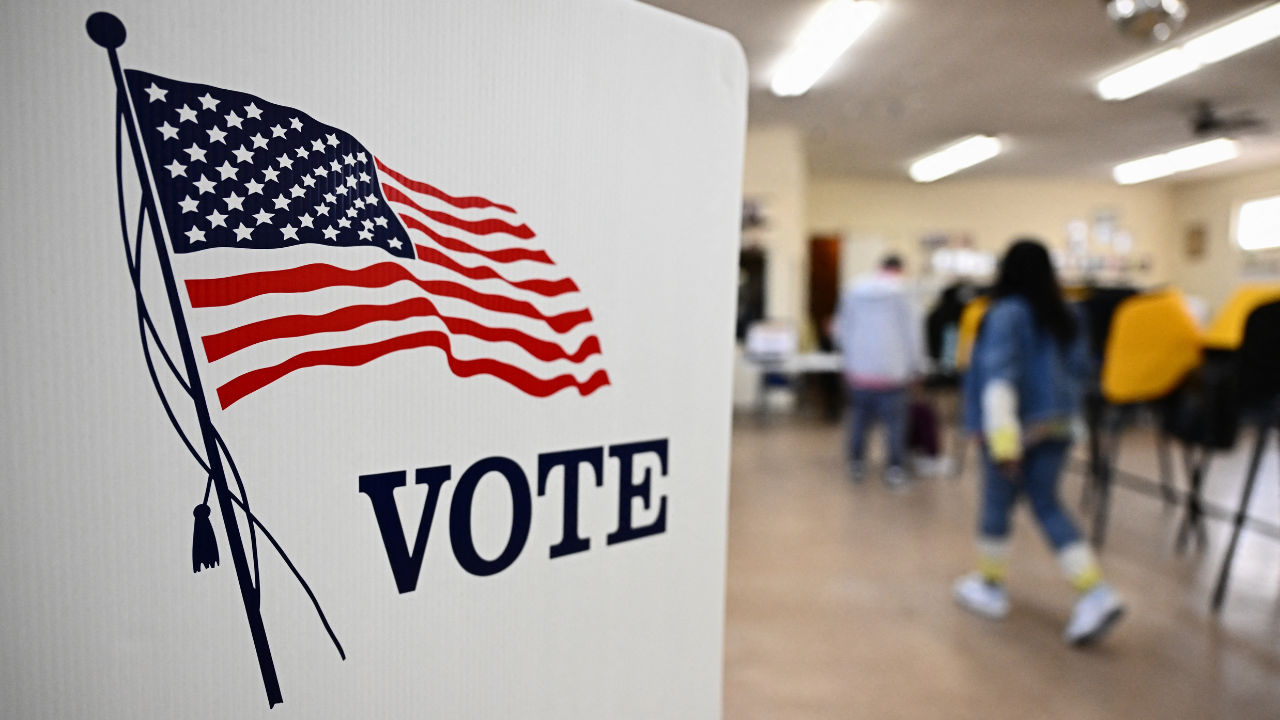
A voter casts a ballot during the Super Tuesday primary at a polling station in an American Legion Post in Hawthorne, Calif., March 5, 2024. (PATRICK T. FALLON/AFP via Getty Images)
According to Altendorf, Minnesota’s secretary of state directed counties not to provide her with the information. Three counties declined to comply with her request, while Hennepin County — the state’s largest county by population — provided the data.
After reviewing the Hennepin County records, Altendorf said she identified nearly 3,000 active voter entries missing key identifying information, such as birthdates, names and addresses, as well as what she described as potential duplicate records.
Though she did not provide specific examples, she also said she found voters listed as over 100 years old.
However, according to Alpha News, 1900 was used as a placeholder birth year for voters who registered before 1983 since they were not required to provide their date of birth.
DOJ TORCHES DEMOCRATS FOR ‘SHAMELESSLY LYING’ ABOUT MINNESOTA VOTER ROLL REQUEST
The sun shines on the Minnesota State Capitol in St. Paul on Monday, Feb. 12, 2024, the opening day of the 2024 session of the Minnesota Legislature. (Steve Karnowski/AP)
A spokesperson for Hennepin County told the outlet that they administer elections in accordance with state law and guidance from the secretary of state’s office.
The spokesperson also said that “address verification is a routine reason a voter record may be flagged as challenged, ‘including when a registration confirmation postcard is returned as undeliverable.’”
Altendorf began pursuing the data after learning that the Department of Justice had sought voter roll information from states across the country as part of broader election integrity efforts, which she said Minnesota declined to provide due to privacy concerns.
She then reviewed state statutes and worked with election integrity groups, including Minnesota Voters Alliance, before determining she had the authority to request the data herself.
CLICK HERE TO DOWNLOAD THE FOX NEWS APP
Altendorf said Simon is “actively working to deny” her, as a sitting member of the House Elections Committee, the ability to access voter roll information to determine whether the records are accurate.
The Minnesota Secretary of State’s Office did not immediately respond to a request for comment.
Read the full article from Here



Cleveland, OH
FBI launches Most Wanted Fraudsters list, establishes partnership in Ohio to fight fraud

CLEVELAND, Ohio (WOIO) – A new federal-state partnership in Ohio will help track down and prosecute people who commit fraud.
At a news conference in Columbus Thursday, Justice Department officials also announced the creation of the FBI’s Most Wanted Fraudsters list.
On the list are the alleged “worst of the worst” offenders accused of stealing millions in taxpayer money.
“Ohio is leading the charge in the fight against fraud, and some states should take notice,” said Acting Attorney General Todd Blanche. “Working closely with Ohio officials, the Department of Justice dismantled a sophisticated Medicaid fraud scheme that exploited taxpayers to fund exotic cars and lavish lifestyles. By holding these fraudsters accountable and partnering with the FBI on a robust Most Wanted fraudster list, we are pursuing fraud more aggressively than ever. No fraud scheme is beyond our reach.”
Officials also announced they seized seven bank accounts worth $600,000 and 14 vehicles worth millions, all of which officials said came as “direct proceeds from robbing value community healthcare resources from Americans who needed it.”
“The days of deception are over. As the stewards of your tax dollars, if we find evidence of willful and deliberate abuse of government programs, we will investigate and prosecute those individuals responsible to the full extent of the law,” said U.S. Attorney David M. Toepfer, for the Northern District of Ohio.

In Northern Ohio, two 22-year-old men from Ghana and a 53-year-old woman were ordered detained this week in connection with an over $15 million romance scam that defrauded over 130 victims across the United States.
Two 31-year-old Ghana men also accused in the romance scam are awaiting extradition.
Copyright 2026 WOIO. All rights reserved.
Illinois
Truck engulfed in flames on I-294 near Oak Brook, shutting down multiple lanes, police say: VIDEO

OAK BROOK, Ill. (WLS) — A truck was engulfed in flames Thursday evening on I-294 in the west suburbs, shutting down multiple lanes, Illinois State Police said.
ABC7 Chicago is now streaming 24/7. Click here to watch
The fire broke out on southbound I-294 near Oak Brook.

Only the left lane of southbound I-294 was open as of 9 p.m., ISP said.
No injuries have been reported.
This is a developing story.
Copyright © 2026 WLS-TV. All Rights Reserved.

This article appears in the June 2026 issue of The American Prospect magazine. If you’d like to receive our next issue in your mailbox, please subscribe here.
Lucas Waterfill, a 35-year-old comedian based in Indianapolis, bought his 1,200-square-foot, three-bedroom, two-bathroom home on the city’s southeast side five years ago. He previously lived in Plainfield, a quiet suburb on the western outskirts of Indianapolis.
“It’s just a little dollhouse, not that big, but it works for me,” Waterfill told the Prospect.
But while the house may be small, the monthly payment for electricity has gotten bigger. Waterfill said his last “major bill” came out to $545; he used to pay anywhere from $350 to $400 per month.
“I’m trying to do everything I can to cut costs, like turn off lights and not use my AC or heat as much,” Waterfill said. “It’s untenable.”
More from James Baratta
Living with a disability and on a fixed income, Waterfill describes himself as middle-class. When we spoke, he almost regretfully recalled having to ask his parents for help to make ends meet. “It’s not realistic for a person trying to make it middle-class to pay that much for the basics,” Waterfill said, adding that his efforts to obtain energy assistance have yet to bear any fruit.
Waterfill is one of some 500,000 customers served by AES Indiana, formerly Indianapolis Power & Light. The electric utility serves the Indianapolis metropolitan area and parts of central Indiana. It was acquired by the multinational utility holding company AES in 2001, and rebranded as AES Indiana in 2021.
AES reported a net income of $900 million for 2025. According to the Energy and Policy Institute (EPI), Andrés Gluski, the company’s chief executive officer, made almost $9.2 million last year, slightly below the $12.3 million in average take-home pay EPI tracked in an analysis of executives at 51 investor-owned utilities.
Indiana remains one of the only states that cannot approve or reject utility takeover deals.
Waterfill, like other AES Indiana customers, occasionally receives emails from the utility with tips on how to cut costs. “They put the onus on us, which I think is a slap in the face when they’re making all this profit,” he told the Prospect. “I need my wheelchair. I need my lifts.”
Earlier this year, Indiana lawmakers passed sweeping legislation aimed at lowering Hoosiers’ electricity costs. House Enrolled Act 1002, which was signed into law by Gov. Mike Braun (R) on February 26, establishes multiyear rate plans based on performance incentives tied to affordability and reliability, bans utility shutoffs during heat emergencies, and requires utilities to establish energy assistance programs for low-income customers.
What it did not do was give the Indiana Utility Regulatory Commission (IURC) authority over mergers and acquisitions involving the state’s regulated utilities. Consequently, Indiana remains one of the only states that cannot approve or reject takeover deals. One such deal is set to proceed imminently, and Hoosiers are furious about what it could do to their utility bills.
In March, AES announced plans to be acquired by BlackRock-owned Global Infrastructure Partners and Swedish private equity firm EQT Group, with the California Public Employees’ Retirement System (CalPERS) and Qatar Investment Authority underwriting the agreement. The acquisition, which includes the company’s utilities in Indiana and Ohio, has an enterprise value of $33.4 billion, with consolidated net debt totaling a whopping $27.2 billion.
BlackRock’s purchase of AES is the latest in a spree of private equity purchases of power companies, which critics believe could lead to rate hikes and gouging of customers. It’s also among the largest private equity utility buyouts to date, second only to the acquisition of TXU Corporation by KKR, TPG Capital, and Goldman Sachs Capital Partners in 2007. That buyout had an enterprise value of $45 billion. Seven years after TXU’s private equity owners rebranded it and split up the business, the generically renamed Energy Future Holdings went bust.
While there are some parallels between the two buyouts, AES derives more of its earnings from regulated utility operations and long-term contracted renewables, rather than so-called merchant generation, or the sale of power to the grid. Still, the logic behind both buyouts hinges on the assumption that cash flows will remain stable enough to sustain a highly leveraged capital structure over the long term. And if the new owners feel compelled to increase the cash flows to service the debt, customers like Lucas Waterfill could pay the price.
FALLOUT FROM THE ANNOUNCEMENT forced AES Indiana to postpone all three of its community open houses “out of an abundance of caution,” with the utility citing safety concerns related to “threats of violence on social media,” a March 6 press release explains. At the time of writing, new dates have not been announced.
Later that month, the IURC launched an investigative inquiry into energy affordability with an hours-long public hearing attended by Indiana’s big five investor-owned utilities. After AES Indiana’s presentation, IURC Commissioner David Veleta questioned AES Indiana President Brandi Davis-Handy about referencing the “regulatory compact,” or the obligation utilities have to provide reliable service at a just and reasonable rate set by regulators. AES Indiana maintains that the regulatory compact is a key pillar of its affordability framework, yet it also uses “trackers” that allow for ongoing recoupment of costs in between rate requests.
“There’s a tension between invoking the regulatory compact and recovering a growing share of your costs through trackers that bypass rate case review,” Veleta said.
Davis-Handy agreed to an ongoing review of these trackers and the impact on customers. But the IURC is relatively powerless to prevent the private equity–backed acquisition, even if the new ownership is even more willing to maximize profit on the backs of its customers. Despite this, AES Indiana contends that its customers will not bear any costs related to the acquisition.
The frustration expressed by many AES Indiana customers also peaked at an April 20 listening session, one of several hosted by regulators across the state this spring as part of their affordability investigation. As WFYI reported, attendees “aired grievances over spikes and inconsistencies in billing, metering irregularities and challenges reaching customer service departments,” with some offering “stacks of utility bills to the commissioners as evidence.”
The $84 million overhaul of AES Indiana’s billing system, which was built by Accenture and dubbed the “ACE Project,” was fraught with irregularities when it launched in November 2023. The results of Accenture’s readiness assessment were promising, indicating that the new system was 99 percent ready for launch.
Turns out, it wasn’t.
In a filing with the IURC, Guidehouse, another professional services consulting firm, found that Accenture’s readiness assessment “did not reflect the true state of system preparedness.” Moreover, the assessment did not include designated testing for out-of-balance billing.
Tens of thousands of customers were plunged into billing chaos. One ratepayer reportedly received a bill for $10,521.42 on a home she had already sold. Her previous bill was $25.97.
AES Indiana incurred approximately $47 million in losses after launching the new system. The company brazenly tried to recover those losses, based on their own errors, in a rate case the IURC will have to decide in the weeks to come. While settlement born out of that rate case does not include any provisions that would allow AES Indiana to recover said losses, it would result in higher rates for residential customers, and lower rates for industrial customers.
“I don’t know how I would afford another increase,” Waterfill told the Prospect. “I can’t afford this the way it’s going right now.”
AES Indiana did not respond for comment.
Indiana-based consumer advocacy group Citizens Action Coalition (CAC) calls the rate reduction for large energy users a “sweetheart deal” that “fails to adequately address the egregious and prolonged billing system problems.”
What’s more, the law firm representing AES Indiana in the rate case, Taft Stettinius & Hollister, contributed $25,000 through its political action committee to one of Braun’s post-election fundraising committees in September 2025. Braun also benefited from $6,000 in AES Indiana donations during his gubernatorial campaign. Three months after the Taft Stettinius & Hollister contribution, Braun appointed Andy Zay, a former state senator and member of the Indiana Senate Utilities Committee, as IURC chair. Zay has been presiding over the rate case; he received $40,000 in donations from several utility industry PACs, including AES Indiana, during his state Senate career.
Zay, whose tenure became effective on January 12, 2026, has faced questions over his ability to remain an independent arbiter in his capacity as chair. Zay declined to comment through an IURC spokesperson, citing the ongoing case.
DELIVERING ELECTRICITY TO HUNDREDS of homes is inherently a more costly endeavor than supplying bulk power to a select few large load users. As I’ve written for the Prospect, charging all ratepayer classes the same average per kilowatt-hour price is one way to avoid this conundrum.
Last year, Gov. Braun signed House Enrolled Act 1007 into law, requiring large load customers to pay 80 percent of the costs for new energy infrastructure needed to power data centers and similar projects. Zay has maintained that data centers will pay their own way, but Hoosiers aren’t buying that. They’re also skeptical of Sabey Data Centers in particular.
At the time of writing, Sabey has yet to find a tenant for its proposed data center on the southwest side of Indianapolis. Residents are worried that BlackRock, a Sabey client, could leverage its ownership of AES Indiana to benefit the data center developer. BlackRock declined to comment. Sabey did not comment.
The acquisition of AES by the BlackRock-led consortium of investors does need federal approval, and is expected to come before the Federal Energy Regulatory Commission (FERC) later this year or early next year. Indiana state Rep. Cherrish Pryor (D) has called on the IURC to formally petition FERC to deny the proposed sale.
In the most recent legislative session, Pryor also introduced an amendment to House Enrolled Act 1002 requiring IURC approval ahead of the sale of any utility, as well as giving municipalities the initial opportunity to buy the utility. All but one Indiana Republican voted down Pryor’s amendment.
“I just think it was very convenient for AES and BlackRock to make the decision to move forward with the acquisition a couple of days after we got out of session,” Pryor said in an interview with the Prospect. “It’s very disappointing that my Republican colleagues decided not to try to push back on the sale and to try to hold AES accountable.
Pryor, who has “grave concern” about the acquisition, is planning to reintroduce the measure once the Indiana House is back in session. “I’m going to have to be strategic in how I decide to offer that up,” she said, “as an amendment next year, or … as a bill next year.”
Waterfill also shared reservations about the bid to buy AES Indiana’s parent company.
“We’re already complaining about how AES is treating us,” he said. “We need to be able to control our own electricity.”
Pryor believes in the concept of public utility ownership, recalling how AES Indiana’s predecessor was a municipal utility. When she introduced the amendment, “my thought was: Let’s see if we can take it back to the way it was, instead of putting it in the hands of Wall Street,” Pryor said. “Now we’re going to put it in the hands of private equity. What’s going to be next?”
But one of Indiana’s loudest voices of opposition to the deal is an unlikely one: the state’s treasurer, conservative Republican Daniel Elliott.
“I’m a capitalist,” Elliott told the Prospect in an email. “You should get the rewards for your labors but also be willing to endure the loss if it fails. I do not believe that is the plan here. This consortium of purchasers [is] not here to put Hoosiers first or America first.”
This article appears in Jun 2026 issue.
Related
-

 Pittsburg, PA3 minutes ago
Carmen Mlodzinski Shows Pirates How Much They Need Him
-

 Augusta, GA8 minutes ago
Driver, passenger killed in crash on Gordon Highway
-

 Washington, D.C15 minutes ago
DC weather: Code Orange Air Quality Alert Friday, sunny and hot with highs in the 90s
-

 Cleveland, OH18 minutes ago
FBI launches Most Wanted Fraudsters list, establishes partnership in Ohio to fight fraud
-

 Austin, TX23 minutes ago
Leif Johnson Ford of Austin Brings Certified Vehicle Maintenance Directly to Customers Through Ford Mobile Service
-

 Alabama30 minutes ago
How much will the special primary election cost Alabama?
-

 Alaska33 minutes ago
Trump administration to auction oil drilling rights in Alaska wildlife refuge
-

 Arizona38 minutes ago
Goldwaters was an iconic Arizona retail chain. See historic photos

