Minneapolis, MN
OPINION EXCHANGE | This summer let's start treating the parkways like parks


Opinion editor’s note: Star Tribune Opinion publishes a mix of national and local commentaries online and in print each day. To contribute, click here.
•••
Recently when I drove down West River Parkway in Minneapolis, a car tailed me, then passed, barreling toward downtown way too fast to notice the flowering trees or see the hawk hunting from a dead limb. The same thing happened last week. And the week before.
Yeah, I’m that guy who drives the speed limit on the parkway — 20 miles per hour. It seems to really infuriate the drivers who want to use the parkway as a commuter highway.
Minneapolis’ 30-odd parkways are called parkways because they’re actually part of a park. They run through park land and are managed by the Park and Recreation Board as public space for you and your family to play, forage, picnic, walk, cycle, skate and scoot.
But in the last few years a lot has changed to make some of the parkways feel more like highways.
The parkway I’m most familiar with — West River Parkway — has essentially become a commuter route for impatient families going to work, school, the airport or downtown, and hurried Amazon drivers making their deliveries. Few drivers heed the 20-mph speed limit. Very few slow to view an eagle passing overhead, and it’s rare that one would stop for a dog-walker in a pedestrian crosswalk.
Meanwhile, e-bikes, e-scooters and other e-rolling devices are increasingly popular and changing how it feels to take a family stroll through the park. The park board has set a 10-mph speed limit on bike paths, but if you’ve been on an electric bike you know that speed barely lets you feel a breeze. Very few people using an e-anything are going only 10 miles per hour. It can feel really scary when an e-bike whizzes by a 5-year-old with training wheels.
Minneapolis is famous for its parks and parkways and we should encourage more people to get out and enjoy them. I have four requests for the mayor, city and park board to make the experience more enjoyable and safer. Happily, none of these requires any change in existing, applicable law.
• Enforce the speed limit. Just a little well-positioned, recurring enforcement, with stiff penalties, would change driver behavior. Commuters need to realize they are driving through a park.
• Move anything with a motor and wheels off the bike path and onto the parkway. Under current law all those electrified bikes and other toys are “motor vehicles” because they aren’t “moved solely by human power.” That means they don’t belong on the bike path. Let’s require all the e-rollers to use the road, which will help to temper the speed of the cars and make the parkway feel like it is, in fact, part of a park.
• Street bikers who want to ride over 10 mph should be welcomed on the road. Many bikers who are out for exercise already ride on the parkways, but it’s not always a welcoming ride, with frustrated drivers often honking or passing too close. It should become the norm, not the exception, to follow a biker if you’re driving on a parkway.
• Ask Google Maps and other driving apps to remove parkways from preferred routes. I don’t pretend to know how the mapping apps figure out a preferred route. But it seems they often disburse traffic from designed arteries to less-trafficked places, like parkways. (Are times calculated by speed limit or traffic flow?) We want our parkways to be a destination, not the fastest way to get to some other place. Announcing that to Google Maps might be a City Council resolution that the whole city could get behind.
The Park Board boasts in its ordinances that the Minneapolis parkways have “gained national and international fame for their history, beauty, and innovation.” If you’ve ridden the grand round, you probably agree. This summer let’s treat the parkways as deserving of that fame, as places we come to recreate, to exercise, to see plants and trees and flowers and bees. Let’s enjoy our parkways as a park.
Kevin Reuther, of Minneapolis, is an attorney.



Stop me if you’ve heard this one before. . .because you have. . .but the National Football League’s biggest off-season event could be coming to the Twin Cities in the very near future.
According to the Minnesota Vikings’ official website, Minnesota Sports and Events has announced that it has officially submitted a bid to host the 2028 NFL Draft in partnership with the Vikings and U.S. Bank Stadium.
Advertisement
While the Vikings’ home stadium would almost certainly serve as the anchor for the event, Matt Meunier, the Executive Vice President of Business Development and Tourism for Minnesota Sports and Events, envisions the event as having a truly regional feel.
“In terms of the location of the draft, the red carpet and all the ancillary events that go with hosting the draft, all those things are under evaluation by the league right now, so it’s to be determined, but what we can say is TCO Performance Center is a really viable option,” Meunier said. “Flag football, youth football is going to continue to be more prominent as it relates to the NFL and leaning into 2028 and the L.A. [Olympic] Games, so there’s potential to stage some youth football and community legacy events out at TCO Performance Center, but in addition to that, every event Minnesota Sports and Events hosts, we’re really intentional about staging events throughout the region and not just downtown [Minneapolis].”
Should the Twin Cities be selected for the event, it would complete the cycle of all four NFC North cities serving as host since the Draft moved away from being held in New York City every year. Chicago hosted the Draft in both 2015 and 2016, Detroit served as host in 2024, and the Draft was held in Green Bay last year.
This year’s NFL Draft will be held next month in Pittsburgh, while Washington, D.C. will play host to the 2027 NFL Draft.
As the article from the Vikings’ website notes, the draft in Detroit brought in fans from all 50 states and 20 foreign countries, generating an economic impact of over $200 million for the greater Detroit area. Surely Minneapolis/St. Paul can do better than that, right?
Advertisement
Right?
It is unknown when the announcement of where the 2028 NFL Draft will be hosted will be made or which other cities are competing for the opportunity, but hopefully the Twin Cities will get their opportunity to serve as host.

Auto thefts continue to rise in Minneapolis, and the Minneapolis Police Department (MPD) said thieves are increasingly using new technology to steal cars without ever needing the owner’s key.
Minneapolis car thefts spike in 2026, St. Paul sees continued decline
According to MPD’s Crime Dashboard, 66 vehicles have been reported stolen in the city since March 20. The dashboard also shows auto thefts are up 26% compared to this time in 2025.
One of those victims is a Minneapolis man named Travis, who shared home surveillance video of his car pulling out of his driveway.
“I seen that car backed out and my keys were still in the house. Already knew someone stole the car,” he said.
He ran to a neighbor’s home, where more camera footage showed “two guys walking through the alley going toward my car.”
He said a family member eventually connected him to people who knew the teens involved.
“He called me back like an hour later, and he was like he figured out who got my car. They were asking for money. They wanted me to give them $1,500 just for them to tell me the location where my car was.”
Travis said the teens sent him photos and videos of the car’s surroundings.
“They were sending me pictures of where the car was parked, what’s around the car.”
He and several relatives spent hours comparing the images to real locations.
“Me and a few other family members and a few friends, we run around and start driving around looking for the car off of the videos that they sent us.”
By 10 p.m. Friday, they found it in an apartment parking lot.
“As soon as I hit the car starter on the car, the car started right up. The first thing was just jump in the car and pull the car up out of there.”
But the damage was extensive, and he said the loss of sentimental items hurt the most.
“They threw out my son’s car seat. They threw out like programs from funerals and stuff. They broke my sunroof. They broke my windshield.”
He said the theft has been hard on his family.
“It’s kind of hard, you know, because I have a 4‑year‑old son. They threw his stuff out. That kind of messed me up.”
According to MPD, non‑Kia and non‑Hyundai vehicles stolen without keys are up nearly 60% compared to this time last year. Kia and Hyundai thefts, where thieves peel or punch the ignition, are also rising.
MPD said the city is also seeing signs of a nationwide trend involving key‑programming devices. These are tools that can reprogram a car to start without the owner’s key. Officers have recovered these devices during recent arrests, including one case involving a 13‑year‑old.
The department says a relatively small group of individuals is responsible for a significant share of auto thefts in the city. MPD also said it does not have a dedicated auto‑theft unit, and that there are fewer property-crime investigators now than in 2020. A new pilot program uses forensic scientists to process stolen vehicles for evidence.
Travis said he gave officers everything he found, the videos, the photos, the social‑media accounts, but felt the department didn’t respond the way he hoped.
“Basically, they didn’t do anything. All they say is they’re juveniles and ain’t too much they could do. Even if they catch them, they lock them up, they’ll get right back out.”
He believes the teens who stole his car have real technical skill.
“What I seen how y’all started my car and everything like that, y’all could really be out here and take that and really make some good money. Plenty of people out here that lost their car keys. You could be making hundreds of dollars programming car keys to people.”
He said the experience has changed how he lives.
“I’m definitely nervous. Now I gotta move different. Make sure my car locked up at night, make sure it’s safe, upgrade my security a little bit more.”
He’s keeping the car at a relative’s house until he can repair the damage.
“I didn’t feel safe. They took my garage keys and everything out of the car.”
Travis said he hopes the teens who stole his car understand the impact on families.
“People have kids, people have family out here. People go out every day, they work. If they came to me and was like hey, we need a few dollars, I’ll give you a few dollars instead of coming and just taking my car that I gotta get to work and get my son to day care.”
He also hopes they choose a different path.
“Just find something else to do with your time,” he said. “Something really bad could happen to y’all.”
The Minneapolis Police Department provided the following responses to KSTP’s questions:
Are the recent increases concentrated in any specific precincts or neighborhoods?
- We are compiling data that will likely be available tomorrow. Auto thefts are occurring in all five precincts with the largest recent increase occurring in the Second Precinct.
Is MPD able to share the percentage of auto‑theft cases that have been solved or cleared so far this year?
- That will need to be a data request. I will see what I can find out.
Does MPD have any updated prevention guidance for residents, especially with the rise in key‑programming technology?
- Car manufacturers are the best source for prevention guidance related to newer technologies used to steal vehicles. In addition to locking your vehicle, removing valuables from plain sight, never leaving a key fob inside or near your vehicle, and never leaving a vehicle running unoccupied, manufacturers also recommend storing key fobs in RFID-blocking cases and keeping them away from doors and windows.
What is the department’s response to people who feel they need to track down their own stolen vehicles, or who feel MPD isn’t doing enough to help them recover their cars?
- Auto theft has a significant impact on victims, and having a vehicle stolen is frustrating and personal. To date, there have been approximately 1,400 auto thefts, compared to 2,190 during the same period in 2023. While that represents a meaningful decline, auto theft remains an ongoing concern.
- Many stolen vehicles are recovered, and both investigators and patrol officers are actively working to address these cases alongside other public safety priorities. Technology has played an important role. License Plate Readers, both fixed and mobile units in squad cars, have helped officers locate stolen vehicles and, in some cases, make arrests.
- We recognize that some vehicle owners have access to tracking technology and may be able to provide real-time location information. That information can be valuable to officers. However, we strongly urge individuals not to approach or attempt to recover their vehicle on their own.
- If a stolen vehicle is located and occupied, individuals should not approach and should call 911 immediately. If the vehicle is unoccupied, they should notify police of its location and wait for officers to respond. For safety and evidentiary reasons, the vehicle should not be moved until it has been officially reported as recovered.
Editor’s note: The video says the victim’s car was stolen on Saturday, but it was actually Friday.

A man was hospitalized with serious injuries after an apparent domestic-related stabbing Monday night in the Bryant neighborhood of Minneapolis, police say.
According to Minneapolis Police Sgt. Garrett Parten, officers were called to the area of 39th Street East and Fourth Avenue South just before 9 p.m. and found a man suffering from “at least one potentially life-threatening stab wound.”
Parten says officers provided aid until an ambulance took the man to a hospital for treatment.
Less than a mile west of where they found the man, on the other side of Interstate 35W, officers found a woman with less serious injuries. She was also taken to a hospital for treatment but is expected to survive.
Investigators believe the man and woman were involved in a domestic dispute and, upon being released from the hospital, were both booked into jail, Parten said.
The investigation remains active.

Risk of severe storms across SE Michigan on Thursday — here’s what to know

1 dead in house fire in San Francisco’s Portola neighborhood

Convicted SMU Stalker Sues Dallas County For 183-Day Jail Overstay

TSA wait times hit

More record breaking temperatures across the Denver metro area

Florida High School Football Rankings: Top 25 teams – Oct. 21

How old is Bo Nix? What to know about Oregon quarterback ahead of 2024 NFL Draft

Cleary's 21 help Le Moyne down Central Connecticut State 69-64 in OT

99th annual Pony Swim held in Virginia

Indiana Members Credit Union announced as new anchor tenant at Bottleworks District

LaGuardia Crash Timeline: Moments Before Air Canada Plane Collided With Fire Truck

Chicago alderwoman apologizes for ‘wrong place at the wrong time’ comment on slain student

Fake Euronews website targets Hungary election with false claims
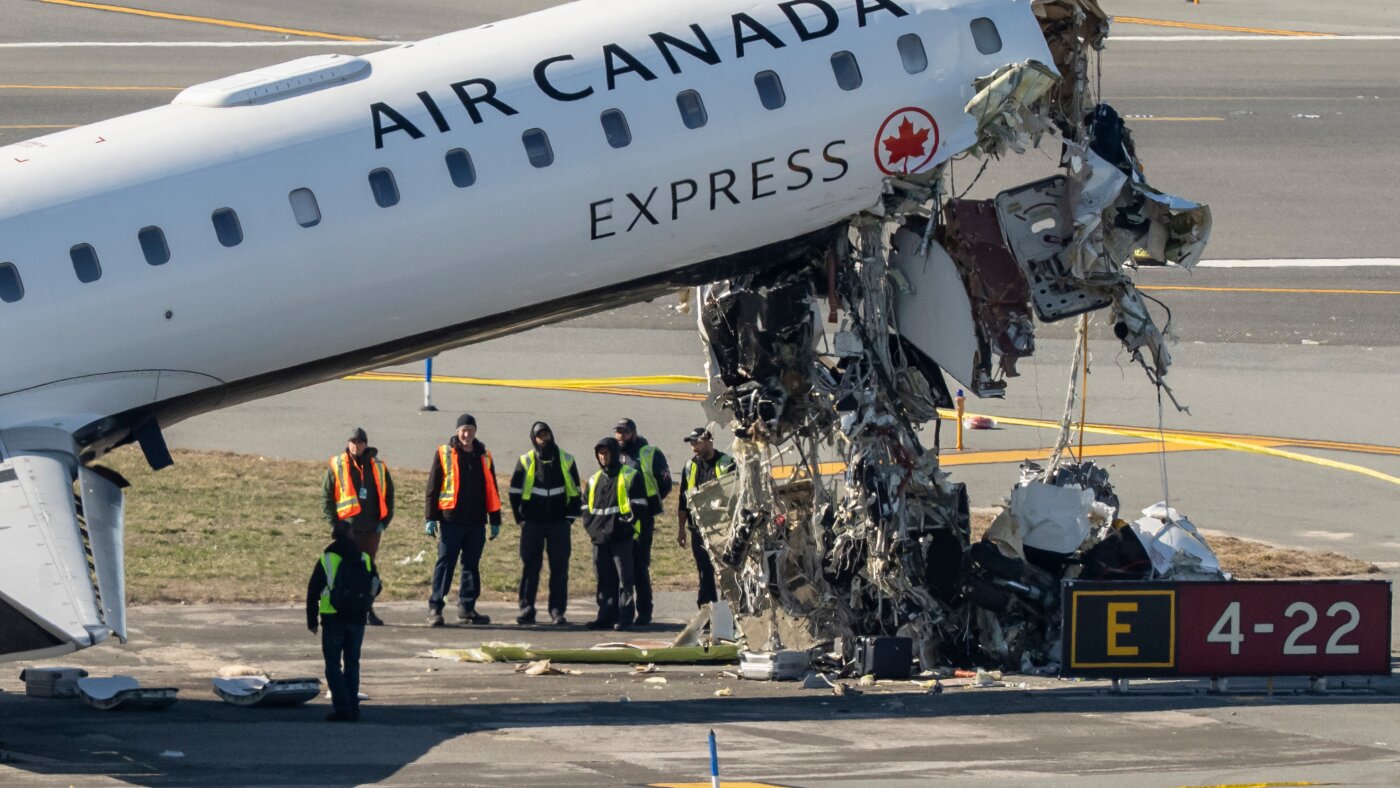
An air traffic controller was juggling extra roles during the LaGuardia plane crash

Iran War: Pentagon set to send thousands of elite 82nd Airborne troops to region | BBC News
-

 Detroit, MI7 days ago
Drummer Brian Pastoria, longtime Detroit music advocate, dies at 68
-

 Georgia1 week ago
How ICE plans for a detention warehouse pushed a Georgia town to fight back | CNN Politics
-

 Movie Reviews6 days ago
‘Youth’ Twitter review: Ken Karunaas impresses audiences; Suraj Venjaramoodu adds charm; music wins praise | – The Times of India
-

 Education1 week ago
Video: Turning Point USA Clubs Expand to High Schools Across America
-

 Sports4 days ago
IOC addresses execution of 19-year-old Iranian wrestler Saleh Mohammadi
-
 Science1 week ago
Industrial chemicals have reached the middle of the oceans, new study shows
-

 Science1 week ago
How a Melting Glacier in Antarctica Could Affect Tens of Millions Around the Globe
-

 Culture1 week ago
Test Your Memory of Great Lines From Classic Irish Poems