Minneapolis, MN
Minneapolis officer killed in ambush joined law enforcement to ‘save lives’


On Jamal Mitchell’s third day on patrol as a Minneapolis police officer, he and another officer ran into a burning house and rescued an elderly couple.
“He was a hero,” Assistant Chief Katie Blackwell said Thursday night. “I’ve never met an officer that received an award on the third day on the job during his” field training.
Mitchell, 36, was killed in the line of duty Thursday afternoon in gunfire that resulted in the deaths of two other people and the wounding of four more.
“Like everyone, every police officer has a story; every officer has hopes and dreams,” Minneapolis Police Chief Brian O’Hara said in a statement early Friday. “Sadly, Officer Jamal Mitchell’s hopes and dreams ended with his life on Thursday.”
Mitchell responded to a report of a double shooting in an apartment building in the Whittier neighborhood. “While rendering aid to an injured male, the injured male pulled a gun and assassinated Officer Mitchell and continued to shoot him after he fell to the ground,” O’Hara said.
Mitchell was a father and was engaged to be married. O’Hara asked people to keep Mitchell’s loved ones and friends in their prayers.
“I knew Jamal,” O’Hara said. “I had the distinct honor of swearing in Jamal as a Minneapolis police officer. Shortly after hitting the street, I commended and honored him for running into a burning house in the 5th Precinct to rescue an elderly couple. He loved the job, he loved the MPD, and he was faithful to the oath he swore.”
After the fire rescue in February 2023, Mitchell told KARE 11: “We’re not trained to run into fires, but being in the field of policing, it’s a potential. We’re here to serve our community and we’re often first on scene.”
Mitchell worked for the Minneapolis-St. Paul Airport Police Department as a community service officer and a police officer in 2022.
After the fire rescue, Mitchell told Fox 9 he got into law enforcement “to do what I can to save lives, serve the community.” And that’s what authorities says Mitchell was doing Thursday.
Investigators are determining the circumstances of what happened, but the head of the Minnesota Bureau of Criminal Apprehension said Thursday night that he’d seen video and Mitchell “was ambushed.”
After Mitchell was shot, responding officers exchanged gunfire with the gunman, according to O’Hara. Another Minneapolis officer who was shot has been treated and released from the hospital. A firefighter was also wounded in the shooting. The suspect died at the scene.
Another person, believed to be a bystander, was shot and was in critical condition as of Thursday night.
The location where Mitchell was attacked was about a block and a half from the original call.
Police found two adult male victims with gunshot wounds at an apartment, according to BCA Superintendent Drew Evans. One was pronounced dead and the second, who was gravely injured, was taken to the hospital.
“We believe this is isolated to the two different locations,” Evans said Thursday night. “… We believe that the individuals in the apartment had some level of acquaintance with each other.”
Gov. Tim Walz ordered flags to fly at half-staff at all state buildings on Friday.



Minneapolis, MN
Minneapolis, Hamel women accused of stealing millions in federal funds due in court Thursday

5 EYEWITNESS NEWS continues to track the latest fraud developments.
Two of the 15 defendants accused of stealing federal program money back in May are due in court on Thursday morning, and a deal with prosecutors could be taking shape.
Fahima Egeh Mahamud, 50, of Minneapolis, and Jillaine Mertens, 42, of Hamel have plea agreement hearings at the Minneapolis federal courthouse.
Prosecutors say Mertens collected more than $400,000 in fraudulent claims across three childcare centers in Ramsey, Rochester and Kasson.
Mahumud is accused of taking $5.5 million in taxpayer money through her daycare, Future Leaders.
Both cases are set for plea agreement hearings Thursday morning in federal court.
Top federal officials came to Minnesota in May to announce the charges against the 15 defendants.
PREVIOUS: DOJ charges 15 defendants accused of collectively defrauding $90 million
They are alleging that fraudsters exploited programs meant to help vulnerable populations — including the now-defunct Housing Stabilization Services program, which was designed to connect homeless Minnesotans with housing, and the Early Intensive Behavioral Development Intervention (EIDBI) program for children with autism.
This is a developing story. Download the KSTP app below to get the latest updates.


Dozens of community members flooded Minneapolis City Hall Wednesday to express concerns about a proposed drone program for Minneapolis police.
Nearly 50 people signed up to speak at the City Council’s public health, safety and equity committee meeting. Residents filled all of the seats in the council chambers reserved for the public, and an overflow room next door.
“We just spent months enduring a brutal winter of military-equipped federal occupation and terrorization, and on the heels of that, you wish to provide military-grade drone tech to the cops in our already over-surveilled neighborhoods?” said north Minneapolis resident Will Reely, referring to federal immigration enforcement during Operation Metro Surge. “You can’t be serious.”
Speakers said they don’t trust how the police would use drones, and are concerned the technology could be used as surveillance and lead to invasion of privacy.
Several people also sat in the hallway outside of the council chambers and streamed the hearing. The 1:30 p.m. meeting began with Minneapolis police officials outlining a free, 75-day pilot program that would allow the police department to use drones as “first responders.”
The committee moved to put the pilot program for a vote before the full council on July 16, which will not feature an additional public comment period on the issue. Should the council approve the program, the trial period would begin as soon as July 20.
The project would be conducted in the police department’s Fourth Precinct on the city’s north side, and hopes to reduce 911 response times by using drones to livestream video of potential crime scenes before officers arrive. The drones, which would be equipped with parachutes, police markings and lights, would be provided by Skydio, a California company.
Several community members noted that Skydio is known to supply drones to the Israeli government, which has used the technology during their military campaign against Palestinian civilians in Gaza.
“We see them as weapons of war and mass surveillance, and do not want them to be used to kill or control people at home or abroad,” Minneapolis resident Meredith Aby said of Skydio drones. “The people of Minneapolis do not want Skydio’s blood on its hands.”
More speakers questioned whether Minneapolis police would use the drones for the intended purpose, and questioned whether their use would actually improve safety.
“What I don’t understand is why we would implement a drone program under the guise of public safety,” Avery Winters told council members. “We the people don’t trust the people or the system administering this.”
Before the public comment period, Minneapolis police officials presented the pilot program to the City Council committee, saying that it would improve officer and community safety and help with staffing challenges. Andy Skoogman, chief of staff for the city’s Office of Community Safety, said officers can use drones to determine whether they need to report to a scene, improving the department’s efficiency.
“Drones are not a replacement for police officers, for firefighters, for EMS [Emergency Medical Services] personnel or other first responders,” Skoogman, who is not a police officer, told council members. “They’re simply a tool that helps ensure the right resources are sent to the right call at the right time.”
Thomas Campbell, deputy chief of patrol in Minneapolis police’s special operations division, said the drones would be operated remotely, would only be activated at potential crime scenes, and that their cameras would be pointed away from private property. Footage that isn’t considered evidence would be deleted after seven days, he said.
Minneapolis police have been using drones for other purposes since 2022, and have a fleet of 29 drones. Officers currently launch drones from the trunks of their squad cars, and deploy them after they’ve been requested by officers who are already present at a scene. The proposed program would allow drones to scope out a scene before officers arrive.
Minnesota law allows local police departments to use drones without a search warrant in specific cases:
- during or in the aftermath of an emergency situation that involves the risk of death or bodily harm to a person;
- at a public event where there is heightened risk to the safety of attendees;
- to collect information from a public area if there is reasonable suspicion of criminal activity, among other situations;
- to document evidence that is at imminent risk of destruction;
- to search for a missing person;
- to counter the risk of a terrorist attack by a specific individual or organization if the agency determines that credible intelligence indicates a risk;
- to prevent the loss of life and property in natural or man-made disasters and to facilitate operational planning, rescue, and recovery operations in the aftermath of these disasters;
- over a private area with the written consent of the occupant or a public area, for officer training or public relations purposes;
- to collect information for crash reconstruction purposes after a serious or deadly collision occurring on a public road;
- to conduct a threat assessment in anticipation of a specific event;
- for purposes unrelated to law enforcement at the request of a government entity provided that the government entity makes the request in writing to the law enforcement agency and specifies the reason for the request and proposed period of use.
Ward 4 City Council Member LaTrisha Vetaw, who represents the area where the pilot program would occur, wrote a legislative directive this spring that prompted the program. At the end of Wednesday’s meeting, she reassured community members that the goal is to reduce response times and limit police interactions with the public.
“This is not surveillance,” Vetaw said. “Someone has to call in for the drone to be dispatched, and the dashboard will be set up where people can track how the drone was being used and what for during the service.”
Committee members asked a few technical questions during the hearing about how the drone program would work, but several of them said they were saving more discussion and personal views of the program for the full council vote next week.

-
 Sports1 minute ago
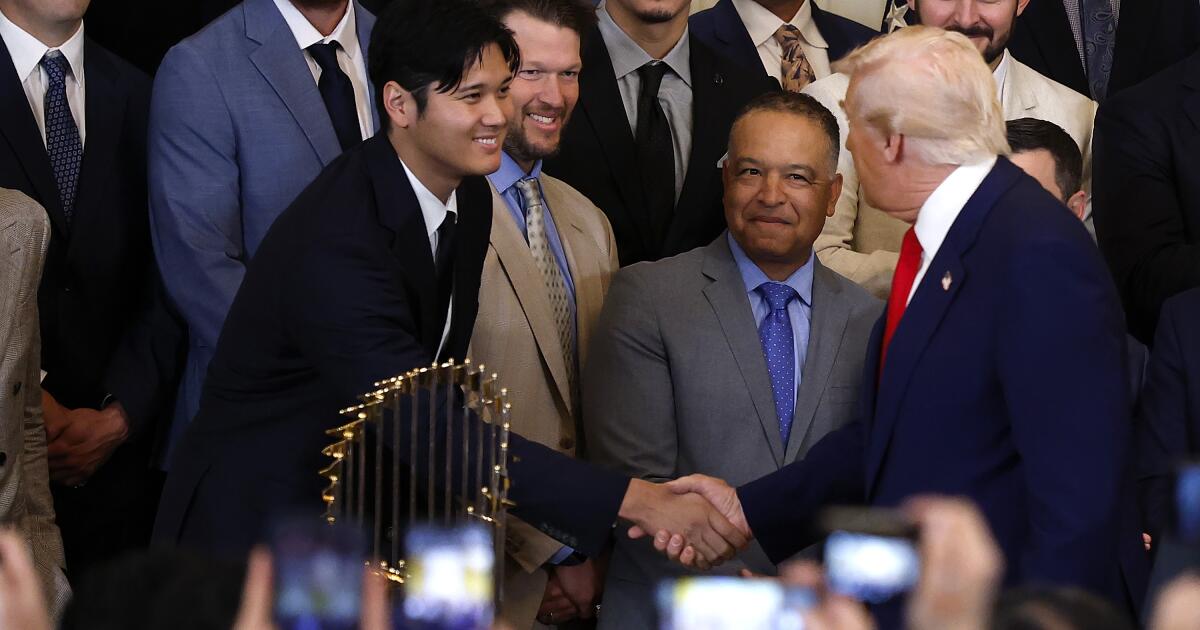
Dodgers scheduled to visit White House in late July to celebrate 2025 World Series win
-

 World11 minutes ago
Former US Olympian pleads not guilty in DC reflecting pool vandalism case
-
 News38 minutes ago
Former Olympian pleads not guilty in reflecting pool vandalism charges
-

 Los Angeles, Ca2 hours ago
Heat advisory, beach hazards in effect as Southern California sizzles
-

 Detroit, MI2 hours ago
Teen on moped hit by car after cruising through stop sign in Detroit
-

 San Francisco, CA2 hours ago
Flight of fancy: San Francisco moves to build private luxury airport terminal
-

 Dallas, TX3 hours ago
Dallas’ digital creator economy is booming. Burnout is too.
-
Miami, FL3 hours ago
I went to 2 famous Miami restaurants, a flashy steakhouse and a Cuban hot spot. Here’s how they compared.


