Midwest
Minneapolis man cleared of triple homicide gets 26 years for kidnapping

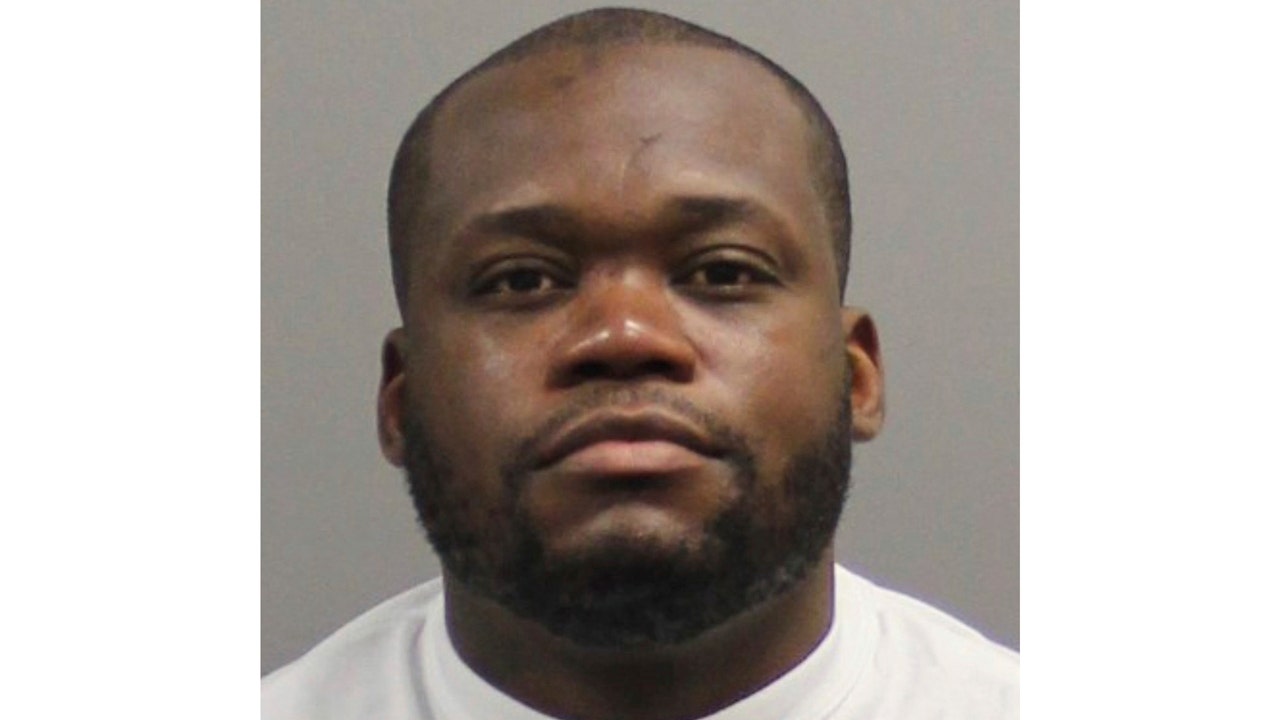
A Minneapolis man with an extensive criminal record who was acquitted of killing three people in St. Paul has been sentenced to 26 years in prison for kidnapping and wounding a man in the same city two days before that 2022 shooting.
Antonio Dupree Wright was given consecutive terms at the prosecution’s request for kidnapping and attempted murder. Ramsey County District Judge Kelly Olmstead on Monday also granted Wright, 42, credit for 488 days already served, the Pioneer Press reported.
MINNESOTA MAN, 21, RECEIVES PRISON SENTENCE AFTER ASSEMBLING AN ARSENAL TO ATTACK POLICE
Prosecutors argued that Wright shot a 37-year-old man identified in the criminal complaint as DW, who considered Wright to be a close friend, because Wright thought DW was going to snitch on him after overhearing Wright discussing a 2017 killing.
Antonio Dupree Wright of Minneapolis is seen in an undated booking photo. (Minnesota Department of Corrections via AP, File)
According to the criminal complaint, Wright asked DW to get in a van with him, and then pressed a handgun to his head. The driver told Wright not to shoot DW in the van. Wright then chased and shot DW as he tried to run away. Police found DW on the front porch of a home with four gunshot wounds.
Two messages seeking comment Wednesday from Wright’s lawyer weren’t immediately returned.
Two days after the Sept. 2 shooting, five people were shot in St. Paul, and three of them died. Prosecutors charged Wright with second-degree murder and attempted murder.
Wright, whose eight prior felony convictions included selling drugs, assault, armed robbery, burglary and other crimes, was arrested that Sept. 7 in Chicago, and charged in both shootings.
Wright waived his right to a jury in the triple homicide case, allowing a judge to decide his guilt or innocence. Olmstead, citing insufficient evidence, found him not guilty on those charges.
Read the full article from Here

Illinois
Truck engulfed in flames on I-294 near Oak Brook, shutting down multiple lanes, police say: VIDEO

OAK BROOK, Ill. (WLS) — A truck was engulfed in flames Thursday evening on I-294 in the west suburbs, shutting down multiple lanes, Illinois State Police said.
ABC7 Chicago is now streaming 24/7. Click here to watch
The fire broke out on southbound I-294 near Oak Brook.

Only the left lane of southbound I-294 was open as of 9 p.m., ISP said.
No injuries have been reported.
This is a developing story.
Copyright © 2026 WLS-TV. All Rights Reserved.

This article appears in the June 2026 issue of The American Prospect magazine. If you’d like to receive our next issue in your mailbox, please subscribe here.
Lucas Waterfill, a 35-year-old comedian based in Indianapolis, bought his 1,200-square-foot, three-bedroom, two-bathroom home on the city’s southeast side five years ago. He previously lived in Plainfield, a quiet suburb on the western outskirts of Indianapolis.
“It’s just a little dollhouse, not that big, but it works for me,” Waterfill told the Prospect.
But while the house may be small, the monthly payment for electricity has gotten bigger. Waterfill said his last “major bill” came out to $545; he used to pay anywhere from $350 to $400 per month.
“I’m trying to do everything I can to cut costs, like turn off lights and not use my AC or heat as much,” Waterfill said. “It’s untenable.”
More from James Baratta
Living with a disability and on a fixed income, Waterfill describes himself as middle-class. When we spoke, he almost regretfully recalled having to ask his parents for help to make ends meet. “It’s not realistic for a person trying to make it middle-class to pay that much for the basics,” Waterfill said, adding that his efforts to obtain energy assistance have yet to bear any fruit.
Waterfill is one of some 500,000 customers served by AES Indiana, formerly Indianapolis Power & Light. The electric utility serves the Indianapolis metropolitan area and parts of central Indiana. It was acquired by the multinational utility holding company AES in 2001, and rebranded as AES Indiana in 2021.
AES reported a net income of $900 million for 2025. According to the Energy and Policy Institute (EPI), Andrés Gluski, the company’s chief executive officer, made almost $9.2 million last year, slightly below the $12.3 million in average take-home pay EPI tracked in an analysis of executives at 51 investor-owned utilities.
Indiana remains one of the only states that cannot approve or reject utility takeover deals.
Waterfill, like other AES Indiana customers, occasionally receives emails from the utility with tips on how to cut costs. “They put the onus on us, which I think is a slap in the face when they’re making all this profit,” he told the Prospect. “I need my wheelchair. I need my lifts.”
Earlier this year, Indiana lawmakers passed sweeping legislation aimed at lowering Hoosiers’ electricity costs. House Enrolled Act 1002, which was signed into law by Gov. Mike Braun (R) on February 26, establishes multiyear rate plans based on performance incentives tied to affordability and reliability, bans utility shutoffs during heat emergencies, and requires utilities to establish energy assistance programs for low-income customers.
What it did not do was give the Indiana Utility Regulatory Commission (IURC) authority over mergers and acquisitions involving the state’s regulated utilities. Consequently, Indiana remains one of the only states that cannot approve or reject takeover deals. One such deal is set to proceed imminently, and Hoosiers are furious about what it could do to their utility bills.
In March, AES announced plans to be acquired by BlackRock-owned Global Infrastructure Partners and Swedish private equity firm EQT Group, with the California Public Employees’ Retirement System (CalPERS) and Qatar Investment Authority underwriting the agreement. The acquisition, which includes the company’s utilities in Indiana and Ohio, has an enterprise value of $33.4 billion, with consolidated net debt totaling a whopping $27.2 billion.
BlackRock’s purchase of AES is the latest in a spree of private equity purchases of power companies, which critics believe could lead to rate hikes and gouging of customers. It’s also among the largest private equity utility buyouts to date, second only to the acquisition of TXU Corporation by KKR, TPG Capital, and Goldman Sachs Capital Partners in 2007. That buyout had an enterprise value of $45 billion. Seven years after TXU’s private equity owners rebranded it and split up the business, the generically renamed Energy Future Holdings went bust.
While there are some parallels between the two buyouts, AES derives more of its earnings from regulated utility operations and long-term contracted renewables, rather than so-called merchant generation, or the sale of power to the grid. Still, the logic behind both buyouts hinges on the assumption that cash flows will remain stable enough to sustain a highly leveraged capital structure over the long term. And if the new owners feel compelled to increase the cash flows to service the debt, customers like Lucas Waterfill could pay the price.
FALLOUT FROM THE ANNOUNCEMENT forced AES Indiana to postpone all three of its community open houses “out of an abundance of caution,” with the utility citing safety concerns related to “threats of violence on social media,” a March 6 press release explains. At the time of writing, new dates have not been announced.
Later that month, the IURC launched an investigative inquiry into energy affordability with an hours-long public hearing attended by Indiana’s big five investor-owned utilities. After AES Indiana’s presentation, IURC Commissioner David Veleta questioned AES Indiana President Brandi Davis-Handy about referencing the “regulatory compact,” or the obligation utilities have to provide reliable service at a just and reasonable rate set by regulators. AES Indiana maintains that the regulatory compact is a key pillar of its affordability framework, yet it also uses “trackers” that allow for ongoing recoupment of costs in between rate requests.
“There’s a tension between invoking the regulatory compact and recovering a growing share of your costs through trackers that bypass rate case review,” Veleta said.
Davis-Handy agreed to an ongoing review of these trackers and the impact on customers. But the IURC is relatively powerless to prevent the private equity–backed acquisition, even if the new ownership is even more willing to maximize profit on the backs of its customers. Despite this, AES Indiana contends that its customers will not bear any costs related to the acquisition.
The frustration expressed by many AES Indiana customers also peaked at an April 20 listening session, one of several hosted by regulators across the state this spring as part of their affordability investigation. As WFYI reported, attendees “aired grievances over spikes and inconsistencies in billing, metering irregularities and challenges reaching customer service departments,” with some offering “stacks of utility bills to the commissioners as evidence.”
The $84 million overhaul of AES Indiana’s billing system, which was built by Accenture and dubbed the “ACE Project,” was fraught with irregularities when it launched in November 2023. The results of Accenture’s readiness assessment were promising, indicating that the new system was 99 percent ready for launch.
Turns out, it wasn’t.
In a filing with the IURC, Guidehouse, another professional services consulting firm, found that Accenture’s readiness assessment “did not reflect the true state of system preparedness.” Moreover, the assessment did not include designated testing for out-of-balance billing.
Tens of thousands of customers were plunged into billing chaos. One ratepayer reportedly received a bill for $10,521.42 on a home she had already sold. Her previous bill was $25.97.
AES Indiana incurred approximately $47 million in losses after launching the new system. The company brazenly tried to recover those losses, based on their own errors, in a rate case the IURC will have to decide in the weeks to come. While settlement born out of that rate case does not include any provisions that would allow AES Indiana to recover said losses, it would result in higher rates for residential customers, and lower rates for industrial customers.
“I don’t know how I would afford another increase,” Waterfill told the Prospect. “I can’t afford this the way it’s going right now.”
AES Indiana did not respond for comment.
Indiana-based consumer advocacy group Citizens Action Coalition (CAC) calls the rate reduction for large energy users a “sweetheart deal” that “fails to adequately address the egregious and prolonged billing system problems.”
What’s more, the law firm representing AES Indiana in the rate case, Taft Stettinius & Hollister, contributed $25,000 through its political action committee to one of Braun’s post-election fundraising committees in September 2025. Braun also benefited from $6,000 in AES Indiana donations during his gubernatorial campaign. Three months after the Taft Stettinius & Hollister contribution, Braun appointed Andy Zay, a former state senator and member of the Indiana Senate Utilities Committee, as IURC chair. Zay has been presiding over the rate case; he received $40,000 in donations from several utility industry PACs, including AES Indiana, during his state Senate career.
Zay, whose tenure became effective on January 12, 2026, has faced questions over his ability to remain an independent arbiter in his capacity as chair. Zay declined to comment through an IURC spokesperson, citing the ongoing case.
DELIVERING ELECTRICITY TO HUNDREDS of homes is inherently a more costly endeavor than supplying bulk power to a select few large load users. As I’ve written for the Prospect, charging all ratepayer classes the same average per kilowatt-hour price is one way to avoid this conundrum.
Last year, Gov. Braun signed House Enrolled Act 1007 into law, requiring large load customers to pay 80 percent of the costs for new energy infrastructure needed to power data centers and similar projects. Zay has maintained that data centers will pay their own way, but Hoosiers aren’t buying that. They’re also skeptical of Sabey Data Centers in particular.
At the time of writing, Sabey has yet to find a tenant for its proposed data center on the southwest side of Indianapolis. Residents are worried that BlackRock, a Sabey client, could leverage its ownership of AES Indiana to benefit the data center developer. BlackRock declined to comment. Sabey did not comment.
The acquisition of AES by the BlackRock-led consortium of investors does need federal approval, and is expected to come before the Federal Energy Regulatory Commission (FERC) later this year or early next year. Indiana state Rep. Cherrish Pryor (D) has called on the IURC to formally petition FERC to deny the proposed sale.
In the most recent legislative session, Pryor also introduced an amendment to House Enrolled Act 1002 requiring IURC approval ahead of the sale of any utility, as well as giving municipalities the initial opportunity to buy the utility. All but one Indiana Republican voted down Pryor’s amendment.
“I just think it was very convenient for AES and BlackRock to make the decision to move forward with the acquisition a couple of days after we got out of session,” Pryor said in an interview with the Prospect. “It’s very disappointing that my Republican colleagues decided not to try to push back on the sale and to try to hold AES accountable.
Pryor, who has “grave concern” about the acquisition, is planning to reintroduce the measure once the Indiana House is back in session. “I’m going to have to be strategic in how I decide to offer that up,” she said, “as an amendment next year, or … as a bill next year.”
Waterfill also shared reservations about the bid to buy AES Indiana’s parent company.
“We’re already complaining about how AES is treating us,” he said. “We need to be able to control our own electricity.”
Pryor believes in the concept of public utility ownership, recalling how AES Indiana’s predecessor was a municipal utility. When she introduced the amendment, “my thought was: Let’s see if we can take it back to the way it was, instead of putting it in the hands of Wall Street,” Pryor said. “Now we’re going to put it in the hands of private equity. What’s going to be next?”
But one of Indiana’s loudest voices of opposition to the deal is an unlikely one: the state’s treasurer, conservative Republican Daniel Elliott.
“I’m a capitalist,” Elliott told the Prospect in an email. “You should get the rewards for your labors but also be willing to endure the loss if it fails. I do not believe that is the plan here. This consortium of purchasers [is] not here to put Hoosiers first or America first.”
This article appears in Jun 2026 issue.
Related

KANSAS CITY, Kan. (KCTV) – Two brothers running a lemonade stand received an unexpected boost this week when Kansas City Kansas police and firefighters responded to a call about their operation.
Parez and Jakkhi Reese have been selling lemonade, Kool-Aid and snacks at 33rd and Webster for years. But this week, someone called 911 to report the boys selling lemonade on the corner.
When officers and firefighters arrived, they did not shut down the stand. Instead, they became its best customers.
Officers rally support
Officer Morgan Reed was among the first to arrive during the afternoon shift. She immediately began calling colleagues to encourage them to stop by.
“I was calling everybody, yeah. I was just calling everybody — hey, make sure you guys stop by the lemonade stand. And then just whenever they were busy, a couple people were able to swing by,” Reed said.
The calls worked. In about 30 minutes, dozens of officers purchased lemonade and Kool-Aid from the brothers. The sales totaled $280.

More than money
For Parez and Jakkhi, the experience meant more than the revenue.
“It means a lot because they gave us like… a big sticker to use on our shirts. And they was like — now you’re an official police officer,” the brothers said.
Reed returned the next day and spent another $40. She said moments like this represent what community policing should look like.
“I think as a lot of us, we’re kids growing up in this city. And this was the thing that we always looked forward to as kids, is these friendly police interactions,” Reed said.

Goals beyond the stand
Parez said his motivation extends beyond collecting badge stickers.
“I just wanted to like help the homeless and buy me a new e-bike because that has been my dream since I was little,” Parez said.
Jakkhi said he plans to use his share to buy diapers for his nephew and niece.
The brothers said they will continue operating the stand throughout the summer. Reed said she will likely return again.
Both boys were invited to attend a free boys and girls football camp put on by the Kansas City Kansas Police Department. More information is available at this link.
Copyright 2026 KCTV. All rights reserved.
-

 Illinois1 minute ago
Truck engulfed in flames on I-294 near Oak Brook, shutting down multiple lanes, police say: VIDEO
-
Indiana7 minutes ago
Indiana’s Private Equity Power Play – The American Prospect
-

 Kansas11 minutes ago
Police, firefighters support Kansas City brothers’ lemonade stand after complaint call
-

 Iowa14 minutes ago
After her family spirals, disabled daughter ends up furious, in misery
-

 Kentucky22 minutes ago
Kentucky Basketball earns No. 2 transfer potal class, rises in 2027 NCAA Championship odds
-

 Louisiana29 minutes ago
Louisiana babysitter arrested after toddler drowned in pool and wasn’t found for 20 minutes
-

 Maine31 minutes ago
Most Mainers oppose AI data centers in their communities, poll finds
-

 Maryland37 minutes ago
Police seek Maryland woman and girlfriend charged in Silver Spring mom’s murder – WTOP News

