Milwaukee, WI
Some Milwaukee homes undergo lead abatement for free

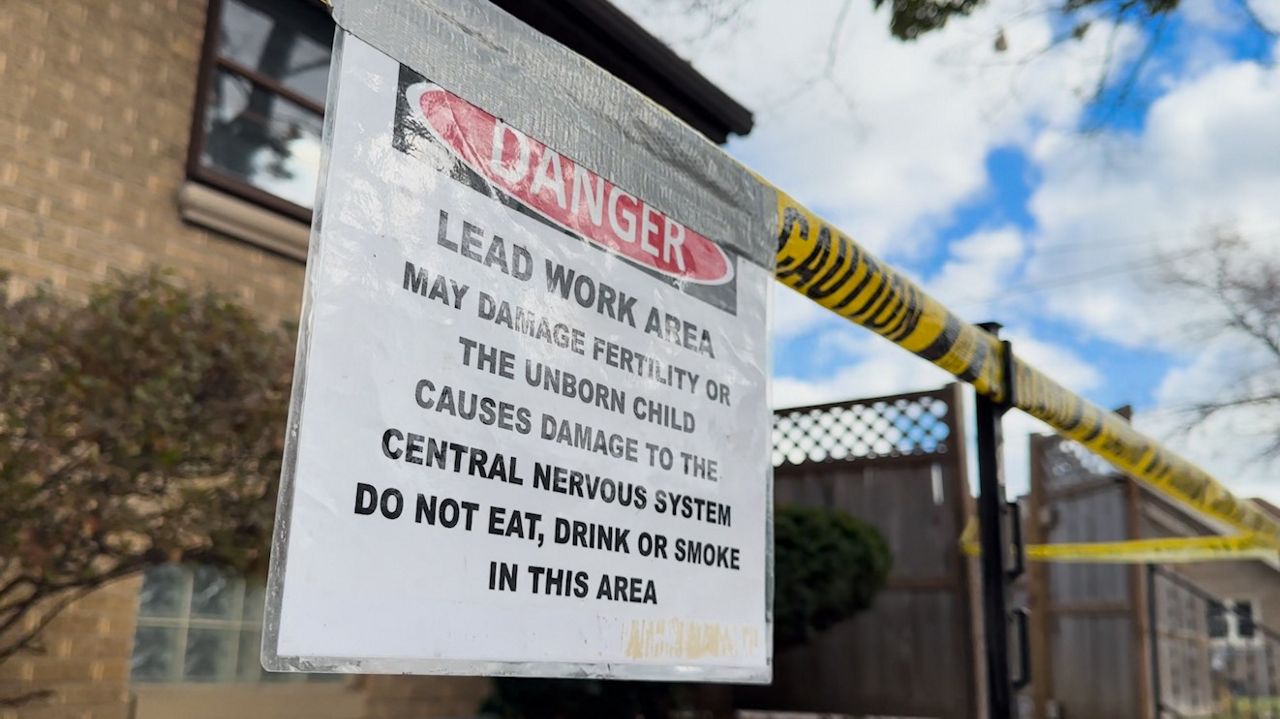
MILWAUKEE — Health officials said lead is still commonly found in older homes around Milwaukee. Lead paint was banned in the U.S. in 1978, according to the U.S. Environmental Protection Agency.
So many of the city’s homes are contaminated with lead that the Milwaukee Health Department is calling it a crisis.
Tyler Weber, the deputy commissioner of environmental health at the Milwaukee Health Department, said there are 200,000 homes in the City of Milwaukee contaminated with lead.
He said the older the home, the higher the levels of lead. That poses an array of health risks, especially for children.
“It can prevent a child from learning to read earlier in life,” Weber said. “It can decrease their vocabulary. There’s impulse control [and] potentially ADHD. So there’s a number of behavioral challenges and that can have a lifelong impact.”
Weber said lead can be found in walls, windows, water and soil. He said because it’s so prevalent in Milwaukee homes, $20 million in federal funds have been put toward reducing the lead hazard in low-income communities.
“They’ve been significantly red-lined, segregated economically and they have older homes with more windows, bigger square-footage and 80% of the families we work with are renters,” Weber said.
In Milwaukee, a resident may qualify for the Wisconsin Lead-Safe Homes Program (LSHP) if they meet the following criteria:
- “Your home was built before 1978
- “Your taxes are paid to date or you are enrolled in a tax payment plan
- “Children under age 19 or a pregnant woman living at or regularly visiting your home are on, or are eligible for, Medicaid or BadgerCare Plus. (“Regularly visiting” means visiting for at least three hours per day on two or more days per week, totaling at least 60 hours per year)”
The Morris sisters are just two of the many individuals impacted by lead exposure in the city. Their home was built in the early 1900s and riddled with lead.
A Habitat for Humanity flyer left in their mailbox that advertised free lead abatement services caught their interest.
“I told my sister, I said ‘Hey, I think this would be a good thing to look into,’ because it’s an older house. We have peeling paint and she had her two grandchildren living here with us,” Shawn Morris said.
They met the qualifications, as the grandkids living in the home had high levels of lead in their blood. Habitat for Humanity quickly got to work. The abatement took about three months to complete and was done free of charge.
“It’s a wonderful program,” Morris said. “They totally transformed our house. They gave us a new house. There’s no way we would have been able to afford it.”
The project saved the Morris family thousands of dollars and brought the grandkids’ lead blood levels back to normal. Weber is hoping to do just that for other families affected by lead exposure.
“Helping to get this crisis under control and bring awareness to the lead poisoning and the effects in can cause,” Weber said.
For more information on how to qualify and apply for free lead remediation in Milwaukee, click here.



MPS cuts face backlash
Milwaukee Public Schools plans about 200 layoffs to close a $46 million budget gap, but union leaders say cuts could impact student safety while district leaders say no classroom teachers will be eliminated.
MILWAUKEE – Milwaukee Public Schools is planning to cut roughly 200 positions next school year as the district works to close a multi-million-dollar budget gap — but there’s disagreement over which roles will be impacted.
What we know:
District leaders say the goal is to close a roughly $46 million shortfall, prompting changes that Superintendent Brenda Cassellius says are necessary.

Milwaukee Public Schools said about 201 staff members will be impacted. District leaders say no classroom teachers, counselors or social workers will be cut — something the teachers’ union disputes.
FREE DOWNLOAD: Get breaking news alerts in the FOX LOCAL Mobile app for iOS or Android
The reductions stem from a previously approved plan to eliminate about 260 non-classroom roles. The final number dropped after retirements and existing vacancies. The Milwaukee Board of School Directors approved that plan on March 9.
What they’re saying:
“We have a $50 million deficit, we are for sure not going to be able to do business the same way that we’ve been able to do business,” Cassellius said. “Change is just hard. It’s just hard. And every single one of our employees is so important.”
But some educators say the cuts go too far.
“MTEA is setting up a distress signal. We are talking about our teachers, art teachers, music teachers, physical education teachers, counselors — things that the voters of referendum of Milwaukee actually voted for,” said Ingrid Walker-Henry, president of the Milwaukee Teachers’ Education Association. “Staffing is being cut to the extent that they are concerned about student safety.”
Cassellius acknowledged the uncertainty and asked school leaders for patience.
“We just have to for sure know our budget situation, where we’re at with that after these cuts are made in order to make those decisions,” she said. “So I’m asking my principals, be patient with us.”
By the numbers:
The district outlined the 201 affected positions as:
- 70 central office roles
- 62 educators with a teaching license but not assigned to one classroom
- 59 assistant principals
SIGN UP TODAY: Get daily headlines, breaking news emails from FOX6 News
MPS says the savings will support new class size guidelines, including:
- 18 students per teacher in K3
- 20 students per teacher in K4
- 22 students per teacher in K5
Milwaukee Public Schools (MPS)
District leaders say no students will be asked to leave a school to meet class size guidelines. Officials say they are working with schools that may not have space or that require larger classes based on specific programs.
What’s next:
Milwaukee Public Schools plans to present its proposed 2026–27 budget to the Milwaukee Board of School Directors in May.
The Source: Information in this post was provided by Milwaukee Public Schools and prior FOX6 coverage.

What’s the main story line of the 2026 Brewers season?
Curt Hogg and JR Radcliffe chat about the overriding storyline for the 2026 Brewers on the cusp of opening day, part of the ‘Microbrew’ podcast.
Just before the pitch clock hits zero, the Milwaukee Brewers released a rundown of channels on cable and satellite for game broadcasts, mere hours before the 1:10 p.m. CT first pitch on Opening Day, Thursday, March 26.
The club said channels include 1263 on XFinity, 670 on DirecTV, 1743 on U-Verse, and 319 or 469 on Spectrum. The broadcasts are also listed as available on streaming service Fubo.
The Brewers are pointing fans to a channel-finding tool on their web site at Brewers.com/watch, though in the moments after the announcement, the channel finder was not yet locating details for Spectrum customers for Milwaukee-area zip codes. A club spokesperson said Major League Baseball was aware of the error and the games would indeed air on Spectrum in Milwaukee.
The built-in Spectrum guide still showed Channel 308 as the “BREW” offering in Milwaukee, with Brewers Live Pregame scheduled to begin at noon CT and baseball at 1 p.m. March 26.
With the February announcement of a switchover from FanDuel Sports Wisconsin to Major League Baseball productions in 2026, MLB negotiations have gone down to the wire with the various providers around Wisconsin. Several teams covered by Main Street Sports, which operated the FanDuel brand, have been in a similar boat this offseason.
Brewers fans aren’t alone in experiencing the late-arriving channel information. Maury Brown of Forbes has been keeping track of all the late-arriving channel announcements for teams around baseball, specifically those that were covered by the Main Street Sports. As of 7 a.m. March 26, the Royals, Rays, Tigers and Braves also still hadn’t released channel listings.
Streaming customers who used the FanDuel Sports Wisconsin app in previous years can use the new Brewers.TV option to once again watch games. The opener is also one of 10 games simulcast on over-the-air channels this season, including WITI-TV (Channel 6) in Milwaukee.

MILWAUKEE – A Milwaukee man pleaded guilty on Wednesday to a pursuit that ended with a crash into a library construction site.
In court:
Court records show Cameron Moore, 37, pleaded guilty to three felonies and the state dismissed two others as part of a plea deal. He’s scheduled to be sentenced in May.
FREE DOWNLOAD: Get breaking news alerts in the FOX LOCAL Mobile app for iOS or Android
The backstory:
Sheriff’s deputies were monitoring a home near 2nd and Lloyd. They were trying to locate a man, later identified as Moore, who was wanted for burglary and fleeing/eluding.
Moore left the home and got into an SUV that afternoon. Detectives tried to pull the SUV over and, while it did briefly stop, it almost immediately took off.
Crash damages library at MLK and Locust, Milwaukee (Jan. 7, 2025)
About a mile into the chase, the SUV ran a red light and slammed into a car at the intersection of King Drive and Locust Street. It then careened into the library construction site.
Nobody in the vehicles involved in the pursuit or crash was injured, according to authorities. A construction worker inside the building reported leg pain, and he was examined and cleared at the scene.
SIGN UP TODAY: Get daily headlines, breaking news emails from FOX6 News
“120 to 140 miles per hour on the freeway, on the public roadways passing people,” Court Commissioner Katharine Kucharski said after charges were filed. “We are all very lucky that nobody is…passed in this situation.”
The Milwaukee Public Library’s new Martin Luther King Branch opened months later. At the official opening, Ald. Milele Coggs acknowledged the roadblocks along the way – including the crash.
The Source: Information in this report is from the Wisconsin Circuit Court and prior FOX6 News coverage.

How to Watch No. 1 Texas Longhorns Hosting No. 15 Texas A&M in Lone Star Showdown

Utah Falls in Emotional, Physical Game Against Capitals | Utah Mammoth

46 anti-Trump No Kings protests planned in Vermont. How to go

Virginia bill targets vape shops that sell to underage buyers – WTOP News

These Wisconsin Rapids restaurants are offering Easter specials

Florida High School Football Rankings: Top 25 teams – Oct. 21

How old is Bo Nix? What to know about Oregon quarterback ahead of 2024 NFL Draft

Cleary's 21 help Le Moyne down Central Connecticut State 69-64 in OT

99th annual Pony Swim held in Virginia

Indiana Members Credit Union announced as new anchor tenant at Bottleworks District

Video: Will ICE Change Under Its New Leader?

DHS shutdown breakthrough comes at cost for Republicans as funding fights nears end

Rubio joins crucial G7 talks as Iran war set to dominate second day

A surprise resignation could open the door for an independent to win a Montana Senate seat

Video: Savannah Guthrie Says She Believes Her Mother Was Taken for Ransom
-

 Detroit, MI1 week ago
Drummer Brian Pastoria, longtime Detroit music advocate, dies at 68
-

 Science1 week ago
How a Melting Glacier in Antarctica Could Affect Tens of Millions Around the Globe
-

 Movie Reviews1 week ago
‘Youth’ Twitter review: Ken Karunaas impresses audiences; Suraj Venjaramoodu adds charm; music wins praise | – The Times of India
-
 Science1 week ago
I had to man up and get a mammogram
-

 Sports6 days ago
IOC addresses execution of 19-year-old Iranian wrestler Saleh Mohammadi
-

 New Mexico4 days ago
Clovis shooting leaves one dead, four injured
-
 Business1 week ago
Disney’s new CEO says his focus is on storytelling and creativity
-

 Texas1 week ago
How to buy Houston vs. Texas A&M 2026 March Madness tickets