Milwaukee, WI
Milwaukee Public Schools' $252 referendum: What's the district's plan for that money?


MILWAUKEE (CBS 58) — In less than six weeks, voters will decide whether Milwaukee Public Schools gets another $252 million through a property tax increase. In a one-on-one interview, CBS 58 asked MPS Superintendent Keith Posley how the district will use that money, and how those dollars will improve student performance in a district that currently lags behind many of its big-city peers.
Posley and other MPS officials have said the biggest culprit of the district’s money problems is state aid that hasn’t kept up with inflation. Milwaukee is one of 90 school districts across Wisconsin that are going to referendum this spring.
Milwaukee voters overwhelmingly passed a 2020 referendum that provided $87 million for MPS. Posley said this time around, the funding would allow the district to keep many of the additions the 2020 referendum funded, including expanded music classes at 90 schools, nearly 50 new library staff positions, and upgrades in early childhood classrooms at 62 schools.
“Maintaining what we have,” Posley said. “We’re trying to maintain.”
When asked if passing the referendum on April 2 would ensure the district doesn’t come back in another four years seeking to raise property taxes, Posley pointed to the state Legislature.
“That is a decision the state will have to make around how schools are funded in the state of Wisconsin,” Posley said.
If this referendum passes, property taxes would increase by $324 for a home valued at $150,000. For a home valued at $250,000, it would mean a $540 tax hike.
While state funding accounts for the lion’s share of MPS’ funding, it gets 15% of its funding from the federal government. Most big-city districts are less reliant on federal money, but Milwaukee gets more from Washington than most because of high poverty levels.
30% of MPS students come from families in poverty. Among the 100 biggest districts in the U.S., only five have a higher poverty rate.
District officials say the funding numbers aren’t entirely accurate since about 30% of the district’s federal Title I aid follows voucher students to private schools. That amounts to about 12% of the federal aid MPS receives leaving the district.

Because of the high poverty levels, Posley said that creates a need for more specialized programs in the classroom.
“Tutoring services, one-on-one type of support with young people. How do you manage and build those safety nets around young people for learning?” Posley said. “Those kinds of things takes dollars.”
At Escuela Vieau in the Walker’s Point neighborhood, the 2020 dollars allowed for kindergarten classrooms to be refurbished. That meant new desks and chairs, as well as replacing carpet with refinished hardwood floors. It also allowed the district to hire one more kindergarten teacher.
“It helps with achievement because having a lower student-to-teacher ratio allows teachers to spend more time with individual students,” Marko Radmanovic, the school’s principal, said.
Reversing below average results
Among big-city districts, Milwaukee test results are well below average. Using the National Assessment of Educational Progress, MPS 4th graders’ reading and math scores were at least 20 points worse than the average large district’s results.
For context, 10 points is about the equivalent of one year’s worth of learning. The test result trends show MPS losing ground compared to other large districts. Reading scores were more than 20 points worse than the big-city average in 2022 and 2019. Before that, the gap was 18 points in 2017 and 14 points in 2013.
Poverty correlates strongly with the results, but not entirely. Milwaukee’s results are comparable to Detroit and Baltimore, but Houston and Atlanta had scores much closer to the average large district score despite also having high poverty rates.
Posley maintained MPS was making progress, even if the NAEP results didn’t show it.
“We have made things happen for children on a daily basis, and we are seeing success,” he said. “And I will be the first to tell you that one test does not mean all.”
“Look at classroom assessments, what’s happening throughout the day.”
As MPS asks taxpayers for $252 million in April, I asked Supt. Keith Posley about national testing data (NAEP) that show Milwaukee 4th graders have been scoring worse than the average big city district for more than a decade.
“We have made things happen for children.” pic.twitter.com/W2dZQtky1S
— A.J. Bayatpour (@AJBayatpour) February 23, 2024
Colleston Morgan said he still had questions. Morgan, a Milwaukee native who was a district administrator in New Orleans, now directs the City Forward Collective, which positions itself as an advocate for all Milwaukee students, in both public and private schools.
“We haven’t seen those numbers move at all, and that’s because we haven’t had a plan,” Morgan said.
In July, MPS did launch a new districtwide strategic plan for 2023 through 2028. Some of its milestones are cut and dry, such as aiming to have all students performing at grade level by the end of their school year, starting in 2026-27. For others, it’s not clear how the district plans to measure success; one goal is having students feel “emotionally and physically safe in school.”
“We need to do better by all of our students here in Milwaukee. We think MPS is an important part of that equation,” Morgan said. “But it’s not clear how they’re gonna use these additional resources to improve that academic picture.”



Milwaukee, WI
Hundreds rally on Milwaukee’s South Side against ICE arrests and in solidarity with immigrants

Hundreds of people gathered at Kosciuszko Park on Milwaukee’s South Side, marching through the neighborhood and raising signs in protest of recent ICE arrests across Wisconsin.
READ ALSO | Father with no criminal record detained by ICE on Milwaukee’s south side, family says
Community members, organizations, and city leaders joined together in the march, which organizers said is meant to be peaceful and to raise awareness about human rights.
“We are standing in solidarity; we don’t believe what’s happening out here in the streets is valid. We think this administration is messed up and we see the politics trickling down now to Milwaukee,” Christina Lopez-Prado said.
The protest comes after federal agents conducted a series of arrests across Wisconsin in the last couple of days. The Department of Homeland Security said in a statement Tuesday that they have arrested 39 people and that many of them have criminal histories.
Watch: Hundreds rally on Milwaukee’s South Side against ICE arrests and in solidarity with immigrants
Protest held over ICE activity in Milwaukee
TMJ4 has been covering the recent ICE arrests, getting video and finding multiple people without any criminal record who have been detained by ICE.
“As an immigrant myself from Guatemala, I sympathize so much with the people of my community. Especially those who live in fear for what ICE is doing to our communities,” Julia said. “I have hope because the only thing stronger than fear is hope.”
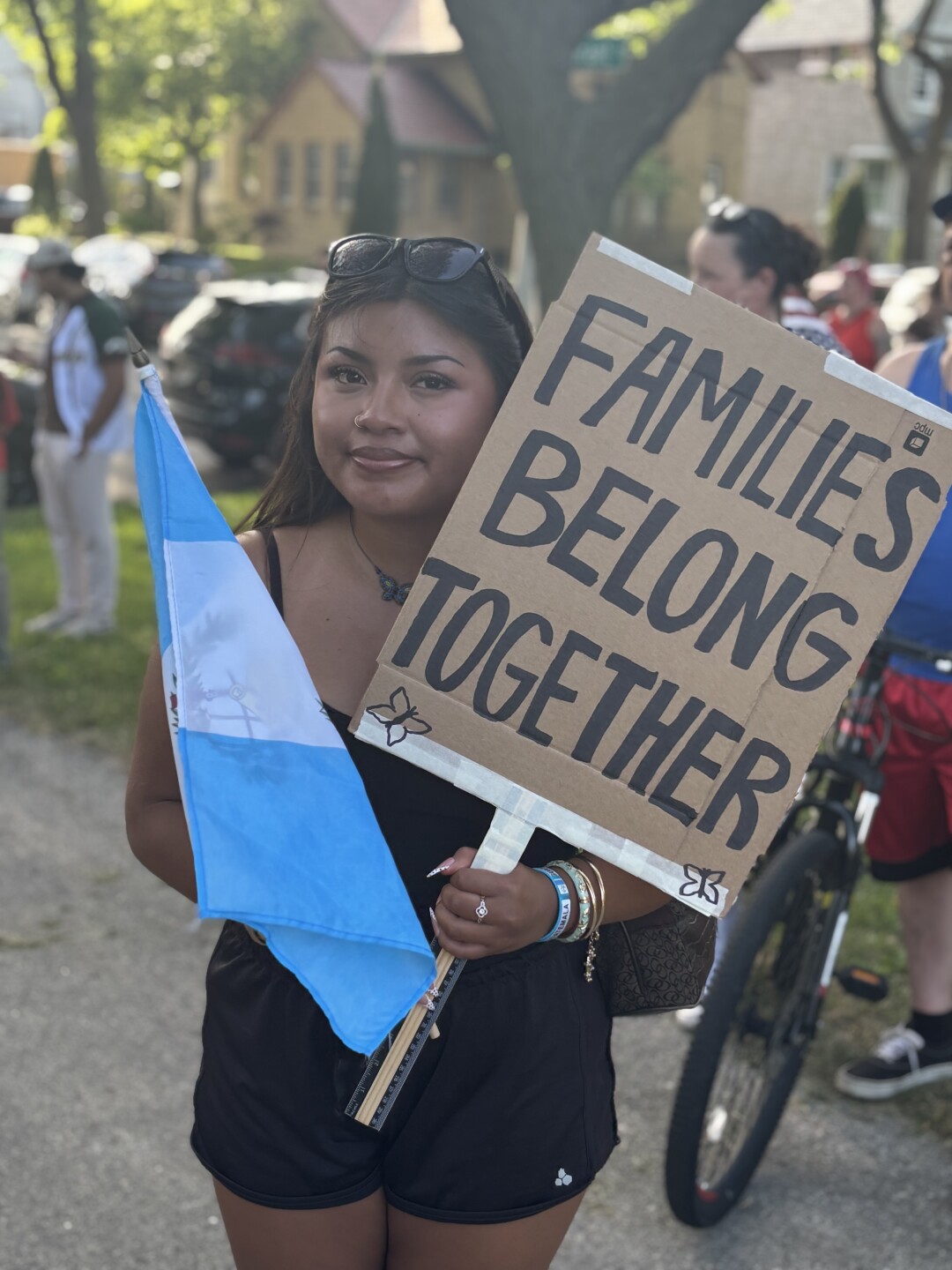
Emilio De Torre of Milwaukee Turners said the nature of the arrests has shaken the community.
“It’s disruptive. People are afraid to go outside, afraid of being racially profiled,” De Torre said.
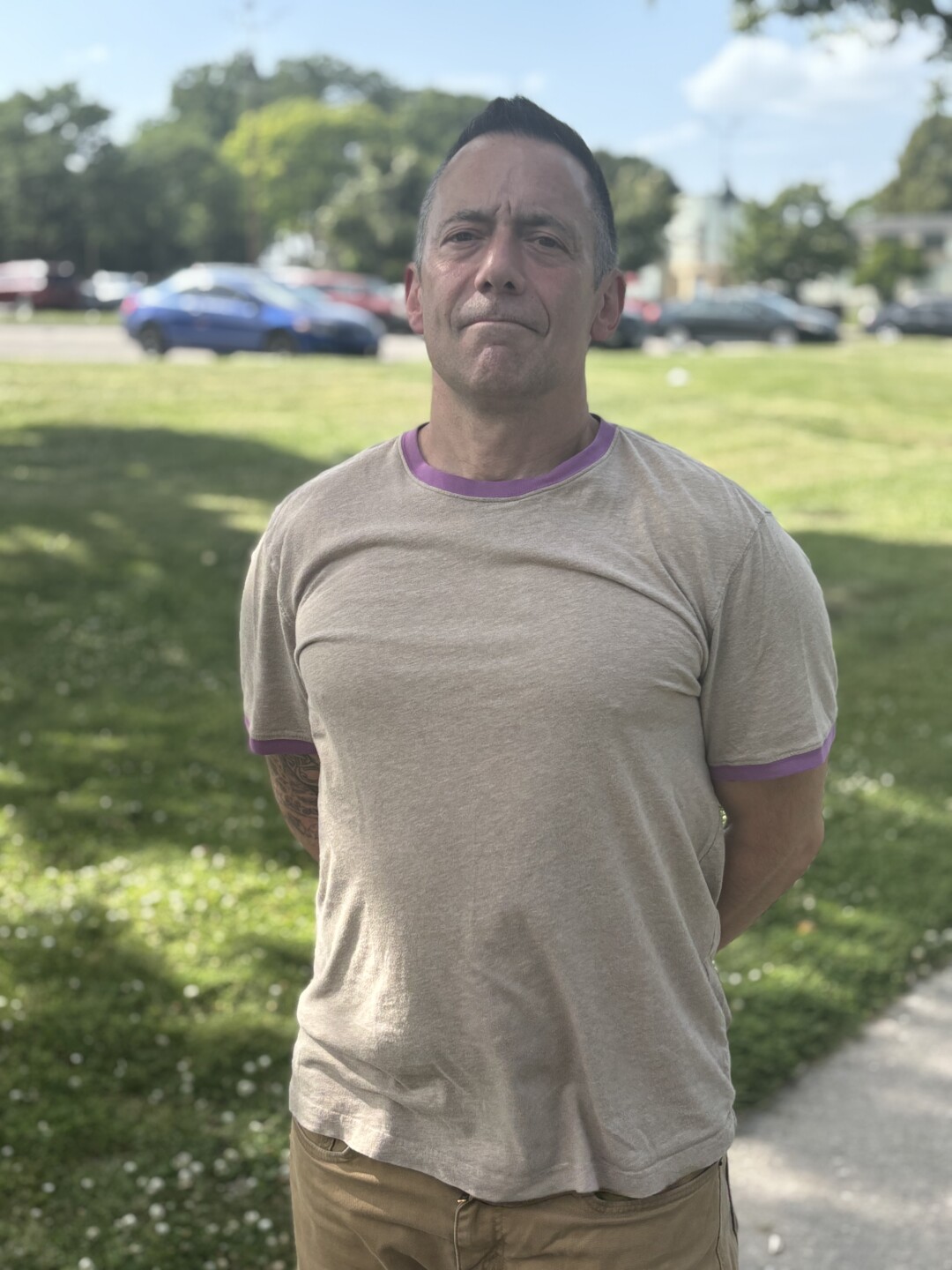
De Torre also addressed what demonstrators want from the federal government.
“Milwaukee does not want the kind of chaos that has been reigned down in Minneapolis, in Chicago, in LA. We want our federal government to follow the Constitution, to follow due process, and to make sure their reactions meet the thing that necessitated it,” De Torre said.
DHS said in its statement that all people arrested have or will receive full due process and will remain in ICE custody pending their removal or removal proceedings.
TMJ4 reached out to DHS for an updated number on arrests made in Wisconsin. They did not provide any new information.
Let’s talk:
Hey there! At TMJ4 News, we’re all about listening to our audience and tackling the stuff that really matters to you. Got a story idea, tip, or just want to chat about this piece? Hit us up using the form below. For more ways to get in touch, head over to tmj4.com/tips.
It’s about time to watch on your time. Stream local news and weather 24/7 by searching for “TMJ4” on your device.
Available for download on Roku, Apple TV, Amazon Fire TV, and more.
Report a typo or error // Submit a news tip

MILWAUKEE – Milwaukee leaders accuse U.S. Immigration and Customs Enforcement of breaking a city ordinance, while an agency spokesperson stands by officers’ decision to “protect themselves” on the job.
ICE in Milwaukee
Big picture view:
ICE said it arrested 39 people over the weekend. The federal agency said those people were in the country illegally and that many had criminal histories, including for sexual assault and DUI.
FREE DOWNLOAD: Get breaking news alerts in the FOX LOCAL Mobile app for iOS or Android
Voces de la Frontera denied that and shared recent images at a news conference of federal immigration agents masked in Milwaukee. And on Wednesday, a fight erupted over what ICE agents are wearing during the arrests.
“For ICE to be doing this, which is again, against our ordinance, it drives me insane,” said Milwaukee Mayor Cavalier Johnson.
Masked agents
The backstory:
In April, Milwaukee’s Common Council and mayor approved a new ordinance. It bans all law enforcement from wearing masks in public when on duty. It provides exemptions if wearing it for health or safety reasons.
“There’s no need to do that, have masked police in the United States of America,” said Johnson. “We don’t have a Gestapo police in the United States. We shouldn’t have a secret police in the United States. If you engage with a law enforcement officer, you should be able to clearly identify who they are, their badge, their name, and they should identify themselves as such,” Johnson said.
Milwaukee’s ordinance also requires all law enforcement to either wear their name on their uniform and their agency – or when asked – to share that information. It also requires cars be labeled – except for undercover assignments.
“It isn’t that it is not working, it is that it is not being respected,” said Milwaukee Ald. Marina Dimitrijevic. “We will hold people accountable.”
Fines for feds?
What they’re saying:
Breaking the masking and ID ordinance could lead to a fine up to $10,000.
“Who’s going to fine them? It’s not going to be MPD. How do you the fine the federal government? An officer is not going to write a ticket and then give it to an ICE officer,” said Alexander Ayala, Milwaukee Police Association president.
MPD said in a statement that it has requested a formal written legal opinion from the city attorney’s office about the mask ordinance. The city attorney already signed off on the ordinance as legal and enforceable.
Milwaukee County action
The backstory:
Milwaukee County also recently passed an ordinance to ban law enforcement from staging in county parks without prior authorization. The county’s attorney said the legislation couldn’t just target ICE because that would violate constitutional principles, so it said all law enforcement.
SIGN UP TODAY: Get daily headlines, breaking news emails from FOX6 News
Milwaukee County Supervisor Juan Miguel Martinez shared images of what he said were federal agents at the Mitchell Domes.
“Right now the idea is to document and know as much as possible and make sure everybody has eyes on the park…and are looking and documenting to see when and what parks that they are staging at, so later on we can sue them for staging without a permit,” he said. “These are kind of small things that we are trying to get done, but, now allowing them in our parks is the idea here, to slow them down or stop what they are doing, from terrorizing our community as much as possible.”
ICE responds
The other side:
In a statement, a U.S. Department of Homeland Security spokesperson said:
“ICE is targeting criminal illegal aliens including murderers, rapists, criminals, gang members and more. In 2025, nearly 70% of ICE arrests are of illegal aliens charged or convicted of a crime in the U.S.
“Enforcing federal immigration laws is a clear federal responsibility under Article I, Article II and the Supremacy Clause.
“While Milwaukee sanctuary politicians continue to release pedophiles, rapists, gang members, and murderers onto their streets, our brave law enforcement will continue to risk their lives to arrest these heinous criminals and make Milwaukee safe again.
“Sanctuary politicians attempting to ban our federal law enforcement from wearing masks is despicable and a flagrant attempt to endanger our officers. To be crystal clear: we will not abide by unconstitutional bans. The Supremacy Clause makes it clear that Milwaukee’s sanctuary politicians do not control federal law enforcement.
“ICE officers wear face coverings for one reason: to protect themselves and their families from real-world threats including agitators. The danger is not hypothetical. Public databases and online “lists” have been created to expose officers’ identities. Today, our ICE law enforcement officers face a more than 1,300% increase in assaults, 3,300% increase in vehicular attacks, and an 8,000% increase in death threats against them.”
The Source: Information in this story is from FOX6 News interviews, prior coverage of the city and county ordinances and a statement from an ICE spokesperson.

MILWAUKEE — There’s a push to get more teenagers working over the summer, but it comes at a tough time.
The number of jobs secured by teens fell 25% last summer compared to the summer of 2024, according to the US Bureau of Labor Statistics.
That trend seems to be continuing, as many services that help place people in jobs report that there are even fewer opportunities for teens this summer.
Milwaukee County, city and school district leaders are working to change that by offering paid internships to high school students.
Spectrum News met up with some of them at Milwaukee Area Technical College (MATC) where they take some job-related classes before starting their internships.
Milwaukee Public School student, Keira Cruz, got into the hospitality and tourism internship.
“I wanted to learn more from it and maybe in the future, become an event planner,” said Cruz, who’s going into her senior year at South Division High School.
Across campus, another group of MPS students is learning how to make their own professional pages and search for jobs on LinkedIn.
“There’s so much stuff out here that you could do to end up where you want to be,” said Mahogonie Wright, who attends James Madison Academic Campus and wants to pursue a career in healthcare. “It’s a pleasure to be able to do anything that, you know, enhances my possible career choices.”
After some classroom preparation, students are paired with a local company, small business, nonprofit or city/county office for seven weeks.
The goal is to match them in the field they’re interested in. This is tied to Employ Milwaukee’s Earn and Learn program.
Teens work 20 hours per week and earn a wage of about $12 an hour.
“It creates a better sense of self for that student,” said Emily Brown, internship coordinator for MPS. “A better sense of purpose, so that hopefully one day they will find their passion.”
Brown said students must demonstrate a commitment before being accepted into the program.
“If we can’t see that you’re coming to school every day, how are we going to know that you’re going to go to that internship or opportunity every day?” she asked.
Paid summer internships for teenagers are in high demand, as fewer employers are hiring seasonal workers.
Brown doesn’t want to turn interested students away, but growth of the internship program is reliant on public and private grants, donations and businesses willing to participate.
“We’re always looking for additional partnerships so that students can extend what they learn in the classroom into the real world,” Brown said.
Both Kiera and Mohagonie acknowledged that these opportunities give them something productive to do while they’re out of school. They’d like to see all Milwaukee high schoolers get this chance.
-

 North Carolina2 minutes ago
North Carolina Football Top 30 Players Countdown: No. 22
-

 North Dakota9 minutes ago
North Dakota offers wellness grants to rural hosptials
-

 Ohio12 minutes ago
Assistant Ohio AG punched on Cincinnati street by man seeking money, police say
-
 Oklahoma17 minutes ago
10,000 texts per hour: How campaigns are reaching Oklahoma voters whether they like it or not
-
Oregon24 minutes ago
Oregon Says Racism Is a Health Crisis, Now It Has a To-Do List
-

 Pennsylvania27 minutes ago
Why are flags at half-staff today? Why they’ll stay lowered in PA
-

 Rhode Island32 minutes ago
Exclusive | Not everyone’s happy about Taylor Swift’s MSG wedding, as Rhode Island residents are left at altarÂ
-

 South-Carolina39 minutes ago
2 injured in South Carolina plane crash

