Milwaukee, WI
Milwaukee Bucks Offseason Big Board: How They Retool If Giannis Antetokounmpo Stays


The Milwaukee Bucks season is officially over and they have a ton of work to do and a lot of questions to answer this offseason. This could be one of the most important offseason in franchise history, and everything revolves around Giannis Antetokounmpo.
If Giannis stays, this is not a rebuild. It’s a retool, but not a small one. This roster, as currently constructed, is not good enough to compete at a championship level. The Bucks have lost their identity, struggled defensively, and lacked consistent shot creation outside of their superstar.
So if Giannis commits, the front office has one job: build a real contender immediately.
This is what their offseason big board should look like.
Players They Should Keep: The Foundation Pieces
Myles turner
Turner is one of the most interesting decisions. He has three years left on his deal and provides two key things: rim protection and spacing. That combination is rare, and it fits extremely well next to Giannis. While his age (29) could make him expendable in a bigger deal, Milwaukee should lean toward keeping him unless they’re getting a clear upgrade.
Ryan Rollins
Rollins is an easy decision. He’s young, improving, and on one of the best contracts on the roster, just $4 million annually over the next two seasons. He’s exactly the type of player you keep around a star like Giannis.
Ousmane Dieng
Dieng has quietly become one of the most intriguing young players on this roster. Over the past couple of months, he’s shown real growth, averaging around 17.8 points, nearly five assists, and six rebounds when given opportunities. At just 22 years old, he offers upside, versatility, and a potential long-term role.
AJ Green
Every contender needs shooting, and Green provides it. He spaces the floor, plays within his role, and doesn’t need touches to be effective.
Players They Should Move: Clearing the Deck
Kyle Kuzma
Kuzma stands out as the most obvious trade candidate. He’s on a $20 million expiring contract and hasn’t delivered consistent production. That contract becomes a valuable trade chip for Milwaukee to upgrade elsewhere.
Myles Turner
I know I had him as a player they should keep but based on his salary he will be a contract that must be included if the Bucks are looking to trade for star this summer. Again, Turner fits, but if a star becomes available, he could be included in a larger package.
Trade Targets:
If Giannis stays, the Bucks cannot be conservative. They need to take real swings and take real risks.
Ja Morant
Morant’s value is at an all-time low, which is exactly why Milwaukee should explore it. He’s still only 26 years old and has already proven he can be a superstar in this league. Ja Morant can bring elite shot creation and explosiveness. He is an underrated playmaker in my opinion, so he should help facilitate.
The Bucks have struggled to generate offense in half-court situations. Morant fixes that immediately. Of course, the risk is obvious: injuries and off-court concerns. If Milwaukee is serious about maximizing Giannis’ prime, this is the type of move that could change everything.
Michael Porter Jr.
Michael Porter Jr. had a breakout season with the Brooklyn Nets averaging 24 points 7.1 rebounds and 3 assists per game. This could be one of the cleanest fits next to Giannis. Michael Porter Jr. provides elite shooting, size on the wing and scoring without needing the ball in his hands.
Giannis thrives when surrounded by spacing, and Porter would open the floor in a way this team desperately needs. The concerns are defense and durability, but offensively, the fit is undeniable.
Trey Murphy III
If Milwaukee wants a lower-risk, high-impact move, Murphy is the perfect choice Trey Murphy III is 25 years old and has had really good back to back seasons. Murphy averaged 21.5 points 5.7 rebounds and 3.8 assists per game. He’s the type of two-way player that every teams wants. Murphy is a great 3 and D player whose athletic and efficient.
Murphy doesn’t need touches, defends multiple positions, and fits seamlessly next to Giannis. He also helps restore a defensive identity.
Free Agent Targets: Contingent on Creating Cap Flexibility
Here’s the reality for the Milwaukee Bucks: They’re projected to be roughly $43 million over the cap, which means free agency won’t be straightforward.
Any move they make is going to be tied directly to what happens before free agency even begins. If Milwaukee wants to be active, it’ll need to create flexibility through trades or internal decisions. One of the biggest factors here will be their players with player options, including names like Gary Trent Jr., Gary Harris, Taurean Prince, and Jericho Sims. If some of those players decide to decline their options and test the market, the Bucks could open up some breathing room. If they opt in, that makes things tighter and forces Milwaukee to look elsewhere to clear salary.
So this isn’t a situation where the Bucks can just go out and spend. Every potential signing is contingent on what they’re able to do with their current roster first .
With that in mind, here are the types of free agents they should prioritize if they’re able to create even a little flexibility.
Norman Powell
If Milwaukee can open up enough room, Norman Powell should be one of their top targets. He gives them something they’ve clearly been missing all season, reliable scoring outside of Giannis. Powell is coming off a breakout year where he averaged around 23 points per game, and he’s capable of creating his own shot while still fitting into a team offense.
The challenge is that Powell will have a strong market, and Milwaukee likely wouldn’t be able to afford him without making a real move to clear salary. But in terms of fit, he checks every box.
Rui Hachimura
Rui Hachimura is a more realistic option depending on how the market plays out. He brings size, physicality, and improved shooting, and he’s the type of forward who can slot into multiple lineups without needing touches to be effective.
For a Bucks team that has lacked versatility, Hachimura would help balance the roster and give them another playable option in bigger lineups next to Giannis.
Coby White
If Milwaukee isn’t able to land a big-name guard through a trade, Coby White becomes an intriguing alternative. He’s taken a step forward as both a scorer and playmaker, and he can operate both on and off the ball.
White wouldn’t be the headline move, but he would raise the offensive floor of this team, which is something they’ve struggled with throughout the season.
Kelly Oubre Jr.
Kelly Oubre Jr. is the type of signing that makes sense for a team operating over the cap. He likely wouldn’t command a massive deal, and he brings energy, athleticism, and scoring off the wing.
He’s not a star, but he’s the type of player contenders add to round out their rotation and bring consistency over the course of a long season.
A Tight Window With Big Decisions
For the Milwaukee Bucks, this isn’t a typical offseason, it’s a pressure-filled one.
They don’t have the luxury of cap space, and they don’t have time to slowly figure things out. Every move is going to require strategy, timing, and a clear vision of what this team is supposed to be around Giannis. If Milwaukee can find a way to navigate the cap, make the right decisions on player options, and clear just enough room to be active, they have a chance to reshape this roster in a meaningful way.
If they can’t, they risk running it back with a team that already showed it isn’t good enough.

Milwaukee, WI
After Another Unsuccessful Opportunity, Craig Yoho’s Time In Milwaukee Could Be Nearing Its End

After he dominated the minor leagues and reached the majors in his second full professional season last year, Craig Yoho’s career has not followed the path he or the Brewers hoped for. In 13 career appearances, most of them low-leverage outings, the 26-year-old has pitched to a 6.75 ERA and 5.22 SIERA.
It was not long ago that Pat Murphy spoke highly of Yoho after a dominant spring training showing in 2025. Within a few months, he became an afterthought on the 40-man roster. After a few rough outings last year, it became clear that the Brewers struggled to trust Yoho in pivotal situations. This season, they’ve rarely trusted him enough to roster him at all.
Control issues have been the primary culprit, in part because Yoho’s stuff moves so much. In Triple-A this year, his signature screwball-like changeup has averaged 2.2 inches of induced vertical drop and 17.8 inches of arm-side run. Even his fastball has averaged 16.6 inches of horizontal movement. In his big-league career, he’s walked 17.9% of batters faced.
Back in the big leagues by necessity for most of June, Yoho showed signs of progress this month amid his longest stint to date. In his first four outings, he was throwing enough strikes and missing barrels, posting a 1.73 xERA and 2.54 SIERA. According to Statcast, he induced whiffs on 36.6% of swings, and his average exit velocity allowed on balls in play was 83.5 mph. His walk rate was still 10%, but that will always be part of the picture for a reliever with so much movement. In each of his last two outings, Yoho threw more than half of his pitches in the strike zone.
On Monday in Cincinnati, Murphy said that performance played a role in the decision to option left-handed reliever Drew Rom, not Yoho, to make room for Brandon Woodruff’s return. Given that solid work and the recent unsteadiness throughout Milwaukee’s ‘B’ bullpen, one could argue Yoho had earned another shot at higher-leverage work.
He got that opportunity on Wednesday night, as Trevor Megill, Aaron Ashby, and a suspended Abner Uribe were unavailable. Yoho inherited a bases-loaded jam from Grant Anderson in the seventh inning, with JJ Bleday representing the tying run in a 6-2 game. With one pitch, a changeup in the zone, he induced an early swing from Bleday for a soft inning-ending groundout to first base. Yoho had answered the call in a big spot.
Things went haywire when he returned for the eighth. Edwin Arroyo waited back on an elevated changeup, dunking it to right field for a leadoff single. Elly De La Cruz worked him for a nine-pitch walk. Yoho nearly escaped with just one run allowed after coaxing routine groundouts from Dane Myers and Sal Stewart, but Spencer Steer blasted an 0-1 fastball over the heart of the plate for a three-run home run. With the score now 6-5, Yoho’s night – and his latest big-league stint – was over. The Brewers optioned him to Triple-A the following day.
As Yoho was being informed in the Cincinnati clubhouse that his next travel would be to Nashville instead of Milwaukee, Murphy gave a blunt postgame assessment of his outing, reiterating the shortcomings that have kept the Brewers from trusting him as an MLB-caliber reliever.
“They don’t know him yet, they haven’t faced him yet,” Murphy said of Yoho’s first inning. “Now he goes out the second inning, they’re expecting it. It’s a two-pitch guy, really, and he doesn’t throw strikes. You can’t do that … You can see he wasn’t comfortable in that situation.”
There were signs on Wednesday that some hitters could easily formulate a productive approach against Yoho. Arroyo waited back on his changeup. De La Cruz appeared intent on waiting him out and forcing him back into the strike zone; he watched five of those nine pitches, including two just outside the strike zone and a 3-1 changeup down the middle.
“They know the deal,” Murphy said. “I mean, the report’s out there. Fastball command, question mark. Changeup, very slow, sit on it, not a swing-and-miss [pitch]. So he’s got to make some adjustments with it, and I think he will. He’s a great kid.”
Most of the Brewers’ concerns are valid. Yoho’s movement is not only difficult to control, but it also makes pitch sequencing more challenging. His changeup is more than 15 mph slower than his fastball, and its extreme depth means he can’t tunnel any pitches within – or even near – the strike zone.
Assume that to get a chase on a changeup just below the zone, Yoho must make it look like his fastball out of the hand. The visual below from FanGraphs shows that, based on how his pitches move, he would have to throw that fastball well above the zone for the two pitches to start at the same sight line. In other words, his stuff moves so much that he can’t use an in-zone pitch to set up a chase on an out-of-zone pitch, or vice-versa.

Murphy made a questionable assertion that Yoho is purely a two-pitch pitcher, as he also features a curveball and cutter. However, the curveball is a more extreme inverse of his changeup in all the wrong ways: averaging 75.9 mph with 10 inches of induced vertical drop and 20 inches of glove-side break in Triple-A, it’s challenging for Yoho to land in the zone and is effectively impossible to tunnel. To even get that breaking ball to fit on a similar tunneling graphic from last year, you’d have to position his fastball at a right-handed batter’s helmet.
A pitcher with Yoho’s stuff will never defeat hitters with pitch tunneling and deception, though. Instead, it will work because the extreme movement will miss barrels, even if it’s not particularly deceptive. That’s where the Brewers may be selling him short.
So far, Yoho’s changeup has excelled at avoiding loud contact, even though hitters have likely known it’s coming and it has not always been located competitively. In his limited big-league work across two seasons, opponents have managed just a .247 xwOBA, 17.6% hard-hit rate, and 5.9% barrel rate against it with a 33.8% whiff rate. On Wednesday night, it induced two chases and two soft ground balls. The Reds did not whiff on it, but Murphy’s claim that it isn’t a swing-and-miss pitch is, frankly, incorrect.
Such a pitch does not need to be disguised as a fastball to be effective. Yoho just needs to throw it in and around the zone below the belt. When hitters start timing it up, a timely in-zone fastball can produce a take or a late swing. So far, he has done neither consistently. Yoho is partially responsible for his current situation because he sprayed the ball too much in his early chances last summer.
At the same time, it’s becoming clear that a poor fit between player and team is also part of the issue. Whenever Chris Hook talks about a particular pitch, he instinctively states whether it “tracks” in the strike zone like it’s a checklist item. To the Brewers, many big shapes pose tunneling problems and do not maximize in-zone swings, so they often find throwing more fastball variants and shorter sliders to be more useful than better “stuff” pitches. There are some exceptions, like Grant Anderson’s sweeper, but Yoho’s stuff is well beyond the mold.
Perhaps the Brewers are right about him, or perhaps it’s simply a poor fit. At this point, a change of scenery looks like the best way to find out. The club has a history of trading former prospects who have been leapfrogged on the 40-man roster for moderate upgrades at the trade deadline. In 2018, they flipped Brett Phillips in a two-player package for Mike Moustakas. In 2019, it was Mauricio Dubon for Drew Pomeranz. More recently, they traded Joey Wiemer for Frankie Montas in 2024.
With the deadline five weeks away, Yoho could be next. A fresh start – and, just as importantly, a setting where he’ll get a longer leash to become as competitive as possible with his arsenal – may be exactly what he needs. The Brewers, meanwhile, could fill his roster spot with a more consistent contributor.

MILWAUKEE – The death toll from two earthquakes in Venezuela has topped 1,400 with an estimated 69,000 people still missing.
Earthquakes in Venezuela
The backstory:
The initial earthquakes registered at 7.2 and 7.5 on the Richter scale, and there have been more than 400 aftershocks since then. Meanwhile, neighbors in Milwaukee are doing their part to provide relief for families affected.
FREE DOWNLOAD: Get breaking news alerts in the FOX LOCAL Mobile app for iOS or Android
Milwaukee relief effort
Local perspective:
Organizers told FOX6 News the generosity was nonstop since doors opened Saturday morning, all to collect basic needs for those impacted by the tragedy in Venezuela.
On Historic Mitchell Street, all hands were on deck as neighbors dropped bags filled with clothes, emergency care items and toiletries. People boxed up the items to send off to families in Venezuela.
“Wipes, Pampers that we have, so many things that we have collected,” said organizer Ana Gilmond. “There is no infrastructure there, so people are struggling.”
Gilmond helped organize the disaster relief collection site at Voces de la Frontera’s headquarters Saturday.
SIGN UP TODAY: Get daily headlines, breaking news emails from FOX6 News
“We all feel devastated, and we thought, ‘We have to get together in order to to help,’” she said. “We might be far, but our heart is there right now.”
Gilmond said she is thinking of families and her friend who died after her building collapsed during the back-to-back earthquakes. It’s a labor of love that has brought dozens of donations to the site from folks like Alex Wenzel and her mother, Deb Smith.
“Just saw images of people being pulled out of the rubble and leaving little dogs,” said Wenzel. “If there’s something you can do, why not do it?”
Group collects donations for Venezuela earthquake relief at Voces de la Frontera headquarters in Milwaukee
“Out of the hopelessness, I know that when we take action in this collective way, we’re all helping each other,” Smith said.
It’s a simple gesture they hope will make a difference. As organizers work to pack up and load donations overseas, Gilmond has a message:
“Fuerza, be strong – we’re here for you,” she said.
Upcoming relief drive
What you can do:
This earthquake relief drive will continue at Blessed Sacrament Catholic Church at 41st and Oklahoma. It takes place from 9 a.m. to 3 p.m. starting Monday and continuing through Friday, July 3.
Desired items include non-perishable foods and cases of water, temporary household needs like new batteries and blankets, and hygiene products like toilet paper and toothpaste.
The Source: Information in this story is from FOX6 News interviews and FOX Television Stations coverage of the earthquakes.

Penelope the corpse flower is in bloom at Milwaukee’s Mitchell Park Domes.
Penelope, which last bloomed in 2024, will be open and stinking for the next 24-48 hours. This rare and very large flower only booms every couple of years; when it does, it emits a powerful – and disgusting – odor.
“Typically they only bloom once every six to eight years, ” said Amanda Garchow, horticulturist at the Domes. “Penelope’s a little different in our case; this is her second bloom in two years, so it’s extra exciting for us because it’s a rare event that’s she’s blooming so soon.”
The ephemeral nature of this plant and its experience has gathered somewhat of a cult following, according to Bryan Connolly, botanist and associate professor of biology at Eastern Connecticut State University, who once had someone visit his greenhouse with a corpse flower tattoo on his leg.
Below, with some help from Connolly and Garchow, we answer questions about this fascinating plant.
What exactly is a corpse flower?
The corpse flower, also known as a Amorphophallus titanum to scientists and “titan arum” to fans of David Attenborough’s “The Private Life of Plants,” is a flowering plant native to rainforests on the Indonesian island of Sumatra. It is known for its putrid smell, often compared to the scent of rotting flesh, and for only blooming for 24-48 hours every couple years.
Why does it take so long to bloom?
It needs to accumulate enough nutrients. The corpse plant starts as a seed or, if it’s already bloomed, an underground tuber-like corm (think potato). Both produce a really large leaf, which can be up to 15 feet tall.
“There’s no stem when it’s not flowering, and so it has a petiole, which is part of the leaf that looks kind of like a stem, but it’s not a stem,” Connolly explained. “They can get very large, like bigger than your thigh around.”
The leaf generates sugar – food for the plant – and stores it in the underground corm.
After a year, the leaf dies, and the tuber rests for four months. Then it produces a new leaf and repeats the cycle until the tuber becomes large enough. This takes about seven to 10 years for a new seed and three to four years for a corm that’s bloomed before.
The corm of a corpse flower is the largest of any flowering plant. According to Connolly, the biggest one has been up to 200 pounds, but they’re typically more like 60 pounds.
Why the rotting meat smell?
To attract pollinators. After years of tuber growing, the tuber eventually produces a spike, formally known as a spadix, of flowers wrapped in a specialized leaf called a spathe. Female and male flowers grow in a ring at the bottom of the spadix. This stage is called an inflorescence, which is a group of flowers.
The corpse flower is the world’s largest unbranched inflorescence or group of flowers.
Eventually, as the spathe opens, the spadix heats up to about 99 degrees F and the flowers begin to emit pulses of powerful odor to attract insects, like carrion beetles or fruit flies, that typically eat or lay their eggs on rotten meat. These insects pollinate the flowers at the base of the plant.
Are there benefits to being pollinated by insects like fruit flies and carrion beetles instead of more common pollinators like bees?
Not really.
According Connolly, it may be related to the plant’s native environment. Corpse plants can be miles apart in a rainforest, and since they bloom infrequently they can only be pollinated and reproduce every few years. Because of that, it could be advantageous to seek pollinators that are willing to travel long distances between plants.
What makes it smell so bad?
Chemists have isolated identified over 40 compounds that make up the odor released by the plant. Some of the chemicals include two that smell like garlic (dimethyl trisulfide and disulfide), one that smells like sulfur (methanethiol), one that smells like citrus (limonene), one that smells like feces (idole), and one that smells like urine (phenylalanin).
Why should I care?
There is inherent intrigue to a smelly plant named Penelope. But also, corpse flowers are an endangered species due to loss of habitat, climate change and encroachment from invasive species. Garchow said that it’s estimated there are only 800 left in the wild.
Additionally, these plants are difficult to conserve via seed preservation because their seeds aren’t viable after drying.
Therefore, they must be conserved in living collections in gardens, research labs or greenhouses and conservatories like the Domes.
Since they can’t self-pollinate, despite having both male and female flowers, they must be pollinated by another plant. Different research labs and greenhouses often rely on sending stored pollen to each other to keep these plant lines going.
“I’m really thankful that we have this giant, smelly, weird plant that, you know, kind of brings botany to the public,” said Connolly with a smile. “And just the conservation of plants and of the species in general.”
The Domes will have extended hours on Saturday and Sunday to accommodate visitors who want to see the corpse flower in bloom, though the smell will mostly fade by Sunday. Stop by to see Penelope, support important conservation work and acquire a unique, albeit smelly, experience.
The Dome, 524 S. Layton Blvd., will host extending hours for this event, from 8 a.m. to 4 p.m. both days. Admission is $10 for adults ($9 for residents), $6.50 for ages 3-12 and free for children younger than 2. Due to road construction and the closure of the 27th Street bridge, the Milwaukee Domes Alliance suggests using GPS to plot a route. Directions and more information, including specific discounts, are available at www.MilwaukeeDomes.org.
Reach Donnisa Edmonds at DEdmonds@usatodayco.com.
-

 Health3 minutes ago
Could ‘humanmaxxing’ actually help you live longer? Here’s what experts say
-

 Sports6 minutes ago
WWE NXT The Great American Bash 2026 preview, predictions and more
-

 Technology11 minutes ago
FBI warns Microsoft users about passwordless scam
-
 Business18 minutes ago
Swipeless online dating? How AI is reshaping the search for love
-
 Entertainment21 minutes ago
Review: They’re finally too old for it in the middling clip reel ‘Jackass: Best and Last’
-
 Politics33 minutes ago
Costs of Iran war will linger despite conflict’s end, experts say
-
 Sports41 minutes ago
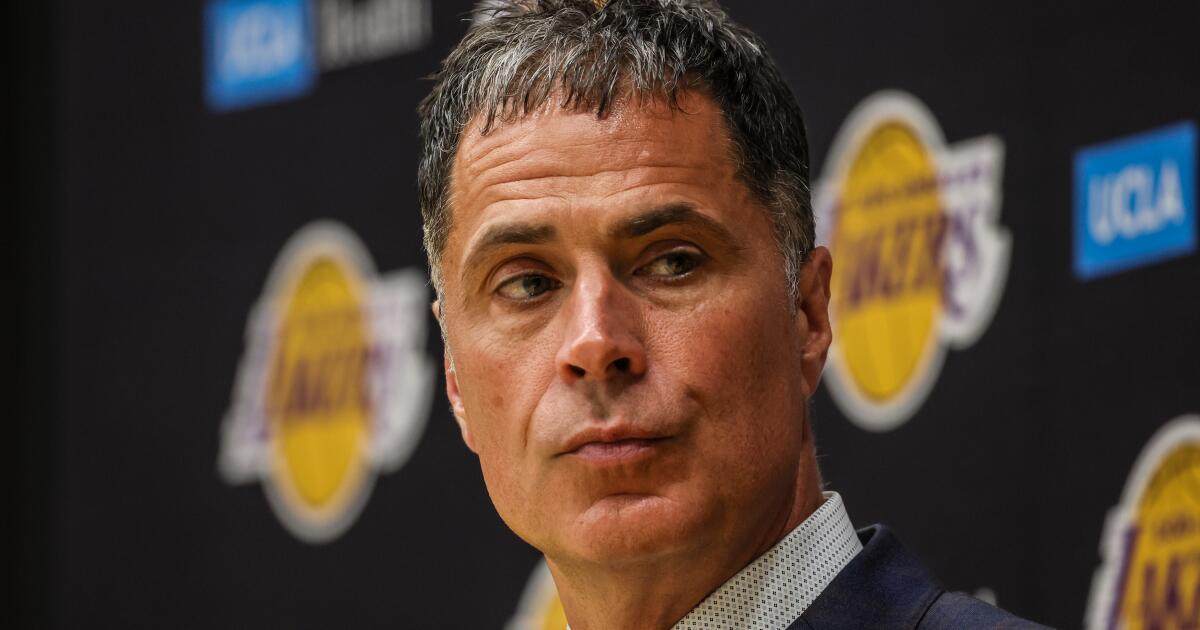
Commentary: You’re up, Rob Pelinka. To avoid Ned Colletti’s fate, the Lakers’ GM has to deliver this offseason
-

 World51 minutes ago
Q&A: Why humanitarian aid is crucial to stopping the Ebola outbreak

