Michigan
The Legacy of This Michigan Season Will Live On Forever


This season was Michigan versus everybody, and everybody lost.
On Monday, Michigan beat Washington 34-13 to win the program’s first national championship in 26 years. The score was close until midway through the fourth quarter, but the game never felt that way. The Wolverines offensive and defensive lines pummeled the Huskies. Before the College Football Playoff national title game, Washington hadn’t allowed an opposing rush of 45 yards all season; Michigan ripped off two 45-plus-yarders in the first quarter alone. The Huskies’ longest run went for 9 yards; Michigan averaged 8 yards per carry. This was a bludgeoning, and no one felt it more than Washington’s star quarterback.
Michael Penix Jr., who was lauded for his accuracy and poise in the Huskies’ semifinal win over Texas, looked flustered and off all night. The Heisman Trophy runner-up threw his first interception on Monday to Michigan cornerback Will Johnson on the first play of the third quarter.
Penix threw his second pick—and sealed Washington’s fate—with his team trailing 27-13 and less than five minutes to go in regulation. He tried to fit a pass to wide receiver Jalen McMillan into double coverage; senior Michigan defensive back Mike Sainristil leaped to corral it before returning it 81 yards to the Washington 8-yard line. This was Michigan’s moment of bliss. Just as Kelee Ringo did for Georgia two years earlier, Sainristil called game on the biggest stage imaginable.
The Michigan defense never let off the gas. The front seven held the Washington rushing attack to 46 yards on 20 carries. It put the Huskies offensive line in hell. The Wolverines secondary, led by Johnson, Sainristil, and safety Rod Moore, stymied the Washington pass catchers in coverage and tackled extremely well in space. It was a complete, relentless performance from a historic defensive unit.
Offensively, Michigan quarterback J.J. McCarthy didn’t do much, but he didn’t have to. Blake Corum and Donovan Edwards combined for 238 rushing yards with four touchdowns. The Wolverines seemed to take it personally that Washington was given the Joe Moore Award for the best offensive line in the nation after Michigan had won it in each of the past two seasons. Jack Harbaugh could have averaged 4 yards per carry Monday with the holes Michigan was opening up.
Michigan made its share of mistakes, but it was never really in danger of losing. That’s a microcosm of its season—and of the arc of its singular head coach.
While talking to ESPN’s Holly Rowe in the moments directly after the game, Michigan head coach Jim Harbaugh said each piece of maize and blue confetti raining down on the field had a story to tell. This, of course, is ridiculous, the type of statement you might expect from a man who once told his players not to eat chickens because they’re a “nervous bird.” But Harbaugh’s message somehow landed. To understand the significance of this Michigan title, you need to grasp all the smaller events that led to this point. Some of those explain Michigan’s long and trying march from its dark ages back to the top. And some of them detail the program’s brilliantly stupid, brilliantly chaotic sign-stealing scandal, which completely took over college football.
Let’s start with where Michigan was when Harbaugh accepted the head-coaching job. In 2014, the school with more wins than any other in the sport’s history was at rock bottom with no clear path up. The Wolverines had gone 5-7 in the fourth and final season of Brady Hoke’s tenure, a campaign that included a 31-0 loss at Notre Dame. This was just a few years after Hoke’s predecessor, Rich Rodriguez, capped off a miserable stint that included back-to-back losing seasons; before these three seasons, Michigan’s football team hadn’t finished below .500 since 1967. Hoke was fired in December 2014, and Harbaugh left the San Francisco 49ers to return to his alma mater and replace him.
Harbaugh quickly turned things around, lifting Michigan to a 10-3 record in his first season at the helm. Hope abounded in Ann Arbor. But things soon plateaued. Michigan lost between three and five games every year from 2015 to 2019, never climbing higher than third in the Big Ten West Division. Then the results got worse. The Wolverines went 2-4 in 2020, and Harbaugh’s job was suddenly in jeopardy. Michigan restructured his contract in 2021 and sliced his base salary in half, from more than $8 million to $4 million.
Yet 2021 also brought the breakthrough: a 12-2 mark, Michigan’s first win over Ohio State in a decade, and a spot in the four-team playoff. The 2022 season was even better: an undefeated regular season, another victory against Ohio State, and another berth in the playoff. Michigan hadn’t won it all, but it was on the verge. Then the team roared out of the gate in 2023 and looked ascendant.
Until, well … enter Connor Stalions. A born-and-raised Michigan superfan, the retired U.S. Marine Corps captain became the biggest name in sports after going from unpaid volunteer to low-level Michigan staffer to kingpin of an absurd and illicit sign-stealing operation. The news cycle was flooded with reports about a scheme that ran afoul of NCAA rules by sending representatives to games to scout future opponents. This operation reportedly included paid iPhone camerapeople, suspicious Venmo payments, and terrible sideline disguises. That’s not to mention Stalions’s nearly 600-page (!) manifesto.
Both the NCAA and Big Ten launched investigations into Michigan, and Stalions resigned from his post as the program made the case that he had acted as a rogue agent and that neither Harbaugh nor the team was aware of improper conduct. While the NCAA investigation is ongoing, the Big Ten opted to move swiftly; it suspended Harbaugh from the sideline for the final three games of the 2023 regular season. (Harbaugh had also missed the first three games of the season after the school imposed a suspension amid an NCAA investigation into prospect visits during the pandemic. This was less controversial, but it’s still important context.)
Without rehashing the entire saga, let’s just say that the drama surrounding Michigan became all-consuming. Before Michigan’s November 11 game at Penn State, Harbaugh’s camp threatened to file a restraining order to block his suspension from the tarmac. The players wore “Free Harbaugh” shirts and tried to rebrand as “America’s team.” Snippets of message board posts somehow made it into legal documents. More reports came out about a linebackers coach aiding in the destruction of evidence and a booster nicknamed “Uncle T” providing financial backing. Most notably, Michigan won all three games that Harbaugh missed, including the team’s third straight matchup against Ohio State. Then Harbaugh returned and the Wolverines won again, against Alabama. And then they won the whole damn thing.
After Monday’s win over Washington, Harbaugh maintained that he and the team are innocent. Michigan athletic director Warde Manuel went a step further, saying “hell nah” when asked whether this championship would come with an asterisk. Michigan president Santa Ono called the Wolverines a “very deserving team” and celebrated their six wins without Harbaugh this season. Oh, and the kicker: Stalions returned to Twitter to celebrate the championship with a GIF.
If each piece of maize and blue confetti has a story to tell, that confetti has plenty of material to draw from. And collectively, they paint quite a portrait. This Michigan team will now go down as one of the all-time greats, not just because it won a national championship, but because of how it did so: defiantly, unapologetically, perhaps illegally, and resiliently.
Soon after hoisting the trophy above his head while wearing Cartier glasses, Harbaugh started talking spring ball. He told ESPN’s Scott Van Pelt that he’s planning to move spring practice back by about a month. Does that mean Harbaugh is returning to Michigan?
Who knows? The other major talking point around Michigan this season has been Harbaugh’s future and whether the coach will leave campus to return to the NFL. Harbaugh dismissed questions about any such scenarios in his postgame presser. While it’s been widely reported that he and his agent, Don Yee, will explore his opportunities in the pros, no decision has yet been made. It will likely be influenced by how significant the NFL interest is, which teams pursue him (Chargers? Raiders? Commanders?), and who from the current Michigan roster is returning to school next season.
Corum is gone. He’s exhausted his eligibility. McCarthy has yet to declare for the 2024 NFL draft, but he has been considered a potential first-rounder at multiple points this season. Sainristil, Moore, and defensive tackle Kris Jenkins are all projected to go in the first few rounds, as well. An era of Michigan football is ending; what comes next is unknown.
But the legacy of this team is forever secure. Sure, some fans will debate the merits of this title for years to come. That’s part of the story, and it’s unavoidable in a sport with debate built into its very DNA. But other parts of this team’s story are also undeniable: It restored Michigan to the mountaintop. It won with and without Stalions, and with and without Harbaugh on the sideline. It won as a hero, and it won as a villain. It became just the fourth team in modern college football history to finish 15-0. And it won the championship the same way it has won all season: by dominating the line of scrimmage, and by playing a bludgeoning brand of football that not only erased its competition, but also made all the struggles that led to this point worth it.
This season was Michigan versus everybody. Michigan won.



Embattled Michigan athletic director Warde Manuel on Tuesday addressed the latest round of reports about his potential exit from the university, saying he has had conversations about a potential buyout.
“I think I’ve been fired by social media three times in my ten years here,” Manuel said during a previously scheduled interview on The Big 1050 WTKA.
Multiple media outlets recently suggested his job is in jeopardy amid investigations into the culture of the department and fired football coach Sherrone Moore’s relationship with his former executive assistant.
The investigations have cost the university about $12 million, and it may not release all the related reports.
“Documents related to these attorney-directed investigations are privileged and confidential and protected by attorney-client privilege,” school spokesman Paul Corliss said Tuesday. “Maintaining the confidentiality of these documents preserves the integrity of the investigative process, protects the privacy of those who participated and helps safeguard those individuals from potential retaliation.”
Michigan’s board has a meeting on Thursday, where the publicly accessible agenda does not mention Manuel or the investigations.
“I have four years left on my contract,” said Manuel, who acknowledged talks about a possible buyout. “I don’t know what the future is going to be.
“I do feel confident in the things I have done here at Michigan. I’m very proud of what we’ve accomplished.”
Manuel said he has helped the Wolverines have their best 10-year stretch, winning this year’s national championship in men’s basketball along with recent football, men’s and women’s gymnastics NCAA titles, 95 Big Ten championships and 4,000-plus student-athletes earning academic all-conference honors.
Michigan also has had a string of scandals under his watch.
Manuel fired Moore for having an inappropriate relationship with his executive assistant, who sued the school earlier this month.
The football program is on NCAA probation, was tarnished by a sign-stealing scheme and has seen many former staffers have run-ins with the law, including Matt Weiss, who is charged with hacking into the computer accounts of thousands of college athletes to find intimate images.
Manuel is also named in a lawsuit — along with the university, its board, a former school president and Big Ten Commissioner Tony Petitti — filed by fired assistant football coach Chris Partridge that claims Michigan knew about the sign-stealing scandal nearly a year before the public did.
The 58-year-old Manuel, who played football at Michigan under the late Bo Schembechler and was on the track team, was hired to lead the department in 2016. He signed a contract extension at Michigan in 2024 that runs through June 2030.
Manuel, a New Orleans native, previously served as athletic director at Connecticut and Buffalo after working in Michigan’s athletic department in various roles from 1996 to 2005.
___
AP college sports: https://apnews.com/hub/college-sports
Note: The video above originally aired on July 9, 2026.


Dusty May is leaving Michigan for the Dallas Mavericks. What now?
Free Press sports writer Tony Garcia breaks down the “shocking” news of Michigan basketball coach Dusty May leaving for the NBA.
Barely three months since students flooded downtown Ann Arbor and chanted “Tt’s great … to be … a Michigan Wolverine” as they celebrated Michigan basketball’s first NCAA championship in 37 years, you’d be hard-pressed to find anyone on the school’s campus who feels great about anything in the athletics department.
Instead, the university found itself in a much different and darker place Monday, July 13, when it faced new legal accusations that replaced all that happy singing with the deafening silence emitted through a barrage of “no comment” statements.
An amended lawsuit from former Wolverines linebackers coach Chris Partridge alleges former school president Santa Ono worked to hide details of the football team’s sign-stealing scandal and that athletic department leaders knew about ex-coach Sherrone Moore’s affair with staff member Paige Shriver years before it led to his firing.
And Warde Manuel – the athletic director who orchestrated that jubilation three months ago and even more jubilation three years earlier, when Michigan football won its first title in a quarter-century – finds himself in the eye of the storm as he faces the end of his highly successful but troubled tenure.
Manuel is named in Partridge’s lawsuit, which claims he knew about Moore’s relationship with Shriver “for years without taking action to protect the employee.”
He’s also a focal point of an investigation that began in December, run by Chicago law firm Jenner & Block and costing the school nearly $12 million. The Free Press has learned that higher-ups have been briefed on the findings. The U-M Board of Regents is expected to discuss that investigation at a Thursday meeting in Traverse City.
On Sunday, Yahoo Sports reported that Manuel’s future is “in doubt” based on the findings of that investigation. On Monday, Manuel told the website: “The president [Domenico Grasso] and I have had several great conversations over the past couple of days. There are no plans for me not to continue to be the athletic director for the near future.”
The near future. As in the ax may swing at any moment in the near future.
It’s impossible to say what exactly will happen to Manuel once the investigation findings are released and discussed by regents. But it’s also impossible to imagine Manuel emerges unscathed from years of scandal within the school’s prized football program.
Can anyone imagine Jenner & Block lawyers facing regents after nearly $12 million has been shelled out and saying: “Yeah, you know the guy who’s been in charge of all this? Yeah, we got nothin’ on him.”
So it’s not hard to see Manuel getting blamed in the investigation. The question is how much blame does he get – and what kind of punishment does the university want to dole out? Also, how much can the investigation truly divulge about Manuel’s role while the school contends with lawsuits from Partridge and Shriver?
Cleaning house always sounds good. But anyone who’s ever actually cleaned a house, inside out and from top to bottom, can tell you it’s no easy chore. It’s actually messy, difficult work that often reveals other structural problems, whether you’re talking about an actual house or an entire athletic department.
The closest example Michigan might follow with Manuel could come courtesy of its most hated rival. Ohio State basically gave then-AD Gene Smith a slap on the wrist in 2018 by suspending him without pay for two weeks after he and then-football coach Urban Meyer mishandled domestic-assault allegations against former assistant coach Zach Smith.
The big difference between than Manuel’s situation is twofold: First, U-M’s investigation is examining the entire department; second, he’s coming off a huge high that vaulted him into rarefied air – an AD with national titles in football and basketball on his résumé.
Does Michigan really want to get rid of the guy who proved he can hire a championship hoops coach, won the school an NCAA Tournament title and helped refill those NIL and donor coffers, just as new football and basketball coaches are about to start their first seasons in Ann Arbor?
As for Manuel deciding to step aside on his own? He’s 58 and under contract through 2030. He has too much road in front of him to imagine a quiet resignation – to decide he’s done as much as he can – after 10 years on the job.
Nah. It’d be a lot easier to imagine the man who played defensive lineman under U-M legend Bo Schembechler saying to Grasso, the regents, and the rest of an ungrateful administration: You’re gonna have to fire me.
If that’s the case, you can also imagine a new contingent on Manuel’s behalf joining the growing briefcase-carrying group that’s flooding downtown Ann Arbor these days and chanting to itself: “It’s great … to sue … the Michigan Wolverines.”
Contact Carlos Monarrez at cmonarrez@freepress.com and follow him on X @cmonarrez.

Michigan health officials are investigating a growing outbreak of cyclosporiasis that has sickened 2,640 people, with early evidence pointing to lettuce or salad greens as a possible source.
The Michigan Department of Health and Human Services said Monday (July 13) that while the investigation is ongoing, no specific type of lettuce, grower, or supplier has been identified.
Other food items also have not been ruled out.
“Although we do not have a definite product identified as the source of the outbreak, we want to let Michiganders know what we have learned so far so they can take steps to protect their families,” said Dr. Natasha Bagdasarian, the department’s chief medical executive. “Early information has shown lettuce as a common product that regularly comes up during the investigation.”
What is Cyclospora?
Cyclospora is a parasite that infects the intestines and can cause watery diarrhea, nausea, and stomach cramps.
The illness is typically spread by consuming food or water contaminated with the parasite.
Michigan usually reports only 40 to 50 cases of cyclosporiasis each year, making the current outbreak unusually large.
What investigators know
State health officials said they have completed more than 1,000 interviews with infected individuals while working with local, state, and federal partners to trace the source of the outbreak.
“We really need that kind of coordination to happen at the national level,” Bagdasarian said. “As soon as other states get their numbers to the CDC, we hope they can take a broader look to see whether these outbreaks are related.”
Because symptoms can take up to two weeks to develop after exposure and food distribution networks are complex, officials said the investigation could take time.
Officials emphasized there is no evidence linking the outbreak to swimming or other recreational water activities. Instead, investigators continue to focus on contaminated produce as the likely source.
Previous cyclospora outbreaks in the United States and Canada have been linked to bagged salad mixes, fresh cilantro, basil, raspberries, snow peas, and green onions.
Health officials said the investigation has been complicated by cyclospora’s long incubation period, with symptoms often taking up to two weeks to develop after exposure.
“That means investigators have to ask people about foods they ate, restaurants they visited, and grocery purchases from two to six weeks earlier,” Bagdasarian said.
How to protect yourself
As a precaution, the department is urging residents, restaurants and commercial kitchens in affected counties to take extra care when handling lettuce and salad greens.
Health officials recommend purchasing whole heads of lettuce instead of bagged, pre-washed lettuce or salad kits, discarding the outer two to three leaves before preparation and thoroughly washing the remaining leaves under clean running water.
When possible, greens should be cooked to at least 158 degrees Fahrenheit (70 degrees Celsius), which kills the parasite.
The department also recommends washing all fresh produce under running water and peeling fruits and vegetables when possible.
People at higher risk of severe illness or dehydration, including older adults, young children, organ transplant recipients and people undergoing chemotherapy, are encouraged to take extra precautions.
“Produce may have been grown on the other side of the country, possibly even in other countries, then processed somewhere else before coming into Michigan,” Bagdasarian said. “Many suppliers also distribute produce to multiple grocery stores and restaurant chains, making it harder to pinpoint the source.”
When to seek medical care
Anyone experiencing frequent watery diarrhea should contact a health care provider and specifically request testing for cyclospora, as routine stool tests may not detect the parasite.
The illness is typically treated with antibiotics, along with rest and fluids to prevent dehydration.
The Michigan Department of Health and Human Services said it will continue providing updates as the investigation progresses.
Copyright 2026 by WDIV ClickOnDetroit – All rights reserved.
-
 News26 minutes ago
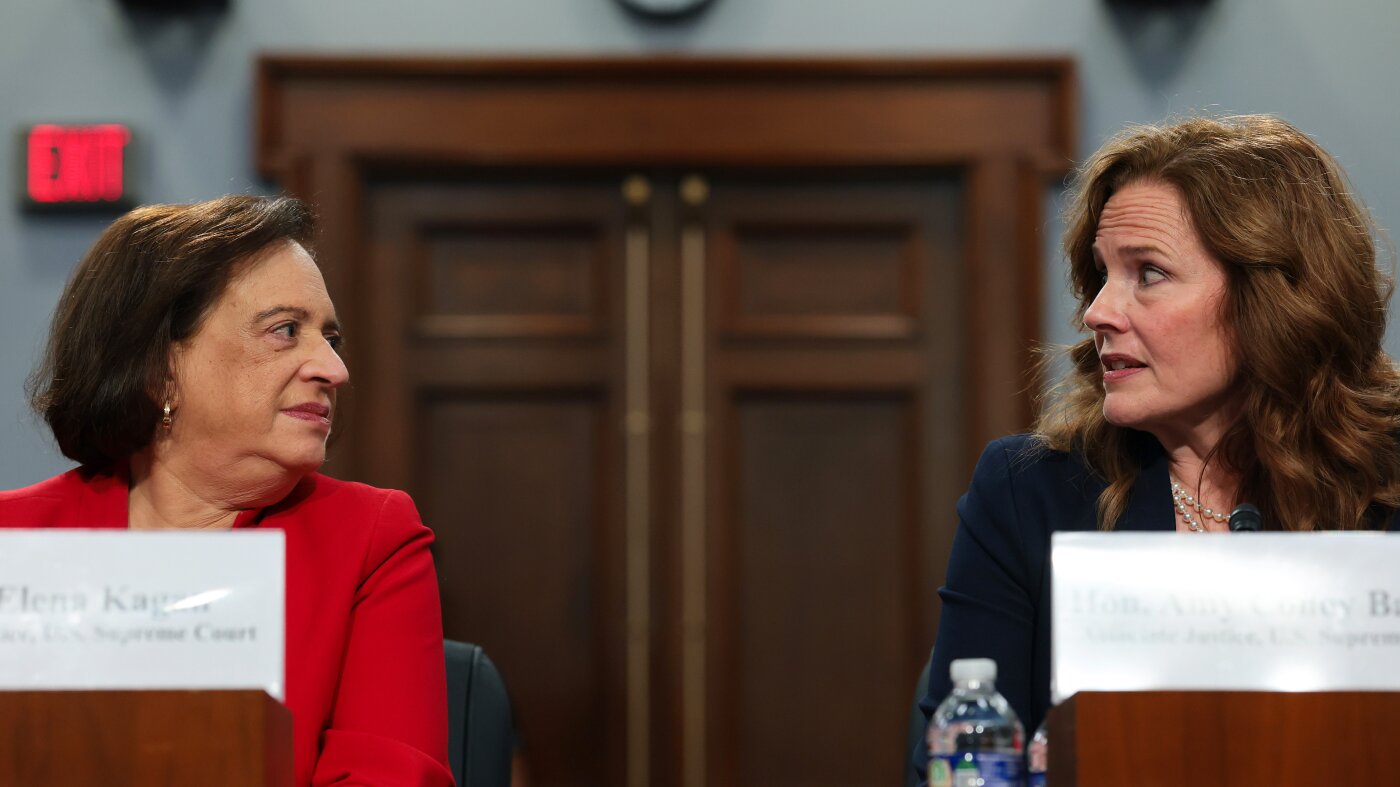
Supreme Court Justices give chilling accounts of threats to their safety
-

 Los Angeles, Ca2 hours ago
Stabbing at Chino Hills liquor store ends in attempted murder arrest
-

 Detroit, MI2 hours ago
A small group of citizens rally for mental health coverage in Detroit
-

 San Francisco, CA3 hours ago
1 dead, 2 missing after boat capsizes near Alcatraz in San Francisco Bay
-

 Dallas, TX3 hours ago
Death penalty off the table for man accused of beheading Dallas motel manager, prosecutors say
-

 Boston, MA3 hours ago
Chickadee, the popular Mediterranean restaurant in Seaport, is shutting down – The Boston Globe
-

 Denver, CO3 hours ago
Denver Nuggets 7-Year NBA Veteran Gets Honest On Peyton Watson
-

 Seattle, WA3 hours ago
Top 25 Seattle Seahawks Going into 2026 NFL Season: #17 Grey Zabel

