Kansas
UCF men’s basketball stuns No. 3 Kansas 65-60 in Big 12 home opener


ORLANDO — UCF delivered a shocking blow to one of college basketball’s bluebloods Wednesday night, scoring its first Big 12 victory in court-storming style.
Jaylin Sellers led all scorers with 18 points, Darius Johnson finished with 16 after knocking down a pair of clutch free throws with 14.6 seconds left and UCF (10-4, 1-1) climbed out of a 16-point, first-half hole to stun No. 3 Kansas 65-60 in front of a sellout Addition Financial Arena crowd of 9,469 fans.
‘There will be no nights off’: UCF men’s basketball prepares for debut Big 12 season
The Knights forced 18 turnovers and registered seven blocks, none bigger than Ibrahima Diallo’s final-minute rejection of KJ Adams Jr. to spring Sellers for an acrobatic finish at the opposite basket and put UCF up by six.
“It’s a great night for UCF, and for our guys,” UCF coach Johnny Dawkins said. “Our guys kept in the game. They got down early in the first half to a very good Kansas basketball team. I’m just proud of the way we fought back. We chipped away and, in the second half, we started to gain a little more momentum, take the lead and sustain it for the most part.
“What a difference a day makes.”
More accurately, what a difference four days made.
UCF, picked to finish last of the Big 12’s 14 teams in the preseason media poll, opened league play with a 25-point loss at Kansas State. The Knights scored 19 points in the first half and shot 23.8% from behind the three-point line.
Sellers set the tone in the game’s first 2½ minutes, burying a corner three after two UCF offensive rebounds and throwing down an emphatic transition dunk to punctuate a 7-0 run out of the gates.
Kansas (13-2, 1-1) settled in after a quick timeout, scoring 23 of the next 28 points and eventually building a 35-19 advantage with 3:41 left before halftime. That’s where, Jayhawks coach Bill Self said, the Big 12 favorites lost control.
“We did some things that, I think, good teams shouldn’t do, especially playing in a hostile environment,” Self said. “We did some very, very careless and loose things to allow them to get back into it. The game was lost — or the game was won, depending on what side you’re on — in the last four minutes of the half, and the first three minutes of the second half.”
UCF went on a 10-0 run before Kevin McCullar Jr. sunk a three-pointer at the buzzer, pulling the Knights within single digits. They pulled even before the 14-minute mark of the second period, and reclaimed the lead moments later on a Sellers turnaround jumper.
Diallo played a key role in his 24-plus minutes in the paint, often winning the individual battle down low with Preseason All-American and Big 12 Player of the Year Hunter Dickinson. The 7-foot Senegalese center set a season-high with 13 points, grabbed five rebounds, dished out three assists and provided the crucial block on Adams.
“I was excited to match up with (Dickinson),” Diallo said. “There was something I needed to prove. It was really hard; he’s really good, too.”
Dickinson, who Self said labored through a knee bruise, battled foul trouble throughout the night. He tallied 12 poiints and four rebounds in just under 28 minutes. The 7-foot-2, 260-pound senior sunk a second-chance three-ball with 17 seconds left to make it a one-possession game.
One of the few returning Knights, a team reshaped largely through the transfer portal, Johnson escaped the Jayhawks’ full-court press and drew a foul to set up a one-and-one. He made both free throws, and UCF defended for a frantic final 10 seconds to secure victory.
The scenes were unlike any ever produced at a UCF basketball game. Palm fronds adorned the basket nearest to the student section, hundreds of fans rushed the court with cardboard cutouts and inflatable trees in hand, and a shoe landed on the announcer’s table.
“The court-storming was crazy. I’ve never seen nothing like that in my life,” Sellers said. “I kind of got up out of there and went to the locker room. I ain’t ever seen that many people around me, and I am kind of shy.”
UCF’s first foray into Big 12 play appeared to be a baptism by fire. Of the Knights’ first nine scheduled league games, six are against opponents currently ranked in The Associated Press’ Top 25 — Kansas (No. 3), BYU (18), Houston (2), Texas (25), Baylor (14) and Oklahoma (9).
Dawkins granted his players until midnight to relish the moment, but practice resumes 8:30 a.m. Thursday ahead of BYU’s visit to Orlando at 4 p.m. Saturday.
“We really haven’t accomplished anything at the end of the day. This only equals out to one win,” Sellers said. “Yes, it sends a message but at the end of the day it doesn’t mean (anything) if we don’t keep winning.”
On a grander scheme, though, the win holds plenty of significance. Kansas is the highest-ranked opponent UCF has ever defeated; the Knights upended No. 4 UConn at the Battle 4 Atlantis in the Bahamas more than a dozen years ago.
UCF last knocked off a ranked opponent on Jan. 19, 2020, an 86-74 road win over No. 15 Florida State. It had lost each of its previous seven contests against teams inside the top-25.
“(Orlando) is probably the entertainment capital of the world. … For us, it’s important that we can be one of the attractions, too,” Dawkins said. “The only way you can become one of those is to have success — to be in moments and games like this, but also to win games like this.”
UCF might not see a better team than Kansas all year, but that certainly does not mean the path is any easier. Five of the Knights’ next six games come against squads ranked in The Associated Press’ Top 25 poll: BYU (No. 18), Houston (2), Baylor (14) and Oklahoma (9).



Kansas
1 man dies after being shot June 9 in Kansas City, Missouri; police working to identify person of interest
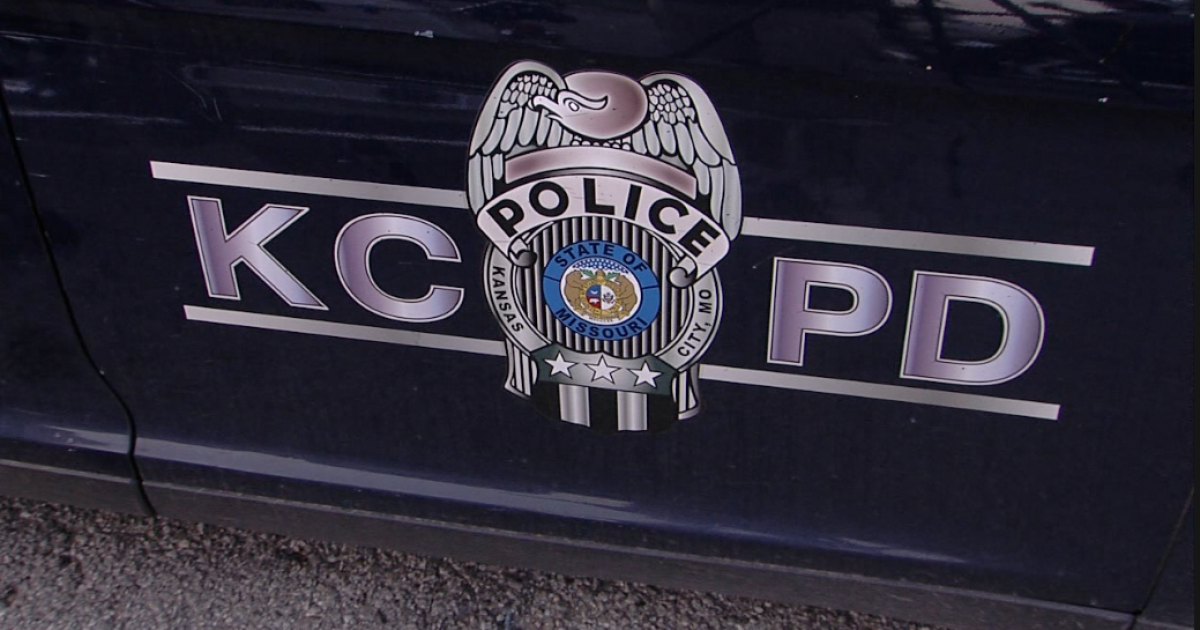
KANSAS CITY, Mo. — The Kansas City, Missouri, Police Department is working to identify a person(s) of interest in a June 9 shooting that led to the death of one victim.
Police were called around 6 a.m. on June 9 to the area of Independence and Monroe avenues in Kansas City, Missouri.
Responding officers found an unresponsive man behind a residence in that area. He was transported to the hospital for life-threatening injuries, per KCPD.
Police were notified Friday night that the shooting victim died.
KCPD said Saturday “detectives have made headway identifying subject(s) of interest.”
Anyone with information on the incident is encouraged to call KCPD Homicide detectives directly at 816-234-5043 or the Greater Kansas City Crime Stoppers Tips Hotline at 816-474-8477.
—
If you have any information about a crime, you may contact your local police department directly. But if you want or need to remain anonymous, you should contact the Greater Kansas City Crime Stoppers Tips Hotline by calling 816-474-TIPS (8477), submitting the tip online or through the free mobile app at P3Tips.com. Depending on your tip, Crime Stoppers could offer you a cash reward.
Annual homicide details and data for the Kansas City area are available through the KSHB 41 News Homicide Tracker, which was launched in 2015. Read the KSHB 41 News Mug Shot Policy.
Kansas
1 man killed, 5 others wounded in mass shooting Friday night near East 19th and Vine streets in KCMO

KANSAS CITY, Mo. — One person was shot to death and five others were wounded by gunfire Friday night in the 18th and Vine Historic District in Kansas City, Missouri.
Police said officers were in the area of East 18th Street and Paseo about 10:30 p.m. when they heard gunshots.
The officers moved to East 19th Street between the Paseo and Vine Street to check for shooting victims, according to a police department news release.
They found one man who had been shot and was unresponsive, along with two women who had been shot.
The man was declared dead at the scene.
One of the women suffered serious gunshot wounds and the other woman suffered non life-threatening wounds, according to the police department news release.
Officers at the shooting scene were notified three more shooting victims from the same area had been taken to a hospital by a private vehicle.
An adult male and female were reported in stable condition late Friday, while a second adult male suffered critical gunshot wounds, according to police.
Police said their preliminary investigation revealed the victims were standing on 19th Street between Vine and Paseo when people began shooting in several directions.
All the shooting victims were hit by gunfire in that area, according to police.
No word on what led to the mass shooting and at least one murder.
This is a developing story and will be updated when new information is available.
—
If you have any information about a crime, you may contact your local police department directly. But if you want or need to remain anonymous, you should contact the Greater Kansas City Crime Stoppers Tips Hotline by calling 816-474-TIPS (8477), submitting the tip online or through the free mobile app at P3Tips.com. Depending on your tip, Crime Stoppers could offer you a cash reward.
Annual homicide details and data for the Kansas City area are available through the KSHB 41 News Homicide Tracker, which was launched in 2015. Read the KSHB 41 News Mug Shot Policy.
Kansas
Where to watch St. Louis Cardinals vs Kansas City Royals: TV channel, start time, streaming for June 19


What to know about MLB’s ABS robot umpire strike zone system
MLB launches ABS challenge system as players test robot umpire calls in a groundbreaking season.
The 2026 MLB season has surpassed the quarter mark, and after each team’s first 40 games, there’s plenty of reasons to tune in all summer long.
Chicago White Sox slugger Munetaka Murakami has already proven doubters wrong by launching 17 home runs, Pittsburgh’s Paul Skenes consistently looks like the best version of himself on the mound and Milwaukee ace Jacob Misiorowski is throwing harder than any starter in the majors.
The MLB action continues on Friday as the St. Louis Cardinals visit the Kansas City Royals.
Here’s everything you need to know to tune in for the first pitch.
See USA TODAY’s sortable MLB schedule to filter by team or division.
What time is St. Louis Cardinals vs Kansas City Royals?
First pitch between the Kansas City Royals and St. Louis Cardinals is scheduled for (ET) on Friday, June 19.
How to watch St. Louis Cardinals vs Kansas City Royals on Friday
All times Eastern and accurate as of Friday, June 19, 2026, at 6:33 a.m.
- Matchup: STL at KC
- Date: Friday, June 19
- Time: (ET)
- Venue: Ewing M. Kauffman Stadium
- Location: Kansas City, Missouri
- TV: Apple TV
- Streaming: MLB.TV on Fubo
Watch MLB all season long with Fubo
MLB regional blackout restrictions apply
MLB scores, results
MLB scores for June 19 games are available on usatoday.com . Here’s how to access today’s results:
See scores, results for all of today’s games.
-

 Los Angeles, Ca7 minutes ago
Armed home invasion in L.A.’s Fairfax District leaves resident assaulted
-

 Detroit, MI25 minutes ago
Tigers top Chicago White Sox 4-1; Detroit pitcher Troy Melton allows 1 hit in 6 innings
-

 San Francisco, CA37 minutes ago
MLB Rumors: Latest Intel on Potential Matt Chapman Trade for San Francisco Giants
-

 Dallas, TX39 minutes ago
Dallas’ Fair Park to Get $2.5M Boost From McKesson – Dallas Weekly
-

 Miami, FL45 minutes ago
Air quality alert in effect in Miami-Dade and Broward counties: National Weather Service
-

 Boston, MA52 minutes ago
Boston Signs Big Blueliner Rylind MacKinnon To One-Year Extension
-

 Denver, CO55 minutes ago
Fire destroys home under construction in northwest Denver
-

 Seattle, WA1 hour ago
We can stop pretending that a suburban stadium would be better for soccer in Seattle

