Kansas
Trust fall: Trump’s win or loss will further damage our elections • Kansas Reflector


The Rule said, “Don’t talk about politics at the dinner table.”
It wasn’t polite to mention deficit spending, because, well … The Rule. And not immigration. Or racism. Or abortion. Or inflation.
And according to The Rule, you certainly shouldn’t bring up the candidates. You weren’t to mention how you didn’t trust the Democrat, or how you didn’t agree with the Republican.
The Rule told us this talk was too divisive. Instead, just tell your dinner guests that you voted, because, even if we couldn’t agree on policy or candidates, we agreed to trust the elections.
How old-fashioned.
Today, merely mentioning the election — mail-in ballots, early voting, election fraud, poll workers — is just as likely to kick up a fight as a debate about the choice between Democrat or Republican, red or blue, pro-life or pro-choice.
At its core, the 2024 presidential election next week will shine a spotlight on our confidence in democratic election results. Will we trust the announced winners? A partisan divide on basic election logistics suggests that we could be in for a roiling debate, not just at our national dinner table, but here in Kansas as well.
A report on the political attitudes of Kansans published this week by the Docking Institute at Fort Hays State University surveyed hundreds of voters statewide.
It happily noted, “Respondents had high confidence with the election results in Kansas. About sixty percent (60.5%) of respondents agreed or strongly agreed that they were confident that the reported winners of the elections in Kansas are actually the candidates that most Kansas voted for.”
Is 60.5% a number that should make us confident?
The fact that anyone reads this polling result as positive news is itself discouraging. To that same question, 10.4% said they disagree or strongly disagree. The same number said they “don’t know.”
This is not “high confidence” in elections. Those “disagree” and “don’t know” percentages, even if wildly off, represent tens of thousands of Kansans that might believe the wrong candidate — their candidate — unfairly lost.
How have those confidence percentages changed during the past few years? Not much. While it’s positive news that Kansans aren’t doubting their elections more each year, we might also worry that this doubt is becoming part of the political identity of Kansans.
Kansans are worried about problems that either don’t exist or problems so rare that they are difficult to document:
- 15.3% believe that illegal immigrants were voting in Kansas elections in large numbers.
- 11.6% believe that voter fraud routinely decides the winners of elections in Kansas.
- Sizeable numbers believed ballot drop boxes should be banned (23.5%) and vote by mail should be abolished (23%).
Call it Kansas election skepticism.
The scare-mongering of Kris Kobach might have successfully entrenched this anxiety about elections into Kansans. His deceptive hyperventilation about voter fraud played out in the courts, in his grasps for national office and in his run for governor. His constant squawks about voter fraud and election integrity may have nudged our statewide attitudes toward suspicion, along with Trump’s more recent shoves on the national stage.
How much is this a Kansas belief and how much is this a Republican belief? That’s difficult to tease out from the survey. All we can see is that 34.1% identified as some kind of “conservative,” while 23.5% identified somewhere along the range of “liberal.”
To answer this question, we need to check national partisan attitudes.
In a report issued last month, Gallup surveyed nationally on the issue of “votes cast by people who, by law, are not eligible to vote.” A wide majority of Republicans (74%) identified this as a “major problem,” while only 14% of Democrats saw it that way. Other surveys found similar partisan divides.
According to the Pew Research Center, Democrats (90%) are 33 percentage points more likely to forecast this election as being run and administered very or somewhat well than Republicans (57%). Trump supporters are less trusting than Harris supporters of election basics such as vote counting, poll workers and election officials. The divide on mail-in ballots is the widest: 85% of Harris supporters are confident in them as opposed to 38% of Trump supporters.
An area of skeptical overlap? Only 8% of all respondents to the Pew poll said they are highly confident in the Supreme Court’s neutrality, if it needed to issue an election decision (2% for Harris supporters; 14% for Trump supporters).
That kind of animosity — whether from one political party or both — toward the basic function of voting is an existential threat to democracy. As some of Trump’s advisers whispered to his deaf ear in 2020, it’s vital to American democracy that the loser trusts both the counts and the courts, and steps aside.
Clearly, Trump’s false claims about voting have fueled Republican doubts about elections. Look no further than Kansas Speaks: It didn’t start asking about election confidence until the 2022 fall survey, in the wake of Trump’s fraudulent clinging to office.
The Rule about dinner table politics was a domestic rule about courtesy. Respect the people who sit across the table from you — enough to not clutter the table with politics.
A Trump biographer and the new movie about Trump’s rise detail another version of The Rule. Along with two other tenets, Trump learned this lesson from the ruthless New York lawyer Roy Cohn. This version of The Rule? “Claim victory and never admit defeat.”
Trump’s dogged insistence that he won — that he always wins — is his personal version of what MIT election experts call the “loser’s regret phenomenon.”
Researchers with their Election Data + Science Lab have documented this effect over decades and across countries. When voters watch their preferred candidate lose, they express less confidence in the election process. Logically, there is a “winner’s effect,” calculated by tracking how much more confident people become in elections after their candidate wins.
When combined, these effects can be substantial. Simply put in one of their studies, “Winners are consistently more trusting of the vote count than losers.” In this way, the reaction of Trump and his followers was at once predictable and extreme, as they searched for votes in Georgia, waged losing court battles and ultimately stormed the Capitol.
Four days from the election, we are caught in a dilemma of election confidence. If voters elect Trump as president next week, he will have four more years in power to damage confidence in our elections. During his first term, he used the bully pulpit to cast doubt about voting machines, poll workers and election commissions. We should expect more of the same from a second Trump term. We should expect election confidence to slide, even with the winner’s effect. Republicans might be buoyed, but Democrats will doubt, with everyone soured by Trump’s deep distrust of elections.
Conversely, if Trump loses, he is likely to fight the election results. The Rule of “never admitting defeat” means a wave of loser’s regret, fueled by Trump’s childish insistence that he must win. His supporters are likely to feel that sting and doubt returns in upcoming elections.
Either way, Trump and his enablers have been and likely will continue to be an accelerant of election doubt, fueling unbounded and unfounded skepticism. Four years from now, political scientists likely will still be polling doubting Kansans who will be thinking of Trump’s lies and parroting them around the kitchen table to anyone who will listen — even if it ruins family dinner.
In this way and many others, the bonfires that Trump and his operatives lit within our elections will still be burning, regardless of who wins next week.
Eric Thomas teaches visual journalism and photojournalism at the William Allen White School of Journalism and Mass Communication at the University of Kansas in Lawrence. Through its opinion section, Kansas Reflector works to amplify the voices of people who are affected by public policies or excluded from public debate. Find information, including how to submit your own commentary, here.



Kansas
Kansas City barbecue pitmaster Arthur Lee Sr. killed in hit-and-run crash while riding his scooter

KSHB 41 reporter La’Nita Brooks covers stories providing solutions and offering discussions on topics of crime and violence. She also covers stories in the Northland. Share your story idea with La’Nita.
—
Kansas City barbecue pitmaster Arthur Lee Sr. was killed in an early morning hit-and-run crash while riding his scooter March 21.
Kansas City barbecue pitmaster Arthur Lee Sr. killed in hit-and-run crash
Lee was turning left from Dr. Martin Luther King Jr. Boulevard onto Eastwood Trafficway when a car ran a red light and hit him. A small memorial now grows at the intersection.
Chris Morrison
“Devastated. Everybody’s hurt, it was really unexpected,” his son Arthur Lee Jr. said. “I loved him to death. My dad was like my best friend.”
Lee was well known in the barbecue community, working as a pitmaster at Gates Bar-B-Q for the past eight years after spending two decades at Arthur Bryant’s Barbeque.
“He loved working at Gates,” Rose Qualls, Lee’s sister-in-law, said. “He was always making us slabs and turkey sandwiches.”
Chris Morrison
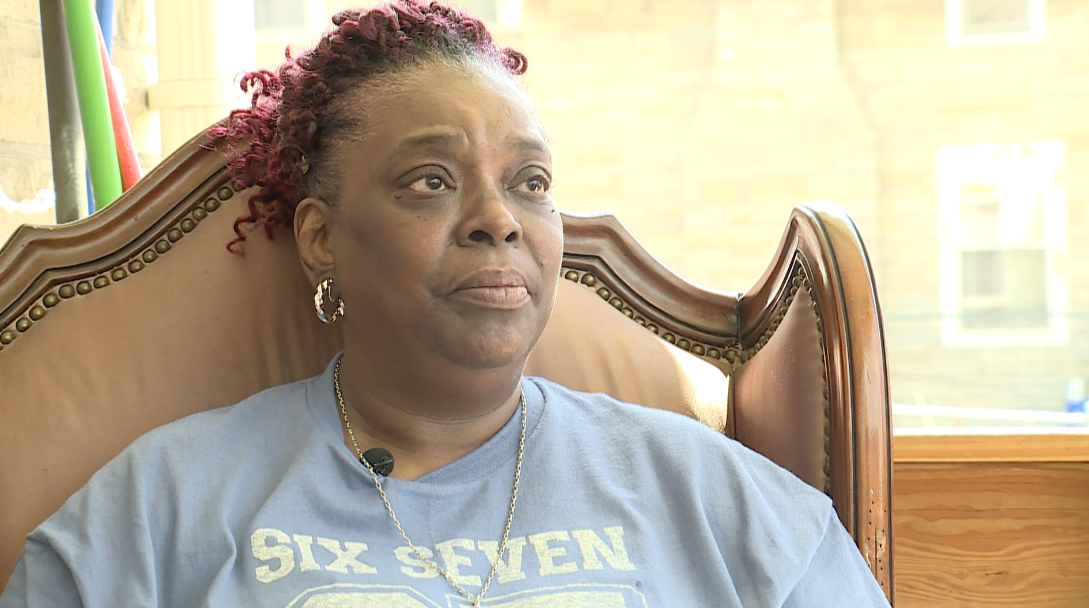
The morning of the incident, Lee was preparing to move into a new home with his wife and children, getting ready for a fresh start before a tragic end.
“He was really special, you know. He was one of a kind and everybody that he was around just loved him,” Qualls said. “It’s just a sad situation.”
Lee was 60 years old. His family said while his life was cut short, his flame will burn forever.
“My sister, she is really going through it, we all are,” Qualls said. “And I’m here for her, whatever she needs, when she need a shoulder to cry on, I’m here.”
Courtesy of Arthur Lee Jr.
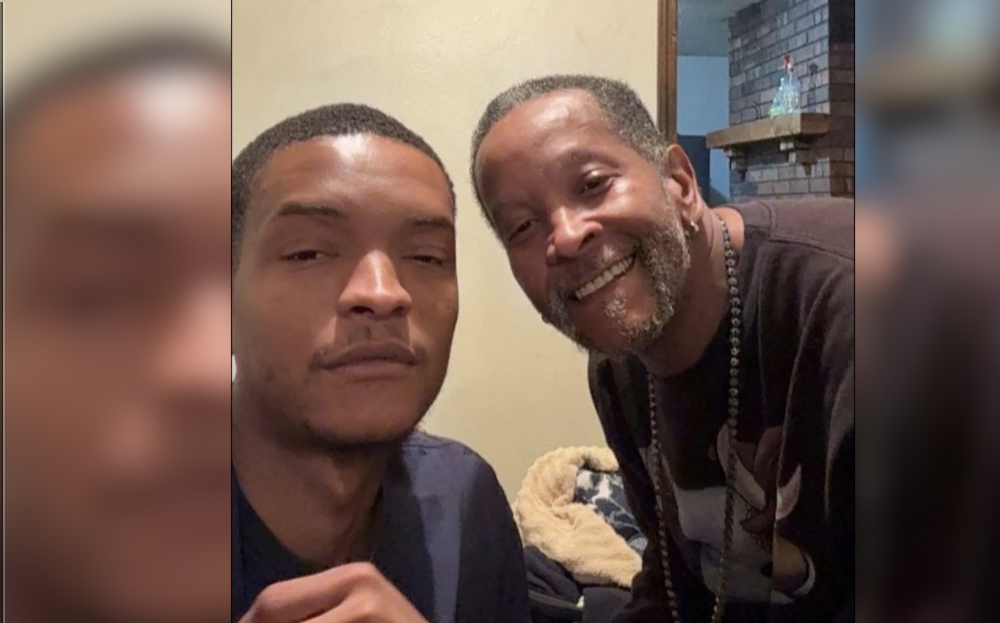
The family is pleading for answers and for the driver, who fled the scene, to come forward.
“I would pray that they would have some type of compassion, some type of heart, possibly turn themselves in,” Lee Jr. said.
This story was reported on-air by a journalist and has been converted to this platform with the assistance of AI. Our editorial team verifies all reporting on all platforms for fairness and accuracy.
—


WICHITA, KAN. – A Kansas man was sentenced to 120 months in prison for selling methamphetamine to an undercover police officer, according to the United State’s Attorney.
According to court documents, Wayne F. Fleming, 41, of Wichita pleaded guilty to one count of distribution of a controlled substance.
In May 2021, Fleming sold drugs multiple times to an undercover officer with the Wichita Police Department. Testing by the Sedgwick County Regional Forensic Science Center showed the total amount Fleming sold to the officer to be more than 200 grams of pure methamphetamine.
“Mr. Fleming was federally indicted in 2021, but before a plea agreement was reached, Mr. Fleming went to state prison to serve time for offenses unrelated to the federal case,” said U.S. Attorney Ryan A. Kriegshauser. “The Department of Justice doesn’t forget. Not long after his release from a state prison, Mr. Fleming is now an inmate in a federal prison.”
The Wichita Police Department investigated the case.

LEAVENWORTH, Kan. (KCTV) – A Kansas inmate will spend more time behind bars after a dispute over an extra slice of pizza turned physical.
Leavenworth County Attorney Todd Thompson announced on Wednesday, March 25, that Wyatt C. Parnell, 42, an inmate at Lansing Correctional Facility, was sentenced to 16 additional months.
Prosecutors indicated that the sentence is the result of an attempt to assault a corrections officer during a December 2019 dining hall confrontation.
What Happened
Court records noted that the incident happened around 6:30 p.m. on Dec. 26, 2019 – the day after Christmas – in the facility’s maximum-security dining room.
According to prosecutors, Parnell entered the dining hall, picked up a dinner tray and grabbed an extra slice of pizza from a separate tray.
A corrections officer repeatedly ordered him to put the tray down and leave the area; however, court documents revealed that Parnell refused.
When the officer moved to retrieve the tray and again ordered Parnell to leave, prosecutors said he yanked the tray away and threw it on the floor.
Parnell then tried to push past the officer to reach the serving line for another tray, according to court records.
The officer reported that they attempted to detain Parnell, but he resisted, leading to a physical fight.
The Charges & Sentence
Court records indicated that Parnell pleaded no contest to attempted aggravated battery. His new sentence will run consecutively – meaning it is added to the sentence he is already serving.
“Correctional facilities rely on order and compliance to maintain safety for both staff and inmates,” Thompson said. “This sentence reflects the seriousness of disregarding lawful commands and engaging in behavior that puts others at risk.”
Parnell’s Criminal History
Corrections records show that Parnell was already serving time for:
- Kidnapping
- Aggravated battery
- Two counts of criminal threat
Prison records also show a lengthy disciplinary history, including violations for:
- Contraband possession
- Fighting
- Threats
- Lewd acts
- Entering restricted areas
Copyright 2026 KCTV. All rights reserved.

Rubio meets G7 ministers in France as US leads on Iran — allies under fire for tepid response

DHS shutdown breakthrough comes at cost for Republicans as funding fights nears end

Dementia risk signals could lie in simple blood pressure readings, researchers say

Indiana coach Cignetti sends message to star transfer with pre-practice dress code lesson

Drone food delivery launches in New Jersey

Florida High School Football Rankings: Top 25 teams – Oct. 21

How old is Bo Nix? What to know about Oregon quarterback ahead of 2024 NFL Draft

Cleary's 21 help Le Moyne down Central Connecticut State 69-64 in OT

99th annual Pony Swim held in Virginia

Indiana Members Credit Union announced as new anchor tenant at Bottleworks District
DHS shutdown breakthrough comes at cost for Republicans as funding fights nears end

Rubio joins crucial G7 talks as Iran war set to dominate second day

A surprise resignation could open the door for an independent to win a Montana Senate seat

Video: Savannah Guthrie Says She Believes Her Mother Was Taken for Ransom

Stefanik grills University of Michigan leader on lack of audit after string of Chinese national arrests
-

 Detroit, MI1 week ago
Drummer Brian Pastoria, longtime Detroit music advocate, dies at 68
-

 Science1 week ago
How a Melting Glacier in Antarctica Could Affect Tens of Millions Around the Globe
-

 Movie Reviews1 week ago
‘Youth’ Twitter review: Ken Karunaas impresses audiences; Suraj Venjaramoodu adds charm; music wins praise | – The Times of India
-
 Science1 week ago
I had to man up and get a mammogram
-

 Sports6 days ago
IOC addresses execution of 19-year-old Iranian wrestler Saleh Mohammadi
-

 New Mexico4 days ago
Clovis shooting leaves one dead, four injured
-

 Texas7 days ago
How to buy Houston vs. Texas A&M 2026 March Madness tickets
-

 Tennessee3 days ago
Tennessee Police Investigating Alleged Assault Involving ‘Reacher’ Star Alan Ritchson