Kansas
Producers closely following developments as Kansas exports could take hit from tariffs


WICHITA, Kan. (KWCH) – There’s been a lot to follow with the promised rollout of tariffs and what their implementation could mean for U.S. trade with Mexico, Canada and China. If the tariffs go into effect, businesses and consumers are expected to feel the impact with two of Kansas’ biggest trade partners on the receiving end. While many unknowns and changes are unfolding, Canada, Mexico and China have said if the U.S. imposes tariffs on their nation’s goods, they would impose their own. That could impact Kansas’ biggest exports, aviation and agriculture.
For Clearwater farmer and producer Max Tjaden the daily work keeping him busy before the fields are ready includes keeping up with national news and what to prepare for.
“Got up [Monday] morning thinking, ‘Well, okay, [tariffs are] going to go into effect,’” Tjaden said. “The markets were down, not as much as I thought the would be, and then I just looked a little bit and now they’re all up, eight to 16 cents, depending on which grain it is.”
Although the tariffs on Mexico and Canada paused, the United States’ northern and southern neighbors are critical export markets for U.S. and Kansas agriculture. The nation as a whole and the state of Kansas are also sources of imports, including fertilizer from Canada.
“Big agriculture exchange going on, as well as just parts for farm equipment, tractors,” Tjaden said.
2023 Kansas Department of Commerce data shows that Mexico, Canada, Japan, China and South Korea were the top destinations for the state’s exports, aviation parts, meats and grains. The biggest component, which could be targeted if tariffs are placed on U.S. goods.
“What’s unusual about this is President Trump is going after first and foremost, our biggest allies, said Newman University Associate Professor of Management Dr. Larry Straub.
Straub said that if the U.S.’s proposed tariffs go into effect, that’s money that American businesses and potentially consumers will have to pay.
“Businesses sometimes will try to shield consumers from that for a short period or partially, but particularly for a 25% tax, you can’t do that for very long, if at all,” he said.
Tjaden said he can’t remember a significant impact from the tariffs in Trump’s first administration and sees their use now as more of a bargaining tool.
“A big deficit to the advantage of Canada and Mexico and other countries as well, and I think that’s probably what their plan is to get things a lot more equal than it is,” he said.
President Trump said he’s using tariffs to not just affect trade, but also immigration and illicit drugs.
Looking at the impact of tariffs in Trump’s first term, a USDA report from 2022 looked at retaliatory tariffs on US ag that happened in 2018, after the president’s first use of tariffs. The report sad that this led to a reduction in ag exports to the countries issuing the tariffs. For Kansas, that was about $1 billion, a 7% decrease.
Copyright 2025 KWCH. All rights reserved. To report a correction or typo, please email news@kwch.com



KANSAS CITY, Mo. — A Linn County, Kansas, man died in a single-vehicle crash early Thursday morning.
The Kansas Highway Patrol says just after midnight Thursday, a 41-year-old Centerville, Kansas, man was driving south on Mills Road about 6.5 miles southwest of La Cygne when he lost control of a 2012 Hyundai Elantra.
The vehicle left the roadway and struck an embankment, causing the Hyundai to overturn before coming to rest on its top.
The driver and sole occupant of the car, Edward Schultz, was pronounced deceased at the scene.
—
If you have any information about a crime, you may contact your local police department directly. But if you want or need to remain anonymous, you should contact the Greater Kansas City Crime Stoppers Tips Hotline by calling 816-474-TIPS (8477), submitting the tip online or through the free mobile app at P3Tips.com. Depending on your tip, Crime Stoppers could offer you a cash reward.
Annual homicide details and data for the Kansas City area are available through the KSHB 41 News Homicide Tracker, which was launched in 2015. Read the KSHB 41 News Mug Shot Policy.

We recognize you are attempting to access this website from a country belonging to the European Economic Area (EEA) including the EU which
enforces the General Data Protection Regulation (GDPR) and therefore access cannot be granted at this time.
For any issues, contact news@kake.com or call 316-943-4221.

TOPEKA, Kan. (WIBW) – A new mural under the Kansas Avenue Memorial Bridge will be unveiled Thursday afternoon in North Topeka.
A ceremony celebrating the mural will be held at 4 p.m. Thursday, July 2 under the bridge near Veterans Park, 131 N.E. Laurent St.
The finished mural, titled “Reflections of North Topeka,” is the culmination of a project that brought together artists, students, volunteers, local leaders and community members to create a lasting tribute to the history and spirit of North Topeka.
“Over the past several months, the bridge has been transformed into a vibrant outdoor gallery that tells the story of our community,” organizers said in a news release. “From the area’s Indigenous roots and the Kaw Nation to the development of Eugene, the growth of North Topeka, and the revitalization of today’s NOTO Arts & Entertainment District, the mural celebrates the people, places, and events that shaped our community.
“What makes this mural truly special is the community behind it. More than 90 volunteers helped paint this project, proving that when people come together with a shared vision, incredible things can happen.”
The celebration will include:
- The official unveiling of the completed mural
- A brief program with remarks from the mural team
- A ceremonial ribbon cutting
- An opportunity to meet the artists and learn about the stories behind the artwork
- Complimentary refreshments
Led by Project Manager and NOTO Arts Administrator Staci Schnacker, lead artist Zandra Sneed-Dawkins, and supporting artists DeAna Morrison, Jordan E. Brooks, and Pradeep K. Bangalore, “this mural is more than public art,” organizers said — “it’s a celebration of the people, places, and history that make North Topeka unique.
This project was supported in part through the National Endowment for the Arts, ArtsConnect Topeka, the City of Topeka, Shawnee County Parks + Recreation, and many other community partners, businesses, artists, and volunteers.
Copyright 2026 WIBW. All rights reserved.
-

 Lifestyle6 minutes ago
Why Chanel Is Acquiring Charvet
-
 Politics9 minutes ago
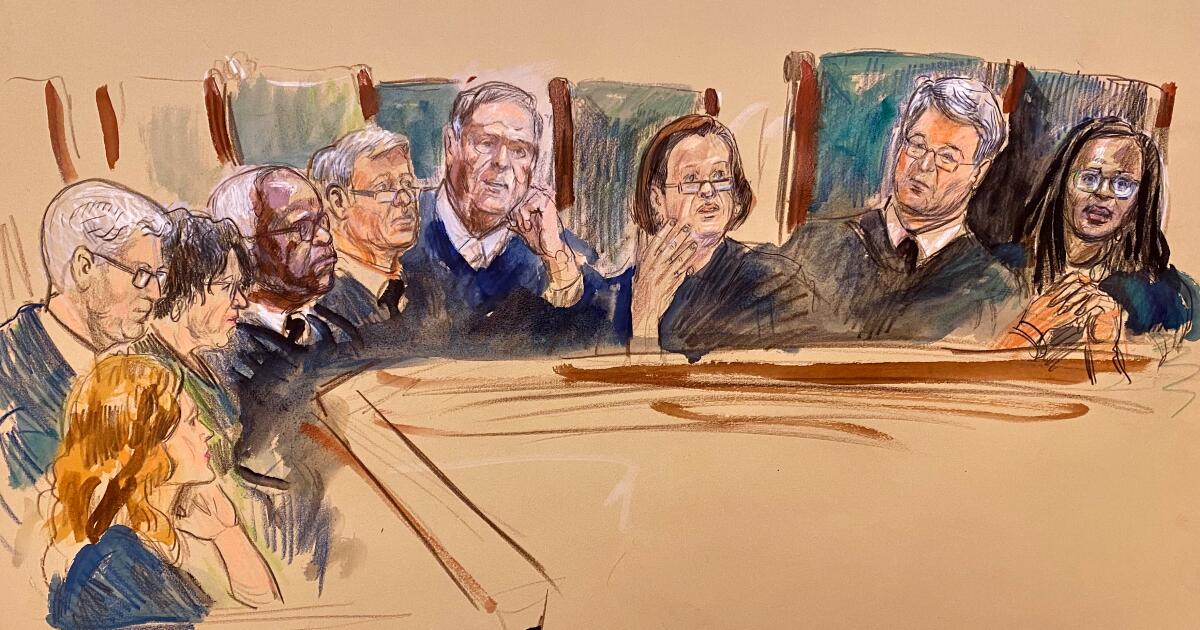
How Roberts led a fractured Supreme Court to wins for the right and defeats for Trump
-
 Science14 minutes ago
Contributor: Alcohol should be stigmatized like smoking
-
 Sports21 minutes ago
Thousand Oaks native Claire Liu finally reaches Wimbledon’s third round, will face Coco Gauff
-

 World29 minutes ago
Could water become a flashpoint between Islamabad and New Delhi?
-
 News54 minutes ago
Ukraine latest / Limits of military might / Can major powers regain dominance? : Sources & Methods
-

 Los Angeles, Ca2 hours ago
Juvenile charged with murder after 4-month-old Claremont infant thrown to her death
-

 Detroit, MI3 hours ago
Silence from Jalen Duren’s camp is what the Pistons want to hear

