Iowa
Iowa Libertarian candidate for Congress ready to fight ballot access objection


DES MOINES, Iowa (Gray Media Iowa Capitol Bureau) – Sunday at the Iowa State Fair, one Iowa Libertarian congressional candidate took his turn at the Des Moines Register Political Soapbox – and says he’s ready to fight. That’s because some Republicans say he didn’t follow the rules to get on the November ballot and they want his name removed.
Upon taking the stage Sunday, Marco Battaglia called on Congressman Zach Nunn to compete with him in a wrestling match. “I invited Zach Nunn here to a no holds barred wrestling match. Loser leaves the ballot. And looks like there’s only one guy here,” Battaglia said.
Battaglia is running in central Iowa’s 3rd Congressional district, and is one of three Libertarians to face Republican objections to them being on the ballot.
Also facing objections are Charles Aldrich, who’s running in northwest Iowa’s 4th Congressional District and Nicholas Gluba, who’s running in eastern Iowa’s 1st Congressional District.
“The further they draw this out, like they’re really kind of screwing with the electoral process. They’re screwing with polls. They’re screwing with debates,” Battaglia said.
After caucuses, parties have to hold county conventions where they’ll choose their delegates for the state convention. The objection, which was made by Republicans, says Libertarians skipped county conventions and went right to state convention and selected candidates.
Battaglia says the party did have county conventions, but they did them in one centralized location.
“It was in Polk County, but the delegates broke out from their specific counties. So, they still had a meeting of people from these counties that nominated us,” he said.
Libertarian presidential candidate Chase Oliver backs them up. “This idea that there wasn’t conventions being held for their party is ridiculous because I know Iowans who were at these conventions who were there and so for me it should be as simple as saying, ‘hey, was there a convention? Yes, there was. You’re good to go’,” Oliver said.
Battaglia says this the way they’ve done it in the past and didn’t face objections
“I think they’re just really confused of how we just all of the sudden didn’t overnight have 99 counties of organization of people working for free to do this work that, you know, the average person doesn’t care about,” he said.
Later this month, a board made up of Secretary of State Paul Pate, Attorney General Brenna Bird, and State Auditor Rob Sand will make the decision on if he and two other libertarians can be on the ballot.
If he’s kicked off, he says they’ll continue to fight.
“If we do fight it, it’s going to be cause it’s a legitimate legal concern. We’re going to go through the court system. We’re not going to storm the golden dome and like pee on the Governor’s rug or something,” Battaglia said.
—
Conner Hendricks covers state government and politics for Gray Media-owned stations in Iowa. Email him at conner.hendricks@gray.tv; and follow him on Facebook at Conner Hendricks TV or on X/Twitter @ConnerReports.
Copyright 2024 KCRG. All rights reserved.



What happens when you call 911?
Here’s everything a dispatcher does to get emergency services to your location when you dial 911.
Miguel Fernandez, NorthJersey.com
A 14-year-old Dyersville girl has died from injuries caused by a watercraft collision on Clear Lake on the 4th of July.
The crash involved five people in two personal watercrafts and occurred around 5:30 p.m. near the McIntosh Woods State Park boat ramp on a part of the lake called Little Lake, according to a release from the Iowa Department of Natural Resources.
Passengers on a nearby pontoon immediately helped the victims before the Iowa DNR water patrol and conservation officers, Ventura and Clear Lake fire departments, Iowa State Patrol, Clear Lake Police Department and the Cerro Gordo County Sheriff’s Office came on scene.
The release does not give the names of the four children involved.
A 35-year-old woman, an 11-year-old girl and a 12-year-old boy, all from Greenwood, South Carolina, were treated at the Mercy-One Medical Center in Mason City and released on July 4. A 15-year-old Mason City girl was transferred to the Mayo Clinic in Rochester, Minnesota, and is in serious condition.
While the investigation is ongoing, Iowa DNR officers have ruled out alcohol or other impairments as contributing factors to the crash, the release states.
Isabelle Foland is a communities reporter for the Register. Reach her at ifoland@registermedia.com.

As the Iowa State Cyclones get set for the 2026 campaign, the program is also looking toward the future and rebuilding a program that was hit hard by departures.
Last season, Iowa State battled a lot of injuries, but was still able to have a pretty good year. However, following the campaign coming to an end and before bowl season kicked off, the team lost head coach Matt Campbell to the Penn State Nittany Lions.
As expected, a lot of players from the program ended up leaving, leaving the team with nearly an entire roster to rebuild. However, new head coach Jimmy Rogers has been able to come in and make a good impression early on.
While Iowa State might not be as talented as they were last year, they have a good coach and a lot of depth. The Cyclones will be hoping that he can develop and get the most out of some of these new players, but the team certainly won’t be competing for a Big 12 title next season.
For Iowa State, with at least this year being a rebuild for the program, they will be looking toward the future. With that comes a need to recruit well, and that is something Rogers and the staff have been impressive at so far.
Iowa State Recruiting Class Shaping Up Nicely
Following the four-star addition of Chuck Alexander, who flipped from the Louisville Cardinals, the 2027 recruiting class is looking really strong right now for Iowa State. According to Rivals, they rank 49th in the country right now, and that is a strong place to be for the team.
With Alexander being the new top recruit for the team, he will be joining a class that has been highlighted by some good offensive talent so far. Running back Isaiah Hansen is regarded as a very good player at his position, and the team also has offensive lineman Will Slagle.
With the three top recruits so far being offensive players, a future core might be starting to come together for Rogers and the program. While the team might be a bit more defensive-minded this year, there is clearly a focus on improving offensively for the future.
Overall, with time still to go, this class could continue to get better. However, it is really encouraging to see what Rogers and the staff have been able to accomplish so far. Recruiting will be key for Iowa State to get back to where they want to be, and they are off to a strong start.
Add us as a preferred source on GoogleFollow

SOLON, IOWA — As holiday weekend crowds head to Iowa lakes and rivers, state and national law enforcement agencies are urging boaters to make safety a priority — especially when it comes to alcohol and drugs on the water.
The push is part of Operation Dry Water, a national awareness campaign aimed at deterring impaired boating, reducing alcohol and drug-related incidents, and enforcing Iowa’s boating while intoxicated laws.
Iowa Department of Natural Resources officials say the holiday weekend is a time when they often see a spike in enforcement activity. Last year, the Iowa DNR reported interacting with more than 1,200 vessels and issued 382 citations.
Rachel Allis, the Iowa DNR’s boating education coordinator, said conditions on the water can intensify impairment.
“We don’t realize the effect the sun, water, the waves have. Simply stated, you can get dehydrated much quicker when you’re out on your boats,” Allis said. “So, all of those compounds with medication and everything else, so impaired drivers are really what we’re on the lookout for and what we’re concerned for. Nationally, about a third of all incidents occur with an impaired driver.”
At Lake Macbride State Park, boaters and paddlers said they’re also taking steps to avoid trouble on busy waterways.
“All of us love to be out here in nature and Macbride is so pretty. So, it’s just a good togetherness function,” said Angela Ranaud, who was kayaking during the holiday weekend. “Fisherman, we try to stay away from them, so we don’t interfere their catching. We try to stay away from the wakes; they tend to capsize. Other than that kayaks a pretty low danger type of sport, so we just like to be out in the water.”
Corey Scott, a holiday boater at Lake Macbride, said the lake’s horsepower restriction helps keep speeds down between Memorial Day and Labor Day, but he still watches closely for smaller craft and stressed the importance of sober operation.
“Macbride is nice and easy, 9.9 horsepower between Memorial Day and Labor Day,” Scott said. “So, that’s the nice part you don’t have people speeding up and down and everywhere, so really the only thing to look out for is anybody on paddleboats, kayaks, things like that. Again, out here people say well you’re only going 9.9 so it’s not ‘hey you can have a few beers’ and stuff like that; but that’s the main thing to be aware of. Making sure you have a sober driver and just be aware of your surroundings.”
To learn more about boater safety visit Iowa’s DNR website.
-
 Sports4 minutes ago
‘I wish she was alive.’ Eliezer Alfonzo has emotional day as Dodgers lose to Padres
-

 World12 minutes ago
Photos: Khamenei funeral procession under way in Tehran
-
 News37 minutes ago
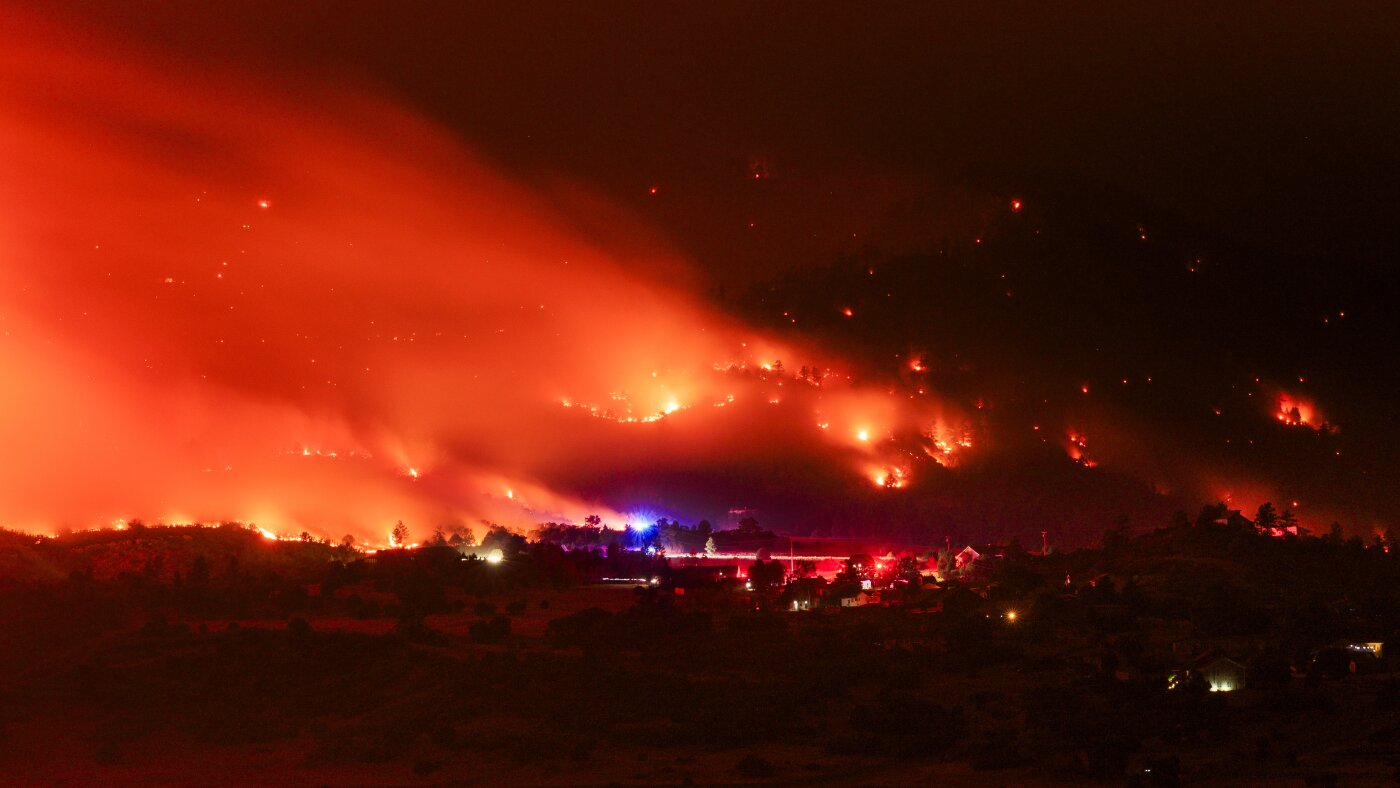
Thunderstorms, heat and wind will hamper efforts to contain Colorado wildfires
-

 New York2 hours ago
10-Minute Challenge: The Ceiling at Grand Central
-

 Los Angeles, Ca2 hours ago
1 killed, multiple people injured in Tarzana 4-car crash
-

 Detroit, MI2 hours ago
Power outage forces flaring at Marathon’s Detroit refinery; portion of Schaefer Road closed
-

 San Francisco, CA3 hours ago
San Francisco’s fireworks show ends in hours of gridlock involving Waymo cars
-

 Dallas, TX3 hours ago
FIFA Fan Fest in Dallas paused due to lighting in the area Sunday evening

