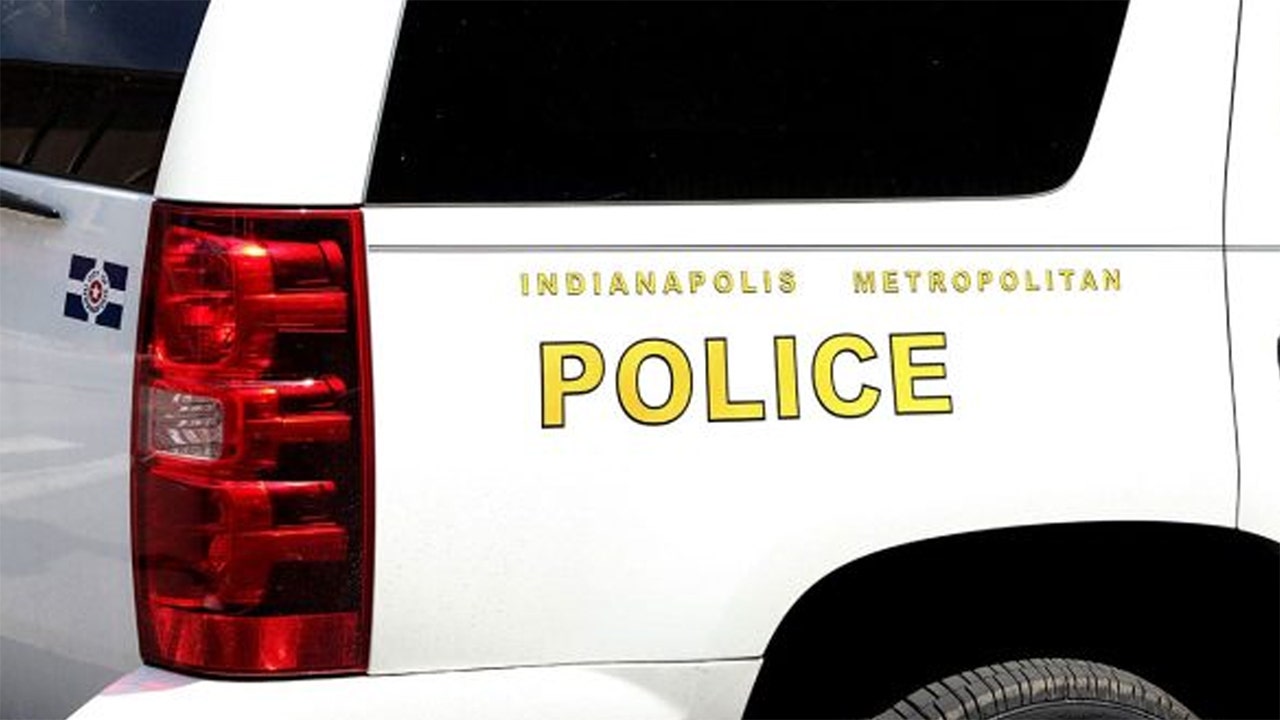
Two people were killed in a shooting that injured at least seven in Indianapolis, Indiana, early Saturday morning, according to police.
Officers responded to the intersection of West Market Street and North Illinois Street at around 1:30 a.m., the Indianapolis Metropolitan Police Department said.
“Our thoughts are with the victims, their families, and the officers & first responders who rushed to the scene,” police wrote on X.
CHICAGO DRIVE-BY SHOOTING LEAVES AT LEAST 4 DEAD, 14 WOUNDED
Advertisement
At least seven people were shot, including two people who died.(Raymond Boyd/Getty Images / Getty Images)
Several roads were closed in the downtown area as officers probed the scene.
Drivers and pedestrians were urged to avoid the area.
SOUTH CAROLINA DEPUTY SHOT AND KILLED IN AMBUSH, SHERIFF SAYS
Officers responded to the intersection of West Market Street and North Illinois Street at around 1:30 a.m.(Getty Images)
Advertisement
No information on a potential suspect or what led to the shooting has been released as of early Saturday morning.
The conditions of the surviving victims are also unknown at this time.
Several roads were closed in the downtown area.(Getty Images)
this season, and there’s been an increase in tick-bite-related emergency room visits, according to state health officials.
The deer tick — also known as the blacklegged tick — can carry not only Lyme disease and other pathogens, but also Powassan virus, a fairly recent discovery which has no treatment and can leave behind permanent neurological damage.
Advertisement
From 2008-2022, Cass and Itasca counties ranked highest for reported cases of Powassan — at six to seven cases each, according to the Minnesota Department of Health, with the west side of Gull Lake considered a prime spot for the disease. During that same time, Aitkin and Morrison counties had two to three reported cases, and Crow Wing County had one reported case.
Contributed / Minnesota Department of Health
Elizabeth Schiffman, supervisor of the Vector-borne Diseases Group at the Minnesota Department of Health, said this lakes area presents a whole host of risks, especially this time of year, thanks to early summer weather with the combination of tick season and increased outdoor traffic.
“Traditionally, we kind of say the end of May through about the middle of July is the highest-risk time of year for ticks and tick-borne diseases,” she said.
Advertisement
Schiffman said diagnostics for Powassan are tricky because by the time someone may feel symptomatic enough to seek treatment, they may have already had the virus pass through their system, and those who are symptomatic largely tend to have more generalized symptoms like fevers, headaches or muscle aches.
“We didn’t detect our first case in Minnesota until 2008, so it’s still relatively uncommon,” she said. “It’s also not one that’s regularly included in a lot of the tick-borne disease panels that most providers use from commercial laboratories, so diagnostics can be a bit more limited.”
Schiffman said the peak year for cases in Minnesota was 2024, with 14 cases. Last year there were eight. The diagnostic process comes after more obvious explanations have been ruled out, and usually involves some kind of serologic testing, or looking for antibodies. Polymerase Chain Reaction (PCR) testing is also available.
“The bacteria that causes Lyme disease is found in about one of three ticks,” Schiffman said. “And something like Powassan is found in just maybe, like, you know, a couple percent of ticks. It’s a much smaller, much smaller proportion of ticks that are infected.”
Matthew Aliota, a professor at the University of Minnesota Twin Cities in the College of Veterinary Science, studies arthropod viruses.
Advertisement
Blacklegged tick, left, and wood tick or dog tick compared. The blacklegged tick, formerly called the deer tick and generally smaller than wood ticks, is the only one that carries Lyme disease, although wood ticks can carry other diseases such as Rocky Mountain spotted fever.
Contributed / U.S. National Park Service
“In the state overall, we think about 5% of ticks are positive,” he said, regarding the proportion of Powassan-carrying ticks.
Aliota said its relatively uncommon but can leave debilitating aftereffects.
“It’s a virus that can invade the central nervous system and go to your brain, with severe outcomes,” he said. “If you survive, you can have long-lasting impacts to kind of your overall functioning from a memory standpoint and from a cognitive standpoint.”
Advertisement
The virus ‘affected everything’
Teal Johannsen said her father, Jeffrey, was a hunter, builder and business owner when he caught Powassan near Gull Lake as an otherwise healthy and active outdoorsman. He died in 2023 at age 69.
“My dad was a very healthy, strong guy, and he pretty much was never sick until this happened, and then it was pretty much just a multi-system collapse for him,” Johannsen said. “The virus and the aftereffects of the virus just affected everything.”
Jeffrey suffered neurological consequences — more specifically, as Johannsen indicated doctors told her family,
encephalitis,
Advertisement
or swelling of the brain. She said her family worked tirelessly to get care that would alleviate his symptoms. They consulted neurologists, sleep experts and infectious disease doctors.
“He couldn’t eat, he couldn’t sleep, he slowly stopped being able to … he wouldn’t want to talk to anyone,” Johannsen said. “He had horrible, horrible anxiety, which was totally unusual for him. He had a really hard time leaving the house. He stopped being able to make eye contact with people. It just kind of slowly took over his ability to just function independently and be himself.”
The Johannsens were not unfamiliar with Minnesota wilderness, and certainly not Jeffrey. Johannsen said her father taught her tick safety, and she has early memories of him instructing her how to stay safe on the property.
“We would always go out in the woods together, and he taught me how to be careful for ticks, so it’s not like he was unaware of how to be out in the outdoors in Minnesota,” Johannsen said. “He knew how to watch out for ticks, but we had never heard of this, and we definitely didn’t know how devastating it could be.”
There is no treatment for the Powassan virus, so Johannsen said there’s a real emphasis to place on preventive measures like wearing long pants and close-toed shoes outdoors, as well as utilizing effective repellents. She and her mother, Susan Johannsen, are working to educate their family members who share their multi-residence Gull Lake area property, including purchasing the pesticide
Advertisement
Permethrin
for use on the grounds.
Schiffman said she usually refers people to the Environmental Protection Agency website for guidance on which repellents are most effective. Permethrin is one of the proven acting chemicals. When shopping in-store, Schiffman said there is usually an EPA registration indicator on the back of these products.
“It says EPA reg number, and then a little series of digits,” she said. “If it has that on the bottle, you know that repellent has been tested, you know it’s going to work the way it says it’s going to work if you’re using it according to the label direction. Some of them you need to reapply more often, like a sunscreen; some of them last a bit longer. So really, the quickest way I would say is to look for that EPA registration number on the label, and if you’ve got that, you’re on the right track.”
Johannsen said she’s also since learned not all ticks that can carry Powassan are full-grown.
Advertisement
“Not all ticks are like the visible ones that you see crawling around,” she said. “The nymph stages can be as tiny as a poppy seed, and they can also carry the virus and infect people; they’re able to break skin and cause infection that way.”
Johannsen said her father is very missed. He was a dedicated builder and loved his job so much that he often took it home, and to other people’s homes as well, given the nature of his work.
“He basically just always had jobs because people would spread the word of what a good job he did on their remodels or builds,” she said. “He was the kind of person that would walk into your house and do an assessment for free because he couldn’t help looking at all the little areas of improvement on your house.”
Johannsen said the property’s standing was evident of the real love and knowledge he possessed of his craft, as well as the level of care he operated with. He maintained the 100-year-old property with specialized needs for use by a lot of extended family. The Johannsens are slowly learning to pick up where he left off.
“He was the main property caretaker that was keeping the place running, because of his knowledge and skill set,” Johannsen said. “He could just basically build anything, fix anything, and so after he died, we’re kind of figuring out how to manage the property.”
Advertisement
An adult female blacklegged tick (Ixodes scapularis). Also known as a deer tick.
Callaway County Sheriff’s Office deputies arrested two Mexico, Missouri, residents on suspicion of possession of 10 pounds of methamphetamine, according to a social media post from the Callaway County Sheriff’s Office.
Around 10:18 p.m. on Wednesday, deputies conducted traffic stops on Interstate 70 regarding an ongoing narcotics investigation by the Sheriff’s Office investigators assigned to the MUSTANG Drug Task Force, according to the social media post.
Deputies made contact with Louetta Dorsey, 43, and Brian Wilson, 41, of Mexico, in their vehicles during the investigation, according to the social media post. The two suspects were in separate vehicles, and one was allegedly acting as a decoy vehicle for the other, according to court documents.
Advertisement
During the traffic stops, deputies located approximately 10 pounds of methamphetamine. Dorsey and Wilson were arrested and taken to the Callaway County Jail, according to the social media post.
Dorsey has been charged with second-degree drug trafficking and possession of a controlled substance, according to court records. Charges for Wilson were not appearing in Missouri’s online court record system as of Friday afternoon.
A probable cause statement filed in Dorsey’s case indicates that both she and Wilson were under investigation on suspicion of distributing large amounts of methamphetamine throughout Audrain, Boone and Callaway counties.
Members of the MUSTANG Drug Task Force worked with the Audrain County Sheriff’s Office, East Central Drug Task Force and the Boone County Sheriff’s Office-MO to execute additional narcotics related search warrants, according to the social media post.
The results of the search warrants revealed firearms and drug paraphernalia commonly used for drug trafficking, according to the social media post.
NEBRASKA CITY, Neb. (KOLN) – A piece of Underground Railroad history is reopening on Juneteenth after severe flooding forced it to close seven years ago.
The Mayhew Cabin offered shelter to people escaping slavery before the Civil War. Visitors can now walk through the same doors they did.
Family history connects to cabin
Darryl Hogan, president of the Mayhew Cabin Foundation, shares how his family escaped slavery in 1859.
“There was a slaveholder who held my third great-grandmother and a few other of the escaped slaves who had passed away, and they were going to be sold as property,” Hogan said from Canada. “So it was almost, in either a death sentence or a worse imprisonment than they had already had.”
Advertisement
The Mayhew family and abolitionist John Brown offered strangers a chance for freedom.
“En route, one of the enslaved people was pregnant and gave birth. So they are affectionately known as the 12 who passed through here,” said Doug Kreifels, board treasurer.
Cabin’s history dates to 1855
The Mayhew Cabin is one of Nebraska’s oldest structures, built in 1855 as the home of Allen B. Mayhew and his wife Barbara Ann. Barbara’s brother, John Kagi, lived there briefly as well.
Kagi helped abolitionist John Brown lead the enslaved people from Missouri to the cabin, as they escaped to Canada.
Flood damage closed site for seven years
Kreifels grew up learning about the cabin’s history.
Advertisement
“I remember when I went through that cabin and that cave and what an impact it had on me,” he said.
A flood in 2019 closed the site for seven years.
“And not only did it reach… as high as this overfill. I mean, it came up over the bank and flooded into the museum as well and caused some damage there,” Kreifels said.
Community effort restores cabin
The Mayhew Cabin Foundation restructured its board and used community grants to recruit Butch Bovier, a historical craftsman.
“Collectively, I think we bring a lot of skill sets together and goodwill,” said Robert Nelson, vice president of the board.
Advertisement
“They bring their dreams to me and I make them happen,” Bovier said.
Bovier helped restore the cabin.
“And that was kind of neat because what we did 20 years ago held up very well. In fact, it held up a lot better than we thought,” he said.
The team worked on the cottonwood logs.
“The logs are this wide, you don’t replace it because that much is bad. So we used a modern product to do some of that. In some cases, we just scraped it smooth,” Bovier said.
Advertisement
The team partially restored John Brown’s Cave. The cabin was moved to its current location in the 1930s from its original site. The owner at the time dug a tunnel-like system that leads to the ravine.
“It’s a tool that we use to help educate everyone who might have an interest in understanding what it might have been like for an enslaved person seeking freedom,” Kreifels said.
Volunteers make reopening possible
The Mayhew Cabin and John Brown’s Cave would not be able to open without the hard work of volunteers. For months, volunteers cleaned up the site and helped Bovier fix the cabin logs, cave and roof. One of them is Jason Hein, who moved to Nebraska City from California. Hein was looking for an opportunity to volunteer in the community and stumbled upon a Facebook post asking for extra hands to help at the Mayhew Cabin. His workplace Burr Farms donated machinery and services toward the efforts.
“You know, we don’t want things falling off the map. We want it to be there for future generations,” Hein said.
“And since that weekend, I’ve been out here Saturdays and Sundays every week. If there isn’t a whole bunch of hands trying to get something done, it’s not going to get done,” he said.
Advertisement
Volunteers have been preparing to reopen the site for more than three months.
“So, I mean, we’ve just literally been here, you know, cutting down trees or trimming trees and then people kind of walking by and seeing and asking, hey, what are you up to?” Nelson said.
The cabin will reopen on Juneteenth.
“And, it was just a matter of this is something that we need to do as a community. Let’s just do it and, make the world a little bit better place,” Hogan said.
Lane Trail and ‘Bloody Kansas’
The Mayhew Cabin was part of the Lane Trail on the Underground Railroad. At the time, the Kansas-Nebraska Act was formed and pro-slavery and abolitionists fought to sway the public toward their beliefs, giving it the nickname “Bloody Kansas.” Abolitionists in southeast Nebraska aided these efforts and helped slaves escape on the Lane Trail.
Advertisement
“It’s an incredible building, but it’s kind of the launch. It was seen as the southern terminus of the Army of the North marching into Kansas, but then also kind of the beginning of the Underground Railroad,” Nelson said.
Nelson, a former Omaha World Herald journalist, researched the Lane Trail extensively. He grew up in Falls City, Nebraska and found out his family has a history of aiding abolitionists.
“The successful fight to stop (slavery), based in Nebraska, or by the people who are involved with this Underground Railroad, is the reason the South secedes. They can’t expand anymore. You know, putting up the wall of Kansas really is what starts the Civil War. So that idea that’s that that’s the Civil War before the Civil War, and Nebraska played a big part of it. I think is a story that’s lost,” Nelson said.
Work remains on the site. The nonprofit wants to repair the museum building and other historic buildings on the property.
Juneteenth event details
A Juneteenth event starts at 7 p.m. Friday at the Mayhew Cabin in Nebraska City. People will have the opportunity to hear speeches from Butch Bovier, Robert Nelson and Darryl Hogan. The event is open to the public and free. There is outdoor seating, but people are welcome to bring lawn chairs. Live music will be provided by West Street Wranglers.
Advertisement
Refreshments will be served at the Hidden Falls Cave Event Center. The Mayhew Cabin is located at 2012 4th Corso in Nebraska City. Questions can be directed to Doug Kreifels at (402) 209-4060.
Click here to subscribe to our 10/11 NOW daily digest and breaking news alerts delivered straight to your email inbox.