Indianapolis, IN
Marion County launches online database to find lead contamination


(MIRROR INDY) — Nearly a half-century after the federal government banned the use of lead in many consumer products and after the closure of lead refining smelters in neighborhoods around the city, Indianapolis still faces a lead contamination problem.
That’s concerning, because the toxic metal can damage the brain and kidneys and cause other health conditions in people exposed to it, especially kids. In 2023 alone, blood testing identified more than 70 kids in Marion County with blood lead levels high enough for health investigators to get involved.
At the Lead-Free Indy Summit on Sept. 19, the Marion County Health Department and IU Indianapolis announced a website called Lead Advisor. They hope the site will help make it easier for Indianapolis residents to learn where lead contamination has already been found and where to get the resources to ensure their homes are lead free.
The website “will eliminate barriers to healthy housing, something that everyone in our city deserves, as well as intervening on the problem before it even begins,” Mayor Joe Hogsett said at the summit. “It is a productive first step toward our vision of a lead free Indianapolis.”
According to the county health department, local lead contamination is mainly found in older homes that contain paint, plumbing or fixtures made with lead. Contamination can also come from smelters, like the Avanti Superfund Remedial Site in the Hawthorne neighborhood on the west side and the American Lead site in the Martindale Brightwood neighborhood on the near east side.
In many cases, people don’t know about the lead threat in their homes or neighborhoods until after they’ve been exposed. For Dr. Virginia Caine, director and chief medical officer of the Marion County Public Health Department, that is much too late.
“We can’t wait to tackle this problem after children have been poisoned,” she said at the summit. “We’ve got to reach them before this environmental hazard impacts them, and that means a lot of community education.”
How to use Lead Advisor
The Lead Advisor website lets residents type in the address of a home and check whether it has been inspected for lead. If it has been tested, the site displays inspection results and any violations found.
The site also will allow residents, school administrators and child care providers to schedule lead inspections and parents to schedule lead tests for their children. The website’s Lead Advisor chat function uses artificial intelligence to answer questions about the services offered by the county. The advisor can answer questions in multiple languages.
“I’m excited about the fact that you can look up and know in advance (a rental unit) has no lead contamination, or if I’m moving into a home, that it’s got no lead contamination,” Caine said.
The website is operational but is a work in progress. Right now, the site contains a few years of Marion County inspection data and does not contain the locations of smelters and other lead sources.
According to Karla Johnson, who is the county health department’s administrator, the website ultimately will be expanded to include more lead inspection data.
Finding all the lead sources may be difficult
Residents who live with or near lead contamination often have mixed feelings about testing, because they’re worried they may be left holding the bag for paying for cleanup.
Elizabeth Gore, a member of the Martindale Brightwood Environmental Justice Collaborative, said some residents did not want to be attached to the stigma of a polluted neighborhood.
Her neighborhood is located near the American Lead site, 2102 Hillside Ave., where a lead smelter operated between 1946 and 1965.
According to federal documents, the Indiana Department of Environmental Management knew about pollution there as early as 1980s and was in talks with the owner, Texas-based NL Industries, to clean up the site between 1996 and 2003. The negotiations failed, and the EPA ordered the company to clean up the site, which it did between 2005 and 2007. A decade later, lead from the American Lead plant was found in homes near the plant, and another cleanup was launched.
But despite the knowledge that lead contamination could be present, some people refused testing.
“People didn’t want you to come into their homes and grounds,” Gore remembered. “They didn’t want to be penalized for having lead.”
When home lead inspections are undertaken, homeowners can be held responsible for fixing the issues that inspectors find. That can create a tough situation for some residents, in a neighborhood where the median household income is about $24,200.
Patti Daviau has lived across the street from the Avanti Remedial Superfund site, 502 S. Harris Ave., for more than 50 years. She thinks the website is a good starting point, but believes the city is focusing too much on household sources of lead and not enough on finding where lead was used industrially.
“I just want to scream it from the rooftops,” Daviau said. “You can clean up all the lead paint inside the house, but if the main problem is the environment, then those kids are still exposed, those families are still exposed and new families will come and be exposed.”
More resources for lead contamination
To check whether your home has been tested for lead, head to the Lead Advisor website and enter your address. If it has been tested, results will appear at the bottom of the page.
Home lead inspections through the Marion County Public Health Department Lead Poisoning Prevention Program can be scheduled via the site’s Contact Us tab. They can also be scheduled by phone at 317-221-2155 or via email at leadct@marionhealth.org.
To test the soil around your home for lead, head to any of these 18 Indianapolis Public Library locations around the city to pick up a community science kit, which comes with instructions on how and where to collect the samples.
For more information, call the health department at 317-221-2000 or email healthdept@marionhealth.org.
Mirror Indy reporter Enrique Saenz covers west Indianapolis. Contact him at 317-983-4203 or enrique.saenz@mirrorindy.org. Follow him on X @heyEnriqueSaenz.



Got story updates? Submit your updates here. ›
This episode of the BEO Show covers a variety of business topics, including the OWMBD Vendor of the Month, an update on the collapse of Saks Global, a new OMWBD certification management system, a look at the business of comedy with Sherri Shepherd, a salute to the female-owned design firm IDO, Inc., and tax and overtime tips from the Indiana CPA Society.
Why it matters
The BEO Show provides a comprehensive overview of important business news and trends impacting the Indianapolis and Indiana business community, covering topics ranging from minority-owned business development to the evolving retail landscape to the growing comedy industry.
The details
The episode features interviews with several business leaders and experts, including Jill Hall of ReproGraphix, Inc., William Stern of Cardiff, David Fredricks of OMWBD, comedian and talk show host Sherri Shepherd, and the principals of the female-owned design firm IDO, Inc. The topics discussed offer insights into the challenges and opportunities facing businesses of all sizes in the region.
- The BEO Show airs on Sunday, April 12, 2026.
The players
Jill Hall
Owner of ReproGraphix, Inc., a print and graphics company.
William Stern
CEO and Founder of Cardiff, a business consulting firm.
David Fredricks
Director of the Indianapolis Office of Minority and Women Business Development (OMWBD).
Sherri Shepherd
Talk show host and business woman.
Amanda J. Medlen
Principal and CEO of IDO, Inc., a female-owned design firm.
Lee A. Boyland
Principal and COO of IDO, Inc., a female-owned design firm.
Jennifer Knotts
CFO of IDO, Inc., a female-owned design firm.
Courtney Kincaid
President of the Indiana CPA Society.
Got photos? Submit your photos here. ›
What they’re saying
“We must continue to support and empower minority and women-owned businesses in our community.”
— David Fredricks, Director, OMWBD
“The business of comedy is evolving, and comedians need to think strategically about building their brands and revenue streams.”
— Sherri Shepherd, Talk Show Host, Business Woman
“As a female-owned firm, we are proud to design spaces that reflect the diversity and creativity of our community.”
— Amanda J. Medlen, Principal/CEO, IDO, Inc.
What’s next
Viewers can find more information about the topics covered in the episode on the websites and social media pages of the featured guests and organizations.
The takeaway
The BEO Show provides a valuable platform for showcasing the vibrant and diverse business community in Indianapolis and Indiana, highlighting the challenges, opportunities, and innovative solutions that are shaping the region’s economic landscape.
Indianapolis, IN
New UIndy degree program hopes to address Indiana’s shortage of school psychologists

INDIANAPOLIS (WISH) — The need for school psychologists is growing across Indiana, fitting a trend school districts are seeing nationwide.
The National Association of School Psychologists recommends a ratio of one psychologist to 500 students. According to its data for the 2024-25 school year, Indiana had one psychologist per every 1,869 students.
This fall, the University of Indianapolis is launching a new school psychology program, specifically targeting people already working in schools.
It’s a three-year Education Specialist Master’s Degree. Candidates would complete evening classes and other asynchronous work for two years, and work in schools for another year.
Interim Director Aerin Welch says they’re hoping to fill the gap of School Psychologists in Indiana.
“One of our goals is to work with districts,” Dr. Aerin Welch, the program’s interim director, said. “[They may] have people within their districts who…want to stay within their school communities, but also want a change of pace and to try a new position.“
The shortage is a problem that preschool psychologist Melissa Duvall sees firsthand at the Wanamaker Early Learning Center, part of Franklin Township Community Schools.
“We are probably the busiest building — It seems like,” Duvall said.
On average, she says the school evaluates about 200 students a year. The closing months of the school year prove to be even busier, as they have to reevaluate students ahead of their transition to kindergarten.
Duvall knows how important her work is to the district.
“My job is to just kind of work with students to figure out how they best learn,” Duvall said. “So that we can work with the rest of the staff, so that they can continue to fill their toolbox with things that make sense to that child.”
It’s a sentiment Franklin Township Superintendent and UIndy alum Dr. Chase Huotari echoes.
He says he’d like to have one school psychologist at every building in the district.
“If you look at the school psychologists we have, it goes way beyond just them doing the work with the kids,” Huotari said. “They’re a key part of the entire school community.”
Duvall didn’t originally intend to become a school psychologist. She’s hopeful UIndy’s new program can open doors for others like her.
“It’s just one of those things that you don’t really realize is out there,” Duvall said. “I’m so glad that I was able to find it.”
Applications for UIndy’s new school psychology degree program are now open. Welch says the university hopes to send out acceptance letters this summer.

INDIANAPOLIS (WISH) — A community meeting took place on Indy’s westside over what’s threatening to be more than a traffic nightmare.
The planned full closure of the 16th Street bridge could put livelihoods and lives at risk, community advocate Aaron Williams with the Keep the Bridge Open Coalition said.
“And not to mention the countless number of businesses, we’ve calculated over 125 million dollars within a quarter mile of this bridge that generate revenue that are going to be directly impacted,” Williams said.
The aging bridge is scheduled for a full replacement this summer. But in order to do it, the city’s department of public works says it will have to be fully closed to traffic in both directions, for two years. The closure recommendation was first mentioned in a scoping report dating back to 2016.
“It’s been pretty consistent that the recommendation has been a full closure based off of what that first scoping report said,” Kyle Bloyd with the Indianapolis Department of Public Works told News 8.
But residents want to know why the critical span that connects downtown to the city’s Haughville neighborhood can’t be reduced to one lane while the reconstruction takes place, allowing some traffic to get through, instead of none at all.
“We’ve seen time and time again, Lafayette Road, West Kessler Boulecard. We’ve seen where a bridge has been open with one lane in each direction,” Williams said.
It’s a question the owner of Longs Bakery, a longtime Indianapolis favorite, has.
The bakery is walking distance to the bridge, and could see a staggering revenue loss tied to even one day of the bridge being closed, let alone two years.
“We really rely on foot traffic and 500 to 1000 customers a day that are impacted by a bridge they can’t get around or a 10th street bottleneck, that’s our biggest concern,” Carl Long, owner of Longs Bakery said.
The bridge opened in the late 1940s. The Indiana Department of Public Works says there’s no record of any significant rehab effort on the bridge since that time.
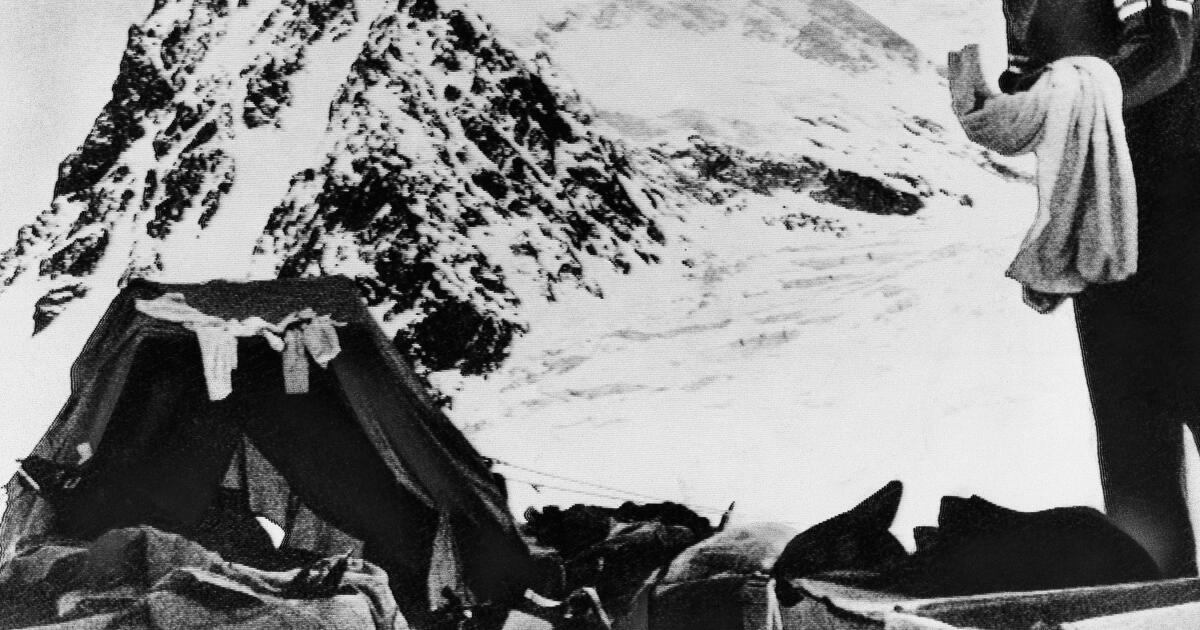
Jim Whittaker, first American climber to scale Mount Everest, has died

Newsletter: NATO holds amid fragile Iran ceasefire

Jim Whittaker, the first American to summit Mount Everest, dies at 97

Video: Suspect in Gilgo Beach Murders Pleads Guilty

Closed Detroit behavioral facility faces lawsuit over alleged sex abuse of teen

Florida High School Football Rankings: Top 25 teams – Oct. 21

How old is Bo Nix? What to know about Oregon quarterback ahead of 2024 NFL Draft

Cleary's 21 help Le Moyne down Central Connecticut State 69-64 in OT

99th annual Pony Swim held in Virginia

Indiana Members Credit Union announced as new anchor tenant at Bottleworks District
Newsletter: NATO holds amid fragile Iran ceasefire
Jim Whittaker, the first American to summit Mount Everest, dies at 97

Video: Military Families Bear the Burden of War, Again

Fox News Poll: Record number say taxes are too high; government spending seen as wasteful

‘Even the street cats ran’: Inside Israel’s deadliest attack on Beirut
-

 Atlanta, GA4 days ago
1 teenage girl killed, another injured in shooting at Piedmont Park, police say
-

 Culture1 week ago
Do You Know Where These Famous Authors Are Buried?
-

 Movie Reviews7 days ago
Vaazha 2 first half review: Hashir anchors a lively, chaos-filled teen tale
-

 Georgia2 days ago
Georgia House Special Runoff Election 2026 Live Results
-

 Pennsylvania2 days ago
Parents charged after toddler injured by wolf at Pennsylvania zoo
-

 Education1 week ago
Video: We Put Dyson’s $600 Vacuum to the Test
-
 Milwaukee, WI3 days ago
Potawatomi Casino Hotel evacuated after fire breaks out in rooftop HVAC system
-
 Entertainment1 week ago
Inside Ye’s first comeback show at SoFi Stadium