Indiana
8 Budget-Friendly Towns In Indiana For Retirees


Most of us want to retire on the cheap — but not be in the middle of nowhere. Aspects like access to a decent hospital, a meaningful retail scene, and safe and peaceful neighborhoods are often the bare minimums. A sparkling lake, a pine-speckled mountain, or even quiet forest trails are bonuses. Fortunately, some of Indiana’s most budget-friendly towns boast access to many great outdoor venues. Starting with New Castle, discover below the eight budget-friendly towns in Indiana.
New Castle
New Castle is a cute little town with a population known to be passionate about basketball. It is also fairly tight-knit and boasts a fantastic arts community. In June 2024, the median listing home price in New Castle was $154,900, earning it a spot among the most budget-friendly towns in the state. An empty nester here will be at the doorstep of Henry Community Health, a 2024 recipient of the Outpatient Orthopedic Surgery Award. She can canoe the Big Blue River as frequently as she likes, immerse herself in the region’s basketball history at the Indiana Basketball Hall of Fame, or hit up the small but lovely trail at Osborne Park. New Castle residents have a median age of 41, with residents aged 60 and above comprising 24% of the population.
Connersville

Connersville offers retirees the chance to go rafting at the Whitewater River, enjoy daily walks at the John Conner Nature Preserve Trail Park — and occasionally sit down to a slow brunch at one of the best Mexican restaurants in Indiana: El Caballo Blanco Mexican. There is Roberts Park as well, a lovely space with lots of happy squirrels, plus a large grassy area for picnicking. In June 2024, Connersville’s median listing home price was $184,500, a price point that comes with ready access to Fayette Regional Health System, a long-running establishment whose history goes back more than a century. Connersville residents have a median age of 40, indicating a melting pot of demographics, with those aged 60 and above comprising 27% of the population.
Richmond
In June 2024, the median listing home price in Richmond was $169,900, a price point that earns the town a spot among the most budget-friendly Indiana towns. Those who want to retire close to an excellent hospital should particularly pay attention to Richmond. This is because Reid Health, originally founded in 1905, is a 2024 recipient of America’s 250 Best Hospitals Award. Then again, Richmond is home to Earlham College, a private liberal arts college that has been around since 1847. An empty nester here can enjoy floating at Middle Fork Reservoir, boating at the East Whitewater River, or biking at venues such as Glen Miller Park and the Cardinal Greenway. Brace yourself for Richmond’s historic charm, well-preserved historic buildings, including a slew of Victorian-era homes, and its endearing small-town feel. Although the Richmond residents have a median age of 38, those 65 years and above represent a decent 18% of the population.
Peru
Small but loveable, Peru has been known as the “Circus Capital of the World.” It hosts one of the oldest and best amateur circus performances on the planet. On parade day, typically held on the third week of July, music and cheers drift down Main Street as the town stages its largest festival. In June 2024, the median listing home price in Peru was $174,500. If under the weather, Dukes Memorial Hospital, which boasts a 24-hour emergency department, is right in town. Wabash River flows through the town, presenting a delicious range of recreational activities. Other venues a retiree will want to pay attention to include the Peru Disc Golf Course, Peru Skatepark, and the Peru Golf Course, which was built in 1926. Peru residents have a median age of 41, with those aged 60 and above comprising 25% of the population.
Logansport
To many retirees, the prospect of owning property for less than $200,000 is bound to be mouthwatering, regardless of location. That is the reason Logansport, which boasts a median listing home price of $178,000, should be of significant interest. Logansport Memorial Hospital is right in town, just in case one is worried about healthcare access. Some of the best recreational venues in and around Logansport include the Wabash River, which runs through the town; Riverside Park — and its paved walking trails — and the aptly named River Bluff Trail, which provides gorgeous views of the Eel River. Logansport residents have a median age of 37. Still, those aged 60 and above comprise 22% of the population. Many residents rave about Logansport’s small-town charm and close-knit community.
Wabash
In June 2024, the median listing home price in Wabash was $175,000. This comes with doorstep access to Parkview Wabash Hospital, which 77% of patients readily recommend. As a retiree here, you will be looking forward to the annual Wabash Cannonball Chili for Charity Cookoff, billed as the largest chili cookoff east of the Mississippi River. Safe and friendly for the most part, Wabash boasts several venues where an empty nester will enjoy spending time. This includes the Wabash River, which meanders through the town, Wabash City Park, which is endearingly peaceful and soothing; and the Honeywell Golf Course, a lovely public course suitable for all levels of golfers. Worried about the chances of linking up with fellow empty nesters? Wabash residents aged 65 and above comprise 17% of the town’s population.
Huntington
Decently maintained parks, neighborly attitude (for the most part), and proximity to Fort Wayne, which is just 25 miles down the road — are some of Huntington’s most retirement-friendly features. The median listing home price in Huntington was $239,900 in June 2024, which is an excellent bargain, especially considering what Huntington offers. There is the Parkview Huntington Hospital, readily recommended by 72% of patients — and Lutheran Health Network Orthopedic Hospital in Fort Wayne, a recipient of America’s 50 Best Outpatient Orthopedic Surgery Award. On the social landscape, Huntington residents aged 60 and above comprise 22% of the population, meaning one will easily find folks in the same age bracket. Huntington University is in town, adding a layer of academic aura and a dash of vibrancy (and diversity) to the town’s cultural scene. Wabash River, the small but beautiful Sunken Gardens, Little River, and Lake Clare, are excellent boating sites. They all curate an experience that can see an empty nester age like fine wine.
Lake Station
Rounding off the list of the most budget-friendly towns in Indiana is Lake Station, a charming Indiana community that sits next to the waters of Lake Michigan. No one will want to overlook Lake Station, particularly because of its closeness to Chicago, which is just 38 miles down the road. Lake Station, therefore, boasts mouthwatering access to big-city amenities. The median listing home price in Lake Station is just $174,900. St. Mary Medical Center, a heartbeat away in Hobart, is a recipient of the Outstanding Patient Experience Award. Top-notch outdoor venues in and around Lake Station include Deep River, which flows through the town, Lake Station Pool @ Riverview Park, loved for its huge pool — and Countryside Park, which has a disc golf course, a nice walking path, and a cute, little pond. On the social side, Lake Station residents aged 60 and above comprise 20% of the population, meaning 1 in 5 residents may turn out to be fellow empty nesters.
The Takeaway
The median listing home price in Indiana — as of July 2024 — stood at $309,400. This makes “The Hoosier State” one of America’s most budget-friendly states. But the pricing scene is anything but uniform. The median listing price in the Angola area, for example, almost grazes the $500,000 mark. If you want to save on cash and still enjoy access to numerous desirable amenities, pay attention to spots such as New Castle, Connersville, and Lake Station, a lovely Chicago suburb with many reasonably priced homes.



ABC pulls upcoming ‘Bachelorette’ season. Here’s what to know
A Carmel man and former Purdue basketball player was set to compete on this season that won’t air.
Should ABC air the canceled-for-now season of “The Bachelorette”? A Carmel man who was set to compete on it seems to think so.
Matt Carroll, a 43-year-old Purdue basketball alum and Carmel resident, took to social media over the weekend to address the cancelation of season 22 of “The Bachelorette,” on which he appeared. Public opinion on whether the show should see the light of day is split, but the former Boilermaker forward and industrial real estate broker hopes the footage makes it to air.
Disney and ABC pulled season 22 of “The Bachelorette” because its lead, “Secret Lives of Mormon Wives” star Taylor Frankie Paul, faces an ongoing domestic violence investigations. The network announced the decision March 19 after TMZ leaked a video from a 2023 domestic violence incident involving Paul and her ex Dakota Mortensen.
Neither Carroll nor the show have officially commented on the cancelation, but that doesn’t mean he and other contestants haven’t hinted at their feelings on social media.
Carroll’s Instagram reel — in which he struts through the streets of Carmel, rose in hand, RAYE’s “Where the Hell is My Husband” soundtracking it all — breaks the ice. “So…about that,” he joked, tagging both “The Bachelorette” and Bachelor Nation, the franchise’s official hub for news and content.
The reel has garnered comments from fellow Carmel residents wishing Carroll well, even offering to set him up with local singles. Notably, though, some of Carroll’s followers have called for the season to air — and he agrees.
“Trying to manifest that they still air this,” one comment from model Brittany Mason reads. “America wants it the world wants it!”
“From your lips to God’s ears,” Carroll replied.
Another response from him put it more plainly:
“I’m still hoping they decide to air it.”
Whether “The Bachelorette” will air is unclear. Disney Entertainment Television’s official statement only indicated that it was halting the season “for now,” so it’s possible the network could dust off the footage and air it after all.
Contact IndyStar Pop Culture Reporter Heather Bushman at hbushman@indystar.com. Follow her on X @hmb_1013.

INDIANAPOLIS (WISH) – The 2026 NCAA Division I Men’s Basketball Tournament’s Final Four is set.
Four teams have advanced to the Final Four and will compete for the national championship this upcoming weekend in Indianapolis.
The two national semifinal matchups will take place on Saturday. Tip times for the two games have been announced:
- 6:09 p.m. EDT – No. 3 seed Illinois vs. No. 2 seed UConn
- 8:49 p.m. EDT – No. 1 seed Michigan vs. No. 1 seed Arizona
The winners of Saturday’s games will then play in the National Championship Game on Monday, April 6.
Each game will take place inside Lucas Oil Stadium.

INDIANAPOLIS — Hundreds of Hoosiers gathered at the Indiana Statehouse Saturday morning as part of nationwide ‘No Kings’ events to voice their concerns about the current administration.
WATCH FULL STORY BELOW
Hundreds gather at Indiana State Capitol for ‘No Kings’ protest
“I’m out here today because what’s happening in our government is completely trash,” Donna Sipes told WRTV. “It’s wrong. We need to do something about it.”
“I’m tired of every single day when the TV comes on to see what stupid thing he’s done next,” Lindi Marti said.
WRTV
Attendees noted the growing popularity of the demonstrations.
“This is my fourth one to come to. I didn’t come to all of them when it was really cold, but I’m glad to see that they are getting a lot more people out here every time,” Marti added. “It seems like there’s more and more coming.”
Demonstrators highlighted specific foreign policy concerns, including the administration’s handling of the war in Iran.
“We’re bombing the heck out of them. We’re killing civilians,” Marti’s husband said. “We’re getting ready to send our Marines.”
WRTV

Others focused on the administration’s handling of immigration.
“That’s what I’m concerned about,” Reverend Kenny Little told WRTV. “Little kids, they’re taking them away from their family. And I’m just one of those people, I think everyone got rights.”
Indiana medical students also attended the rally to speak out against changes to the healthcare system.
“We’re really worried about the attacks on the health care system in general, but with Medicaid… current estimates range from anywhere from 325,000 to 450,000 Hoosiers will lose coverage by 2032,” Wade Catt said with concern.
WRTV

With midterm elections approaching later this year, attendees emphasized the importance of now taking action at the ballot box.
“If we don’t vote, then things are gonna not, they’re gonna stay the same,” a protester said.
Meanwhile, Indiana Lieutenant Governor Micah Beckwith says he’s happy to see Hoosiers exercise their First Amendment right to protest.
However, he takes issue with the idea that President Trump is acting like a king. Beckwith says the fact that people have the freedom to protest is proof that the president is not acting like a tyrant.
He acknowledges that bridging the gap between the sides is probably an uphill battle, but believes communication is key.
“I think when you sit down with people face to face, you’re confronted with humanity. There’s another human sitting across that table from you and talking to you. And so, all I have to say, I think that’s probably the thing I would encourage all Hoosiers to do is say, ‘Hey, if you don’t agree with somebody or if you don’t like somebody, why don’t you try grabbing coffee with them? And give it 30 minutes, and just see what happens.’ I bet most of the time people will walk away with a much softer heart and spirit towards that person before they came in,” Beckwith said.
Beckwith is currently on a 92-county tour of the state. He says all sides are welcome to attend his events.
__

How a Database Manager Lives on $118,000 in Inwood

Detroit Lions ‘Ready’ for All-Pro Moving to Left Tackle

This Week: Bike Ambassador, Lake Merritt Loop, Cayuga Street – Streetsblog San Francisco

How FC Dallas Can Unlock Santiago Moreno Alongside Musa, Valiente, and Farrington

Could Miami Dolphins trade up in first round of 2026 NFL Draft?

Florida High School Football Rankings: Top 25 teams – Oct. 21

How old is Bo Nix? What to know about Oregon quarterback ahead of 2024 NFL Draft

Cleary's 21 help Le Moyne down Central Connecticut State 69-64 in OT

99th annual Pony Swim held in Virginia

Indiana Members Credit Union announced as new anchor tenant at Bottleworks District

Video: Iran to Allow More Oil Ships Through Strait of Hormuz, Trump Says

Dem senator warns deportation could let Virginia woman’s illegal immigrant killer ‘escape accountability’

Newsletter: G7 ministers to hold talks on war’s economic fallout
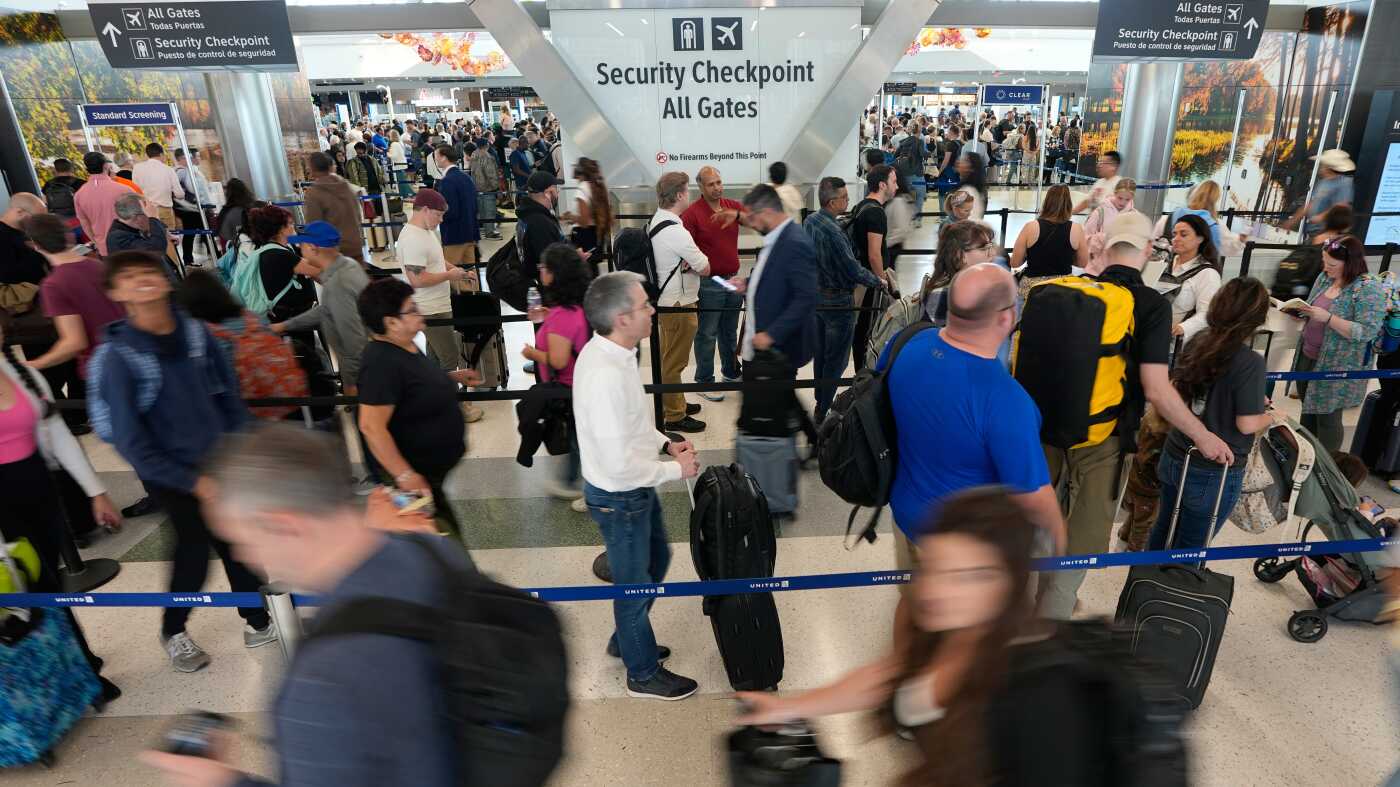
ICE officers could remain at airports after TSA workers are paid

Scathing report claims nation’s oldest labor union ‘betrayed’ MAGA members through ‘shocking’ spending
-

 Sports1 week ago
IOC addresses execution of 19-year-old Iranian wrestler Saleh Mohammadi
-

 Miami, FL4 days ago
Jannik Sinner’s Girlfriend Laila Hasanovic Stuns in Ab-Revealing Post Amid Miami Open
-

 New Mexico1 week ago
Clovis shooting leaves one dead, four injured
-

 Politics1 week ago
Schumer gambit fails as DHS shutdown hits 36 days and airport lines grow
-

 Tennessee7 days ago
Tennessee Police Investigating Alleged Assault Involving ‘Reacher’ Star Alan Ritchson
-

 Minneapolis, MN4 days ago
Boy who shielded classmate during school shooting receives Medal of Honor
-

 Science1 week ago
Record Heat Meets a Major Snow Drought Across the West
-

 South-Carolina1 day ago
South Carolina vs TCU predictions for Elite Eight game in March Madness