Midwest
Indiana pair arrested for allegedly stealing bronze veteran burial markers from headstones

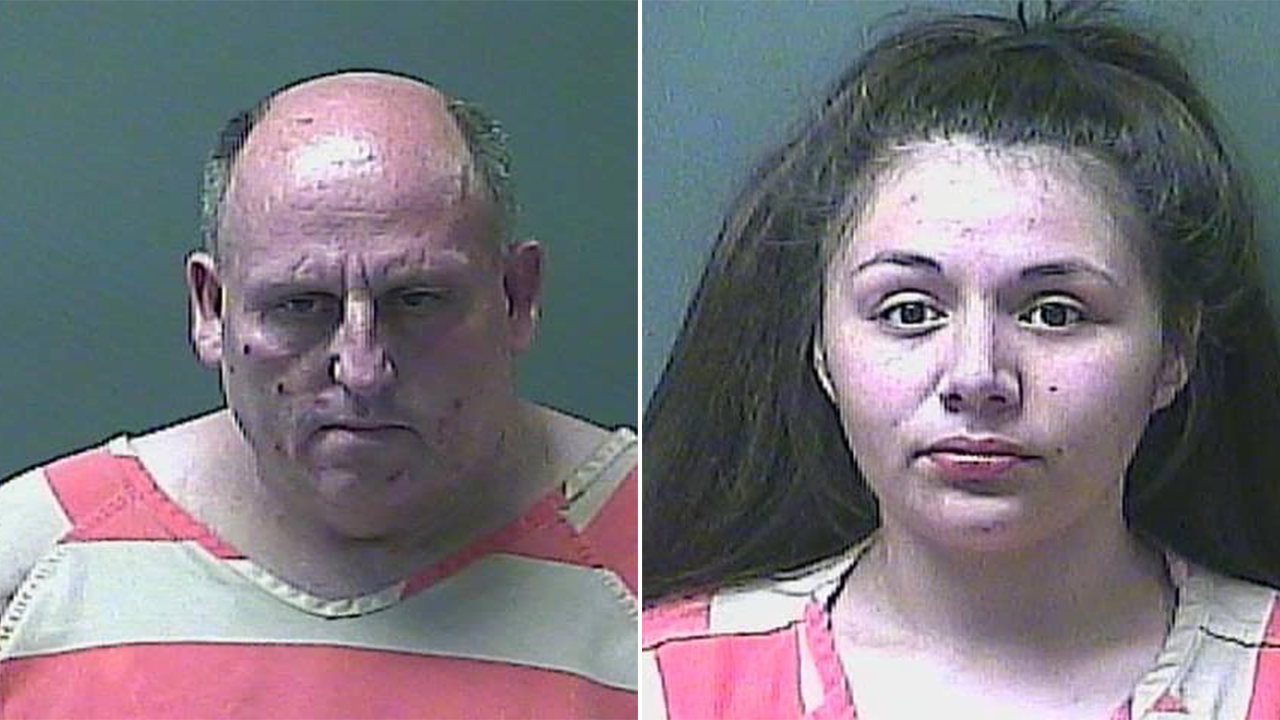
Two people are facing charges in Indiana in connection with a series of thefts of bronze veteran markers from headstones from various veteran burial locations in the Hoosier State.
Terry Wood, 53, and Breanna Puentez, 25, were taken into custody Friday after at least 15 grave markers from six different cemeteries in La Porte County last month were reported stolen while another was reportedly damaged, the La Porte County Sheriff’s Office said in a news release.
Both suspects are facing several felony counts of theft and cemetery mischief.
The sheriff’s office publicly announced the investigation into the stolen grave markers on Aug. 28 and urged residents to visit the grave sites of deceased veterans. The next day, the agency said investigators received credible information identifying a suspect.
FORMER INDIANA SHERIFF PLEADS GUILTY TO CHARGES OF SPENDING FUNDS ON TRAVEL, GIFTS, CARS
Terry Wood, 53, and Breanna Puentez, 25, are facing felony counts of theft and cemetery mischief. (La Porte County Sheriff’s Office)
Detective Jake Koch, a veteran himself, led the investigation, which revealed that the grave markers were taken from cemeteries in Union Mills, Rolling Prairie, Carmel, Pinola, Greenwood and St. Stan’s.
Investigators presented evidence to the La Porte County Prosecuting Attorney’s Office and later to La Porte County Circuit Court, where probable cause was found for Wood’s arrest.
The “Justice, Peace, and Salute” operation was executed Friday in the 400 block of Andrew Avenue in La Porte, where Wood was arrested, and additional evidence was collected.
The investigation revealed that the grave markers were taken from cemeteries in Union Mills, Rolling Prairie, Carmel, Pinola, Greenwood and St. Stan’s. (iStock)
Later that day, Puentez was taken into custody and charged in connection with the thefts.
“This type of criminal behavior is disgusting, unacceptable, and will not be tolerated in La Porte County! It is the hope of the entire Sheriff’s Office that because of the diligent and thorough investigation by Detectives Koch and Banic, justice will be served to both accused subjects. Hopefully, US Veterans, both deceased and living, can find peace and comfort with these arrests, and with that, we salute them for their service,” Capt. Derek J. Allen said in a statement.
ILLEGAL IMMIGRANT ARRESTED AFTER STABBING OF TEEN GIRL AT INDIANA BASEBALL GAME: POLICE
Both suspects were booked into the La Porte County Jail. (iStock)
Both suspects were booked into the La Porte County Jail.
Wood is being held on a $15,005 cash-only bond, while Puentez is not eligible for bond because she was out on bond.
Read the full article from Here



See how Iowa DNR conducts beach monitoring tests at Iowa’s lakes
The Iowa Department of Natural Resources conducts weekly tests to monitor beach water quality at 39 state-owned beaches.
High temperatures over the Fourth of July weekend might have you looking to take a dip in one of Iowa’s lakes. But, you’ll want to be sure the water is safe for swimming before getting into the water.
A total of 11 state beaches are not recommended for swimming ahead of the holiday, up from 10 beaches last week.
The Iowa Department of Natural Resources provides weekly updates on which state beaches are experiencing high levels of E. coli or algae that can be dangerous to swimmers. You can check the latest reports on the DNR website or by calling (515) 725-3434.
The DNR collects weekly samples at 41 state-owned swimming beaches to determine the public’s risk of coming in contact with waterborne diseases. Testing starts a week before Memorial Day and runs through Labor Day.
What Iowa DNR beaches are not recommended for swimming?
Backbone Beach
- Beach classification: Vulnerable
- Last test date: July 1
- Test results: Exceeded single-sample limit and five-sample Geomean standard for E. coli
Beeds Lake Beach
- Beach classification: Vulnerable
- Last test date: June 30
- Test results: Exceeded single-sample limit for E. coli
Big Creek Beach
- Beach classification: Less vulnerable
- Last test date: June 30
- Test results: Exceeded single-sample limit for E. coli
Black Hawk Beach
- Beach classification: Less vulnerable
- Last test date: June 30
- Test results: Exceeded single-sample limit and five-sample Geomean standard for E. coli
Emerson Bay Beach
- Beach classification: Vulnerable
- Last test date: July 1
- Test results: Exceeded single-sample limit and five-sample Geomean standard for E. coli
Lake Darling Beach
- Beach classification: Vulnerable
- Last test date: June 30
- Test results: Exceeded single-sample limit and five-sample Geomean standard for E. coli
Lake of Three Fires Beach
- Beach classification: Less vulnerable
- Last test date: July 1
- Test results: Exceeded algal toxin action level
Nine Eagles Beach
- Beach classification: Vulnerable
- Last test date: July 1
- Test results: Exceeded five-sample Geomean standard for E. coli
North Twin Lake West Beach
- Beach classification: Less vulnerable
- Last test date: June 30
- Test results: Exceeded five-sample Geomean standard for E. coli
Pine Lake South Beach
- Beach classification: Vulnerable
- Last test date: June 30
- Test results: Exceeded single-sample limit and five-sample Geomean standard for E. coli
Prairie Rose Beach
- Beach classification: Vulnerable
- Last test date: June 30
- Test results: Exceeded single-sample limit and five-sample Geomean standard for E. coli
Which Iowa beaches have improved to ‘OK for swimming’?
Two beaches have made it back onto the OK for swimming list since June 26:
- North Twin Lake East Beach
- Pleasant Creek Beach
Which Iowa beaches have special statuses?
- Blue Lake Beach: Monitoring by DNR is currently suspended due to low lake water conditions and the closure of Lewis and Clark State Park.
- Lake Keomah: Monitoring by DNR is currently suspended due to low lake water conditions. The DNR drained the lake in July 2024 for a major renovation and water quality improvement project that was set to last through spring 2026. The DNR warns people to stay out of the lake bed, which might look dry, but is soft and could quickly entrap people.
How does the Iowa DNR classify Iowa’s beaches based on their water quality?
DNR officials classify state park beaches into one of three categories annually based on their history of bacteria results in recent years:
- Vulnerable: Beaches are considered vulnerable when the geometric mean standard is exceeded in three or more of the five most recent sampling seasons.
- Transitional: The beach’s geometric mean standard is exceeded in two or fewer sampling seasons of the five most recent years of monitoring and was listed as “vulnerable” in the past monitoring seasons.
- Less vulnerable: The beach’s geometric mean standard is exceeded in two or fewer sampling seasons of the five most recent years of monitoring and was listed as “transitional” or “less vulnerable” in past monitoring seasons.
Brian Smith is a senior editor and audience strategist at the Des Moines Register. Contact him at bsmith@dmreg.com.

Lansing — Michigan lawmakers worked through the night into Friday morning on a new state budget that will use an array of spending cuts and funding maneuvers to close a $1 billion tax revenue gap.
The plan will increase the state’s investment in basic per-student support for Michigan schools and will feature $125 million for special projects sought by legislators. However, 10 state departments will get less money than they had the year before, and a variety of state initiatives, such as the arts and culture program, Pure Michigan and the Office of Global Michigan, will see cuts.
Senate Appropriations Chairwoman Sarah Anthony, D-Lansing, described the new budget, which authorized somewhere around $84 billion in spending, as one “full of compromises.”
“This was a very challenging budget negotiation, mainly because of the $1 billion deficit that we had to ensure to address,” Anthony said. “But being able to do so without reducing any benefits for folks who are receiving Medicaid or food assistance is probably the proudest thing … that comes out of this process.”
The Legislature convened throughout the night Thursday into Friday morning, when the state Capitol would normally have been closed for the Fourth of July holiday weekend.
Under state law, the Republican-led House and Democratic-led Senate are supposed to approve a new budget by July 1 each year. The first of the funding bills wasn’t unveiled this week until about 3:13 a.m. Friday morning, two days after the deadline.
Lawmakers would likely have a few hours to read the bills before the final votes, which were expected later Friday.
On Thursday afternoon, Sen. John Damoose, R-Harbor Springs, said Senate Republicans had no information about what was in the budget blueprint. He labeled the process playing out in the Legislature “nonsense.”
Likewise, Sen. Jim Runestad, R-White Lake Township, said lawmakers had about 30 to 40 minutes between being briefed on the budget and when they had to vote on it.
“We have no idea what’s in these bills,” Runestad said.
In February, Jen Flood, Whitmer’s budget director, said the state was facing a $1.8 billion financial gap. Health care costs had jumped, the Legislature had dedicated more tax dollars to roads, and the federal government, led by Republican President Donald Trump, had forced states to pay for a larger share of costs associated with food assistance for low-income families.
Whitmer initially proposed an $88.1 budget for next fiscal year, which begins Oct. 1. She sought a bevy of new taxes on smokers, gamblers and digital advertising. Michigan House Speaker Matt Hall, R-Richland Township, refused to go along with the tax hikes.
The new budget will be somewhat close to the current budget in overall amount of approximately $84 million.
Hall and Senate Majority Leader Winnie Brinks, D-Grand Rapids, had been working for weeks to create the new funding plan. Hall announced a final deal had been reached Thursday.
The ultimate agreement involved dozens of other bills that were tied to the budget’s approval, including a long-sought measure by some Democrats that would double the cap on the state’s transformational brownfield program, which allows businesses behind large developments to keep income tax and sales withholdings resulting from their projects, from $1.6 billion to $3.2 billion.
The incentive is expected to be used to spur the redevelopment of Detroit’s riverfront Renaissance Center. The Senate approved the brownfield bill in December. The House voted 82-26 in favor of it early Friday.
The Senate also took up early Friday a House-backed proposal to ban former lawmakers from being paid to lobby for two years after leaving office. The bill passed in a vote of 29-7.
How will schools be funded?
Sen. Darrin Camilleri, D-Trenton, acknowledged lawmakers were shifting a larger amount of School Aid Fund money, which would normally go to K-12 schools, toward higher education and community colleges.
The number appeared to rise from about $1.3 billion in the current year to about $2 billion in the fiscal year beginning Oct. 1, setting a new record. Whitmer had proposed using $1.7 billion from the School Aid Fund to support the operations of universities and community colleges.
The moves effectively free up money in the General Fund, where tax dollars are currently tight, for other needs.
“It’s too much,” Camilleri said of the shifts. “But we’re dealing with a divided Legislature with different priorities, and we all needed to fill the budget gap.”
Robert McCann, executive director of the K-12 Alliance of Michigan, blasted the approach lawmakers took.
“Nothing in this budget justifies it once again being done late,” McCann said. “There is little in it focused on supporting Michigan’s schools, even as it raids nearly $2 billion from the School Aid Fund to pay for data centers and corporate tax handouts.”
The K-12 budget went down from $21.3 billion to $19.8 billion, a 7 percent drop in federal funds on paper.
But the plan appears to allow the federal funds not included in the tally to be spent, so it wasn’t clear how much total spending there would actually be under the legislation.
Lawmakers are increasing the base per-pupil foundation allowance for schools by about 2.5% from $10,050 to $10,300. They are also investing $50 million in high-impact tutoring and instituting a long-term plan for a so-called weighted funding formula, which would tie extra support to economically disadvantaged students and students who are learning English.
House Appropriations Chairwoman Ann Bollin, R-Brighton, touted the weighted funding formula, which will be phased in over the next 15 years.
“This is a transformational school budget, where we are making record investments,” Bollin said.
For Michigan’s public universities, overall funding increased by 12% from $2.3 billion to $2.6 billion, with more money for operations and scholarships.
What were the cuts and projects?
Lawmakers’ final plan also cut $8 million in funding for the Pure Michigan tourism campaign, which received $17 million in support in the current year. The Office of Global Michigan got $500,000 less, dropping its total to about $41.4 million. And the arts and culture program got $685,200 less, dropping its total to $8 million.
Among state departments, the Department of Environment, Great Lakes and Energy saw the largest percentage drop in funding of 31%, going from $967 million to $671 million. The decrease was largely due to the reduction of money for a federal sewage and stormwater program.
Lawmakers did provide $125 million for special projects around the state.
There was $3 million for the Schoenherr Road Bridge Reconstruction in Shelby Township, $1.4 million for the Rochester Community House expansion and renovation, $3.7 million for water main replacements in Utica and $2 million for a fire station project in Waterford Township, according to the spending plan.
cmauger@detroitnews.com
Minnesota
Where to watch Minnesota Lynx vs New York Liberty on July 3: TV channel, start time and streaming
The WNBA has returned with a brand new collective bargaining agreement and a league full of loaded rosters as the 2026 season tips off.
A rookie class headlined by Dallas Wings top pick Azzi Fudd, Minnesota’s Olivia Miles and Washington’s Lauren Betts is ready to make a mark in the pros while the defending champion Las Vegas Aces look to keep their dynasty alive with a fourth title in five years.
As the the season gets going under a new media rights deal, it can be tough to figure out which channel each team is playing on every night. Here’s everything you need to know to tune in when the New York Liberty host the Minnesota Lynx on Friday.
What time is Minnesota Lynx vs New York Liberty?
Tip off between the New York Liberty and Minnesota Lynx is scheduled for 7:30 p.m. (ET) on Friday, July 3.
How to watch Minnesota Lynx vs New York Liberty on Friday
All times Eastern and accurate as of Friday, July 3, 2026, at 6:18 a.m.
- Matchup: MIN at NYL
- Date: Friday, July 3
- Time: 7:30 p.m. (ET)
- Venue: Barclays Center
- Location: Brooklyn, New York
- TV: ion
- Streaming: ion
Watch the WNBA all season on Fubo
WNBA scores and results
See scores, results for all of today’s games .
See WNBA scores, results from July 2
Odds for WNBA games today
The latest WNBA odds can be found below from the best sports betting apps . Some odds may include games scheduled on future dates.
-

 Iowa5 minutes ago
11 beaches on Iowa DNR’s swimming not recommended list for July 4
-

 Kentucky15 minutes ago
Kentucky Wildcats News: Tyler Herro helped UK get Milan Momcilovic
-

 Louisiana20 minutes ago
Supreme Court rules in indictment against Louisiana attorney general
-

 Maine27 minutes ago
Magalloway Conservation Project in western Maine nearing completion
-
 Maryland30 minutes ago
Baltimore Gas and Electric seeks $8 monthly rate increase for Maryland customers
-

 Michigan35 minutes ago
Michigan lawmakers work through the night on ‘compromise’ budget
-

 Massachusetts42 minutes ago
Massachusetts city imposes curfew ahead of historic World Cup match
-
Minnesota45 minutes ago
Where to watch Minnesota Lynx vs New York Liberty on July 3: TV channel, start time and streaming

