Illinois
'Truly a special dog': Illinois House honors Lake County Sheriff Canine Dax, handler following canine's death


The Illinois House of Representatives honored Lake County Sheriff’s Canine Dax and his handler this week after the canine’s retirement and sudden death last month.
State Representative Tom Weber (R-Lake Villa) and the Illinois House of Representatives honored Dax and his handler, Lake County Sheriff’s Deputy John Forlenza, on Wednesday.
Dax and Forlenza were honored with the adoption of House Resolution 703 commending the duo for their “honorable service and dedication to their community, the State as a whole, and the nation.”
Forlenza was present at the Illinois State Capitol for the adoption of the resolution.
“Dax is one of the most decorated police K9s in the history of our state,” Weber said. “It’s only fitting that we honor his service as we would any law enforcement officer who has done so much to save lives and protect our communities.”
“He was truly a special dog, but none of his accomplishments would have been possible without the dedication and determination of his handler. It is a testament to the time and constant training Deputy Forlenza put in over the years that Dax was able to achieve so much. It was my honor to recognize them both on the House floor today and thank Deputy Forlenza for his service and work with Dax,” Weber said.
Dax – a German Shepherd born in March 2014 in the Czech Republic – joined the sheriff’s office in the spring of 2015. He was 13 months old when he joined the team.
Following nearly 10 years of service, Dax’s retirement was announced on April 4 and a public retirement ceremony was held on April 10.
The Lake County Sheriff’s Office announced Dax’s death on April 12, just two days after the ceremony.
“While K9 Dax’s legacy will forever live on, this morning K9 Dax passed away,” Lake County Sheriff’s Office Deputy Chief Christopher Covelli said at the time.
Covelli told Lake and McHenry County Scanner that Dax’s recovery since his injury in March had been “up and down.”
“But over the last ten days, it’s been going downhill. The last 30 hours he was in a lot of pain,” Covelli said.
Lake County Sheriff John Idleburg said Dax will “always hold a special place in our hearts, and we are incredibly saddened by his passing.”
“K9 Dax will be remembered for the lives he saved, violent offenders he apprehended, and drugs he kept from being distributed in our community. Please keep the Forlenza family in your thoughts and prayers,” Idleburg said.
Dozens of community members attended the retirement ceremony, some even bringing their own dogs.
Covelli said during the ceremony that Dax and his handler have located over 400 missing endangered people.
“There’s no doubt this equates to over 400 lives being saved by this canine, Canine Dax,” Covelli said.
Dax has located some of society’s most violent fleeing criminals, Covelli said just before Dax began barking. “He’s still got it in him,” Covelli joked as the crowd began laughing.
Covelli said the canine recovered hundreds of kilos of illegal drugs, assisted with the seizure of millions of dollars, recovered dozens of firearms discarded by offenders, assisted with dozens of seized vehicles and has participated in hundreds of community and school demonstrations.
“It’s hard to travel anywhere in the United States and meet somebody who hasn’t heard of Canine Dax from here in Lake County,” he said.
Dax received dozens of awards and recognition, including from elected officials and nationwide organizations.
During the canine’s career with the United States Police Canine Association (USPCA), he competed in several regional and national trials across the country.
Dax earned numerous top finishes in the areas of tracking, article searches, narcotics, suspect searches and protection.
He won six USPCA Regional Championships and earned two Tracking Exceptional Certifications.
Dax also appeared on numerous local and national news stations, including Fox Nation, NBC, A&E Network and ESPN.
Forlenza spoke during the retirement ceremony and reflected on Dax’s career, including Dax’s first apprehension of a felony domestic battery suspect who fled on foot in North Barrington in 2015.
“He found the offender hiding behind a tree. Dax started to bark aggressively — go figure. Something he has obviously excelled in,” Forlenza said as Dax barked during the ceremony.
“The offender gave up. I remember being so proud of him looking back and I could tell he was proud of himself also,” Forlenza said.
Dax’s handler said he never anticipated that his first find in the woods would be the start of a career where Dax would go on to locate hundreds of violent offenders, subjects in mental crisis, lost children and elderly subjects.
Forlenza thanked the community for all of the cards, letters, care packages and well-wishes as Dax worked to recover from his recent injury.
“I want you all to know the special role you have played in Dax’s career and his rehabilitation,” Forlenza said.
The canine was injured on March 3 while apprehending a person who had committed several felonies and was fleeing near Zion.
Dax injured his neck and spine, which resulted in temporary paralysis in his hindquarters.
He was later diagnosed with cervical and thoracolumbar Intervertebral Disc Disease (IVDD) and lumbosacral IVDD exasperated during the apprehension, Covelli said.
Dax went through intensive physical therapy following the injury, which allowed him to regain the ability to walk and use his hind legs.
Covelli said Dax’s team of veterinarians determined he would not be able to return to active duty for his physical well-being.



Tornadoes rip through Michigan just hours after deadly tornado in Oklahoma
Destructive tornadoes wreaked havoc hundreds of miles apart from March 5-6, as severe storms roared through the middle of the U.S.
Central Illinois is expected to be hit with tornado alerts Tuesday afternoon and evening, with the highest risk between 6 and 10 p.m.
The National Weather Service announced on X that a Tornado Watch is 95% likely in east-central Illinois through 4:30 p.m. The potential storm is forecast to reach a peak intensity of 2-3.5 inch hail, 55-70 mph winds and 120-150 mph tornadoes.
Here’s how to stay updated on weather alerts in your area.
How to sign up for weather alerts in Illinois
Most residents throughout Illinois will automatically receive Wireless Emergency Alerts on their mobile phones from the NWS, warning them of potentially dangerous weather in their area. These will look like normal text messages and will typically show the type and time of the alert, any action you should take and the agency issuing the alert.
Other sources of information include NOAA Weather Radio, the Storm Prediction Center’s live map of nationwide tornado watches and the Emergency Alert System on radio and TV broadcasts.
Residents can also sign up for text alerts through their local county emergency management agency, such as NotifyChicago.
Sign up for USA TODAY Network weather alerts
Illinois residents can sign up for alerts from the USA TODAY Network to receive texts about current storms and weather events in their area.
Tornado watch vs warning
The NWS explains the difference between the varying tornado alert terminology on its website.
A tornado watch means tornadoes are possible in the area, while a tornado warning means a twister has been sighted or indicated by the weather radar. A tornado emergency is the most severe alert, meaning a violent tornado has touched down in the area.
The website uses the phrases “be prepared,” “take action” and “seek shelter immediately” to summarize the three alerts.
Central Illinois weather radar
Chicago weather radar

A record share of Illinois university employees opt-out of pensions for a 401(k)-style plan, lawmakers should give other state employees the same flexibility.
More retired state university employees are opting for a 401(k)-style plan rather than a traditional pension than ever before. They want more choice and flexibility in their retirement benefits. Lawmakers should expand the option to all state workers.
SURS published its annual actuarial evaluation for 2025. With only 47.1% of what they need to pay retirees, they are the second-highest funded state pension in Illinois, beaten only by the Teachers Retirement System with a funded ratio of 47.8%. That shouldn’t be a source of pride, however.
Experts say 60% funded is dangerous and 40% funded or lower is past the point of no return, so 47% is far too low. Illinois’ pension crisis is the worst in the nation.
But the system stands apart because it offers a way out for employees who don’t want to be stuck in the outdated, one-size-fits-all pension model or a pension system that might become insolvent.
SURS gained 1,314 new employees last year, 725 to the traditional and portable pension plans while 589 opted into the Retirement Savings Plan. Nearly half, 45%, of all new members joining are opting out of a traditional pension.
The numbers show 18.2% of all active employees opted into the Retirement Savings Plan, the highest ever since it started in 1998.
It’s a defined contribution plan, similar to a 401(k), rather than the typical defined benefit pension available in most state retirement systems. That’s up from 17.7% of active employees in 2024.
Actuaries expect this pattern to continue, projecting a growing share of active employees opting into the plan until it reaches around 30% of all active employees who are on a defined contribution plan.
Academic hires such as professors are expected to opt-in to the Retirement Savings Plan at a rate of 45%. Non-academic employees such as administrators are expected to opt-in at a rate closer to 25%.
In both cases, employees seem to enjoy getting more choice over how to invest their retirement benefits, but the difference highlights why this option is so important. Currently state university employees are the only ones with this defined contribution option.
Traditional pensions for new workers at Illinois universities have a vesting period of 10 years. That means if someone leaves their job or the state before they’ve completed 10 years, they won’t be eligible for anything but a refund of their contributions. Not the state match or any interest they could’ve accrued while working.
Early-career academics face higher job uncertainty and are more likely to change institutions than later-career or tenured faculty. Under higher expected mobility, defined contributions are more attractive because you don’t have to worry about losing out on retirement benefits because the vesting period is much lower at 5 years.
Mobility isn’t only important in academia. The ability to change careers is important for a variety of jobs today. Wage and salary workers in the public sector today have a median tenure of 6.2 years. That number is likely skewed because 3-in-4 government workers are aged 35 and older.
Younger workers tend to stay in jobs for shorter periods. Across the public and private sectors, the median tenure of workers 55 to 64 is 9.6 years and 2.7 years for workers 25 to 34. Both figures are far below the 10-year vesting requirement for most Illinois pensions.
There’s no reason to limit flexibility and control to only employees under the State University Retirement System. Senate Bill 3389 offers a step in the right direction by allowing downstate teachers to opt-in to a similar Retirement Savings Plan. But that is only the start.
Illinois should expand this option to all five of its state pension systems so that employees can choose to have more control over their retirement finances. Similar plans have been enacted in Rhode Island and Tennessee, which has one of the best-funded pension systems in the country. A defined contribution plan offers more freedom and security for retirees.

ILLINOIS – Illinois is making it possible for thousands more people with disabilities to set aside money for their needs without losing critical federal benefits.
A new rule, announced this week by State Treasurer Michael Frerichs, raises the eligibility age so that anyone whose disability began before age 47 can now open an ABLE (Achieving a Better Life Experience) savings account.
The change nearly doubles the number of Illinois residents who can use the program, which lets people with disabilities save and invest money tax-free for qualified expenses.
Frerichs called the expansion a “game changer,” estimating that 250,000 additional Illinoisans and about 6 million people nationwide now qualify.
“We’re happy to report that ABLE accounts are now available to anyone who acquired their disability before age 46, and I think this is a game changer for a lot of people,” Frerichs said.
Until this expansion, ABLE accounts were only available to people who acquired a disability before age 26. That restriction left out veterans, accident survivors, and people diagnosed with disabling conditions later in life. The new rule took effect this year after Congress responded to calls from Illinois advocates and families to expand access.
How ABLE accounts work:
An ABLE account functions much like a 529 college savings account. Account holders, friends, and family can contribute cash, which is then invested. The money grows tax-free as long as it is used for disability-related expenses such as housing, transportation, assistive technology, or education. Illinois also offers a state income tax deduction for contributions.
Before ABLE accounts, people with disabilities who received Supplemental Security Income (SSI) or Medicaid faced strict asset limits. Having more than $2,000 in savings could mean losing those benefits.
“This created a lot of anxiety for families who were preparing,” Frerichs said. “There’s a lot of fear for people who wanted to go out and work. What would happen if my paycheck put me over that threshold? Well, ABLE is the answer.”
The program allows up to $100,000 in savings without affecting federal benefits. Earnings and withdrawals remain tax-free if used for qualified expenses.
Real-life impact:
Frerichs shared stories from families who had to make difficult choices before ABLE accounts existed.
“I talked to parents who had to tell their children’s employer don’t give my kid a raise,” he said. “I’ve talked to parents who talked with their financial advisors, saying, don’t name your child in your will. We created a system that put parents in horrible positions, but now we have a solution that allows them to do more long-term planning and to truly set their kids up for a better life experience.”
Stephanie Cantor, director of the Illinois ABLE program, said the expansion lets her and thousands like her save for expenses that come with disability.
“Living with a disability just costs more, and it makes me think of all the ways an ABLE account could have been useful to me over the years to be able to save money and pay for these expenses,” Cantor said.
What’s next:
Illinois has about 8,500 ABLE account holders who have saved $121 million so far. The state treasurer’s office encourages anyone who thinks they may qualify to learn more and apply at illinoisable.com.
The Source: The information in this article was reported by FOX Chicago’s Terrence Lee.

NBA cancels Hawks’ plans to celebrate Atlanta strip club

Paid Family Leave Act strains Minnesota businesses, Chamber says
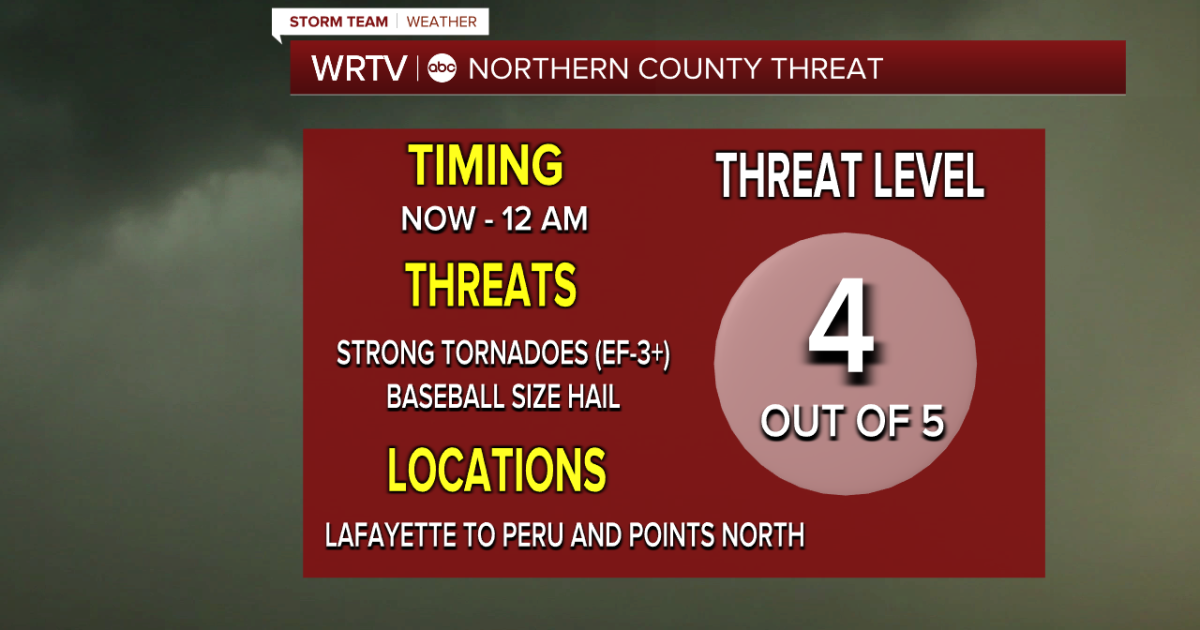
ALERT DAY: Tornado threat north this evening; severe threat sinks south overnight

Steelers Add Year to Cam Heyward’s Contract, Creating Cap Space

EARLY RESULTS: Special election underway for Ga. House District 130 seat

Florida High School Football Rankings: Top 25 teams – Oct. 21

Cleary's 21 help Le Moyne down Central Connecticut State 69-64 in OT

How old is Bo Nix? What to know about Oregon quarterback ahead of 2024 NFL Draft

99th annual Pony Swim held in Virginia

Indiana Members Credit Union announced as new anchor tenant at Bottleworks District

Map: 2.3-Magnitude Earthquake Reported North of New York City

Trump stirs GOP primary drama with visit to Massie’s Kentucky home turf

Israeli air strike targets building in south Lebanon

Ed Martin, outspoken Justice Department lawyer, is formally accused of ethical violations | CNN Politics

Trump reveals top issues GOP should focus on to secure midterms victory: ‘I’ve never been more confident’
-

 Wisconsin1 week ago
Setting sail on iceboats across a frozen lake in Wisconsin
-

 Massachusetts1 week ago
Massachusetts man awaits word from family in Iran after attacks
-

 Maryland1 week ago
AM showers Sunday in Maryland
-

 Pennsylvania5 days ago
Pa. man found guilty of raping teen girl who he took to Mexico
-

 Florida1 week ago
Florida man rescued after being stuck in shoulder-deep mud for days
-

 Detroit, MI5 days ago
U.S. Postal Service could run out of money within a year
-

 Miami, FL6 days ago
City of Miami celebrates reopening of Flagler Street as part of beautification project
-

 Sports6 days ago
Keith Olbermann under fire for calling Lou Holtz a ‘scumbag’ after legendary coach’s death