Illinois
Government Wrapping Up Its Corruption Case Against Former Illinois Speaker


Government attorneys are wrapping up their case with a focus on AT&T and former state Rep. Eddie Acevedo, D-Chicago, at the corruption trial of former Illinois House Speaker Michael Madigan and codefendant Michael McClain.
Judge John Robert Blakey ruled Wednesday that Acevedo would be required to testify next Monday, despite questions about Acevedo’s competency as a witness.
Blakey denied defense attorneys’ motion to quash Acevedo’s subpoena Wednesday morning. Blakey pointed to the distinction between the credibility of the witness and competency to testify. Acevedo’s attorney, Gabrielle Sansonetti, had also sought to prevent Acevedo’s testimony by saying her client had dementia.
U.S. government attorneys have introduced evidence showing that Acevedo was paid by AT&T and ComEd for do-nothing jobs. In a separate case, Acevedo was sentenced in 2022 to six months in prison for tax evasion.
Lobbyist Thomas Cullen, who worked for Madigan from 1987 to 1999 in both the Speaker’s office and the Democratic Party of Illinois, reported to the witness stand Wednesday afternoon.
Prosecutors say AT&T made payments to Acevedo through Cullen’s lobbying firm.
Cullen said his attorney, Thomas Durkin, requested a non-target letter from the government to indicate that Cullen is not the target of the investigation corresponding with the trial of Madigan and McClain.
Cullen called himself a “political junkie” and said he was loyal to the speaker and loyal to Democrats.
Cullen said McClain would ask him to go to his clients and request campaign donations for Illinois Democrats in target districts.
Government attorney Sarah Streicker displayed a transcript of a recording from Aug. 29, 2018, of McClain asking Cullen, on behalf of “our mutual friend,” to join him and others in donating $1,000 each per month for six months to former Madigan aide Kevin Quinn, who had been dismissed over harassment claims.
Cullen said he understood “our mutual friend” to mean Mike Madigan and agreed emphatically to McClain’s request, even though Cullen said there were no unique services that Quinn could provide for him.
During the call, McClain said that Madigan would “take care of Kevin” once Madigan was sworn in as speaker.
Cullen testified that Kevin Quinn was an effective member of Madigan’s 13th Ward Democratic Organization in Chicago. Cullen said he paid Quinn $1,000 per month for six months.
Cullen said he helped AT&T talk with Illinois lawmakers about carrier-of-last-resort legislation. According to Cullen, a COLR bill was AT&T’s No. 1 priority in 2017. The legislation passed that summer.
Streicker asked Cullen about Acevedo, who had served as an assistant majority leader for Democratic members of the Illinois House under Madigan until Acevedo left the General Assembly in 2017.
Cullen said AT&T did not want Acevedo’s successor, Theresa Mah, D-Chicago, to know that the company was paying Acevedo, because Mah had defeated Acevedo’s son in a contentious campaign. Cullen said he agreed to hire Acevedo even though he did not think Acevedo could add anything of value to his firm.
“He wasn’t a serious member of the General Assembly … I didn’t think he could add anything to my team,” Cullen added.
Cullen described a meeting during which Acevedo “got mad” and used “some choice words” because he was upset that AT&T was being “cheap” by only offering him $2,500 per month.
Prosecutors called AT&T Illinois employee Barbara Galvin to the witness stand Wednesday morning. Galvin said she has worked in the company’s external and legislative affairs department since 2003.
Government attorney Amar Bhachu introduced a 2017 consultant agreement with Cullen’s firm to work under the direction of AT&T President Paul La Schiazza.
According to the agreement, Cullen’s firm did not have authority to give gifts or payments directly or indirectly to political officials or parties.
Bhachu also displayed an amendment to the deal that raised the payment amount to Cullen’s firm from $7,500 per month to $10,000 per month.
Bhachu then introduced an email among AT&T legislative affairs members explaining the increased payments for an additional asset, which Galvin testified was “Eddie Acevedo,” to support House Democratic leadership.
Bhachu then showed jurors a document showing AT&T’s sponsorship of a fundraising event for Aunt Martha’s Health & Wellness in Chicago “to provide stakeholder opportunities with legislators.” The document included language explaining the $2,500 cost of the event, to align with Aunt Martha’s, was “to position AT&T with state, city and county decision-makers and business leaders.”
FBI Special Agent Jennifer Avila followed Galvin to the witness stand and testified about AT&T records related to the company’s efforts to lobby Madigan for telecommunications modernization. Prosecutors introduced several emails over prior objections by the defense teams.
In one email, La Schiazza wrote, “In Illinois no bill can get through the legislature and to the Governor without the tacit approval of the all-powerful House Speaker Michael Madigan. He is the longest serving Speaker in the United States and rules the House with an iron fist.”
Another email from La Schiazza asked if there was money set aside for Eddie Acevedo. A subsequent email recommended that Acevedo not be contracted directly with AT&T but instead be hired by Cullen’s firm.
In a series of emails, AT&T executives indicated that Acevedo “felt insulted” by the company’s consulting offer of $2,500 per month and asked for $3,000 per month. Acevedo eventually accepted the $2500 amount for consulting through Cullen & Associates.
Government attorney Julia Schwartz introduced a series of emails from the summer of 2017, after the General Assembly passed legislation favored by AT&T. In one email, the speaker’s son, Andrew Madigan, emailed AT&T officials to invite them to participate in a fundraiser for Aunt Martha’s.
La Schiazza suggested that this would not be the last such request and, after some discussion via email, La Schiazza wrote, “We’re on the friends and family plan now.”
Connie Mixon, professor of Political Science and director of the Urban Studies Program at Elmhurst University, said defense attorneys might argue that AT&T’s behavior is not unusual.
“Most people, most organizations, most corporations try to curry favor with legislators and, importantly, the powerful Speaker of the Illinois House, Michael Madigan,” Mixon told The Center Square.
Lobbyist and former Madigan aide Will Cousineau mentioned AT&T in a wiretapped call with McClain on May 25, 2018.
“Zalewski was asked to get you language on his small cell item today?” Cousineau asked.
“Yeah?” McClain said.
“Was that to talk to, to start a discussion with AT&T? And here’s the reason I’m asking: I’ve got a little, uh, COLR relief for little Century Link in there, um, that I would like to hook to anything that moves, and it’s in the language that he got you,” Cousineau said.
Former AT&T executive Deno Perdiou began testifying Tuesday afternoon but did not return Wednesday due to what Blakey called “a personal issue.”
The court is not scheduled to be in session Thursday or Friday. Trial proceedings are scheduled to resume Monday morning at the Everett McKinley Dirksen U.S. Courthouse in Chicago.
Prosecutors indicated that they expect to rest their case Tuesday. Madigan’s defense attorneys suggested they would be ready to begin presenting their case when the government rests.
Attorneys mentioned that state Rep. Bob Rita, D-Blue Island, might return to the witness stand. Rita testified for about 10 minutes on Oct. 24 but did not return. Bhachu said there are “some things in play” with regard to Rita.
Madigan and McClain are charged with 23 counts of bribery, racketeering and official misconduct in connection with a scheme U.S. government attorneys termed, “The Madigan Enterprise.”
Prosecutors allege that ComEd and AT&T Illinois gave out no-work or little-work jobs and contract work to those loyal to Madigan to get legislation passed that would benefit them in Springfield. Four ComEd executives and lobbyists were convicted last year in a related trial, and ComEd itself agreed to pay $200 million in fines as part of a deferred prosecution agreement with prosecutors.
This story first published in The Center Square. Read the original here.



Illinois
AIPAC faces test of its power in Illinois primary as Democrats debate future of Israel relationship

WASHINGTON — A crowded primary season in Illinois is shaping up as the next test for the American Israel Public Affairs Committee, a powerful advocacy organization that’s generating fresh turmoil over the Democratic Party’s relationship to Israel and the role of undisclosed campaign cash in this year’s midterm elections.
AIPAC, which was founded decades ago to lobby for U.S. support for Israel, has reserved at least $1.9 million in advertisements through its super PAC in the race to replace Rep. Danny Davis, a veteran politician who is retiring. The organization hopes to boost Melissa Conyears-Ervin, the city treasurer in Chicago, to victory over a dozen other candidates in the March 17 primary.
Other organizations that critics believe are tied to AIPAC are also spending heavily in Illinois, a source of bitterness and recriminations in a state already known for its bare knuckled brand of politics.
The aggressive spending comes after AIPAC put almost $2 million into a recent Democratic primary for a special election in New Jersey, an effort that’s widely considered to have backfired. AIPAC targeted Tom Malinowski, a former congressman who narrowly lost to progressive candidate Analilia Mejia — who has been outspoken in criticism of Israel.
But AIPAC appears undaunted by the experience, despite an outpouring of criticism from across the political spectrum.
“We expect to be involved in dozens of races both in primaries and general elections this cycle,” said Patrick Dorton, a spokesman for AIPAC’s affiliated super PAC, the United Democracy Project, or UDP.
AIPAC has more urgently pursued its mission as Democratic skepticism and even hostility toward the U.S.-Israel relationship increases because of the war in Gaza, jeopardizing traditional bipartisan support for military assistance to a historic ally. But the group’s assertive interventions in this year’s primaries, which are expected to expand in the months to come, also risk further fracturing the party and eroding any remaining goodwill.
AIPAC has been dividing line in Illinois primary
Campaign finance laws involving super PACs make it nearly impossible to ascertain who is behind much of the money being spent in Illinois. Although UDP is open about its affiliation, recently created groups like Elect Chicago Women and Affordable Chicago Now haven’t yet been required to disclose the sources of their money.
Neither group is obligated to disclose its funding until after the Illinois’ primary. Critics suspect they’re conduits for AIPAC money, and AIPAC has declined to say whether there’s any connection.
UDP, Elect Chicago Women and Affordable Chicago Now are three of the top four spenders on advertisements in House races so far, with almost $11 million total, and the majority going to Illinois. Financial numbers are drawn from AdImpact, a nonpartisan ad-tracking service.
None of the organizations mention Israel in their campaign messaging, a strategy that AIPAC-affiliated groups have used in the past as well.
For example, the United Democracy Project assailed Malinowski in New Jersey as sympathetic to President Donald Trump’s deportation efforts, undermining him with liberal voters. In Illinois, it is promoting Conyears-Ervin to replace Davis in the 7th congressional district by saying she will fight to lower costs and protect healthcare.
The strategy has contributed to speculation and angst about AIPAC’s influence in politics. Supporters of Israel accuse critics of using antisemitic tropes about dual loyalty, and others say the focus on AIPAC is misplaced.
“I think the folks who are talking the most about AIPAC are seeking to demonize Israel and create a break in the U.S.-Israel relationship,” said Rep. Brad Schneider, a Democrat who represents Illinois’ 10th district.
“The problem is Citizens United and the decision to allow dark money,” said Schneider, the co-chair of the Congressional Jewish Caucus. “The problem is the rules. Let’s fix the rules.”
Candidates have been criticizing each other for their perceived willingness to accept help from AIPAC. Four progressive candidates vying for different Illinois congressional seats jointly condemned the organization’s role in the state’s primaries during a press conference in February. Another candidate is selling shirts on her website with anti-AIPAC messaging.
AIPAC has increased its campaign spending in recent years
Malinowski is still raw over his experience as AIPAC’s target in New Jersey, and he said that he won’t support any candidates backed by the organization this year. He described himself as pro-Israel even though he opposed unconditional assistance for the country, a stance that drew AIPAC’s ire.
“Obviously, we were going to talk about Israel and Gaza in the campaign because many voters would be asking questions about it,” Malinowski said. “But I wanted those discussions to be about the substance, not colored by baggage of endorsements from groups that are controversial now.”
AIPAC said in a statement that Mejia’s success in the primary was “an anticipated possibility,” suggesting they had no regrets that their role could have helped pave the way for a candidate who has described Israel’s actions in Gaza as genocide.
Although AIPAC has always been politically active, it began spending directly on campaigns during the 2022 midterms.
Since then, it has spent more than $221 million through its traditional PAC and its super PAC, according to Federal Election Commission filings between December 2021 and January 2026.
The super PAC has mostly focused on Democratic primaries. In the 2022 and 2024 cycles, UDP spent at least $1 million supporting or opposing 18 candidates, 16 of whom were Democrats. Many of those candidates were running in open races.
Traditional PACs are allowed to raise and donate up to $5,000 per candidate per election, and may coordinate directly with campaigns. Super PACs don’t have fundraising or spending limits but are not allowed to make direct or in-kind contributions to candidates nor coordinate communications.
In 2024, UDP’s biggest investments were made in support of centrist challengers to progressive incumbents. It spent more than $13 million in the 2024 Democratic primary in New York’s 16th District, in which current Rep. George Latimer defeated former Rep. Jamaal Bowman. It also spent $8.5 million opposing former Rep. Cori Bush, who lost her primary to Rep. Wesley Bell.

A tax incentive plan aimed at keeping the Bears in Illinois advanced in the state House Thursday amid opposition from City Hall and questions about whether Democrats can whip up enough votes to pass it.
The legislation, introduced by state Rep. Kam Buckner (D-Chicago), would allow the NFL team to negotiate a freeze on property tax assessments with local taxing districts — in this case, Arlington Heights, Cook County and local school districts.
This marks the latest development in the high-stakes bidding war between Illinois and Indiana over which state can lay claim to one of the NFL’s most storied franchises as the team looks for the exits from its long-time lease at Soldier Field.
On a roll call opposed by Republicans, the Democratic-led House Revenue & Finance Committee voted 13-7 to back Buckner’s legislation and position it for a vote by the full House. But that didn’t happen after the committee vote because the House adjourned for the week without taking action on the measure.
Following the committee’s action, Buckner said it’s time to start putting a legislative plan into motion, and the property tax concessions are essential for anything going forward.
“I don’t feel pressured by the Bears,” Buckner said. “What is important to me, though, is that we are able to put these tools in play. I do want the team to stay in Illinois. That’s very important to me.”
The bill that advanced Thursday deals only with the issue of property tax certainty and saving the Bears hundreds of millions of dollars by freezing property taxes on the Arlington International Racecourse site, and allowing the team to negotiate reduced “payments in lieu of property taxes with suburban school districts.”
Still to be determined is the massive infusion of infrastructure funding required to bankroll the road, sewer and utility work needed to ready the site for development.
Ahead of the vote, Buckner appeared on “The Fran Spielman Show” podcast and said the infrastructure wish list that started at $855 million has been whittled down to $734 million and said, “We’re still talking through it.”
But Buckner told the Chicago Sun-Times that whatever the final number turns out to be, the Chicago legislative delegation will demand similar help to renovate and refresh Soldier Field and ease the transportation bottleneck that makes it difficult to get in and out of the Museum Campus.
“We’ve still got some things to work on, including Chicago and what happens with Chicago and a Chicago package,” he said.
Buckner, whose district includes Soldier Field, has long spoken out against the state cutting a blank check to finance a new Bears’ stadium, particularly given that roughly half a billion dollars in debt remains from the 2003 renovation of Soldier Field. Buckner said the Bears should pick up that tab.
The Chicago Park District has made an ask for $630 million for infrastructure and renovation of the Soldier Field — an appeal that a representative of the mayor’s office renewed today despite formally registering as an opponent to Buckner’s legislation.
Steven Mahr, Chicago’s acting chief financial officer, told the House panel the relocation of the Bears would have “devastating consequences on the city,” and he re-upped the city’s previous $630 million infrastructure request.
“Some of those consequences are unknowable,” Mahr said. “It is clear that Chicago is the economic engine of the state of Illinois. Engines require fuel to run, otherwise engines stall and grind to a halt. The city is requesting a fair and equitable opportunity and a level playing field.”
Labor unions, business groups and several northwest suburbs, including Arlington Heights, voiced support for the legislation.
This is a developing story.
Illinois
Bears, Illinois get do-over opportunity on new stadium, but will something finally get done?

INDIANAPOLIS — After last week’s breakdown in communication between the Chicago Bears and top Illinois lawmakers, the two sides are back to having constructive talks. The opportunity to do what they failed to do last week — advance legislation through the Illinois House – now seems possible.
While the language is still far from being finalized, there is renewed hope that PILOT legislation could pass in the Revenue and Finance Committee. An amended version of Illinois House Bill 910 was filed Wednesday evening in Springfield and added to the schedule for Thursday’s committee hearing at 10 a.m. Of significance, the filing of the bill came from Rep. Kam Buckner, who has been leading the City of Chicago’s interests during stadium negotiations with the Bears.
Advertisement
What happens Thursday will be telling. One source close to the situation suggested there will be a push to not only pass the bill in the committee, but also push it to the House Floor for a vote by the end of the day. The same source expressed skepticism that a Floor vote would actually occur. The Illinois House is scheduled to adjourn until March 18 after Thursday’s proceedings, complicating the timing to advance significant stadium legislation.
Pressure has mounted in Springfield this week, with the neighboring Indiana Senate scheduled to vote on their stadium legislation Thursday just steps away from the NFL Scouting Combine, which has brought Bears chairman George McCaskey and president Kevin Warren to town.
Multiple sources have insisted since last week that the Bears and Illinois are not far off in their negotiations. Gov. JB Pritzker told reporters at an event in Chicago on Tuesday that “there’s been really broad agreement” about changes the Bears have proposed in recent weeks.
But while Indiana stadium legislation remains at the one-yard line, the reality is that Illinois still needs more runway to finalize details, including what incentives the City of Chicago will receive from the Bears. The hope is that passing some form of PILOT legislation through a committee on Thursday will be a sign of good faith that Illinois is finally getting serious about keeping the Bears.
Advertisement
The situation is essentially a do-over opportunity after similar legislation failed to make it to the same Revenue and Finance Committee last Thursday. Indiana, on the other hand, advanced their stadium legislation out of its Ways & Means House Committee with a 24-0 vote. The Bears later called it “the most meaningful step forward in our stadium planning efforts to date” in a statement.
The events left Pritzker’s team stunned. The statement from the Bears lauding Indiana’s efforts caused the most frustration after what appeared to be a productive week of talks in Illinois. Those talks were put on hold until Warren released a statement to Crain’s Chicago Business that said: “We continue to work with Illinois’ leadership and appreciate the progress being made.”
Meanwhile, in Indianapolis, all signs point to Senate Bill 27 getting to Gov. Mike Braun’s desk before the Indiana legislative session ends Friday. The bill passed through the Indiana House with a 95-4 vote on Tuesday and is expected to pass in the Indiana Senate on Thursday. If all goes as expected, the Bears would be in a position to commit to building a stadium in Hammond, Ind. at any time.
That reality is accelerating movement amongst lawmakers in Springfield. And what happens Thursday could prove to be crucial.

Heart disease threat projected to climb sharply for key demographic

Anthony Richardson free to seek trade after injury setbacks amid Colts’ shift to Daniel Jones

300,000 Chrome users hit by fake AI extensions
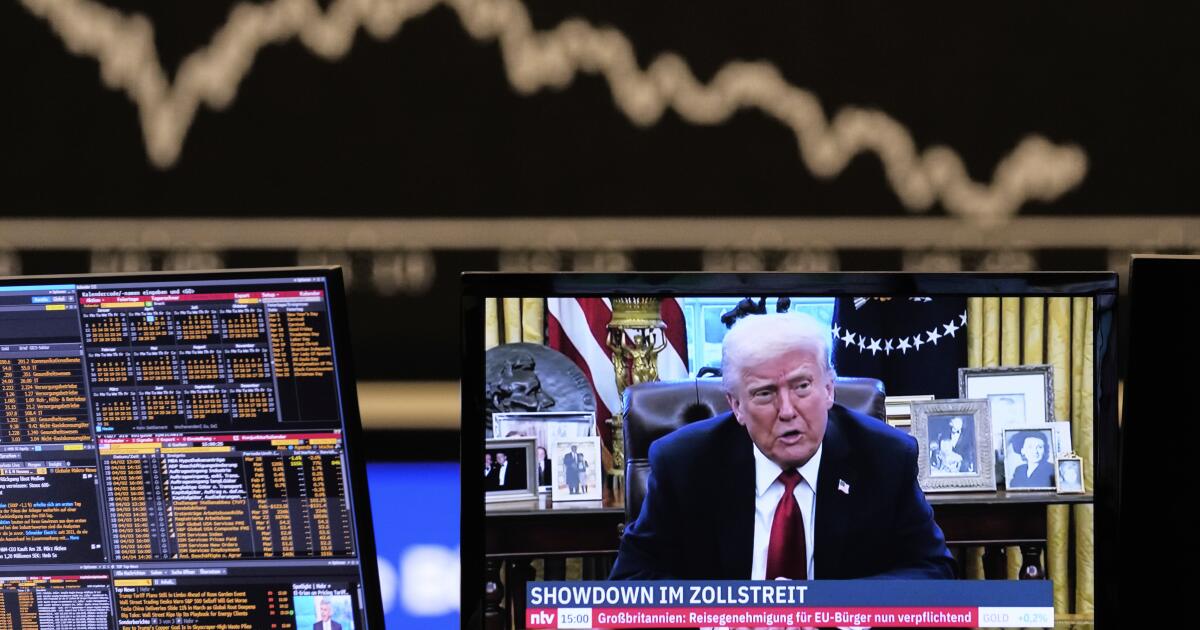
Commentary: How Trump helped foreign markets outperform U.S. stocks during his first year in office

Philip Glass canceled a Kennedy Center show, but this conductor brings his work center stage at L.A. Opera

Florida High School Football Rankings: Top 25 teams – Oct. 21

Cleary's 21 help Le Moyne down Central Connecticut State 69-64 in OT

How old is Bo Nix? What to know about Oregon quarterback ahead of 2024 NFL Draft

99th annual Pony Swim held in Virginia

Indiana Members Credit Union announced as new anchor tenant at Bottleworks District

Has India’s influence in Afghanistan grown under the Taliban?

Bill Clinton to testify before House committee investigating Epstein links

Read Judge Schiltz’s Order

Vulnerable House Dem lashes out at Trump’s ‘racist’ SOTU challenge: ‘That was uncomfortable’

Italy calls for suspension of EU carbon market
-

 World1 day ago
Exclusive: DeepSeek withholds latest AI model from US chipmakers including Nvidia, sources say
-

 Massachusetts2 days ago
Mother and daughter injured in Taunton house explosion
-

 Montana1 week ago
2026 MHSA Montana Wrestling State Championship Brackets And Results – FloWrestling
-

 Oklahoma1 week ago
Wildfires rage in Oklahoma as thousands urged to evacuate a small city
-

 Louisiana4 days ago
Wildfire near Gum Swamp Road in Livingston Parish now under control; more than 200 acres burned
-

 Technology6 days ago
YouTube TV billing scam emails are hitting inboxes
-

 Denver, CO2 days ago
10 acres charred, 5 injured in Thornton grass fire, evacuation orders lifted
-

 Technology6 days ago
Stellantis is in a crisis of its own making