Illinois
Four Downs and Bracket: Northern Illinois is beauty, Texas the beast and Shedeur Sanders should opt out


Davis Warren: ‘Standard hasn’t changed’ after Michigan loss to Texas
Michigan Wolverines quarterback Davis Warren said the reigning national championship team’s “standard hasn’t changed” after losing 31-12 to Texas.
First Down
This is the danger of overreaction, of penciling in favorites and roaming blissfully unaware through the minefield that is the college football regular season.
A week ago, Notre Dame had a clear path to the College Football Playoff. Now there’s wild uncertainty under the Golden Dome after a 16-14 loss to Northern Illinois.
A week ago, Irish quarterback Riley Leonard gutted out a big win at Texas A&M, fighting a defense full of elite athletes and going head-to-head with Mike Elko, his former coach at Duke. Fast forward to an unusually chilly September Saturday afternoon in South Bend, Indiana, with little ol’ Northern Illinois staring back from the other side of the ball.
Leonard threw two interceptions, averaged one lousy yard per carry and the Irish looked like a team in disarray — a week after strutting like a playoff team.
When will we ever learn?
This is the beauty of college football, and its perfectly imperfect fall Saturdays. Sometimes it’s not so much about bluechips and big NIL deals as it is want. Who wants it more?
A roster full of blue chip recruits with strapping, rising 30-something coach Marcus Freeman building what seems like a national power, or a bunch of MAC castoffs with tough love coach Thomas Hammock, who looks more like John Candy than John Heisman.
He was blubbering on the field at Notre Dame Stadium as the sun set over Touchdown Jesus, yet speaking so poignantly about players doing the right things, and listening and taking coaching. Football is more than NIL deals, he said.
You better believe it is. More times than not, it’s about who wants it more.
Like gutty and gritty Northern Illinois quarterback Ethan Hampton, who threw for 198 yards and had a few key runs ― including converting a key fourth-down run on the game-winning drive. Prior to this season, he had nine career passing touchdowns against eight interceptions.
Or running back Antario Brown, who was 13 when his mother was shot and killed outside their apartment in Savannah. After rushing for nearly 1,300 yards last season, he could’ve left NIU for a Power Four team and earned a sweet NIL deal.
But he stayed with the school who first recruited him, much like he did when leaving high school despite an offer from South Carolina.
HIGHS AND LOWS: Michigan mess and Texas triumph lead Week 2 winners and losers
Or Hammock, a star running back at NIU in the early 2000s who bounced around in college football and the NFL coaching running backs, before his alma mater asked him to come home in 2019. And then back him over and over despite some rough spots, including a three-win season in 2022.
So yeah, he was weeping in the biggest moment of his coaching career. So were his players as they dove into the stands to celebrate with the few hundreds who made the 150-mile drive east to witness history.
This is college football. Not daily pontificating or weekly overreactions or looking down a three-month road and declaring no one is beating Notre Dame. Until Northern Illinois does.
And picks up a cool guarantee game check worth $1.4 million in the process, thank you.
Second Down
Of all the critically bad decisions to chance for college football administrators, there are defining moves that somehow continue to be made through emotion.
Hiring a head coach shouldn’t be a heart over head proposition, but here we are, and the strange scenario continues to play out when it shouldn’t. From beloved assistant coach to head coach — to overwhelmed by the moment.
All because emotion clouded judgment in the hiring process, and the ”players’ coach” or “the importance of transition” or “you know what you’re getting” meant more than finding the right coach.
Speaking of a clouded process, it may be time to give Michigan coach Sherrone Moore an early invite to the waiting room of bad decisions.
Because after Michigan’s 19-point home loss to Texas (it wasn’t that close), Moore looks a lot like Bobby Williams at Michigan State. Or Randy Shannon and Manny Diaz at Miami, Ron Prince at Kansas State and Matt Luke at Ole Miss.
And that’s just a handful of assistant coaches who got their first power conference head coaching job when elevated at their respective schools — and were then engulfed by it all. They were “players’ coaches” who were hired in the heat of the moment and amid the fanfare of player support, after the previous coach either took another job, retired or was fired.
Williams followed Nick Saban (left for LSU), Shannon followed national championship coach Larry Coker (fired), Diaz followed Mark Richt (retired), Prince followed Bill Snyder (retired) and Luke followed Hugh Freeze (fired).
Only Diaz, now coaching Duke, got a second chance as a Power Five conference head coach.
Now here we are with Moore, who won four games as an interim coach last year during Michigan’s national championship season while former coach Jim Harbaugh was suspended. But that was with a loaded team, built over the years by Harbaugh and built specifically to peak during the 2023 season.
Moore took over, and had to find a quarterback (he didn’t land one from the transfer portal despite the deep group of candidates), and replace the entire offensive line and wide receiving corps.
After an uninspiring season opening win over Fresno State, the Wolverines looked outcoached and outclassed against Texas. Michigan had 284 yards — 78 on the last drive of the game against Texas backups — converted only 3-of-12 third downs and had three turnovers.
Moore looked shellshocked from the first drive of the game, when a questionable holding call negated a Texas touchdown. The Longhorns then missed a short field goal.
Then it got worse for Moore and Michigan, which had four win streaks snapped with the loss: 16 consecutive wins overall, 23 consecutive home wins, 28 consecutive wins in August and September, and 23 consecutive non-conference home wins.
The Wolverines were an operational mess on both sides of the ball. Quarterback Davis Warren was shaky in his second start, and the play calling was uninspiring.
The run game — the anchor of Harbaugh’s Michigan teams — rushed for 80 yards on 23 carries, and has produced 228 yards in two games. The defense wasn’t much better, giving up nearly 400 yards before the Longhorns shut it down in the fourth quarter to salt away the win.
“I liked our poise and I liked our composure,” Texas coach Steve Sarkisian said after the game.
A team, and a coach, that wasn’t distracted in a critical moment.
Third Down
Here we go again. Another one-possession game, another loss for Arkansas.
And another excuse to turn up the heat on embattled Hogs coach Sam Pittman.
Just in case you’ve forgotten what the last two years of Arkansas football looked like, turn on the DVR and watch Arkansas give away a big road win Saturday at No.16 Oklahoma State. The Hogs led by 14 at halftime and eight in the fourth quarter, yet couldn’t get out of Boone Pickens Stadium with an important non-conference win.
This one ended in the second overtime with Arkansas failing to convert on fourth-and-1 from the OSU 6. It also ended as the 15th one-possession loss under Pittman since 2000. Fifteen.
More: Biggest nonconference games of 2024 College Football Playoff race
They’ve ended in every conceivable way: from Saturday’s loss of a yard when the Hogs needed only one, to holding Mississippi State to 205 total yards and losing 7-3 when Pittman admitted he “didn’t know what to do” when faced with the decision of kicking a long field goal or punt.
Then there was the missed game-winning field goal against Texas A&M when the kick hit the top of the upright. Yes, the top. In a stretch last season that included three losses by one possession against Brigham Young, LSU and Ole Miss, Arkansas had a combined 35 penalties.
The latest unsettling loss to Oklahoma State, a game the Hogs had control of deep into the second half, shines more concern on the one-possession losses. it also underscores losses for Arkansas in nine of its last 10 games against power conference teams — the only win in overtime at Florida.
“I’ve had success,” Pittman told me in July. “I’m not concerned about ‘Oh, he’s a failure.’ Hell no, I’m not a failure. And I’m not going to do something different because I’m worried about a job.”
Fourth Down
it’s time for Shedeur Sanders to hear some harsh truth. And it has to come from his coach, and father, Deion Sanders.
It’s time to opt out. Of the season.
I’m half joking, but imagine being Colorado star quarterback Shedeur Sanders, an elite NFL draft prospect and possibly a Top five overall pick, knowing the beatdown is coming, week after week, while playing behind a horrific offensive line.
Why stand tall and absorb those hits and take that physical pounding for what looks like a three- or four-win team? What exactly is the sense of this exercise?
The Colorado offensive line gave up 56 sacks last season ― that’s right, 56 ― and after two games against North Dakota State and Nebraska, this year’s group looks worse. Why in the world would Deion (the coach or the dad) throw his son behind this mess of an offensive line, knowing it could lead to the only thing that could prevent his son from being one of the first players selected in the draft?
OK, so opting out of the season is too harsh. Let’s start with opting out of games when you’re down four touchdowns.
The Bracket
First round byes:
(1) Georgia, (2) Ohio State, (3) Miami, (4) Oklahoma State
First round games:
(12) Liberty at (5) Texas
(11) Penn State at (6) Alabama
(10) Missouri at (7) Oregon
(9) Southern California at (8) Ole Miss



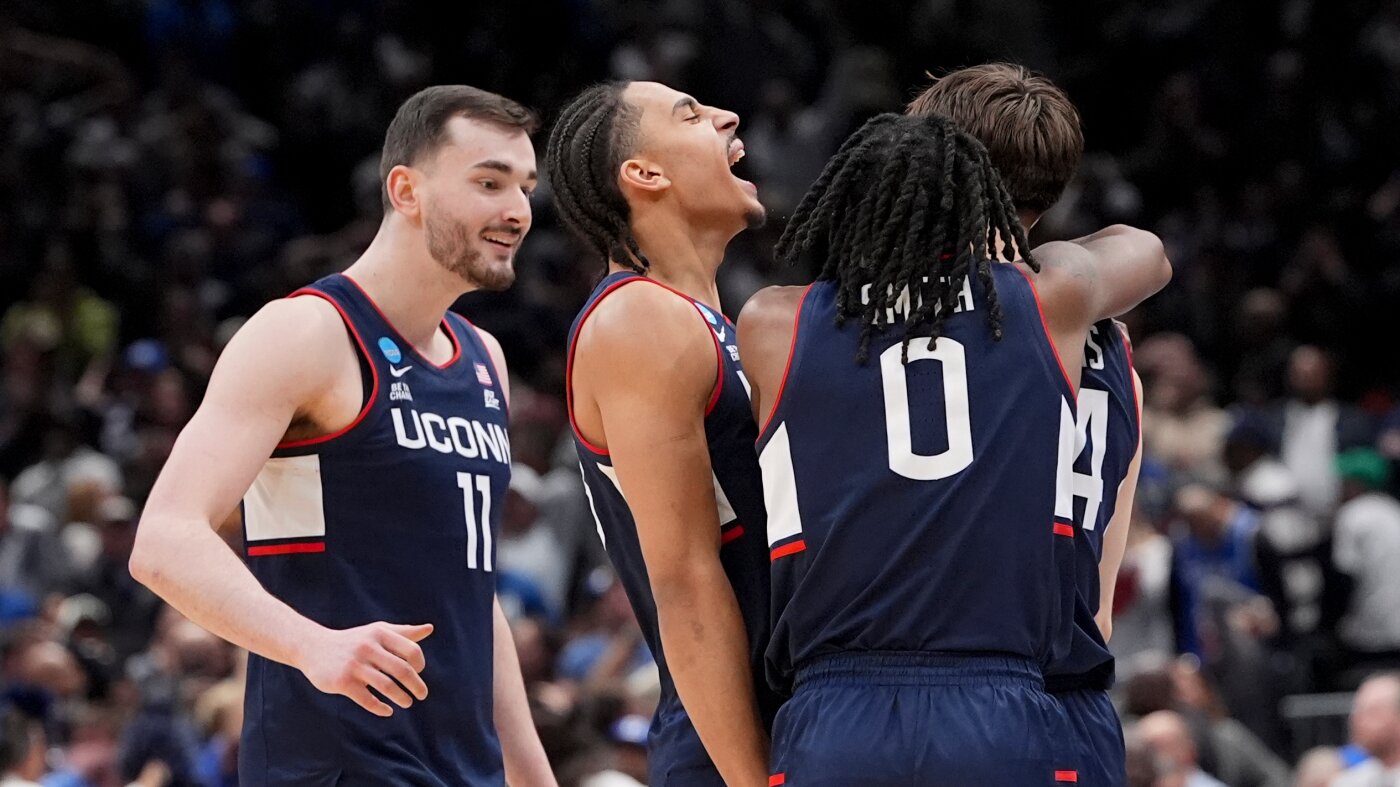
UConn guard Braylon Mullins, right, celebrates his game winning basket with guard Malachi Smith (0) during the second half in the Elite Eight of the NCAA college basketball tournament against Duke, Sunday, March 29, 2026, in Washington.
Stephanie Scarbrough/AP
hide caption
toggle caption
Stephanie Scarbrough/AP
All that talent at Arizona and Michigan. All that momentum and good vibes at UConn. And somebody has to be play the part of the unheralded “little guy.” At the Final Four next weekend, that role belongs, improbably, to Illinois.
In a sign of the times, the Illinii — a Big Ten team with more wins in the conference over the last seven seasons than any other program — will pass for something resembling Cinderella when college basketball’s biggest party kicks off in Indianapolis on Saturday.
The first challenge for coach Brad Underwood’s team will be stopping a hard-charging UConn juggernaut that came from 19 points down and got a game-winner from the logo with 0.4 seconds left from an Indy native — Braylon Mullins — to make its third Final Four in the last four years.
The last two times the Huskies reached this point, they won the championship.
“It’s a UConn culture, a UConn heart,” coach Dan Hurley said. “We believe we’re supposed to win this time of year.”
All these teams do.
Arizona, led by Brayden Burries, and Michigan, with Yaxel Lendeborg, have up to nine NBA prospects between them.
The Wildcats opened as slight favorites — at plus-165 to win the championship, according to BetMGM Sportsbook. That was a shade ahead of the Wolverines, who are plus-180 after their 95-62 romp over Tennessee on Sunday.
But, in one of a few strange twists on the odds chart, the Wildcats are 1 1/2-point underdogs to Michigan in Saturday night’s second semifinal.
Illinois is a 2 1/2-point favorite over UConn and, in reality, it’s the Huskies, at plus-550, who are the biggest long shot in Indy.
Even so, the fact that Illinois — the flagship university in the nation’s sixth most populous state and a school with an enrollment of nearly 60,000 — feels most like this year’s out-of-nowhere underdog speaks more about the current state of college hoops than the Illini themselves.
They are a No. 3 seed — the highest number at the Final Four in two years. (UConn is a 2. Last season, all four No. 1s made it.)
This year’s meeting of 1 vs. 1 — Michigan vs. Arizona — is a heavyweight matchup of power teams from power conferences meeting with everything at stake.
It’s a far cry from a mere three years ago, when mid-majors Florida Atlantic (coached by Dusty May, who now leads the Wolverines) and San Diego State crashed college basketball’s biggest party.
Since then, NIL and the transfer portal have redefined the contours of player movement, another spasm of realignment has made the big conferences bigger (Arizona, now in the Big 12, was in the Pac-12 in 2023), and the high-achieving underdogs that used to make March Madness what it is have gone into a slump.
Double-digit seeds won a total of five games in this tournament (not counting the play-in round). Two years ago, they won 11 and sent one team (N.C. State) to the Final Four.
Not surprisingly, Underwood — the coach who landed on the Illinois radar a decade ago by coaching double-digit seed Stephen F. Austin to a pair of upset wins in the tournament — views his program’s trip to the Final Four more as destiny than a once-in-a-lifetime story.
It is, however, the first trip for Illinois since 2005, when it lost to North Carolina in the title game.
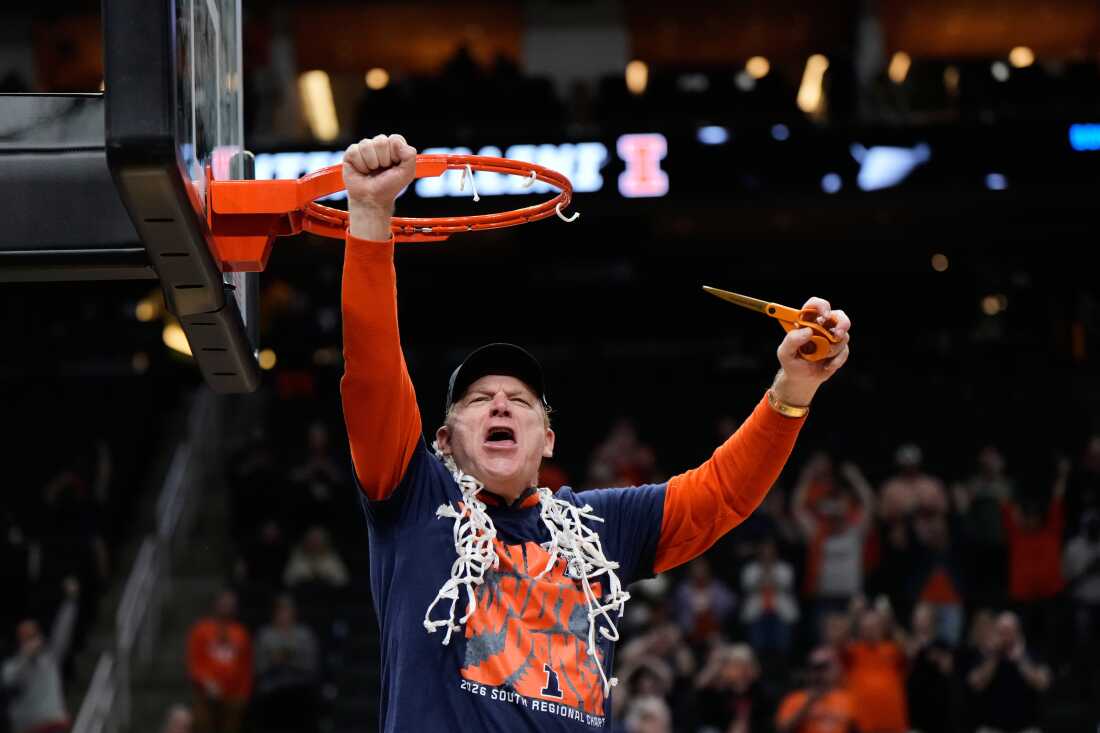
Illinois coach Brad Underwood celebrates after Illinois beat Iowa in an Elite Eight game in the NCAA college basketball tournament Saturday, March 28, 2026, in Houston.
Ashley Landis/AP
hide caption
toggle caption
Ashley Landis/AP
“I don’t want to sound arrogant,” said Underwood, whose teams have won 96 Big Ten games since 2019-20, two more than Purdue. “I’ve never doubted us getting to a Final Four would happen. I have thought we have had other teams capable. But I also know how doggone hard it is to do it.”
The Big Ten knows all about this. Both Illinois and Michigan have a chance to deliver a title for the conference for the first time since Michigan State won it all in 2000.
Illinois vs. UConn
The Illini, led by the so-called “Balkan Bloc” — a cohort of players with roots in Eastern Europe — have a potential NBA lottery pick of their own in guard Keaton Wagler.
Even so, the best-known name on the Illini roster might be Andrej Stojakovic, whose father, Peja, was a three-time NBA All-Star. Illinois is the third school in three years for the younger Stojakovic, who spent one season at Stanford and another at Cal before joining Underwood’s crew.
The task for Illinois: Figuring out who to key on across a roster that has five players who average double figures, led by Tarris Reed Jr.
Michigan vs. Arizona
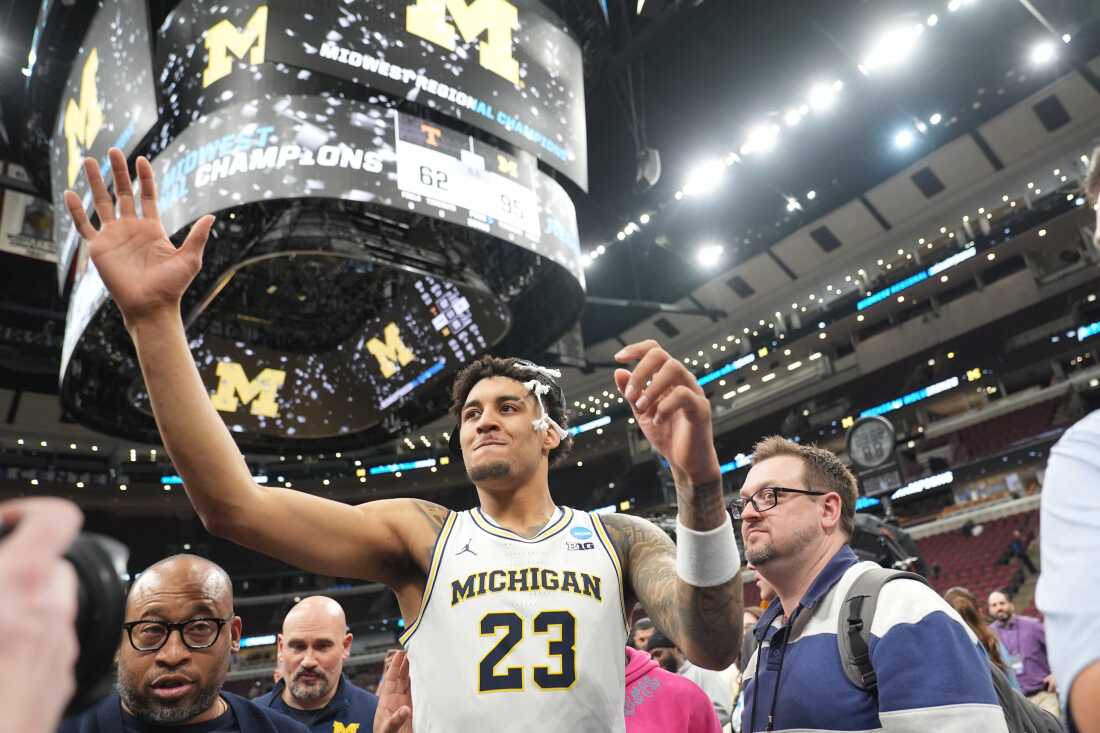
Michigan’s Yaxel Lendeborg (23) celebrates after defeating Tennessee in the Elite Eight of the NCAA college basketball tournament, Sunday, March 29, 2026, in Chicago.
Erin Hooley/AP
hide caption
toggle caption
Erin Hooley/AP
The Wildcats-Wolverines game is a high-powered matchup of programs that have shown there’s more than one way to amass talent in the era of the unlimited transfer portal and big-money name, image and likeness deals.
Four of the five starters for Tommy Lloyd’s Wildcats began their careers in Tucson; the fifth, Big 12 player of the year Jaden Bradley, moved over from Alabama and has been with the Wildcats for three years.

Meanwhile, the top four players in minutes played at Michigan — Lendeborg, Morez Johnson Jr., Aday Mara and Elliot Cadeau — all arrived from the transfer portal.
In a twist that makes perfect sense these days, both coaches parlayed roots in the mid-majors to a spot on the sport’s biggest stage. Lloyd spent decades as a top assistant for Mark Few at Gonzaga before heading to Arizona to rebuild the program after the ouster of Sean Miller in 2021.
May led FAU to the Final Four before heading to the Michigan program that had thrived, then collapsed, under former Fab Five star Juwan Howard.

Once again, the NFL pre-draft circuit is in full effect, as teams spread out their staff all over the country to try and ensure they view as many pro days as physically possible. With some of the most substantial schools being next up on the schedule, it is going to draw national attention from the media, especially with results from the top prospects and potentially some passing drills from the quarterbacks.
Among the plentiful news coming out of these events is some intriguing meetings from the New Orleans Saints, with one of the most recent being Illinois guard Josh Gesky, who they met with at the school.
Gesky had an extremely impressive 2025 season when it comes to the metrics, allowing only 1 sack and 12 pressures, while only having 1 penalty tied to his name. While his run blocking left a bit to be desired, he has shown promise there in previous years, and it is something he has been solid at in various years.
At 6-foot-5 and 335 pounds, he has great size and has quite a few distinctions during his time at Illinois. He was listed as a Big Ten Distinguished Scholar in 2023, an Academic All-Big Ten from 2022 to 2025, and was an All-Big Ten Honorable Mention from 2023 to 2025. These types of things certainly factor into potential draft selections, and with the Saints needing another guard, Gesky could be an option for them in 2026.

No. 3 Illinois knocked off No. 9 Iowa on Saturday night in Houston, now they’re advancing to the Final Four in the men’s NCAA Tournament.
The Fighting Illini pulled away late and ended their the Hawkeye’s Cinderella run in the Elite Eight with a 71-59 victory.
SHOP: Illinois Final Four tickets
Illinois fans know this is special, it’s the team’s first Final Four appearance since 2005, so now it’s time to celebrate.
Get the gear the players wore on the court, including Illinois Final Four hats, Illinois Final Four shirts, and more.
Shop ALL Illinois Final Four gear
Illinois Final Four hat
Illinois Final Four shirt
Illinois Final Four game location
Illinois will play its Final Four game at Lucas Oil Stadium in Indianapolis. Get your Illinois Final Four NCAA Tournament tickets now.
Shop Illinois Final Four tickets
Illinois Final Four appearances
The last time the Illinois Fighting Illini men’s basketball team made the Final Four was in 2005. They also made it in 1989, 1952, 1951 and 1949.
When is the Final Four?
The 2026 NCAA Tournament concludes with the Final Four on Saturday, April 4 and the National Championship game on Monday, April 6. Saturday’s games are scheduled for 6 p.m. and 8:30 p.m. ET respectively, while the National Championship game is set to tip at 8:30 p.m. ET on Monday, April 6.
March Madness 2026 full schedule for the men’s tournament
- March 19-20: First round
- March 21-22: Second round
- March 26-27: Sweet 16
- March 28-29: Elite 8
- April 4-5: Final Four
- April 6: National Championship
Shop ALL March Madness tickets

Meet Garret, Your Newest Morning Show Host on 97.5 WOKQ

Power Players: FIFA World Cup 2026 — New York / New Jersey World Cup Host Committee

I-25 northbound maintenance slows commute between Albuquerque and Santa Fe

WNC wildfire updates for Monday, March 30, 2026

North Dakota punches ticket to 23rd Frozen Four in SF

Florida High School Football Rankings: Top 25 teams – Oct. 21

How old is Bo Nix? What to know about Oregon quarterback ahead of 2024 NFL Draft

Cleary's 21 help Le Moyne down Central Connecticut State 69-64 in OT

99th annual Pony Swim held in Virginia

Indiana Members Credit Union announced as new anchor tenant at Bottleworks District

Video: Iran to Allow More Oil Ships Through Strait of Hormuz, Trump Says

Dem senator warns deportation could let Virginia woman’s illegal immigrant killer ‘escape accountability’

Newsletter: G7 ministers to hold talks on war’s economic fallout
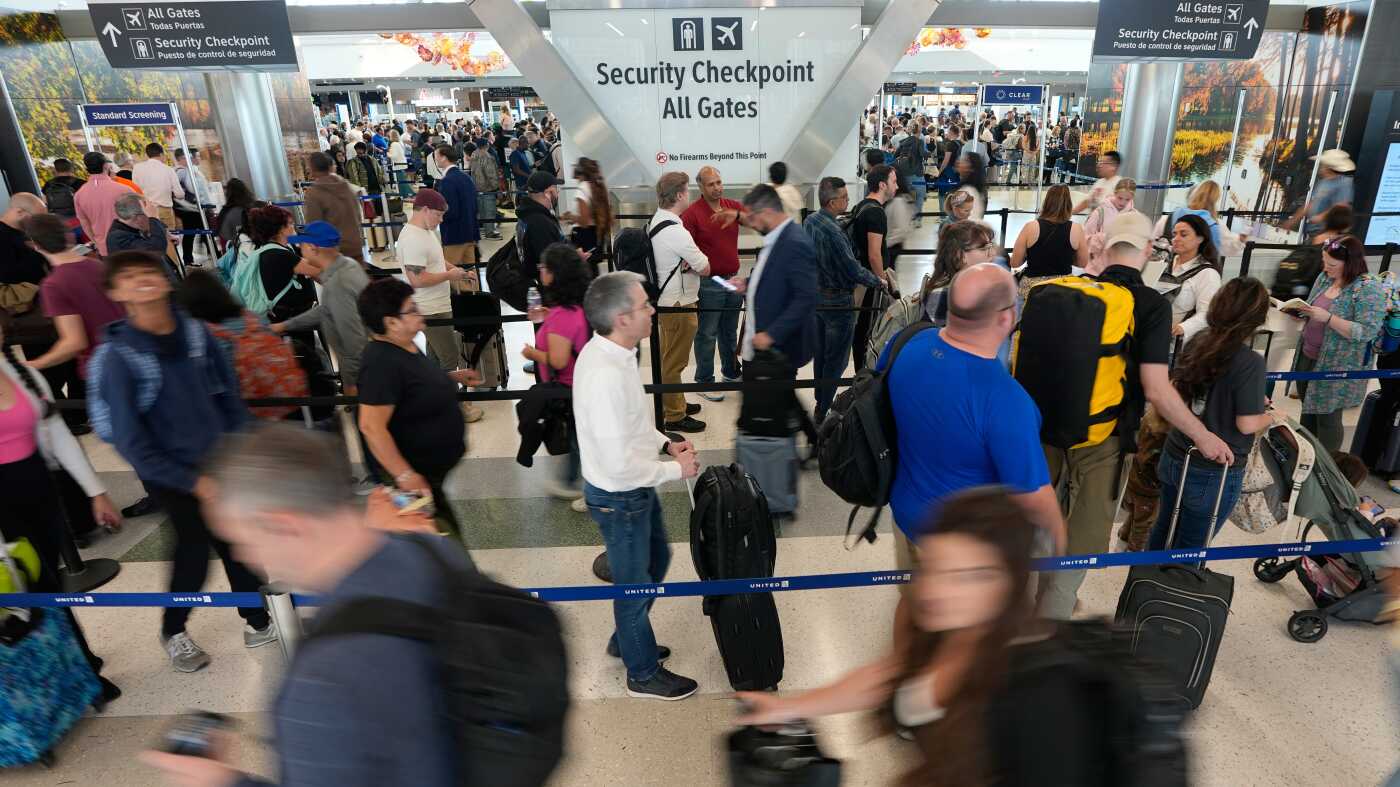
ICE officers could remain at airports after TSA workers are paid

Scathing report claims nation’s oldest labor union ‘betrayed’ MAGA members through ‘shocking’ spending
-

 Sports1 week ago
IOC addresses execution of 19-year-old Iranian wrestler Saleh Mohammadi
-

 Miami, FL4 days ago
Jannik Sinner’s Girlfriend Laila Hasanovic Stuns in Ab-Revealing Post Amid Miami Open
-

 New Mexico1 week ago
Clovis shooting leaves one dead, four injured
-

 Politics1 week ago
Schumer gambit fails as DHS shutdown hits 36 days and airport lines grow
-

 Tennessee7 days ago
Tennessee Police Investigating Alleged Assault Involving ‘Reacher’ Star Alan Ritchson
-

 Minneapolis, MN4 days ago
Boy who shielded classmate during school shooting receives Medal of Honor
-

 Science1 week ago
Record Heat Meets a Major Snow Drought Across the West
-

 Technology1 week ago
YouTube job scam text: How to spot it fast