Illinois
Buckeyes Wilt Down The Stretch, Fall to Illinois – Press Pros Magazine


Bruce Thornton scored 20 points and dished out 10 assists, but the Buckeyes fell to Illinois 77-74 in the Big Ten Tournament. (Press Pros File Photos)
Hamstrung by foul problems and unable to get the one last break needed for yet another star on its NCAA Tournament resume, Ohio State came up just short against second-seeded Illinois in the Big Ten Tournament.
 Minneapolis, MN – A quick glance suggests Ohio State came up an agonizing three points short of the upset win over second-seeded Illinois that it needed Friday at the Big Ten Tournament.
But, really, the Buckeyes’ came even closer than their 77-74 loss that, had it ended differently, just might have landed OSU (20-13) in the NCAA Tournament.

Veteran columnist Bruce Hooley writes Ohio State basketball and sports at large for Press Pros Magazine.com.
In reality, Ohio State was as close as one additional rebound in the waning seconds…one who-knows-what-he-was-thinking mistake at the wrong time by an OSU senior…or one official’s call that should have fouled out Illinois’ best player with six minutes to play.
Any of those – and Ohio State likely needed only one of them – could have been enough to avert the Illini’s escape in a game the Buckeyes led by 10 points with 11 minutes left and three points with 1:41 remaining.
Instead, OSU went scoreless thereafter and Illinois made all six of its free throw attempts to end the Buckeyes’ fairy-tale rally in the aftermath of former head coach Chris Holtmann’s firing on Valentine’s Day.
 Why was Ohio State fouling at the finish, when leading, 74-71, via Jamison Battle’s shot in the lane at 1:41?
Well, after Terrence Shannon’s two free throws at 1:28 cut that margin to one, Battle tried again with a hard drive to the hoop that drew contact, but no foul, resulting in a jump ball to Illinois.
Coleman Hawkins then put the Illini in front for the first time since late in the first half with another pair from the line, where Illinois would finish 21-of-32 to OSU’s 10-of-13.
Now down, 75-74, OSU crossed midcourt and, before it could set up much of anything, watched backup center Zed Key to set quite possibly the worst excuse for a screen in the history of college basketball.
Key positioned himself to impede Hawkins covering Battle three feet behind the three-point line. But, for some inexplicable reason, Key then just fell into Hawkins like an oak tree on the wrong end of a sharpened chainsaw.
In a game where officials let Illinois hammer Ohio State mercilessly in the post for offensive rebounds – a sickening 19, to be exact – Key’s nonsense couldn’t be ignored when committed it in full view of everyone in the Target Center.
Leading by one and seeking further separation from the Buckeyes, Illinois’ Marcus Domask missed yet another jumper on a night the first-team All-Big Ten wing went an abysmal 3-of-16 from the field.
But Ohio State let Hawkins grab the rebound with 32 seconds left.
 No worries, right?
Just play great defense, regain possession after the Illini consumed however much of the 18 seconds they had left to shoot, then either preserve the win at the free throw line or hold for a final, game-winning attempt.
Instead, Shannon did Ohio State a big favor.
Not as big a favor, mind you, as officials did Shannon when they ignored his bull-in-a-china-shop steamrolling of OSU’s Bruce Thornton with six minutes left.
Thornton was in defensive position and backpedaling only slightly when Shannon, who has no gear below overdrive, flattened him driving to the rim just 29 seconds after checking back into the game.
Officials pretended their whistles were a delectable dessert, swallowing them obligingly and sending Shannon to the line for a pair of free throws that he drained.
More importantly, the call spared Shannon banishment to the court-side seat he should have occupied the remainder of the night…kinda like the temporary restraining order that’s allowed Shannon to play since January despite facing up to 54 years in prison on a rape charge that will go to trial in May.
Don’t you just love college sports?
Fast forward to the final 32 seconds, with Shannon at the top of the key, where he let fly a hoped-for clinching triple that instead came up well short.
 Ohio State, though, whiffed again on the rebound and Hawkins, again, grabbed it.
Forced to foul on the inbounds, OSU put Shannon on the line at 11.3 and he hit both, leaving the Buckeyes down, 77-74.
The anticipated Illinois foul on the Buckeyes’ ensuing possession never happened, with Battle getting off a contested triple under heavy duress that could have tied it.
Instead, it came up just short, as did his heave from midcourt after stealing an Illini inbounds pass in the final second.
“I’m just glad everyone got to see what’s in this locker room,” interim coach Jake Diebler said of the team that lost nine of Holtmann’s final 11 games, but went 6-2 thereafter. “My belief in them has never waivered.

Koverman,Staley, Dickerson proudly supports your favorite high school sports on Press Pros Magazine.
“We understand that things didn’t go as any of us anticipated for a certain stretch of the season, but we have great players in here who care so much about this program.”
Illinois coach Brad Underwood, who stomped and spat and sputtered throughout timeouts in an attempt to awaken his team to shake an opponent it beat by 12 points in Columbus, was not happy with what he saw on OSU’s final possession or all night.
“We were supposed to foul when they came across half-court,” Underwood said. “That was a mess. We got lucky.”
Shannon’s 28 points and 18 off the bench from backup bouncer – er, center – Dain Dainja delivered the Illini (24-8) from an OSU upset bid built on Battle’s 21 and Thornton’s 20.
The Buckeyes bench, which contributed a collective 37 in a Thursday win over Iowa, managed just 20 this time around with Devin Royal (6 points, 2 rebounds) limited to just 19 minutes because of foul trouble.
OSU center Felix Okpara had 10 rebounds and four blocks, but scored just four points in 24 minutes, fouling out with 2:27 to go to invite Illinois’ crippling dominance of the offensive glass down the stretch.
Officials called Ohio State for 27 fouls to Illinois’ 13, including seven on the Buckeyes in the last 5:44, at which point OSU held a 65-61 lead. The Illini were not whistled for a single foul over that span.
“We talked about the most important real estate being what was in the paint,” Diebler said. “We just couldn’t get the rebound we needed when we needed it there af the end, but that doesn’t change anything I feel about this team and how they responded.”

Wilson Health proudly sponsors the best in area sports coverage on Press Pros Magazine.com.

Illinois
Illinois awards AD Josh Whitman a new contract worth more than $31 million over the next 10 years

CHAMPAIGN, Ill. — Illinois has extended athletic director Josh Whitman’s contract through 2036, committing more than $31 million over the next 10 years on the heels of a series of standout seasons for the department and its teams.
The university’s board of trustees approved the new deal for Whitman at its regular meeting on Thursday. The fifth-longest tenured AD among the four power conferences will make $2.15 million during the 2026-27 school year, a salary increase of more than 40%.
Whitman is scheduled to receive $100,000 raises annually before a $200,000 bump to $3.15 million in the final year of the agreement and a $500,000 retention bonus each June 30 that he remains on the job at Illinois.
The contract also includes additional incentives of up to $500,000 annually related to performance goals set by the university chancellor and three automatic one-year extensions through 2039 if certain Illini football and men’s basketball performance measures are met.
Whitman, a former Illinois football player, was hired in 2016. This was the fifth time his contract has been amended. The men’s basketball team reached the NCAA Final Four in April for the first time in 21 years. The football team won 19 games over the last two seasons, a program record for that span. Illini athletics also set a revenue record for a fourth consecutive year and topped $200 million for the first time in 2025-26, according to the board of trustees meeting memo.

ESSEX, Ill. – It’s been two days since we first told you about Constellation Energy buying several hundred acres of land in or near the Village of Essex and it’s still anyone’s guess what they are going to do with all of that land.
Fox Chicago’s Unit 32 brought you this story and our Bret Buganski is still on the hunt for some answers.
“My thought is, well, I think we lost our butts and our house because we bought it at the premium golf course price and now we are essentially could be having a data center in our backyard,” Essex resident Taylor Gunier said.
Gunier and her family moved into this house last summer.
She has spent the last year working with other concerned residents to figure out what Constellation is going to do with the 700 acres of land they have purchased in and around Essex from June 2025 to February 2026.
Data center in Essex?
The backstory:
Following a Freedom of Information request to the Kankakee County Recorder, a Unit 32 investigation found Constellation spent $47.5 million dollars in fourteen different land deals.
Property records reviewed by Fox Chicago show the company purchased at least 505 acres in just nine months. The total is likely higher because some of the public records did not include the number of acres sold each time.
Unit 32 also found that two Essex Village Board members were sellers in five of those transactions.
“Essex does not have any industrial zoning ordinances, which I think is part of why Constellation chose us. We would have been an easy target with few regulations for them to abide by,” said Essex resident Kylee Raney.
Raney is part of the Essex Coalition, a group of concerned residents following every move between the Essex Village Board and Constellation Energy.
It has also been making some of its own moves.
“We’ve worked with a third party consultant and we have built out a draft of industrial zoning ordinances. They are based off of the Kankakee County industrial zoning ordinances along with some ordinances from Yorkville and the data center that is being built there. So we made sure to keep the language broad so it could cover a multitude of industrial uses, but we wanted to make sure the umbrella of that language included data centers. So we have a petition and we have doubled the numbers of our signatures there. The petition is to urge our village board members to pass industrial zoning ordinances. Even if you don’t know what they’re gonna build, even if Constellation doesn’t have their customer yet, you can put protections, legal protections, legally binding protections in place to ensure that we can mitigate noise pollution, sound pollution, we can monitor water usage. There are lots of avenues that we can take to build out the regulations to protect our future. No matter what happens,” Raney said.
While Raney says Constellation has not told them what they’re going to use the land for, the village board seems to be taking precautions for a data center.
On their website, the Essex Village Board wrote it “… has issued a formal notice establishing development standards and mitigation requirements for a proposed data center facility that may be located within the village.”
It also posted a letter. The subject line says it is a notice about “development standards and required mitigation response plan” for a data center.
What they’re saying:
“Now, as far as buying that big land in Illinois, there could be multiple reasons. I don’t know what they’re going do with it,” said Mohammad Shahidapur, a distinguished professor of electrical and computer engineering at the Illinois Institute of Technology.
Shahidapur has been teaching for 43 years.
Given his background, we asked him for his objective opinion as to what Constellation could be doing with all of this land.
“They could be building a big solar farm because having a nuclear unit, we can sort of reduce the issues because sun doesn’t shine all the time. So then once the sun is shining, you know, basically, they can sell that and then when the sun is not shining they can replace it by nuclear. That could be one reason. They could be also going after data centers in a sense maybe they’re lining up with some of these tech companies to build more data centers and providing power through their nuclear units, so it’s sort of a joint venture,” Shahidapur said
The statement Constellation sent us when our story first aired says in part: “Constellation is seeking to annex land into Essex near the Braidwood Clean Energy Center to help the company strategically market the facility’s carbon-free generation to potential future developers.”
“So, obviously, I’m not an insider at the company, but if I’m a betting man, I would bet based on buying a bunch of land, looking to annex it, that they’re looking to build out one of these data centers,” said Andrew Rocco, a stock strategist with Zacks Investment Research based in Chicago.
Rocco’s focus is on the tech industry and where it overlaps with the energy sector.
So we also asked him for his unofficial analysis on what he thinks Constellation may do with the 700 acres of land they purchased in and around Essex:
“Braidwood is the largest nuclear plant in Illinois. And as I mentioned before, getting these nuclear facilities through the regulatory red tape, even though kind of the Trump administration has said they’re pro-nuclear, but still there’s a ton of regulatory red tape and really nothing has been approved in the last 10 or 20 years. So having this already built out, I think it does around 2,400 megawatts of carbon-free baseload electricity. So this is exactly what these large tech companies are looking for. They’re looking for an immense amount of energy, dependable and clean. Now you can look at natural gas as an alternative to something like this, because obviously the startup costs are going to be lower for natural gas. And natural gas is very, very cheap. And it makes up the most amount of energy produced in the U.S. currently. But once you have a nuclear reactor already running, this one’s been running since the late 80s, you don’t have to worry about that. So the upfront costs have already been paid for. Now they’re looking likely to secure this large plot of land nearby to put a data center in and just connect it right up to that massive nuclear plant.”
Again — that is Rocco’s unofficial opinion on what Constellation may be doing with all that land.
Unit 32 reached out to Constellation to see if they would tell us what was going to happen with all of the land they bought in and around Essex. They told us that since they do not have a customer, they do not have any plans.
The Source: The information in this report came from interviews with Essex residents, statements from the Essex Village Board and Constellation Energy along with interviews with stock strategist Andrew Rocco and IIT professor Mohammad Shahidapur.

-
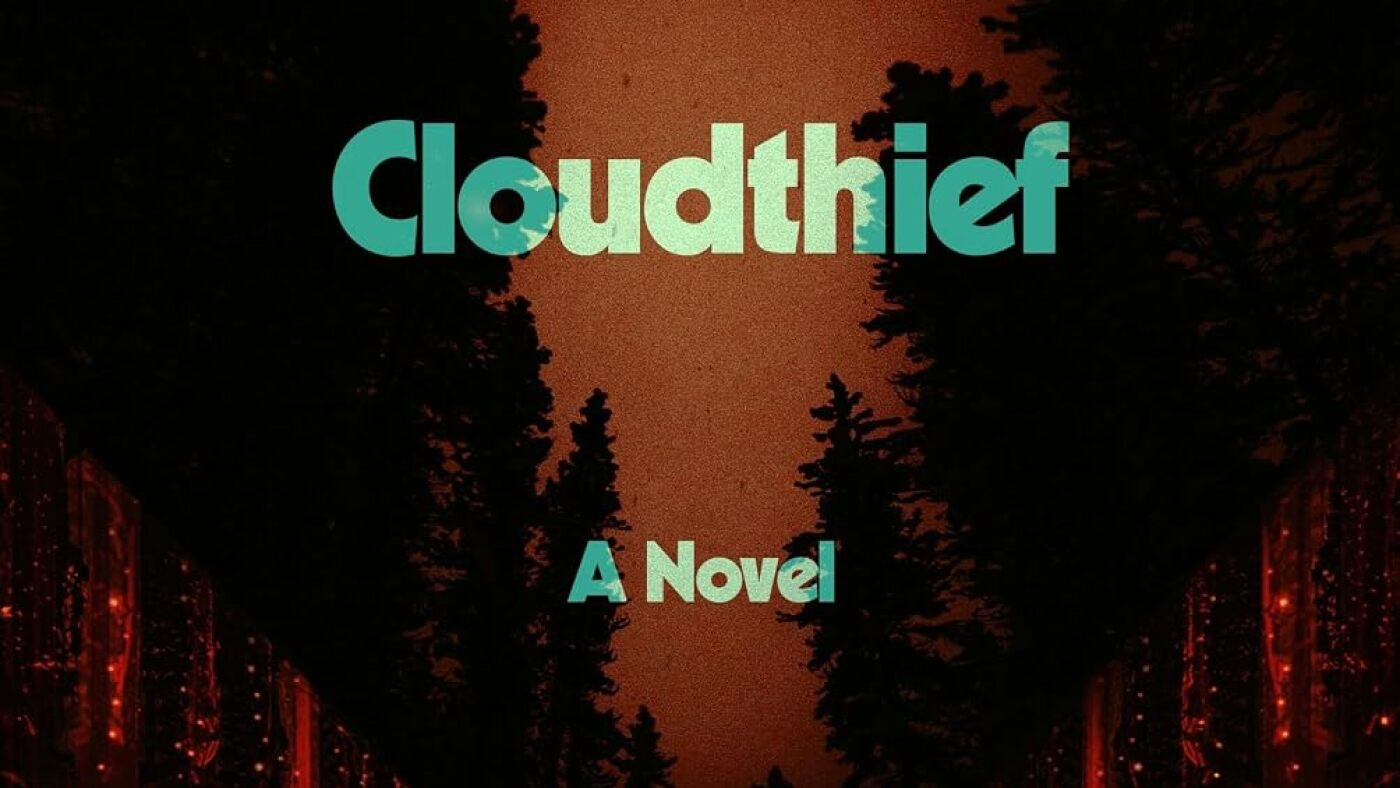 Lifestyle22 minutes ago
An eco-journalist takes on a Big Tech in this modern twist on the heist novel
-

 Technology34 minutes ago
Fortnite is getting a bunch of AI-powered ‘personas’
-

 World40 minutes ago
Resource-rich nation praises US ties amid Washington-Beijing critical minerals race
-

 Politics46 minutes ago
‘Shadow government’: Trump claims intel community bragged about hiding Chinese meddling
-

 Health52 minutes ago
Doctors reveal hidden danger for some Ozempic, Wegovy users with brain disorders
-

 Sports58 minutes ago
Olympic great Lindsey Vonn reveals her ankle is ‘still broken’ months after shocking crash
-

 Technology1 hour ago
Apple AirDrop, Android Quick Share flaws put phones at risk
-
 Business1 hour ago
Netflix reports higher profits as investors worry about growth

