Midwest
House GOP's razor-thin majority gets a little wider with Ohio special election victory

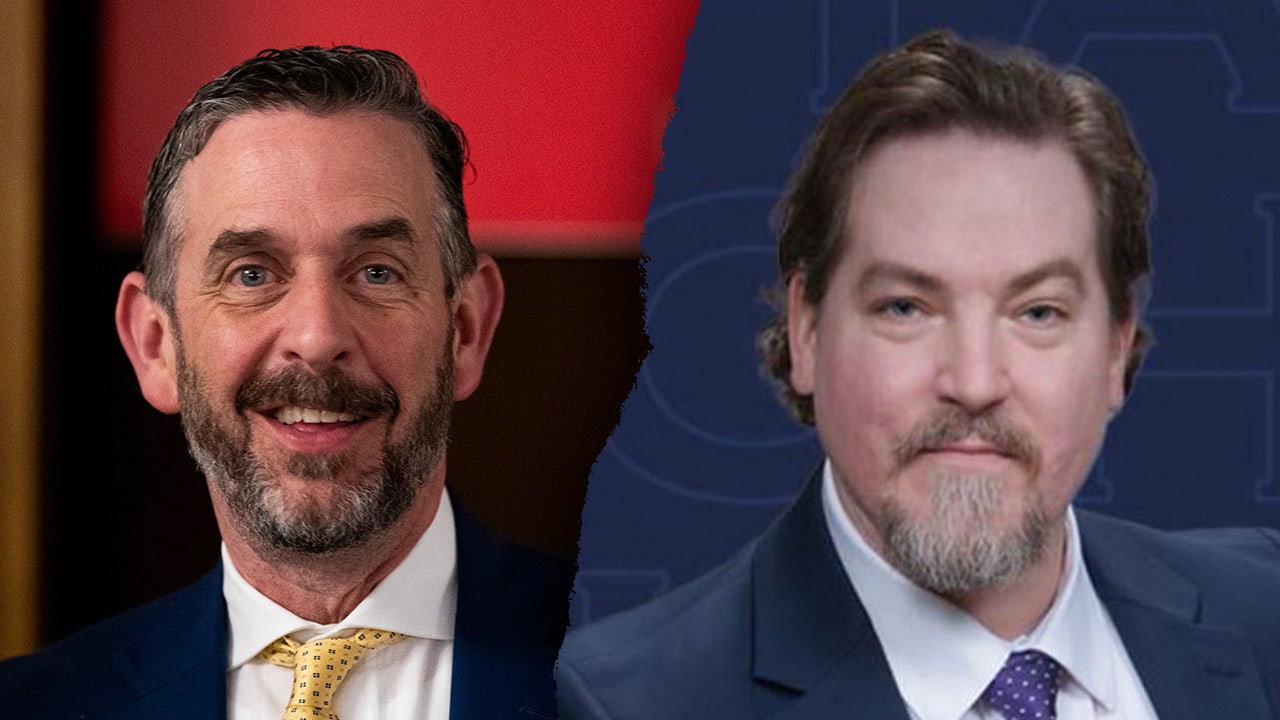
House Speaker Mike Johnson, R-La., got a bit of breathing room on Tuesday night when Republican Michael Rulli won the special election to replace retired Rep. Bill Johnson, R-Ohio.
Rulli is an Ohio state senator and a small business owner who touts himself as a “big natural gas guy,” according to the Ohio Capital Journal.
His family started and runs Youngstown-based grocery stores called Rulli Brothers Market, his campaign website stated. He was also president of the Leetonia School Board in Northern Ohio.
US ENERGY FUTURE ‘UNDER THREAT’ FROM BIDEN POLICIES: GOP REPORT
Ohio State Senator Michael Rulli, left, faced off against Air Force veteran Michael Kripchak, right, in the Ohio 6th congressional district special election. (Getty Images/@KripchakOH via X)
Rulli’s website also lists “priorities for Ohio families,” which include “energy independence,” the “right to bear arms” and “election integrity,” among other issues.
The local Ohio official was the favorite to win in the Buckeye State’s deep red 6th congressional district, which former President Trump won by more than 40 points in 2020.
EXPERTS REVEAL MAJOR ‘DOWNSIDE’ TO POTENTIAL TRUMP VP PICK: ‘NO WOW FACTOR’
Rulli’s victory gives Speaker Mike Johnson a bit more wiggle room in his razor-thin majority. (Getty Images)
His victory and eventual swearing-in will bring the total number of Republicans in the House GOP up to 219. It means Republican leaders can afford to lose three votes on any party-line measure, marginally better than the two-seat majority it’s been navigating for weeks.
Once sworn in, Rulli will serve out the rest of former Rep. Johnson’s term until November.
Johnson announced in November 2023 that he would be leaving the House to become president of Youngstown State University.
WATCH: POSSIBLE TRUMP VP PICK MAKES MAJOR PREDICTION ABOUT BLACK VOTERS AS BIDEN BLEEDS SUPPORT
Former Rep. Bill Johnson vacated the seat to be president of Youngstown State University. (Getty)
“After much thought and prayerful deliberation, I have accepted the offer to lead Youngstown State University and will not be seeking an 8th term in Congress,” Johnson wrote on X. “As I’ve stated previously, I wasn’t looking for another job, because I love the one I have serving the people of Eastern Ohio in the U.S. House. This was an extremely difficult decision.”
He left in late January of this year, just weeks after the departure of ex-Speaker Kevin McCarthy, R-Calif.
Read the full article from Here


DETROIT ― The crowd wasn’t large ― a smattering of about 40 or so people at Detroit’s historic Palmer Park just north of downtown on a warm and muggy summer evening.
The people who did show up were there because they feared something precious could be lost: the relationships between therapists and the people who trust them with their deepest wounds.
This is what democracy often looks like. A tent. Some speakers. Livestreaming on social media. And waning sunlight seemingly trying to figure out whether to set in fiery red-orange or fade behind rainclouds.
It was my pleasure to witness this moment firsthand because we live in a new era ― a period when the most powerful leaders in our government increasingly move to trample on our First Amendment rights. This was the second time within the past 30 days that I have found myself covering the debate surrounding Blue Cross Blue Shield of Michigan’s planned reimbursement policy changes affecting limited licensed mental health clinicians.
I’ve written previously about the policy itself. This time, though, something else captured my attention.
It was the people.
Last Friday night’s rally was organized by Caitlin Fleming, a mental health therapist and co-founder of Healer’s Choice, who demonstrated the kind of leadership that rarely makes headlines but often changes communities. She listened as much as she spoke. She created space for others to tell their stories. She reminded those gathered that advocacy is less about anger and more about refusing to become invisible.
At one point, Fleming shared that she lost her former husband to suicide.
Her words carried weight, especially because only days earlier I had written about losing my aunt Geraldine and how grief leaves permanent marks on those left behind. Mental illness, suicide and trauma are not abstract policy debates. Nearly every family carries a story. Every interruption in care has a human face.
That reality echoed through the entire evening.
Mars DeWitt, a limited licensed clinician who previously worked as a teacher, reminded us that change has happened before in Detroit. After addressing the audience, DeWitt told me that they watched the fight for teacher pay, recalling Detroit educators’ successful efforts to improve salaries. “So, I know it’s possible for therapists to fight back in a similar way.… Detroit is one of those inspiring cities in the world because we know how to fight back.”
Their words were less criticism than a declaration of home.
Congresswoman Rashida Tlaib, D-Detroit, connected the issue to another community she knows well: veterans.
“Every interruption in treatment increases the risk that a patient, including veterans, falls through the cracks,” she said. “Our veterans should not have to retell their trauma, rebuild our trust or start the therapeutic process from the beginning due to an insurance billing policy.”
Jess Riley of the National Association of Social Workers-Michigan added sobering context. Twenty-five Michigan counties have no psychiatrists. Ten neither have a psychiatrist or psychologist. The Upper Peninsula has no child psychiatrists and no pediatric psychiatric beds.
Whatever one’s position on reimbursement policy, those numbers reveal a behavioral work force already stretched dangerously thin.
Fleming also reminded the audience that communities of color are especially vulnerable to changes in insurance coverage policy because they understand what generational trauma in health care looks like. She cited historical abuses such as the Tuskegee Study of Untreated Syphilis. She emphasized that clinical supervision should not be a sign that therapists are somehow viewed as inadequate.
“We want people to be supervised not because they are not quality therapists; it’s the human experience. We should always be working in teams.
Notably, Fleming said Blue Cross Blue Shield of Michigan has not publicly released data estimating how many patients may lose access to their current therapists under the proposed policy. She said representatives from BCBS Michigan were invited to the forum but did not participate.
Regardless of where this debate ultimately ends, something encouraging happened last Friday evening.
Citizens assembled peacefully. They exercised their First Amendment rights. They shared data, personal stories and deeply held convictions. They urged elected officials to listen. They asked a powerful institution to explain itself.
That is not something to fear.
It is something to celebrate.
That’s because healthy democracies depend on citizens who care enough to show up – even if there are only 40 of them standing together in a Detroit park at the end of a long week, refusing to believe their voices don’t matter.
Byron McCauley is a regional columnist for USA Today Co. in Michigan. Email: bmccauley@usatodayco.com; call (513) 504-8915.


The Holton Street Bridge nearly ready to reopen after a rehab project
The Holton Street Bridge in Milwaukee is nearly ready to reopen after a rehabilitation project. A public reopening ceremony on will take place on July 16.
A teen was shot in Milwaukee on the afternoon of July 14, and the Milwaukee Police Department is asking the public for information about the incident.
Police said a 16-year-old was shot in the 2700 block of North 44th Street around 4:23 p.m., according to a news release. The circumstances leading up to the shooting remain under investigation.
Milwaukee police are looking for unknown suspects.
Anyone with information is asked to contact the Milwaukee Police Department at 414-935-7360 or, to remain anonymous, contact Crime Stoppers at 414-224-TIPS or submit a tip through the P3 Tips app.
Adrienne Davis is a general assignment and breaking news reporter for the Milwaukee Journal Sentinel. Got any tips or stories to share? Contact Adrienne at amdavis@gannett.com. Follow her on X at @AdriReportss.

MINNESOTA (TNND) — Federal prosecutors have turned over key evidence in the fatal ICE shootings of Renee Good and Alex Pretti to Minnesota investigators after months of legal battles, marking a major breakthrough in the state’s effort to investigate the deaths.
Hennepin County Attorney Mary Moriarty announced Monday that the evidence was released by U.S. Attorney for Minnesota Daniel Rosen’s office after a lengthy dispute over access to the materials. The transfer includes previously withheld hard drives containing witness statements, police body-camera footage and Good’s damaged SUV.
“The wonderful thing now is we have all the evidence,” Moriarty said in a video statement. “Any time the government is responsible in whatever way for taking the life of a community member, we need to have a full and thorough investigation.”
The Minneapolis immigration crackdown, dubbed “Operation Metro Surge,” ended in February after being billed as the largest immigration enforcement operation ever.
A private autopsy found that Good, a 37-year-old mother of three, was shot three times by a federal immigration agent during a Jan. 7 traffic stop, including a fatal gunshot wound to the head.
Pretti, a 37-year-old intensive care nurse, was shot and killed during a Jan. 24 protest. The medical examiner ruled he died after being struck multiple times by federal agents.
At least nine people have been killed nationwide in encounters involving ICE agents since the Trump administration’s immigration enforcement campaign began last year. No one has been charged in connection with the deaths, and the federal government has argued that state prosecutors lack jurisdiction to investigate federal officers.
The latest development also comes as questions continue to surround other recent fatal ICE shootings. An ICE agent fatally shot a motorist in Maine on Monday, while prosecutors in Houston said federal officials are still withholding key evidence in their investigation into another deadly shooting involving an ICE officer last week.
New video of Minneapolis ICE shooting from agent’s perspective (CNN Newsource)
Minnesota officials sued the Trump administration in March, accusing federal authorities of refusing to provide evidence needed for the state investigation.
Court filings suggest the breakthrough came after federal prosecutors sought evidence gathered by state investigators in a separate case involving ICE agent Christian Castro.
Castro, 52, has been charged with assault and falsely reporting a crime in connection with the Jan. 14 nonfatal shooting of Julio Cesar Sosa-Celis. Prosecutors allege Castro fired through the front door of a Minneapolis home while pursuing another man, striking Sosa-Celis in the thigh.
State and local prosecutors told federal officials they would share evidence in Castro’s case only if the federal government agreed to reciprocate in the investigations into the deaths of Good and Pretti.
“We are willing to share evidence with you if the exchange is reciprocal,” Minnesota Bureau of Criminal Apprehension Superintendent Drew Evans wrote in a court filing.
Lawyers for Good’s family called the evidence transfer “an important and meaningful step toward justice and accountability.” The Minnesota Bureau of Criminal Apprehension, which has taken custody of the materials, said “great strides have been made” to ensure a “thorough and complete review” of both shootings.
But an attorney for Pretti’s family said Rosen’s office still declined during a Monday meeting to confirm whether any formal cooperation agreement exists between state and federal investigators.
“No family should be required to beg federal authorities to do their job,” attorney Steve Schleicher said in a statement. “Without a public commitment by federal authorities to cooperate with the state, it is difficult—if not impossible—to pursue justice that holds the individuals accountable for Alex’s death.”
The evidence transfer marks the first significant cooperation between state and federal investigators since Minnesota filed its lawsuit, potentially allowing the long-stalled investigations into both fatal shootings to move forward.
_____
Editor’s note: The Associated Press contributed to this article.
-
 Science3 minutes ago
Anger grows in Boyle Heights as warehouse fire leaves stench, flies and vermin in its wake
-
 Sports9 minutes ago
Spain delivers surprise rout of France, clinches berth into World Cup final
-

 World21 minutes ago
US says latest Iran strike wave over, IRGC claims damage to US Naval HQ
-
 News51 minutes ago
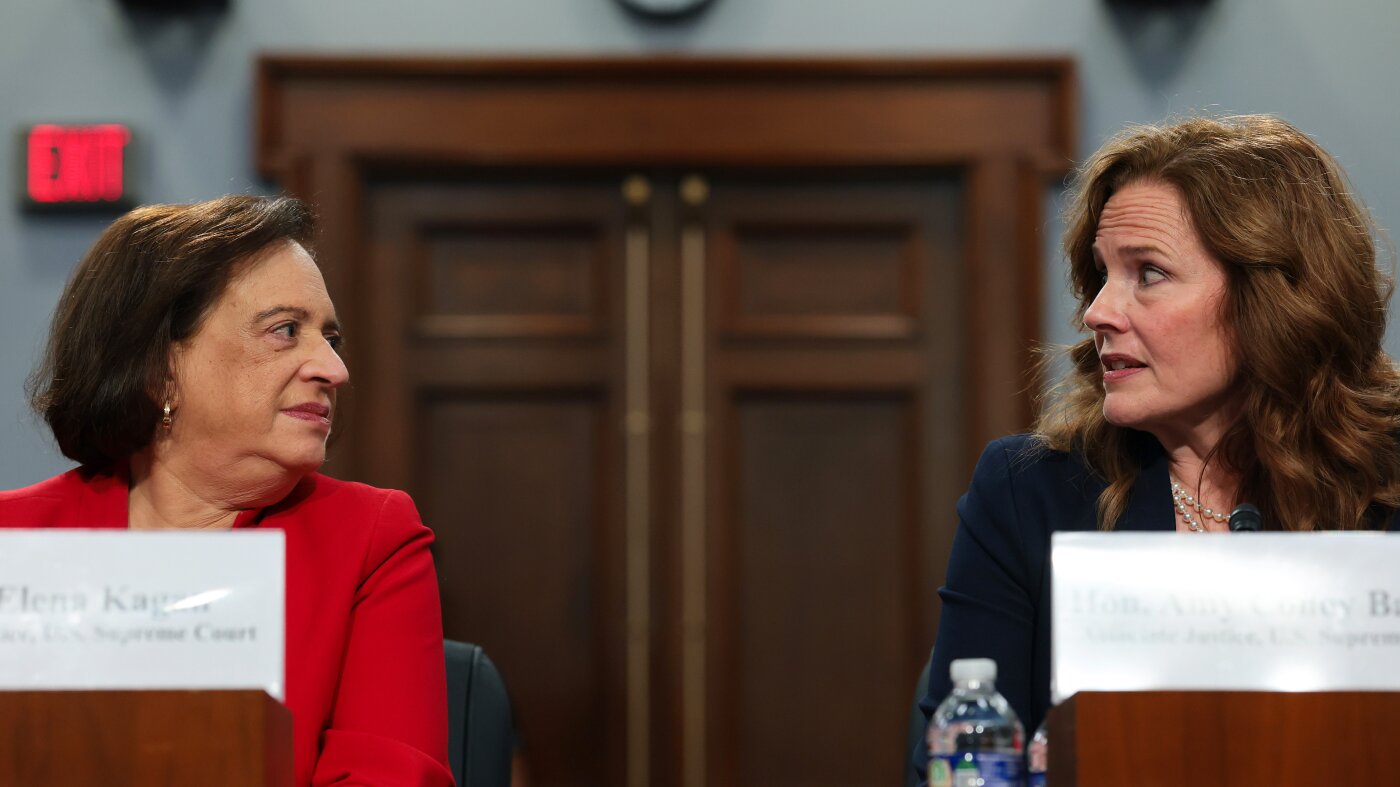
Supreme Court Justices give chilling accounts of threats to their safety
-

 Los Angeles, Ca2 hours ago
Stabbing at Chino Hills liquor store ends in attempted murder arrest
-

 Detroit, MI3 hours ago
A small group of citizens rally for mental health coverage in Detroit
-

 San Francisco, CA3 hours ago
1 dead, 2 missing after boat capsizes near Alcatraz in San Francisco Bay
-

 Dallas, TX3 hours ago
Death penalty off the table for man accused of beheading Dallas motel manager, prosecutors say

