Midwest
Grieving father says daughter’s death by illegal alien shows cost of sanctuary policies

NEWYou can now listen to Fox News articles!
A year after his daughter was killed in a hit-and-run crash in Urbana, Illinois, Joe Abraham has confronted the human cost of the state’s failed border and immigration policies and demanded Illinois lawmakers acknowledge her death for the first time.
While Operation Midway Blitz, a Department of Homeland Security (DHS) immigration enforcement operation targeting criminal illegal immigrants, was launched in honor of Katie Abraham’s death, Abraham also warned illegal immigrants to “do things the right way.”
“If you want to really be part of America and come in here, then you have got to do things the right way,” said Abraham, who is featured in a video for The American Border Story, a national initiative exposing the human impact of America’s border crisis.
“There has got to be an orderly process where people have to understand how to behave here,” he told Fox News Digital, before describing the silence he experienced from state leadership that compounded the pain of his loss even further.
MOM PRAISES HOUSE FOR PASSING KEY IMMIGRATION BILL, BASHES CROCKETT FOR DISMISSING DAUGHTER’S MURDER
DHS launched “Operation Midway Blitz” in honor of Katie Abraham, who was killed in a drunken-driving, hit-and-run car wreck caused by a criminal illegal alien in sanctuary Illinois. (Department of Homeland Security)
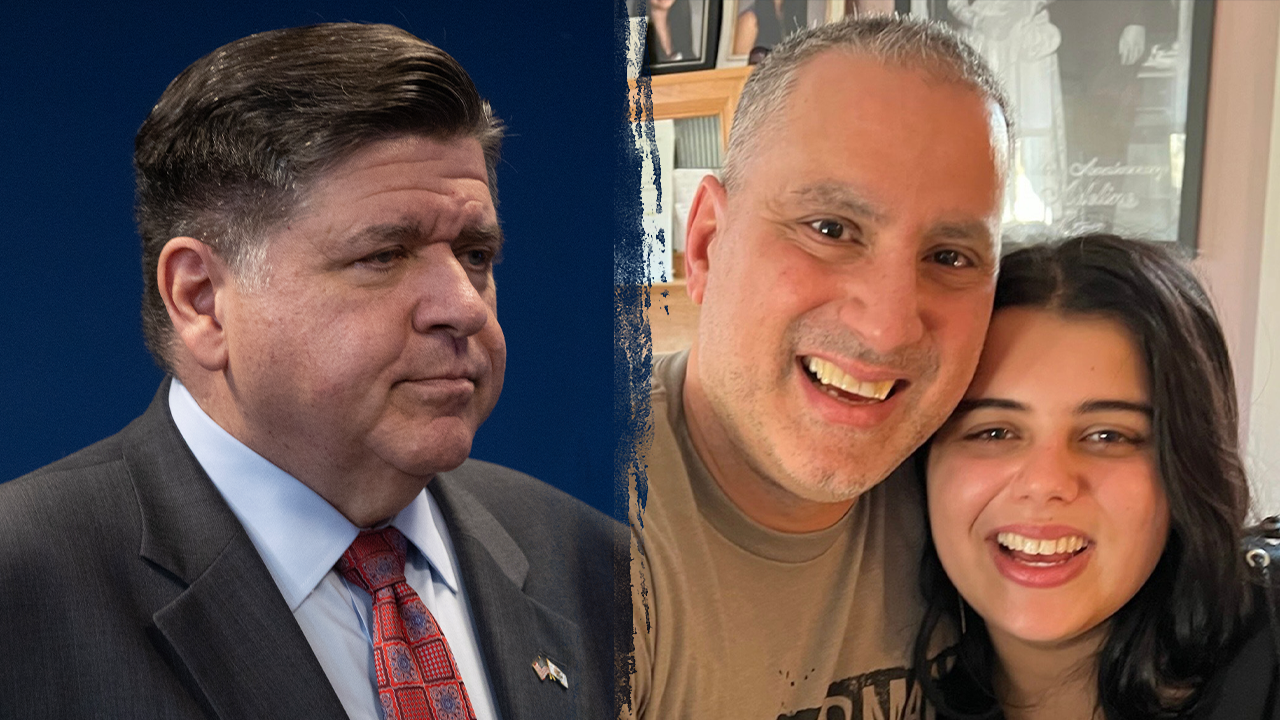
“I received utter silence and indifference from my governor,” said Abraham. “Katie got disrespect and silence.” Abraham said neither Pritzker, Sen. Dick Durbin, Sen. Tammy Duckworth nor his state or local representatives have reached out to him since she was killed.
Abraham even recalled attending a congressional Oversight Committee event in 2025 at which Pritzker and other sanctuary state governors testified, when Katie’s case was cited.
“We were sitting several feet away from him in Congress, and he didn’t spend two seconds – didn’t even look in our direction,” he said. “Father to father – I expected him to care.”
“I wanted him to say, ‘Things got out of control. We’re working on it.’ I wanted leadership and wanted him to acknowledge Katie’s life. She was worth five seconds of his time,” he added.
Katie died in the early morning hours of Jan. 19, 2025, when police said a drunk illegal alien slammed into the vehicle she was riding in with friends and fled the scene.
A second young woman, Chloe Polzin, 21, of Deerfield, died the following day from her injuries.
“They were at a stoplight in front of the hospital and were barreled into from the rear at almost 80 mph by an illegal immigrant who was drunk driving,” Abraham said.
ILLEGAL IMMIGRANT ALLEGEDLY DRIVING DRUNK AT EXTREME SPEED KILLED WOMAN IN VIOLENT CRASH: DHS
Joe Abraham criticized Illinois Gov. J.B. Pritzker’s handling of illegal immigration. (Anna Moneymaker/Getty Images)
“[Katie] died on the scene… They had to rip open that Honda Civic… like a tuna can to drag her dead body out of it,” Abraham said, before describing his daughter as vibrant, driven and full of promise.
“Katie was a productive, talented, beautiful woman, so intelligent, so funny, so witty. She had this way of bringing people in and making them feel seen.”
She loved sports and the water, he said, and had her entire life ahead of her but will now never see her get married, and he said he will, “never walk her down the aisle or see her children.”
Abraham said the driver, Julio Cucul-Bol, is a Guatemalan national using a Mexican alias.
Authorities said Cucul-Bol had previously been deported from the U.S. He was arrested near Dallas while on a bus heading to Matamoros, Mexico. Police said he was found with fake Mexican identification under the name Juan JaHaziel Saenz-Suarez.
Cucul-Bol was sentenced to 30 years in prison after accepting a plea deal for charges including leaving the scene of a crash resulting in death, aggravated DUI resulting in death and reckless homicide.
MEET THE MINNESOTANS KILLED BY ILLEGAL IMMIGRANTS THAT WALZ, DEMS NEVER HELD PRESS CONFERENCES OR VIGILS FOR
Operation Midway Blitz was launched in Katie Abraham’s honor. (Demetrius Freeman/The Washington Post via Getty Images)
The Department of Justice (DOJ) had charged him with possessing a false Social Security card, possessing a false permanent resident card, making a false statement on a bank application and false use of a passport.
“The issue was that when he came into the U.S. there were no background checks. There were no health checks,” Abraham said. “He had HIV. That’s in the court transcripts and court documents.”
Cucul-Bol could not read or write and spoke neither English nor Spanish – rather, he spoke a Mayan language, according to Abraham. “He wasn’t working and wasn’t productive. This was also not his first foray into drunk driving,” he said.
Abraham said his criticism surrounds weak policy, which he hoped would be “rational policy and some common sense,” he said. “If you’re going to nullify federal law, you better have a process to fill that void.”
Abraham called for practical policies that protect victims and the broader public while also supporting immigrants who come legally and with good intentions. He added that, so far, the main progress has been federal agencies like DHS and ICE stepping in to assist communities despite facing resistance from multiple sides.
“ICE has to go out on the streets now, because Illinois won’t cooperate,” he said. “You can’t throw out the welcome mat to anyone and everyone, unchecked and unvetted, and then wash your hands of the consequences.”
ANGEL FAMILIES THANK TRUMP IN NEW THANKSGIVING VIDEO FOR HIS BORDER SECURITY EFFORTS: ‘WE APPRECIATE YOU’
Abraham alleges that neither his governor, senators – including Sen. Dick Durbin, D-Ill., pictured – nor his state and local representatives contacted him following his daughter’s death. (Scott Olson/Getty Images)
Illinois and the city of Chicago filed a lawsuit against the federal government over Operation Midway Blitz, alleging that President Donald Trump’s administration violated Tenth Amendment protections through what the suit described as “unlawful and violent” enforcement tactics.
CLICK HERE TO DOWNLOAD THE FOX NEWS APP
“We can contrast Pritzker with Donald Trump, who invited us to the White House, who looked me in the eye, father to father. He acknowledged Katie’s life and said things are out of control, and he will work to fix it,” he added. “This past year without my daughter has been the most brutal year of my life.”
Read the full article from Here



Illinois is full of small towns where the downtown square still serves as the heart of the community. Many are centered on a historic courthouse and ringed by brick buildings, local shops, and cafes. Festivals and farmers’ markets still fill these gathering spaces through the year. The squares feel personal and walkable, keeping an unhurried rhythm that makes them easy to explore. Each one has its own personality shaped by history and local culture.
Galena
This town is one of the best-known towns in Illinois, known for its beautifully preserved 19th-century downtown and dramatic hillside setting. With a population of just a few thousand, the entire town feels like a historic postcard, especially along Main Street, where brick buildings, antique shops, and locally owned boutiques line the steep, walkable streets. The architecture is remarkable and among the best preserved in the Midwest, giving the town a timeless, almost cinematic atmosphere.
Visitors can spend hours exploring the downtown shops, tasting local food, and learning about history at the Ulysses S. Grant Home State Site. Scenic overlooks above the town offer wide views of the river valley, and seasonal events like holiday walks and fall festivals make the square feel even more alive. Galena is especially popular for weekend trips because it combines history, scenery, and a strong small-town identity that makes individuals feel at home.
Woodstock

This town is a classic courthouse-square place with strong Victorian-era character and a lively downtown centered around its historic square. The centerpiece is the Woodstock Opera House and the surrounding courthouse square, which has remained visually consistent for over a century. The town is also famous as the filming location for the movie “Groundhog Day,” which adds a unique cultural layer to the experience.
Things to do in Woodstock include walking the squares’ boutique shops and cafes, visiting the Opera House for unique and entertaining performances, and exploring the filming locations scattered around downtown. The town also hosts farmers’ markets, festivals, and seasonal events that keep the square active year-round. It feels both historic and lively, making it one of the most balanced small-town downtowns in Illinois.
Petersburg
This town is small and quiet, located in central Illinois, with a population of just a few thousand people. Its courthouse square is simple but handsome, surrounded by small shops, cafes, and antique stores that reflect its deeply local character. The pace here stays unhurried, and the town feels more like a preserved community hub than a tourist destination.
Visitors can explore the square, enjoy local diners, and browse antique shops, but the biggest draw is its connection to Abraham Lincoln’s history. Nearby New Salem State Historic Site lets visitors step into a recreated pioneer village where Lincoln once lived. The mix of calm downtown life and major historical significance gives Petersburg a unique and intriguing identity among Illinois towns.
Mount Carroll
This town is one of the most architecturally impressive towns in Illinois, with a downtown that feels like a preserved 1800s historic district. The entire square is surrounded by ornate brick buildings, giving it a rich, old-world environment. With a population of around 1,500, it is quiet, walkable, and deeply rooted in history.
Things to do include exploring antique shops, visiting local cafes, and walking the surrounding residential streets filled with historic homes. Unlike more commercialized towns, Mount Carroll feels peaceful and authentic, making it ideal for visitors who enjoy architecture, photography, and quiet exploration.
Princeton
This town offers a lively but still small courthouse square surrounded by antique stores, boutiques, and locally owned restaurants. With a population of under 10,000, it serves as a hub for the surrounding farming communities, giving it a steady flow of local activity without losing its character. The downtown area is especially known for its welcoming, community-focused feel.
Visitors can shop in antique malls, dine in cozy and relaxing cafes, and attend seasonal festivals that often take over the square. Nearby attractions like the Red Covered Bridge add a scenic countryside element to the experience, making Princeton a mix of historic downtown appeal and rural Illinois beauty.
Clinton
This town has a traditional Midwestern courthouse square that feels clean, simple, and welcoming. Its center is a foundation surrounded by small businesses that serve both locals and visitors passing through central Illinois. With a population of 7,000, it maintains a close-knit community environment.
Things to do include walking around the square, visiting local shops and cafes, and exploring the DeWitt County Museum for a deeper look at the town’s history. Clinton is not heavily tourist-driven, which gives it an authentic everyday feel that reflects small-town Illinois life.
Dixon
This beautiful town has a scenic stretch of the Rock River and a downtown that blends history, culture, and natural beauty. The square and surrounding streets include murals, shops, and cafes, while the riverfront adds a peaceful, open atmosphere. With a population of around 15,000, it is larger than some of the other towns but still retains a strong small-town identity.
Visitors can explore the Ronald Reagan Boyhood Home, walk along the riverfront parks, and browse downtown shops and restaurants. The combination of presidential history and river scenery makes Dixon stand out as both educational and visually appealing.
Edwardsville
This town has one of the most active and developed town squares on this list, while still maintaining a historic courthouse-centered layout. Located near the St. Louis metro area, it has a population of around 26,000 residents and serves as a regional hub with restaurants, cafes, and shops surrounding the square. Despite its growth, it still holds onto its small-town character through community events and preserved architecture.
Visitors can enjoy dining downtown, attending farmers’ markets, and walking through the courthouse square during festivals and concerts. The town also offers nearby trails and parks, making it a great mix of outdoor recreation and downtown appeal. Edwardsville shows how a town square can stay relevant while adapting to modern growth.
Where The Square Still Matters
Overall, these Illinois towns show just how diverse and meaningful small-town squares can be. Some feel frozen in time with preserved architecture and quiet streets, while others are active hubs of local life filled with entertaining events and commerce. What they all share is a strong sense of place, where the town square is not just a location, but the identity of the community itself.

MONROE COUNTY, Ind. – The ACLU of Indiana filed a lawsuit over what it calls “unconstitutional conditions” at the Monroe County Jail.
This comes after the advocacy group previously suggested it would take legal action to resolve a lengthy dispute over the facility’s safety.
The federal lawsuit was filed on behalf of two individuals currently incarcerated at the jail. It cites chronic overcrowding, deteriorating infrastructure, unsafe living conditions and the county’s inability to remedy the problems.
The dispute originally flared in 2008, when the ACLU of Indiana filed a lawsuit challenging conditions at the jail. That led to a 2009 settlement in which county officials promised a long-term solution. Over the years, the deadline for improvements has been extended multiple times.
While the county appeared to embrace a brand-new justice complex near I-69 and State Road 46, those plans stalled when the county council voted down the project due to cost concerns.
The ACLU said the settlement has expired and the original lawsuit has been dismissed, necessitating the filing of a new one. The lawsuit claims conditions at the jail violate the 14th Amendment rights of people awaiting trial and 8th Amendment rights of people held after conviction.
The lawsuit names the Monroe County Council, Monroe County commissioners and Monroe County sheriff as defendants.
In a news release, the ACLU cited several problems at the jail, ranging from overcrowding to “extreme temperatures, broken plumbing, mold, crumbling walls, limited disability access, and failures to safely separate people with different medical and security needs.”
Ken Falk, legal director for the ACLU of Indiana, said officials have had long enough to fix the numerous issues.
“They have had nearly two decades to find a lasting solution, yet people are still being held in unconstitutional conditions that threaten their health and safety,” Falk said in a statement. “Studies have documented that the jail is dangerous and inadequate, and the sheriff has been candid about its many problems. However, the sheriff’s role under Indiana law is limited, and the county officials who could solve this problem have not listened.”
The ACLU is asking the court to certify the case as a class action and seeks a permanent injunction “requiring defendants to take all steps necessary to ensure that the conditions of confinement at the Monroe County Jail comply with the United States Constitution,” among other relief.
FOX59/CBS4 reached out to the Monroe County Sheriff’s Office regarding this lawsuit. Officials with the office stated that they are “declining to comment on pending litigation.”
Read the full complaint here.

SIOUX COUNTY, Iowa (KTIV) – A Woodbury County woman was taken by ambulance to the hospital after a rollover took place in Sioux County.
The Sioux County Sheriff’s Office says 45-year-old Jenni Madison of Sioux City was taken to the hospital Saturday, July 11.
Authorities say at about 12:01 p.m., deputies investigated a rollover that took place on Highway 60, one mile south of Alton. According to the Sioux County Sheriff’s Office, the car was traveling north on Highway 60 when the driver lost control, entered the median and rolled.
Deputies say Madison was taken by ambulance to the Orange City Area Health System to be treated for minor injuries. The vehicle sustained $12,500 in damage.
Orange City Fire Department, Alton Fire Department, Alton Ambulance, the Orange City Police Department, and the Iowa State Patrol helped the Sioux County Sheriff’s Office at the scene.
Want to get the latest news and weather from Siouxland’s News Source? Follow these links to download our KTIV News app and our First Alert Weather app.
Copyright 2026 KTIV. All rights reserved.
-

 Colorado3 minutes ago
Colorado State football 2026 outlook from national experts
-
 Connecticut8 minutes ago
HBO casting in CT for neighbor dispute docuseries
-

 Delaware15 minutes ago
Heat watches, advisories issued for Delaware. How hot will it get?
-

 Florida21 minutes ago
South Florida scientists studying newborn sea turtles
-

 Georgia27 minutes ago
Georgia twins launch 3D-printed toy business
-

 Hawaii33 minutes ago
Guided tours take visitors into Honouliuli internment camp’s ‘Hell Valley’
-

 Idaho39 minutes ago
Idaho attorneys rebuff DOJ threat to prosecute Secretary of State in voter roll dispute
-

 Illinois45 minutes ago
8 Most Charming Town Squares In Illinois

