Midwest
Founder of Safe Haven Baby Boxes shares her story and hope for the future: 'A God-given purpose'

With Wisconsin recently legalizing “baby boxes” for anyone to surrender their newborn babies anonymously, the founder of the Safe Haven Baby Box program told Fox News Digital that there is still more work to be done across the United States.
The new law, passed in December, expanded the Badger State’s previous Safe Haven law, which permitted a parent to leave an infant younger than 72 hours old at a fire department, police department or hospital.
Now, with “baby boxes” legal in Wisconsin, a person can drop off these children anonymously (previously, it was required that the handoff happen face-to-face).
FLORIDA FIREFIGHTER ADOPTS BABY ANONYMOUSLY DROPPED OFF AT SAFE HAVEN: ‘GIFT FROM GOD’
“We’re currently active in 14 states,” Monica Kelsey, the Indiana-based founder of Safe Haven Baby Boxes, Inc., told Fox News Digital in an interview.
The first baby boxes should arrive in Wisconsin within a few months, she estimated.
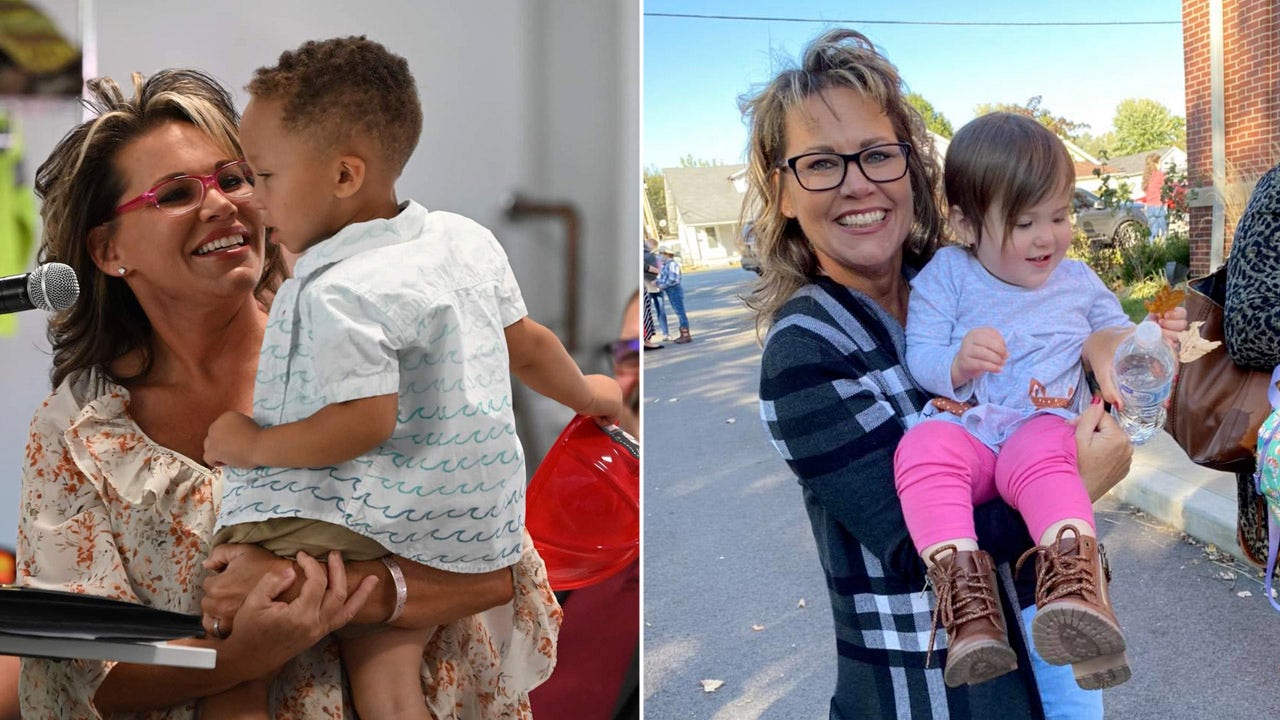
Monica Kelsey, based in Indiana, is founder and CEO of Safe Haven Baby Boxes, Inc. She’s also the author of the book, “Blessed to Have Been Abandoned” (2021), a U.S. Navy veteran — and a mom of three. (Monica Kelsey)
“Baby boxes” with anonymous surrenders are legal in 22 states — a figure that Kelsey hopes will grow in the near future. (Safe Haven Baby Boxes, Inc. does not presently operate in all states where the boxes themselves are legal.)
A “baby box” is a safety device provided for use under a state’s Safe Haven Law. It “legally permits a mother in crisis to safely, securely and anonymously surrender if they are unable to care for their newborn,” says the organization’s website.
These boxes are installed in the exterior walls of fire departments or other locations — and are electronically monitored and temperature controlled.
“Their child’s life is going to go on. Their life is going to go on.”
Wisconsin Gov. Tony Evers said of the new baby box law in his state, known as Wisconsin Act 79, “Expanding safeguards for kids across Wisconsin is a priority for my administration, and this bill provides a solution that will hopefully keep newborns and infants safe from harm.”
He added in a press statement shared by his office in early December, “I will continue to advocate for initiatives that work to make our communities and families safer, and I look forward to seeing more bipartisan bills like this in the future.”
In a statement shared with Fox News Digital, Pro-Life Wisconsin said that it “supports efforts to prevent the illegal abandonment of newborn infants, often resulting in their tragic demise, by offering ways to hand over newborns lawfully and safely to proper authorities,” said Matt Sande, legislative director of the organization.
‘They can surrender their child’
When a person places an infant in the box, an alarm will alert after a set period of time, letting officials know a child is inside and allowing the person to avoid attention.
INDIANA POLICE OFFICER AND HIS WIFE ADOPT INFANT GIRL ABANDONED IN ‘BABY BOX’
A door on the interior side of the box allows for medical professionals to access the baby and provide medical care.
There “is 100% anonymity,” Kelsey told Fox News Digital.
Safe Haven Baby Boxes, like the one above, are legal in 22 states. They allow for the safe and anonymous surrender of an infant. (Safe Haven Baby Boxes)
“If they [the parents or caregivers] don’t want to walk in and face someone, if they don’t want to talk to you, they can surrender their child in an electronically monitored baby box and walk away knowing that they just saved their child’s life,” she said.
“Their child’s life is going to go on. Their life is going to go on.”
While each state has some sort of “Safe Haven” law allowing for the surrender of an infant up to a certain age, the laws differ from state to state.
KIDS IN FOSTER CARE SEE DREAMS COME TRUE, THANKS TO NEW JERSEY NONPROFIT ONE SIMPLE WISH
For instance, some states, Kelsey said, allow parents to surrender their children up to three months after their births — others, just three days after their births.
A federal law, she suggested, would streamline the process and make an already complicated and stressful situation easier to understand.
“If [the law] is confusing to [advocates] and we’re not in a moment of crisis, then it’s confusing to these women who are having the worst day of their life, and they’re trying to figure out what the law is,” she said.
As an adult, Kelsey met her biological mother, something she described as “the best and worst day of my life.” Much to her shock, her biological mother showed her a police report from August 1972 — with stunning details. (iStock)
The crusade to ensure the safe surrender of babies is personal to Kelsey — as she herself was abandoned as an infant.
“I didn’t know my beginnings,” she told Fox News Digital.
While she was aware she was adopted, her adoptive parents were not told the truth about her origins.
“My goal is to stop infant abandonment.”
“My adoptive parents were told when they adopted me that my birth parents were young and they couldn’t care for me, so they placed me for adoption,” she said.
“And that was not even close to the truth,” said Kelsey, who is the mother of three children.
As an adult, Kelsey met her biological mother, something she described as “the best and worst day of my life.”
Much to her shock, her biological mother showed her a police report from August 1972.
Kelsey said she hopes that one day a federal “Safe Haven” law will be passed. For now, each state has different laws and policies. Above, a baby box is shown in Kentucky. (Grace Ramey/Daily News via AP)
“She was brutally attacked and raped and left along the side of the road,” said Kelsey. “And this was in 1972, when abortion was illegal in our country, even in the cases of rape and incest.”
Her biological mother, just 17 at the time of the attack, pressed charges against the man.
ADOPTED AS A CHILD, TEXAS WOMAN IS NOW HELPING OTHERS FIND HOPE AND FEEL LOVED AT CHRISTMAS
She later discovered she was pregnant.
“She was taken out of high school, not allowed to go back,” said Kelsey of her biological mother. “She was hidden for the remainder of the pregnancy.”
“She abandoned her child two hours after the child was born. That child ended up to be me.”
She continued, “And then she gave birth in April 1973 and abandoned her child two hours after the child was born. And that child ended up to be me.”
Kelsey added, “And so I stand on the front lines of this movement as one of these kids that wasn’t lovingly and safely and legally placed in a Safe Haven Baby Box by a mother that wanted me.”
FACILITATING THE INTEGRATION OF ADOPTED CHILDREN INTO YOUR FAMILY
Despite her tumultuous start in life, Kelsey said she considers herself “blessed,” and is motivated by her strong faith.
“How blessed am I to to have been abandoned but now be saving abandoned children,” she told Fox News Digital.
“And it’s just it’s a God-given purpose. I don’t take it lightly,” she said. “I take it very seriously. And now I’m traveling the country doing His work.”
Monica Kelsey poses for a selfie with a child who was surrendered in a Safe Haven Baby Box. She said she knows these children are “going to struggle. One day they’re going to struggle to find their worth … But I want them to know they’re not alone.” (Monica Kelsey)
Kelsey wrote the book “Blessed to Have Been Abandoned: The Story of the Baby Box Lady,” published in April 2021.
She sends an autographed copy to each baby placed in one of the boxes.
“In this book, it shows the struggle of finding my worth,” she said.
“And they’re going to struggle one day. They’re going to struggle. One day they’re going to struggle to find their worth,” she said.
“But I want them to know that they’re not alone.”
Looking ahead, Kelsey said she has no specific goals for the Safe Haven Baby Boxes, apart from the big picture of child safety.
“I can’t change what happened to me — but I can change what happens to others.”
“My goal is to stop infant abandonment,” said Kelsey. “And wherever Christ leads me is where I’m going to go.”
As she also said to Fox 13 not long ago, “I can’t change what happened to me — but I can change what happens to others.”
What to know about Safe Haven Baby Boxes
The organization’s primary goal is to raise awareness of the Safe Haven Law.
Women in crisis can call or text the national 24-hour hotline (1-866-99BABY1) and receive counseling and assistance free of charge, according to the group.
To date, the hotline has received over 9,000 calls from every state in the U.S., it notes on its website (shbb.org).
Safe Haven Baby Boxes has referred over 500 women to crisis pregnancy centers, assisted in 9 adoption referrals, and had over 140 legal Safe Haven surrenders.
“Thirty-seven babies have been surrendered in our Baby Boxes,” says the organization.
“Three babies were surrendered directly to firefighters at Safe Haven Baby Box locations.”
For more Lifestyle articles, visit www.foxnews.com/lifestyle.
Read the full article from Here


Renowned outdoor retailer L.L. Bean is officially making its way to North Dakota, bringing its heritage gear and apparel to the Red River Valley.
The Maine-based retail giant has signed a lease to open its first-ever North Dakota location at the West Acres Shopping Center in Fargo. According to mall officials, the new store will take over the approximately 15,000-square-foot space in the Aquarium Court formerly occupied by Forever 21, positioning it right next to Crave restaurant.
Bringing a Taste of Maine to the Midwest
The announcement has already sparked significant excitement from regional retail organizers. West Acres took to Facebook to enthusiastically share the news of the partnership with the community.
“From their iconic Duck Boots and Boat and Tote bags to clothing for men, women, and the whole family, they’re bringing it all to Fargo!” the shopping center posted.
The expansive retail footprint will feature L.L. Bean’s signature array of high-quality apparel, outerwear, and footwear designed to withstand the rugged elements—a fitting match for North Dakota’s notoriously tough winter climate.
A Strategic Multi-Year Launch Timeline
The incoming retail hub represents a major cornerstone addition for the Fargo shopping destination. West Acres Chief Operating Officer Alissa Adams noted that the addition of the iconic brand directly targets the lifestyle and outdoor needs of local and regional shoppers.
Work on the Aquarium Court space is expected to transition over the coming months. Shoppers will have to wait just a little while longer to browse the racks in person, as the store is projected to officially open its doors to the public in 2027, with specific targets aimed toward the first three months of that year.

A family in Ohio has been indicted for murder after the body of a 20-year-old man was found in a burnt vehicle.
Sarah Haning, Randy Haning and Beverly Haning have been charged in the death of 20-year-old Ethan Vernon, Meigs County Prosecuting Attorney James K. Stanley said on Thursday. On Wednesday, a grand jury indicted the three members on charges that include murder, arson and gross abuse of a corpse.
Vernon was found dead in his burnt truck on Dec. 12, 2025, along Hemlock Grove Road in Bedford Township in Meigs County. Stanley said in the news release that the 20-year-old man was last seen on Dec. 11, 2025.
The prosecuting attorney said the indictment was handed down after an “extensive investigation.” Twenty-four-year-old Sarah Haning was indicted on 49 counts, 65-year-old Randy Haning on 11 counts and 63-year-old Beverly Haning on nine counts. All three family members are from Athens. The relationship between the victim and the three suspects was not immediately released. Vernon’s cause of death was also not immediately released.
In a Facebook post, Meigs County Sheriff Scott Fitch said the three suspects were arrested on Wednesday after law enforcement served a search warrant at a home on Pleasanton Road in Athens County.
“This investigation has been a lengthy and complex effort, and today’s arrests are the result of countless hours of work by our detectives,” Fitch said in the post on Facebook. “While these arrests mark a significant milestone, the investigation remains active, and we will continue to pursue every available lead to ensure justice is served for Ethan Vernon and his family.”
Anyone with any information on the case can call the sheriff’s tip line at 740-992-4682.
“Additional information will be released as it becomes available and as the investigation permits,” Fitch added.

WASHINGTON (Gray DC) – The President set to travel to Mount Rushmore to mark America’s 250th anniversary.
Friday, President Donald Trump is taking that celebration to one America’s most iconic sites, Mount Rushmore
The President is traveling to South Dakota for a celebration at Mount Rushmore that will include fireworks, military bands and flyovers – including one by the new Air Force One – which had its maiden flight on Wednesday to North Dakota. The Boeing 747 is a gift from Qatar.
While at Mount Rushmore in the Black Hills near Keystone, South Dakota, President Trump will deliver a keynote address marking the nation’s 250th anniversary.
The sculpture at Mount Rushmore features 60-foot-tall depictions of the heads of four U.S. presidents: George Washington, Thomas Jefferson, Theodore Roosevelt and Abraham Lincoln. They were chosen to represent the nation’s foundation, expansion, development, and preservation
President Trump last visited Mount Rushmore for a Fourth of July Celebration in 2020. The event featured the first official fireworks display at the monument in over a decade.
He’s also repeatedly joked that his face should be added to the monument.
Copyright 2026 Gray DC. All rights reserved.
-

 North Carolina43 seconds ago
Wake County woman says housing authority failed to pay thousands in rent for over a year
-

 New Jersey45 seconds ago
Air conditioning fails at Delaney Hall as heat wave leaves detainees struggling to breathe • The Jersey Vindicator
-

 New Mexico8 minutes ago
7 Best New Mexico Towns For Retirees
-

 North Dakota16 minutes ago
L.L. Bean to Open Store in North Dakota
-

 Ohio23 minutes ago
3 family members accused of murdering Ethan Vernon in Ohio
-
 Oklahoma26 minutes ago
New Oklahoma law requires emergency action plans for summer camps
-

 Oregon31 minutes ago
Here’s when you can see the Oregon Air National Guard flyovers on July 4
-

 Pennsylvania38 minutes ago
Fire tears through recycling center in Doylestown, Pennsylvania, officials say

