Detroit, MI
Q&A: James Tate, Detroit’s new City Council president, has ‘huge expectations’


City Councilman James E. Tate Jr. describes his new role as council president as “the seat.”
To get to that seat, the native northwest Detroiter has lived and worked through the city’s most public challenges of the past 20 years. One of his first jobs after college was working in the communications office for the scandal-ridden Mayor Kwame Kilpatrick. He became a Detroit police spokesman when plenty of “blood and guts” stories dominated the news.
He first became a councilman in 2010, just in time to deal with crushing city debt that would lead Detroit to file for Chapter 9 municipal bankruptcy in 2013.
Tate, 51, says his faith in Detroit never wavered. He has always felt he was among the Detroiters who would improve the city for all, he said. Now, he has “huge expectations” working with the new Mayor Mayor Sheffield, the former city council president, will result in policy breakthroughs that will benefit Detroiters.
Tate spoke with The Detroit News about his path to the council presidency and his goals going forward. This conversation has been edited for length and clarity.
Question: What did your parents do?
Answer: So, mom was a teacher. So, initially she was in the EKG unit at Henry Ford Hospital and then made an abrupt decision to be a (Detroit public school) teacher. And ended up getting moved around because of all the changes that were going on in the school system at the time. She was a teacher, I want to say about for 14 years. My dad; GM worker. A GM worker for 40 years. He retired, actually, in 2009.
They were from Alabama. Mom from Birmingham, dad from Montgomery.
Q: Moving to Detroit was very much the Black middle-class dream?
A: Yeah.
Q: How was Detroit, from your perspective, when you were growing up?
A: It wasn’t hard for me at all. I’m blessed to not have one of those real hard luck stories. You know, both parents together, never had abuse in the house or anything like that. They just loved on me, but I made life a little bit difficult for them. From the time I was from kindergarten to graduation of high school, I was either kicked out, put back or transferred nine times.
Q: Were you seeking action elsewhere, say out in the street?
A: It was never, like, into criminal stuff. I was just a jokester. It really hit me when I started applying to colleges and, you know, taking SATs . . . and nobody accepted me. The only way I was able to go to Wayne State was through a probationary program.
I went to Wayne State University and didn’t pay a dime. My parents paid for that. My dad really showed me what it was like to be a strong man in the family. Treated my mother with respect to this day.
I feel like Forrest Gump sometimes, like, how did I end up here? I think all of the lessons that they poured into me as a kid. At some point, they bubble up and they get to the point where it fills the cup. I would say the majority of what I do today is to make them proud and to show them that all the work they put into me, it mattered.
Q: Shortly after college you ended up in the Kwame Kilpatrick administration, working in communications. Then you became a spokesman for the police department.
When you worked for the mayor, what was the status of the Kilpatrick controversies?
A: It was bad. It was prior to the re-election. I ended up working in the mayor’s office for nine months. One day when the person over in the police department’s office of public information … ended up leaving, they said, ‘Hey, we need someone to go over to the police department.’ That was a day after the fireworks shooting, when nine people were shot. They needed someone to go over to the police department and deal with all of the media stuff.
I worked at the police department, the office of public information, as the second deputy chief, for five years. That was a complete culture shock, going from non-law enforcement to being basically embedded in the police department. There were a lot of folks who didn’t trust me. I was like, 20-something years old at that time, right? My job was to find stories that we can get out to the community that went beyond that we just arrested somebody or the blood and guts.
Q. Back to the Kilpatrick administration, I think the basic question would be, what did you see?
A: I didn’t go to any parties. (Laughs)
Q: Did you have any sense there was corruption?
A: No, it was not as salacious as some people would think, right? All I saw was, you know, people working hard, burning the candle from end to end. It was a lot of young, Black, positive energy.
I would come in at four in the morning, call the news stations, and I wouldn’t leave until about 8 p.m. because I was in love with it. It was intoxicating. I never got tired, never got frustrated. It felt this was the time for a younger generation of Detroiters to now take the place to the next level.
Q: Did it take you a while to admit, personally, that there was some wrongdoing going on?
A; I mean, whatever was dealt with in court, that was the final arbiter for me. I never had to reconcile what I saw in front of me versus that, because . . . I was there for the work, and I think we did some pretty doggone good work when we were there.
Q: Do you recall a moment of clarity, or someone who pushed you to run for council? What was the turning point?
A: When I was at the police department, I was on TV a lot. I was the guy who dealt with, you know, the public statements on all the blood and guts. I was never prepared for what I would see. I remember the first body that I saw. I was a 14-year-old girl, face down. She had on blue jeans, a pink shearling coat with little fur around it. Thankfully, I didn’t get a chance to see her face. But I remember her to this day.
But me being on camera meant that people got a chance to see me. And they felt that I was articulate enough to speak on behalf of the community. Folks who were in my atmosphere, they kept pushing me and saying, ‘You should run.’
If, I can’t trust myself, who can I trust? I wanted to be a part of making things better, period.
And I (remember) clearly … asking my wife, you know, for permission to do this. She said, ‘I got your back, whatever you decide to do.’ I resigned from the police department. Nine months my wife held down the household. Now this is in return, because I held down a household when she was getting her master’s degree.
Q: I want to ask about the bankruptcy. Was there any other choice?
A: There was no other path to getting beyond that point. When we had broken vehicles that weren’t being repaired. We had, you know — it’s 10 o’clock at night when the trash collector would come by and other times they missed it, right? That wasn’t great quality of life for residents.
When you get here (at council) and you look at the documents and you see how dismal our financial situation is, there was no choice. It absolutely needed to happen. There were a lot of people that were hurt, let’s be honest. Especially when we talk about our retirees, who are still trying to figure out what their next infusion of assistance is going to be.
Q: Could that have been avoided?
A: Any time a deal is made, you can always make it this way or that way. So there’s always alterations that could have been made. I never want to say when people are thrust through the pain that they’re still trying to figure out, that it was worth it. But it paid off going through that process for us as a city. Because we were able to now restructure that massive debt. We now were able to purchase vehicles. We now were able to slowly increase our credit rating so that now we can borrow more. We were now able to increase services period within the city of Detroit.
Q: Gosh, we’re talking about such tremendous things, from the Kwame administration corruption, crime, the bankruptcy. Was there ever a point where you thought it was too overwhelming?
A: No. It’s my city, yeah, and now I’m in the seat. So, it’s up to me to be a part of the group. I remember sitting at the table, prior to bankruptcy, and we are arguing about $1,000 going to a department here versus a department there. That’s how tight it was, right?
We’re now talking about healing and growing and making things better. We still have a long way to go, because we got a lot of folks who need help right now.
Q: You were the creator of the urban agricultural ordinance back in 2013. Was there hope it would be the start of a flourishing urban farming scene?
A: Honestly, I wasn’t that guy who even tried to think . . . that large scale. I was just saying it doesn’t make sense . . . that we can’t grow fruits and veggies in a neighborhood. And allow neighbors to pick them and, you know, eat the food.
I didn’t do all the sweat equity that all those men and women did in the urban gardens, in the urban farms. But I want to say that I played a role in getting the ball rolling.
Q: Any other pieces of legislation that you consider high marks for you?
A: The cannabis legislation. That one was important to me, because we’re talking about a new industry. That’s very rare that you’re on the forefront of an industry in the city. So, for me, it was important not to try to entice, you know, Detroiters to either consume or to own these businesses. But if they’re going to exist in the city of Detroit, it makes sense to try to identify ways to allow Detroiters to participate, have an opportunity to succeed. You still got to have a great business plan. But how do we level the playing field when you are now competing against folks who are much more connected and have deeper pockets?
Now, the industry has changed completely since then. So everybody, whether you are in the city or outside the city, there’s the challenge for many of them.
Q: Is there anything that you think the public generally often gets wrong about what you do?
A: I don’t know if it’s wrong. I just don’t think that they know what all it entails. You know, many times they only see the headline. They see a vote, but they don’t recognize that, every Tuesday, there’s sometimes hundreds of items that we have to go through (at council meetings.) Those 100 items or plus, don’t just pop up. They’re in the committee. We’re doing that homework in the committee, and we are doing everything we can to read all these documents that come before us. It’s a constant flow of information that we are receiving, and also information that we’re trying to put out and provide to the community.
I think one misperception is people believe we don’t want the community to be involved, especially our younger folks. You know, I come across 20-year-olds all the time, they don’t want cars, they don’t want to drive.
So now that really puts a bigger emphasis for us to improve our public transportation. So last year, I was one who raised my hand with other council members, and we put an infusion of dollars into our DDOT system. We’re going to have to do that over and over again. But it becomes more challenging year by year, especially nowadays, with all this financial uncertainty and political uncertainty. The dollars that we receive for our public transportation come from the federal government. Yeah, that’s been cut a bit now.
Q: There’s a council member who wants to get rid of the Detroit land bank. How do you think that conversation is going to go?
A: I don’t think getting rid of the land bank is the answer. There’s got to be far more conversation than just a will and desire to get rid of it. I don’t think that’s where overall the body is. But are we at a point where we want to see some changes in how it operates? Absolutely.
Q: Many people are frightened of what’s happening at the federal government level, national policies … tell me what that means for you as an elected official for a local city government. How do you respond?
A: From what’s happening potentially, like in Minnesota, coming (to Detroit), yeah.
Q: It’s not just ICE, of course. The federal cuts, other measures.
A: When you see what’s happening in Minnesota, and then when you saw what was happening in LA, that’s really what’s shaking our country, without a doubt. Do I want that to happen here? Absolutely not. Part of it is we have to be very strategic in our communication to our residents and how we project what our intentions are. We can get a crowd excited in a room, but also, in a way, poke the bear. And the same people that we’re trying to help are the ones who end up being harmed. While we get applause, people are being harmed.
It’s not about telling and forecasting every move that you’re going to make. Make the moves, build connection with the community, understand clearly what those needs are, and just do them to the best of your ability. Everything does not, in my opinion, have to have this stance, this statement, that we are declaring that we shall not do this if it has not arrived. Now, when it arrives, it’s time to kick butt. It’s time to respond. We don’t have to forecast it, just do it.
Thus far, I want to give credit to the mayor, the former mayor, former council and this council, we’re doing just that; listening to the community, taking in the information, investigating, but not putting us in a point where we are a target.
Q: How long do you think you will stay on council?
A: You got to ask the people of the city of Detroit. You’ve got to ask my wife, ask my doctor. I’m just blessed, you know, to be this late in my tenure on council and run unopposed in my district, that’s huge. Yeah, and now to be appointed council president by my colleagues, you know that again, is a very tremendous honor. I don’t put a shelf life on it. I just, you know, continue to work.
Q: A former council member is now the mayor. How does that change the dynamic?
A: Huge expectations. Not just because she’s a former council member, but a Detroiter. She has a heart for the community . . . she has certainly the intelligence to pull this off.
Q: Huge expectations for lowering taxes? New developments? For lowering crime?
A: Fill in the blank.
Q: Really?
A: Yeah, I mean, so it’s not just about lowering taxes or another single issue. It’s about the way you approach things, right? It’s about all those items that we have been talking about on council. How do we actually make those things happen? And it’s not that they weren’t happening with the previous administration. It was just happening in a different way.
But there’s huge expectations for this current administration, because this one feels a bit more organic. And you know, Mayor Sheffield was on council for 12 years. So when you get a chance to know a person, you have expectations that person will bring out all those things that are inside of them, and not just allow the world to consume them.
laguilar@detroitnews.com



If you need help with the Public File, call (313) 222-0566
At WDIV, we are committed to informing and delighting our audience. In our commitment to covering our communities with innovation and excellence, we incorporate Artificial Intelligence (AI) technologies to enhance our news gathering, reporting, and presentation processes. Read our article to see how we are using Artificial Intelligence.
Detroit, MI
Fangirl Culture is Front and Center as Detroit Mercy Theatre Company Presents a Zany Y2K Comedy

I’m Gonna Marry You Tobey Maguire closes Detroit Mercy’s 55th Season
DETROIT — Detroit Mercy Theatre Company (DMTC) closes the inaugural season of the new Detroit
Mercy Black Box Theatre with I’m Gonna Marry You Tobey Maguire by Samantha Hurley, playing April 10-19 on University of Detroit Mercy’s McNichols Campus.
I’m Gonna Marry You Tobey Maguire is set in 2004 and follows 14-year-old Shelby Hinkley, who is obsessed with Hollywood star Tobey Maguire and creates a play to kidnap and marry him in her basement.
“This play is as hilarious as it is heartfelt,” said DMTC managing director Sarah Rusk. “Shelby truly believes Tobey Maguire is her destiny, and through her obsession we get a look into the complicated emotions of growing up during the Y2K era.”
“I absolutely love working with young actors,” said director Cassandra Svacha.

“Watching them create and rise to the challenge is thrilling. I’m Gonna Marry You Tobey Maguire to college-aged kids is like a period piece; none of them were alive when this story takes place so it’s extra fun to have them dive into this world in an anthropologic way. They aren’t reminiscing or remembering 2004, they have to study that world and build it for themselves.”
I’m Gonna Marry You Tobey Maguire runs six performances April 10-19 at the new Detroit Mercy Black Box Theatre on University of Detroit Mercy’s McNichols Campus. The DMTC Ticket Office is open Tuesday-Thursday 10 a.m.- 2 p.m., with tickets being available for purchase anytime online at www.DetroitMercyArts.com.
Individual tickets are $25 for adults, $18 for seniors and Detroit Mercy faculty, staff and alumni, and $10 for veterans and students (ages 4-college). Discounts are available for groups of 10 or more. To schedule your group, contact Sarah Rusk at 313-993-3273.
Those looking to buy tickets should note that the play is rated R and contains adult language and
Detroit, MI
Detroit Pistons and A Kid Again team up to give children with illnesses a special night at the arena

DETROIT (WXYZ) — More than 600 family members facing life-threatening conditions stepped into Little Caesars Arena on Wednesday night to enjoy a Detroit Pistons game, thanks to a partnership with the organization A Kid Again.
Watch Christiana Ford’s video report:
Detroit Pistons host a special game night for kids with illnesses
Nine-year-old Kendall Yarbrough, who has lupus, picked out her outfit the night before the game. At center court, her focus was on being the best fan she could be.
“Feeling good, pretty good,” Yarbrough said, getting ready to go down to the court for the fan tunnel.
WXYZ-TV
Her mom surprised her with the news the night before.
“Yesterday she told me I was coming and I got really excited and I couldn’t really sleep,” Yarbrough said.
For the fourth year, A Kid Again partnered with the Pistons to create a behind-the-scenes adventure tailored for children with medical conditions. The event removes barriers like dietary restrictions and accessibility issues so families can focus on having a good time.
“We give them opportunities to come to events like tonight to meet with other families going through similar situations as well as just giving them a time that they can be a family and be together,” Amy Vining said.
WXYZ-TV
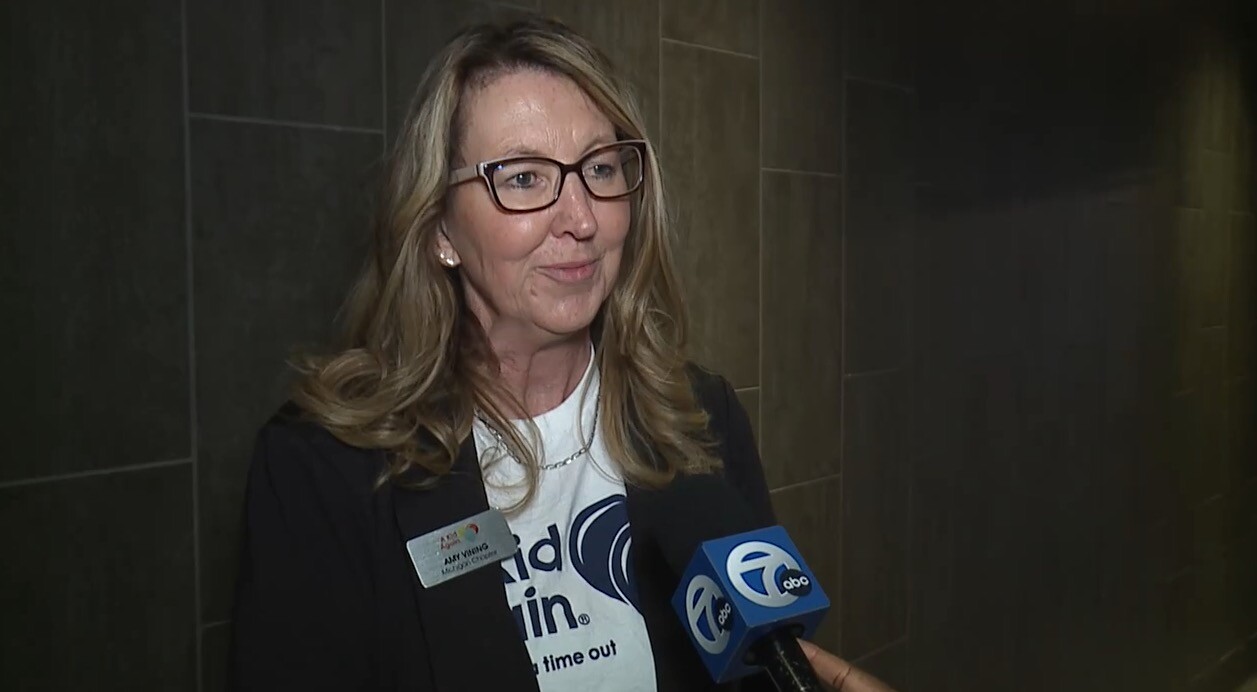
Vining, the executive director of A Kid Again, has a personal mission to help these families.
“My youngest was born with a condition called craniosynostosis. He had his skull remodeled at 4 months old at CS Mott Children’s Hospital, and I’ve always been a part of the non-profit community,” Vining said. “Going through that experience with my own child, his surgery corrected itself, but I saw so many children that were a part of the hospital at that time that were going to have lifelong complications from the conditions that they had, and I knew at some point in my non-profit journey that I wanted to give back to those families.”
Vincent Larkins, a 9th grader living with an undiagnosed rare neuromuscular disorder, also attended the game with his mom and three brothers who share the same disorder.
“It seems like it’s a very big deal, and I’m pretty excited to see the players up in person. I’ve never done something like this before, so I’m pretty happy,” Larkins said.
WXYZ-TV

Their mom, Alison Zanella, says the event provided a rare moment of rest for the kids who stood alongside players during the National Anthem.
“The only normal kid thing they do is go to school. Everything else is therapy and doctors appointments every day,” Zanella said.“It was really just about a chance to give the kids a break and let them be kids for the night.”
WXYZ-TV
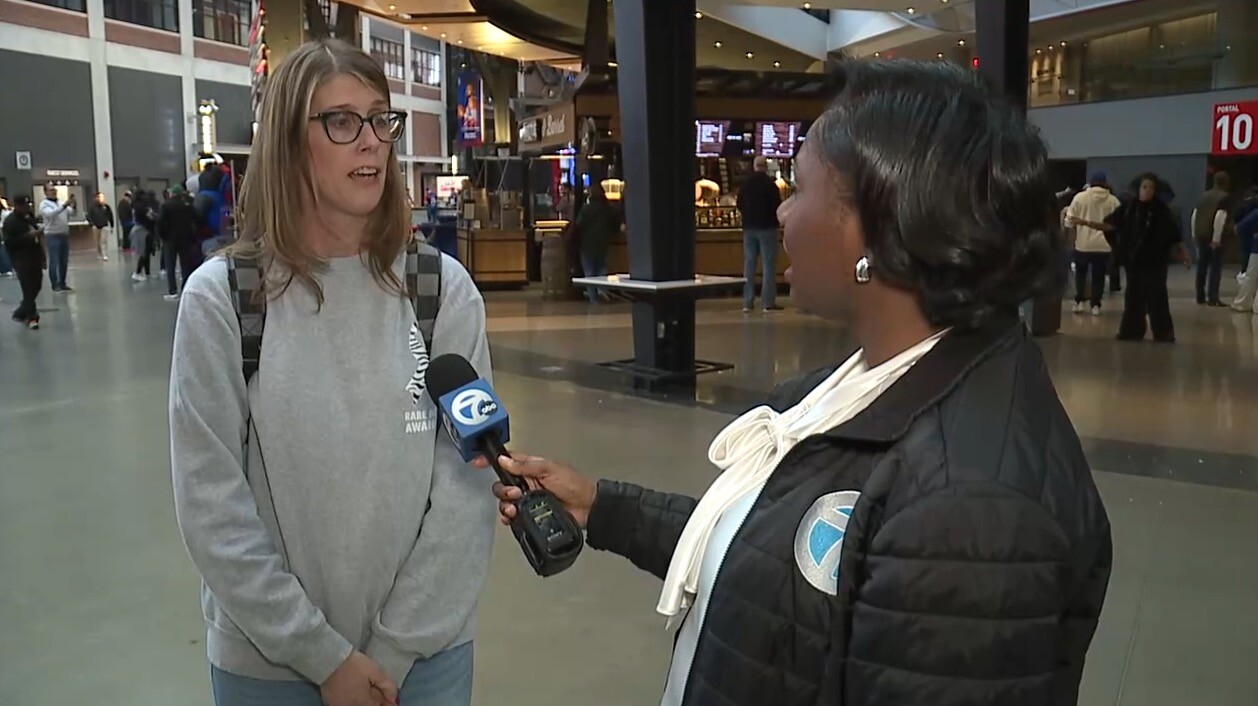
A Kid Again is a national organization with a mission to foster hope, happiness, and healing for children with life-threatening health conditions and their families. The organization provides cost-free, consistent, year-round activities that create meaningful shared experiences and joy-filled memories.
A Kid Again Michigan was established in December 2021 and currently serves more than 1850 families throughout the state.
——————————————————————
This story was reported on air by a journalist and has been converted for this platform with the assistance of AI. Our editorial team verifies all reporting on all platforms for fairness and accuracy.

Oklahoma City Comets preliminary 2026 roster

Merkley Announces Additional Oregon Town Halls April 2-4

Pennsylvania-born indie rockers Tigers Jaw return with new album release

A new safety role at Rhode Island College comes into sharper focus after Brown shooting – The Boston Globe

NFL Draft Injury Analysis: Jalon Kilgore, S – South Carolina

Florida High School Football Rankings: Top 25 teams – Oct. 21

How old is Bo Nix? What to know about Oregon quarterback ahead of 2024 NFL Draft

Cleary's 21 help Le Moyne down Central Connecticut State 69-64 in OT

99th annual Pony Swim held in Virginia

Indiana Members Credit Union announced as new anchor tenant at Bottleworks District

Video: Will ICE Change Under Its New Leader?

DHS shutdown breakthrough comes at cost for Republicans as funding fights nears end

Rubio joins crucial G7 talks as Iran war set to dominate second day

A surprise resignation could open the door for an independent to win a Montana Senate seat

Video: Savannah Guthrie Says She Believes Her Mother Was Taken for Ransom
-

 Detroit, MI1 week ago
Drummer Brian Pastoria, longtime Detroit music advocate, dies at 68
-

 Science1 week ago
How a Melting Glacier in Antarctica Could Affect Tens of Millions Around the Globe
-

 Movie Reviews1 week ago
‘Youth’ Twitter review: Ken Karunaas impresses audiences; Suraj Venjaramoodu adds charm; music wins praise | – The Times of India
-
 Science1 week ago
I had to man up and get a mammogram
-

 Sports6 days ago
IOC addresses execution of 19-year-old Iranian wrestler Saleh Mohammadi
-

 New Mexico5 days ago
Clovis shooting leaves one dead, four injured
-
 Business1 week ago
Disney’s new CEO says his focus is on storytelling and creativity
-

 Texas1 week ago
How to buy Houston vs. Texas A&M 2026 March Madness tickets