Detroit, MI
Pastor draws strength from Detroit church’s proud history to lead


In 2025, Lawrence Rodgers celebrated his fifth anniversary as pastor of Second Baptist Church of Detroit. But when he serves his community, he draws strength from a nearly 190-year-old church history.

Historic Detroit church set to become couple’s dream home
Joe Trobaugh and his wife Rachel Nelson, CEO of the interior design studio Concetti, plan to renovate a church in Detroit’s Indian Village neighborhood.
It is true that Detroit is the only American city where four major sports franchises play home games in the downtown core area.
However, it is also true that within walking distance of Little Caesars Arena, Ford Field and Comerica Park — the homes of the Detroit Pistons, Detroit Red Wings, Detroit Lions and Detroit Tigers respectively — sits a Detroit institution that has been intimately engaged in a type of service where success is not measured by championship banners, but instead by the number of lives that are saved and transformed.
And this nearly 190-year-old institution has often performed its best work during some of the most challenging historical periods known to mankind.
That institution, founded in 1836 by 13 formerly enslaved people, is historic Second Baptist Church of Detroit, which, since 1857, has occupied a stately space at 441 Monroe St. within the cultural, commercial and entertainment district known today as Greektown.
“I’ve had people come up to me and say, ‘this church is why I am free’ because our church served as one of the last stations on the Underground Railroad. That’s heavy stuff and very humbling,” Second Baptist Church of Detroit Senior Pastor Lawrence Rodgers said about the oldest religious institution owned by Black people in the Midwest, which “claimed a mission” in 1836 “to free the enslaved and have them enjoy the full privileges of American citizenship.”
On Dec. 22, the 41-year-old Rodgers, who celebrated his fifth anniversary as the senior pastor at Second Baptist in 2025, provided some insight about how he finds inspiration to serve his congregation and the greater Detroit community.
Just as the players and coaches who participate in games played at the bustling sports venues near Second Baptist spend many hours studying past performances to get better, Rodgers says he finds strength by looking at photographs displayed within the church that reflect the significant history made by a host of special people. A tiny sampling includes: William C. Monroe, Second Baptist’s first pastor, who spearheaded the church’s involvement in the formation of two abolitionist societies — the Amherstburg Baptist Association and the Canadian Anti-Slavery Baptist Association. Second Baptist member and Sunday schoolteacher Fannie Richards, who became the first Black schoolteacher in a Detroit public school in 1868 and later taught an integrated class at Everett Elementary School beginning in 1871, the year the Michigan Supreme Court ordered Detroit to abolish segregated schools; and Robert Bradby, Second Baptist’s pastor from 1910 to 1946, who leveraged his relationship with Henry Ford to link hundreds of Black people to jobs at the Ford Motor Co. during the Great Migration.
The passionate tone in Rodgers’ voice when he provided an impromptu history lesson about Second Baptist provides a glimpse of the energy his congregation experiences when Rodgers delivers a sermon. But Rodgers says the history that he loves to share means little if it is not acted upon today.
“I never want people to think that this church is only a museum,” stated Rodgers, a native of eastern North Carolina, who says he did not dive into Second Baptist’s history until he responded to a “call from the Lord” while serving as a pastor in Baltimore and searched the internet for national pastor openings, which led to him being selected by Second Baptist out of 200 applicants. “This history is not just about what we have done, it’s also about who we are right now. My predecessors improved the conditions of our people during the institution of slavery, the Great Depression, World Wars, the Civil Rights Movement, the Detroit Rebellion of 1967 and other challenging periods in our history. They offered us a way to survive and even thrive. And that is a tradition that we need to apply today.”
After immersing himself in Second Baptist’s history, Rodgers came to Detroit in 2020 full of enthusiasm and a desire to continue the church’s tradition of serving humanity as the 24th senior pastor to lead Second Baptist Church of Detroit. Nonetheless, despite having the best intentions, Rodgers faced a challenge that no other Second Baptist pastor before him had to navigate during the COVID-19 pandemic. Visits to the homes of church members and other extended in-person interactions were not possible when “everything was on lockdown” and “everyone was afraid.” But as time went on, with help from connections Rodgers made through the Council of Baptist Pastors of Detroit and Vicinity, and his own exploration across the city for basic essentials, Rodgers says he witnessed and felt a spirit that allowed him to appreciate Detroit in a different way.
“I can’t tell you exactly when it happened, but, at some point around the middle of my second year here, I called my mother and I said, ‘Detroit is like down home, up North,’ ” recalled Rodgers, who earned a master’s degree in divinity in 2017 from Howard University, where he graduated at the top of his class, while receiving numerous awards in the process. “Around the same time, I found a Detroit barber and a Detroit tailor and bought a pair of Detroit-style glasses. One of our members saw me afterwards and he said: ‘Now you look like one of us.’ But more than the member’s words, there was a sense of community and warmth that I felt — like Southern hospitality — that you don’t see or feel in a lot of places that have these temperatures.”
Powered by the “spirit of Detroit” that Rodgers described, he and the Second Baptist congregation have aggressively addressed challenges that continue to plague Detroit and our nation, including the opioid crisis; food insecurity connected to families and the unhoused, and human trafficking. And while helping Detroiters “survive,” Second Baptist is also committed to providing resources that enable Detroiters to “thrive,” such as resources and programs focused on financial and STEAM (Science, Technology, Engineering, Arts and Mathematics) education.
Rodgers says that with each historical tour, training session and seminar provided at his church, along with direct outreach into the community performed by Second Baptist members, including providing food and other necessities to unhoused Detroiters, a message is sent that is felt well beyond the city.
“There was a time when the world looked to Detroit because of the automotive industry, but today the world is looking to Detroit to see how we are responding to challenges faced by our entire nation,” said Rodgers, who also has shared his concerns and ideas for helping Detroiters with the nonprofit Greektown Neighborhoods Partnership, which is leading the ongoing initiative to transform the Greektown district into a pedestrian-friendly destination. “The world wants to know how we are going to ensure that all people are served. Going into 2026, I’m so excited to be in Detroit at this time and I look forward to building on the relationships and partnerships that we have established at Second Baptist such as our partnership with the DTE Energy Foundation, which will allow us to expand our youth STEAM program and continue our mission to empower the next generation.
“I’m also extremely excited to be living in a time when Detroit’s first woman mayor is about to take office and I’m praying for Mayor Sheffield and all of our new leaders. I believe all Detroiters need to look back and be inspired and gain hope from the challenges that we have overcome in the past. Ancestral memory is important, but we don’t want to just look back at the history, we want to live it, and in that way we can continue to repair and turn around our city for the benefit of all Detroiters.”
Scott Talley is a native Detroiter, a proud product of Detroit Public Schools and a lifelong lover of Detroit culture in its diverse forms. In his second tour with the Free Press, which he grew up reading as a child, he is excited and humbled to cover the city’s neighborhoods and the many interesting people who define its various communities. Contact him at stalley@freepress.com or follow him on Twitter @STalleyfreep. Read more of Scott’s stories at www.freep.com/mosaic/detroit-is/. Please help us grow great community-focused journalism by becoming a subscriber.



If you need help with the Public File, call (313) 222-0566
At WDIV, we are committed to informing and delighting our audience. In our commitment to covering our communities with innovation and excellence, we incorporate Artificial Intelligence (AI) technologies to enhance our news gathering, reporting, and presentation processes. Read our article to see how we are using Artificial Intelligence.
Detroit, MI
Fangirl Culture is Front and Center as Detroit Mercy Theatre Company Presents a Zany Y2K Comedy

I’m Gonna Marry You Tobey Maguire closes Detroit Mercy’s 55th Season
DETROIT — Detroit Mercy Theatre Company (DMTC) closes the inaugural season of the new Detroit
Mercy Black Box Theatre with I’m Gonna Marry You Tobey Maguire by Samantha Hurley, playing April 10-19 on University of Detroit Mercy’s McNichols Campus.
I’m Gonna Marry You Tobey Maguire is set in 2004 and follows 14-year-old Shelby Hinkley, who is obsessed with Hollywood star Tobey Maguire and creates a play to kidnap and marry him in her basement.
“This play is as hilarious as it is heartfelt,” said DMTC managing director Sarah Rusk. “Shelby truly believes Tobey Maguire is her destiny, and through her obsession we get a look into the complicated emotions of growing up during the Y2K era.”
“I absolutely love working with young actors,” said director Cassandra Svacha.
“Watching them create and rise to the challenge is thrilling. I’m Gonna Marry You Tobey Maguire to college-aged kids is like a period piece; none of them were alive when this story takes place so it’s extra fun to have them dive into this world in an anthropologic way. They aren’t reminiscing or remembering 2004, they have to study that world and build it for themselves.”
I’m Gonna Marry You Tobey Maguire runs six performances April 10-19 at the new Detroit Mercy Black Box Theatre on University of Detroit Mercy’s McNichols Campus. The DMTC Ticket Office is open Tuesday-Thursday 10 a.m.- 2 p.m., with tickets being available for purchase anytime online at www.DetroitMercyArts.com.
Individual tickets are $25 for adults, $18 for seniors and Detroit Mercy faculty, staff and alumni, and $10 for veterans and students (ages 4-college). Discounts are available for groups of 10 or more. To schedule your group, contact Sarah Rusk at 313-993-3273.
Those looking to buy tickets should note that the play is rated R and contains adult language and
Detroit, MI
Detroit Pistons and A Kid Again team up to give children with illnesses a special night at the arena

DETROIT (WXYZ) — More than 600 family members facing life-threatening conditions stepped into Little Caesars Arena on Wednesday night to enjoy a Detroit Pistons game, thanks to a partnership with the organization A Kid Again.
Watch Christiana Ford’s video report:
Detroit Pistons host a special game night for kids with illnesses
Nine-year-old Kendall Yarbrough, who has lupus, picked out her outfit the night before the game. At center court, her focus was on being the best fan she could be.
“Feeling good, pretty good,” Yarbrough said, getting ready to go down to the court for the fan tunnel.
WXYZ-TV
Her mom surprised her with the news the night before.
“Yesterday she told me I was coming and I got really excited and I couldn’t really sleep,” Yarbrough said.
For the fourth year, A Kid Again partnered with the Pistons to create a behind-the-scenes adventure tailored for children with medical conditions. The event removes barriers like dietary restrictions and accessibility issues so families can focus on having a good time.
“We give them opportunities to come to events like tonight to meet with other families going through similar situations as well as just giving them a time that they can be a family and be together,” Amy Vining said.
WXYZ-TV
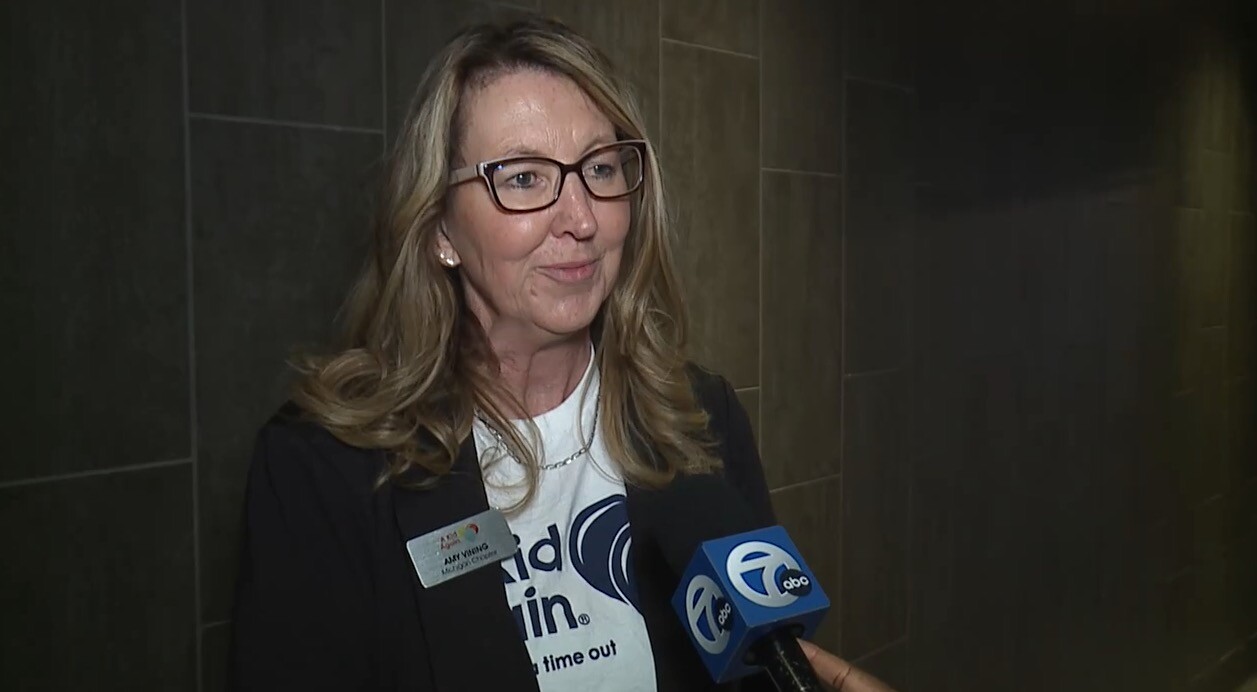
Vining, the executive director of A Kid Again, has a personal mission to help these families.
“My youngest was born with a condition called craniosynostosis. He had his skull remodeled at 4 months old at CS Mott Children’s Hospital, and I’ve always been a part of the non-profit community,” Vining said. “Going through that experience with my own child, his surgery corrected itself, but I saw so many children that were a part of the hospital at that time that were going to have lifelong complications from the conditions that they had, and I knew at some point in my non-profit journey that I wanted to give back to those families.”
Vincent Larkins, a 9th grader living with an undiagnosed rare neuromuscular disorder, also attended the game with his mom and three brothers who share the same disorder.
“It seems like it’s a very big deal, and I’m pretty excited to see the players up in person. I’ve never done something like this before, so I’m pretty happy,” Larkins said.
WXYZ-TV

Their mom, Alison Zanella, says the event provided a rare moment of rest for the kids who stood alongside players during the National Anthem.
“The only normal kid thing they do is go to school. Everything else is therapy and doctors appointments every day,” Zanella said.“It was really just about a chance to give the kids a break and let them be kids for the night.”
WXYZ-TV
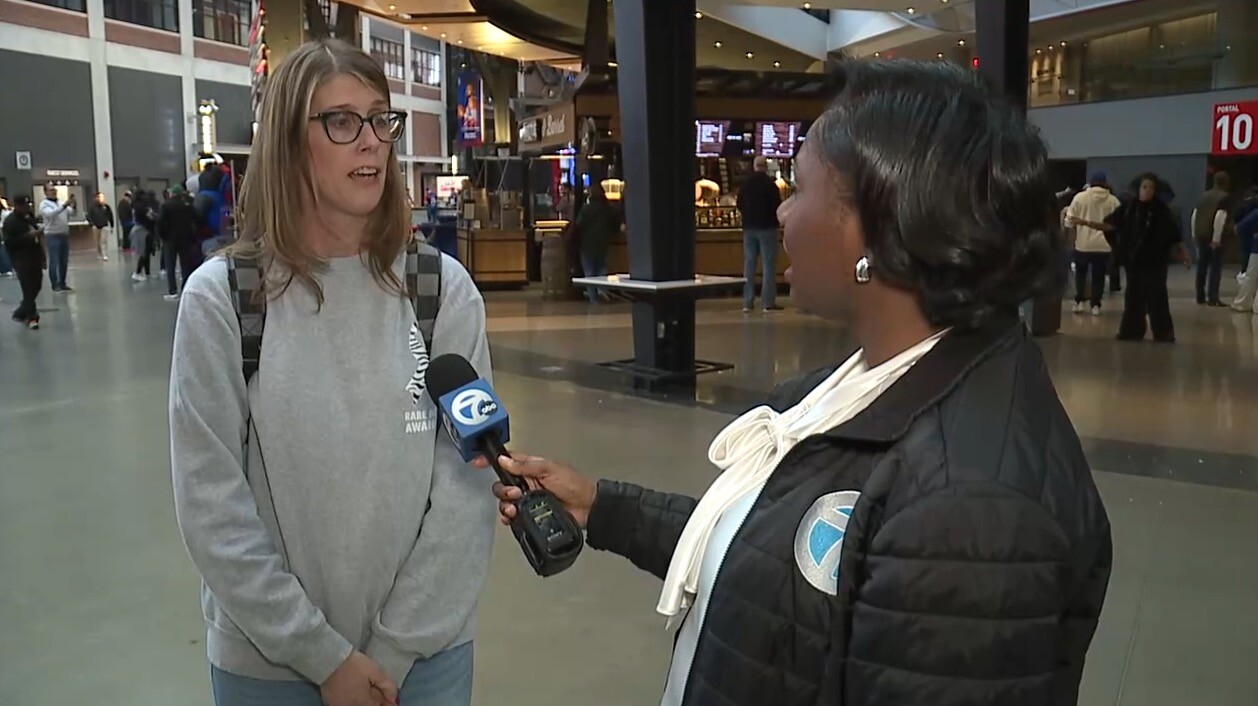
A Kid Again is a national organization with a mission to foster hope, happiness, and healing for children with life-threatening health conditions and their families. The organization provides cost-free, consistent, year-round activities that create meaningful shared experiences and joy-filled memories.
A Kid Again Michigan was established in December 2021 and currently serves more than 1850 families throughout the state.
——————————————————————
This story was reported on air by a journalist and has been converted for this platform with the assistance of AI. Our editorial team verifies all reporting on all platforms for fairness and accuracy.

Trump to sign emergency order to pay TSA agents as Augusta airport preps for golf week

50 years of DC Metro: A look back in photos

WKYC Channel 3

Austin’s Star Is Still Shining Bright: Venture Funding To City’s Startups Hits All-Time High

How To Watch: Michigan vs Alabama in NCAA Tournament Sweet 16

Florida High School Football Rankings: Top 25 teams – Oct. 21

How old is Bo Nix? What to know about Oregon quarterback ahead of 2024 NFL Draft

Cleary's 21 help Le Moyne down Central Connecticut State 69-64 in OT

99th annual Pony Swim held in Virginia

Indiana Members Credit Union announced as new anchor tenant at Bottleworks District

Video: Will ICE Change Under Its New Leader?

DHS shutdown breakthrough comes at cost for Republicans as funding fights nears end

Rubio joins crucial G7 talks as Iran war set to dominate second day

A surprise resignation could open the door for an independent to win a Montana Senate seat

Video: Savannah Guthrie Says She Believes Her Mother Was Taken for Ransom
-

 Detroit, MI1 week ago
Drummer Brian Pastoria, longtime Detroit music advocate, dies at 68
-

 Science1 week ago
How a Melting Glacier in Antarctica Could Affect Tens of Millions Around the Globe
-
 Science1 week ago
I had to man up and get a mammogram
-

 Movie Reviews1 week ago
‘Youth’ Twitter review: Ken Karunaas impresses audiences; Suraj Venjaramoodu adds charm; music wins praise | – The Times of India
-

 Sports6 days ago
IOC addresses execution of 19-year-old Iranian wrestler Saleh Mohammadi
-

 New Mexico5 days ago
Clovis shooting leaves one dead, four injured
-
 Business1 week ago
Disney’s new CEO says his focus is on storytelling and creativity
-

 Texas1 week ago
How to buy Houston vs. Texas A&M 2026 March Madness tickets