Midwest
Delphi murders suspect's confessions to wife, mother sounded 'calm,' expert says: 'Not what I expected'

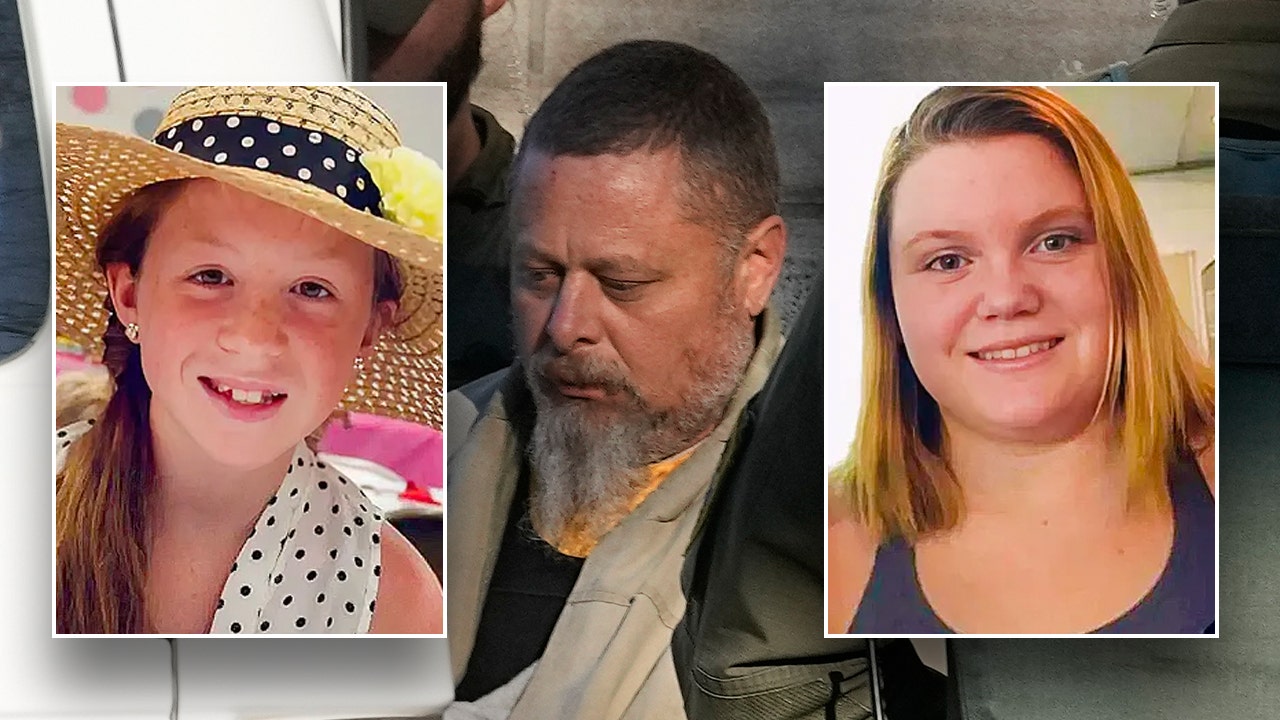
An Indiana-based journalist and podcaster, who has been covering the 2017 murders of two girls, known as the Delphi murders, said suspect Richard Allen’s various confessions to his wife played aloud in court were not what she “expected.”
Allen, 52, who is charged with murdering 14-year-old Liberty German and 13-year-old Abigail Williams while they were walking on a hiking trail in Delphi on Feb. 13, 2017, apparently made more than 60 incriminating statements to a prison psychologist and made more confessions to his wife and mother in recorded jailhouse calls.
“Richard Allen’s recorded confessions to his wife and mother were not what I expected. He did not sound hysterical or agitated as he confessed repeatedly. He sounded calm, conversational, and determined to convince his family that he had murdered two children,” journalist Áine Cain, who co-hosts “The Murder Sheet” podcast with Indiana-based attorney Kevin Greenlee, told Fox News Digital in a statement. “He seemed particularly interested in receiving assurance from family members that they would love him no matter what.”
Among Allen’s confessions made between 2022 and 2023, Allen said the following to his wife, Kathy, according to FOX 59 Indianapolis.
DELPHI MURDERS SUSPECT CONFESSED TO KILLING 2 GIRLS ON HIKING TRAIL IN SMALL TOWN, PRISON DOC SAYS
Richard Allen was arrested in October 2022 for the 2017 murders of 14-year-old Liberty German and 13-year-old Abigail Williams. (Indiana State Police)
“I’m sorry, baby. It’s just one more thing I f—– up for you.”
“I killed Abby and Libby.”
“I think I did it.
“I think I did. I don’t know. I wish they would kill me and let me apologize to the families.”
“I need to tell you something anyway. I need you to know that I did this.”
“I did it. Kathy, I did it. Do you still love me?”
Officers transport murder suspect Richard Allen, Nov. 22, 2022, at Carroll County Courthouse in Delphi, Indiana. (Alex Martin/Journal and Courier/USA Today Network)
Kathy often responded by telling her husband that he “didn’t” kill the two girls, telling Allen in one conversation, “They are messing with your mind.”
“You can’t call me and talk like this,” she told Allen in another call.
DELPHI MURDERS TRIAL: ‘BRIDGE GUY’ EMERGES AS NEW CRIME SCENE EVIDENCE PRESENTED
Former federal prosecutor and president of West Coast Trial Lawyers Neama Rahmani said Allen’s confessions were “the most damning” evidence in his case.
“I think that’s the most difficult evidence in the case for the defense is Richard Allen’s own words.”
“There wasn’t just one. We’re talking about 60 confessions over a period of time. And although Allen may have confessed to things that he didn’t do, such as molesting his daughter, he did tell his wife at some point that even though he made some false confessions, that the killings of Libby and Abby were real,” Rahmani said.
Delphi police recovered Libby’s cellphone beneath her body on Feb. 14, 2017. The phone had a 43-second video showing Abigail walking on the Monon High Bridge Trail in Delphi toward Libby while a man wearing a dark jacket and jeans walks behind her. (FOX Nation)
The recorded confessions were played in a Carroll County courtroom on Oct. 31, after the court heard testimony about his other confessions to Dr. Monica Wala on Oct. 30.
“I killed Abby and Libby. I’m sorry,” Allen allegedly told Wala – the lead psychologist for the Indiana Department of Correction – in prison, according to her testimony on Wednesday during Allen’s double murder trial, as FOX 59 Indianapolis reported.
The prison psychologist testified that Allen’s intentions in targeting Abby and Libby were “sexual” in nature, and he admitted to being a sex addict. Allen also told Wala that he was an alcoholic, as well as both a victim and perpetrator of sexual assault, according to FOX 59.
CLICK HERE FOR MORE TRUE CRIME FROM FOX NEWS
In a May phone call with his wife, Allen apparently told her, “I didn’t do everything I said I did, but I killed Abby and Libby,” at which point his wife hung up on him, according to Wala’s testimony.
Superintendent Doug Carter of the Indiana State Police speaks during a press conference on the Delphi murders investigation, April 22, 2019, at the Canal Center in Delphi. (© Nikos Frazier/Journal & Courier/USA Today Network)
Wala told the court on Wednesday that Allen had followed Abby and Libby on the Monon High Bridge Trail on Feb. 13, 2017, and ordered them “down the hill,” where he intended to rape them.
Allen allegedly told Wala he was spooked by something – either a man or a van – at which point he decided to brutally murder the two girls, slashing their necks and covering their bodies with tree branches in a wooded area just a short distance from the popular hiking trail, the psychologist said in court.
DELPHI MURDERS TRIAL: SUSPECT RICHARD ALLEN’S ATTORNEYS MAKE STUNNING REVELATION ABOUT HAIR AT CRIME SCENE
“The confession to Dr. Monica Wala is of particular interest because of its level of detail and the fact that Allen claims he was interrupted by a van,” Cain told Fox News Digital of Wala’s testimony. “Resident Brad Weber, who lives by the bridge, testified that he would have driven a van home that day around the time of the kidnapping.”
Snow covers the water of Deer Creek as the Monon High Bridge towers above, Feb. 9, 2022, in Delphi. (© Nikos Frazier/Journal & Courier/USA Today Network)
Cain said she was also “struck by how similar” Allen’s voice is to the voice that ordered Abby and Libby “down the hill” on the High Monon Bridge Trail, otherwise known as “Bridge Guy.”
“That being said, that is not admissible evidence. Experts require more than four words to do any sort of analysis. And Bridge Guy was only recorded saying ‘Guys, down the hill,’” Cain added.
DELPHI MURDERS: MAN CHARGED WITH KILLING 2 GIRLS IS ‘HIS OWN WORST ENEMY,’ EXPERT SAYS
On cross-examination, Wala admitted to being a fan of true crime content, including podcasts and online discussions about the Delphi case, which she said she followed closely prior to working at the prison where Allen was being held. Wala even traveled to the scene of the crime near the High Monon Bridge at one point, she testified.
“When Allen confessed to killing the two girls, he confessed to being the person on the Snapchat video saying, ‘Down the hill,’” Rahmani said. “In addition, he also said that he intended to rape the girls but was spooked out by the white van. That was not public information and information that may have only been known to the killer.”
Sketches and video footage showing the Delphi murders suspect over the years. (Indiana State Police)
Wala also said Allen’s behavior in prison was consistent with someone who had a serious mental illness, describing him as having “fatalistic delusions,” “hopelessness,” “insomnia” and “suicidal ideations.”
“Probably the best evidence the defense has to argue is that Allen’s confessions were either coerced or false, or really Allen’s own actions — eating feces, taking off his clothes, being naked, washing his face in the toilet, eating paper and all the other strange behavior,” Rahmani explained. “It’s also clear that he’s lost significant weight during the time that he’s been in prison. So maybe the jurors believe that this was all either due to mental health or some other psychiatric issue. They may set those confessions aside, but it’s going to be very tough because there’s so many different confessions over such a long period of time.”
This week, jurors heard more from experts about Allen’s declining mental health in prison since his arrest in 2022, including video evidence showing Allen completely nude in prison or wearing a cloth or hood over his face, according to FOX 59.
Read the full article from Here


For Pi Day, grocery shoppers get quizzed on what pi means
From the video archive, Columnist Jim Stingl quizzes Whole Foods Market customers on the mathematical pi. Video originally published March 14, 2010.
For math enthusiasts and foodies, Pi Day on March 14 is upon us once again.
We all know what pie is, but what the heck is pi? Pi ― 3.14 ― is the ratio of the circumference of a circle (the distance around the outside of it) to the diameter of that circle (the distance edge-to-edge). As we may have learned in math class, no matter the size of the circle, pi is always 3.14.
Hence on March 14, many bakeries and eateries in and around Milwaukee are offering pie sales and diverse pie selections. A selection of them are listed below.
Note that pie availability is typically while supplies last and preordering or calling beforehand is recommended. If there is a bakery or restaurant that is recognizing Pi Day and is not included in this list, let us know so we can add it.
Gather Bakehouse in Bay View
At Gather Bakehouse, the bakery will have mini 3-inch pies as well as 9-inch pies. Flavors include Dutch apple, strawberry rhubarb, cherry, French silk, honey custard and key lime. There will also be preorder options.
Location: 1100 E. Oklahoma Ave., Milwaukee
Hours: 6 a.m. to 3 p.m. Tuesday through Friday; 7 a.m. to 3 p.m. Saturday and Sunday. It’s closed on Monday.
For more information: Visit gatherbakehouse.com
National Bakery & Deli in Brookfield, Greendale and Milwaukee
National Bakery & Deli will have multiple pies available for National Pi Day: banana cream, cherry, apple, chocolate cream, Dutch apple and strawberry cream.
Location: 13820 W. Greenfield Ave., Brookfield; 5637 Broad St., Greendale; and 3200 S. 16th St., Milwaukee.
Hours for all locations: 6:30 a.m. to 3 p.m. Monday through Friday; and 6:30 a.m. to 2 p.m. on Saturday.
For more information or to order online: Visit nationalbakery.com
Kelly’s Pot Pies & More in Greenfield and East Troy
Kelly’s Pot Pies & More will have $3.14 off any large Reuben pot pie or shepherd’s pie beginning Pi Day and running through St. Patrick’s Day. These specials will be at both the East Troy and Greenfield stores.
Kelly’s Pot Pies & More also has other pot pies, including beef, turkey, veggie, taco and pizza. They also offer quiche, cheesecake, lemon torte and key lime pie.
To help guarantee a pie, order online two hours or more in advance.
Locations: 3785 S. 108th St. in Greenfield; and 3268 Main St. in East Troy
Hours: 11 a.m. to 5:30 p.m. Tuesday through Friday; and 10 a.m. to 2 p.m. Saturday
To order online or for more information: Visit kellyspotpies.com.
Mr. Dye’s Pies at 3rd Street Market Hall in Milwaukee
At Mr. Dye’s Pies at 3rd Street Market Hall, there are a plethora of pies sold by the slice or as a whole pie including peanut butter, sweet potato, pecan, key lime and blueberry.Location: 5504 W. State St. (First Floor, South Hall located in the row of stalls to the right of Dairyland)
Hours: 11 a.m. to 8 p.m. Tuesday through Thursday; 11 a.m. to 10 p.m. Friday and Saturday; and 11 a.m. to 7 p.m. on Sunday
For more information: Visit 3rdstmarkethall.com/locations/all-vendors/mrdyespies
The Elegant Farmer in Mukwonago
The Elegant Farmer will participate on National Pi Day from March 9 to 15 and will offer $3.14 off 5-inch apple pies baked in a paper bag (original price is $9.99). The pies baked in a bag feature a flaky crust with a sugar cookie-like top.
Location: 1545 Main St. (at Highways ES & J) in Mukwonago
Hours: 9 a.m. to 6 p.m. daily
For more information or to order: Order online at elegantfarmer.com or call 262-363-6770
Periwinkle’s Bakery in Waukesha
Periwinkle’s Bakery on Broadway in Waukesha will have its full pie menu for special order on March 14 and a variety of 9-inch-deep dish pies for sale that same day at its retail location at neighboring Rochester Deli. These include French Silk, caramel apple, Key West lime, wild blueberry and peanut butter French silk.
Online orders need to be placed the week prior.
Location: 143 W. Broadway, Waukesha (Bakery for purchase inside of Rochester Deli)
Hours: 10 a.m. to 3 p.m. Monday through Thursday; 10 a.m. to 7:30 p.m. Friday; and 10 a.m. to 3 p.m. on Saturday
For more information: Visit periwinklesbakery.com
All in Favor, Say Pie in Waukesha
At All in Favor, Say Pie, you can order your pie online to pick up in Waukesha. Flavors include Door County cherry pie, apple blueberry, Dutch apple pie, cranberry apple, mixed berry and blueberry. Pies should be ordered two to five days in advance.
For more information and to order: Visit https://sites.google.com/view/allinfavorsaypie/home
Aggie’s Bakery and Cake Shop in West Allis
Aggie’s Bakery and Cake Shop will sell pies including cherry, apple, caramel apple, blueberry, peach and banana cream pie on National Pi Day.
Location: 7328 W. Greenfield Ave., West Allis
Hours: 7 a.m. to 6 p.m. Monday through Friday; 7 a.m. to 5 p.m. Saturday; and 7 a.m. to 1 p.m. on Sunday
For more information: Call 414-482-1288 or visit aggiesbakery.com
The Bake Sale in West Allis
The Bake Sale in West Allis has pie options that customers can order online days in advance which include key lime, French silk, apple, caramel apple, strawberry rhubarb, pecan, whiskey chocolate pecan and fruity pebble. Pies are available on National Pi Day while supplies last. Select pies are available in the store.
Location: 6923 W. Becher St., West Allis
Hours: 6:30 a.m. to 2 p.m. Monday through Wednesday; 6:30 a.m. to 4 p.m. Thursday and Friday; 7 a.m. to 4 p.m. on Saturday; and 8 a.m. to 2 p.m. on Sunday
For more information or to order: 414-543-4230 or bakesalewestallis.com
Bishop’s Sweets in West Allis
For National Pi Day, Bishop’s Sweets will have whole pies and slices available while supplies last. If you want a specialty pie or to ensure there is one ready, order the pie 72 hours before March 14.
The featured pie flavors include apple, cherry, banana cream, coconut cream and Bishop’s Sweets requested favorite, French silk pie. The bakery will also be introducing additional pies for people to try, including chess, buttermilk and Mississippi mud pie.
Location: 8005 W. Lincoln Ave., West Allis. Bishop’s Sweets also offers delivery through Uber Eats and DoorDash.
Hours: 7 a.m. to 6 p.m. on National Pi Day, March 14, or until the pies are sold out. Otherwise, hours are 11 a.m. to 6 p.m. Friday; 10 a.m. to 5 p.m. on Saturday; and noon to 4 p.m. on Sunday. (It is closed Monday through Thursday.)
For more information: Visit www.facebook.com/BishopsSweets or call 414-763-2436.
Cathy Kozlowicz can be reached at 262-361-9132 or cathy.kozlowicz@jrn.com. Follow her on X at @kozlowicz_cathy


Indianapolis-area students speak on proposed ILEA changes
Students from both Shortridge High School and KIPP Indy Public Schools speak on the proposed models from the Indianapolis Local Education Alliance.
The signers of a recent statement by the African American Coalition of Indianapolis questioning who speaks for the Black community raise concerns about process while our students of color continue to be left behind in a public education system that offers too little opportunity and too few positive outcomes.
We agree that parents and students should be heard, which is why we’re troubled that our voices were overlooked during the public process led by the Indianapolis Local Education Alliance. We were present at nearly every ILEA meeting, sharing our personal experiences and asking leaders to take bold action, and we spent months discussing and researching ideas before offering a series of recommendations to improve schools in both IPS and the charter sector.
For many of us, speaking up to improve public education in our city goes back years. We have consistently focused on stronger accountability for all schools within IPS and on growing what works in communities that most need quality schools. So we have to ask: Did you not hear us? Or did you choose to ignore us because our opinions don’t align with yours? Are you now trying to diminish our voices by suggesting that our affiliation with certain organizations means we can’t think or speak for ourselves?
Let us be clear. Our advocacy is driven by our own experiences, and it is these perspectives that add value to the debate we’re having as a community. We live in neighborhoods that are directly impacted by the opportunity gap. It takes courage to advocate, and when voices like ours are attacked, it discourages others in our community from standing up and speaking out.
We strongly support IPS — many of us attended the district as children and have our own students there now. We also support a system of quality charter schools, and we will continue to advocate for both despite attempts to pit sectors against one another. While these recent words and claims are unfair and deeply hurtful, we remain dedicated to bringing voices together to solve problems.
It is time to stop the toxic politics of school type and focus on progress for children, especially Black and brown students who have been harmed by a tragic opportunity gap that has existed for generations. While House Bill 1423 is not perfect, we see it as the best opportunity in many years to hold all schools accountable for improved results, expand transportation and access across IPS, and move toward financial stability across the system.
You may disagree with us on the policy, and that is OK. But please do not dismiss our voices or discount our stories, which represent so many in IPS who simply want a high-quality, safe public school experience for their children.
LaToya Hale, Greg Henson, Dontia Dyson, Cristal Salgado and Swantella Nelson are Indianapolis parents.

Southern California’s Jewish community reacts to war in the Middle East

Check out these Milwaukee-area places to celebrate Pi Day on March 14

Atlanta Braves News: Top 30 Prospects, Starting Pitching Depth, More

City officials report less speeding at corners with traffic cameras in Minneapolis

We speak for ourselves in IPS-charter debate. Don’t dismiss us. | Letters

Florida High School Football Rankings: Top 25 teams – Oct. 21

Cleary's 21 help Le Moyne down Central Connecticut State 69-64 in OT

How old is Bo Nix? What to know about Oregon quarterback ahead of 2024 NFL Draft

99th annual Pony Swim held in Virginia

Indiana Members Credit Union announced as new anchor tenant at Bottleworks District

Trump sends official notification to Congress on strikes against Iran

Unexpected birth brings hope to near-extinct Amazon tribe

Supreme Court blocks redrawing of New York congressional map, dealing a win for GOP

Map: Earthquake Shakes Central California

Gas prices could jump as Middle East tensions threaten global oil supply
-

 World5 days ago
Exclusive: DeepSeek withholds latest AI model from US chipmakers including Nvidia, sources say
-

 Massachusetts6 days ago
Mother and daughter injured in Taunton house explosion
-

 Denver, CO6 days ago
10 acres charred, 5 injured in Thornton grass fire, evacuation orders lifted
-

 Louisiana1 week ago
Wildfire near Gum Swamp Road in Livingston Parish now under control; more than 200 acres burned
-

 Technology1 week ago
YouTube TV billing scam emails are hitting inboxes
-

 Politics1 week ago
OpenAI didn’t contact police despite employees flagging mass shooter’s concerning chatbot interactions: REPORT
-

 Technology1 week ago
Stellantis is in a crisis of its own making
-

 Oregon4 days ago
2026 OSAA Oregon Wrestling State Championship Results And Brackets – FloWrestling